Elevating the humble pancake to a seasonal masterpiece requires a chef’s precision. This recipe transforms crisp apples and warm spices into a breakfast centerpiece with a delicate crumb and caramelized edges. Expect a technique-driven approach that guarantees consistent, restaurant-quality results from your own kitchen.
Why This Recipe Works
- Dual-Texture Apples: Grating half the apples integrates moisture and flavor into the batter, while dicing the other half provides tender, distinct pockets in the finished pancake.
- Buttermilk & Leavening Synergy: The acidity of buttermilk reacts with baking soda for maximum lift, creating an exceptionally light and airy interior structure.
- Brown Sugar Caramelization: Using brown sugar in the batter and for a quick pan-sauté of the diced apples deepens the flavor profile with notes of molasses and promotes a beautifully golden-brown crust.
- Rested Batter: A mandatory 10-minute rest allows the flour to fully hydrate and the leavening agents to begin activating, which is critical for achieving optimal texture and preventing a dense, gummy result.
Ingredients
- 2 medium Granny Smith apples (about 1 lb total), peeled
- 1 ½ cups all-purpose flour
- 2 tablespoons light brown sugar, packed
- 2 teaspoons baking powder
- 1 teaspoon baking soda
- 1 teaspoon ground cinnamon
- ½ teaspoon ground nutmeg
- ¼ teaspoon ground cloves
- ½ teaspoon kosher salt
- 1 ¼ cups full-fat buttermilk, cold
- 2 large eggs, cold
- 3 tablespoons unsalted butter, melted and cooled slightly, plus more for cooking
- 1 teaspoon pure vanilla extract
- 2 tablespoons unsalted butter (for sautéing apples)
- 1 tablespoon light brown sugar (for sautéing apples)
- Pure maple syrup and additional butter, for serving
Equipment Needed
- Box grater
- Chef’s knife and cutting board
- Large mixing bowl
- Medium mixing bowl
- Whisk
- Rubber spatula
- 10-inch or 12-inch cast iron skillet or heavy-bottomed non-stick griddle
- Thin, flexible spatula (fish spatula ideal)
- Ladle or ⅓-cup dry measuring cup
- Kitchen towel (for keeping pancakes warm)
Instructions
Step 1: Prepare and Sauté the Apples
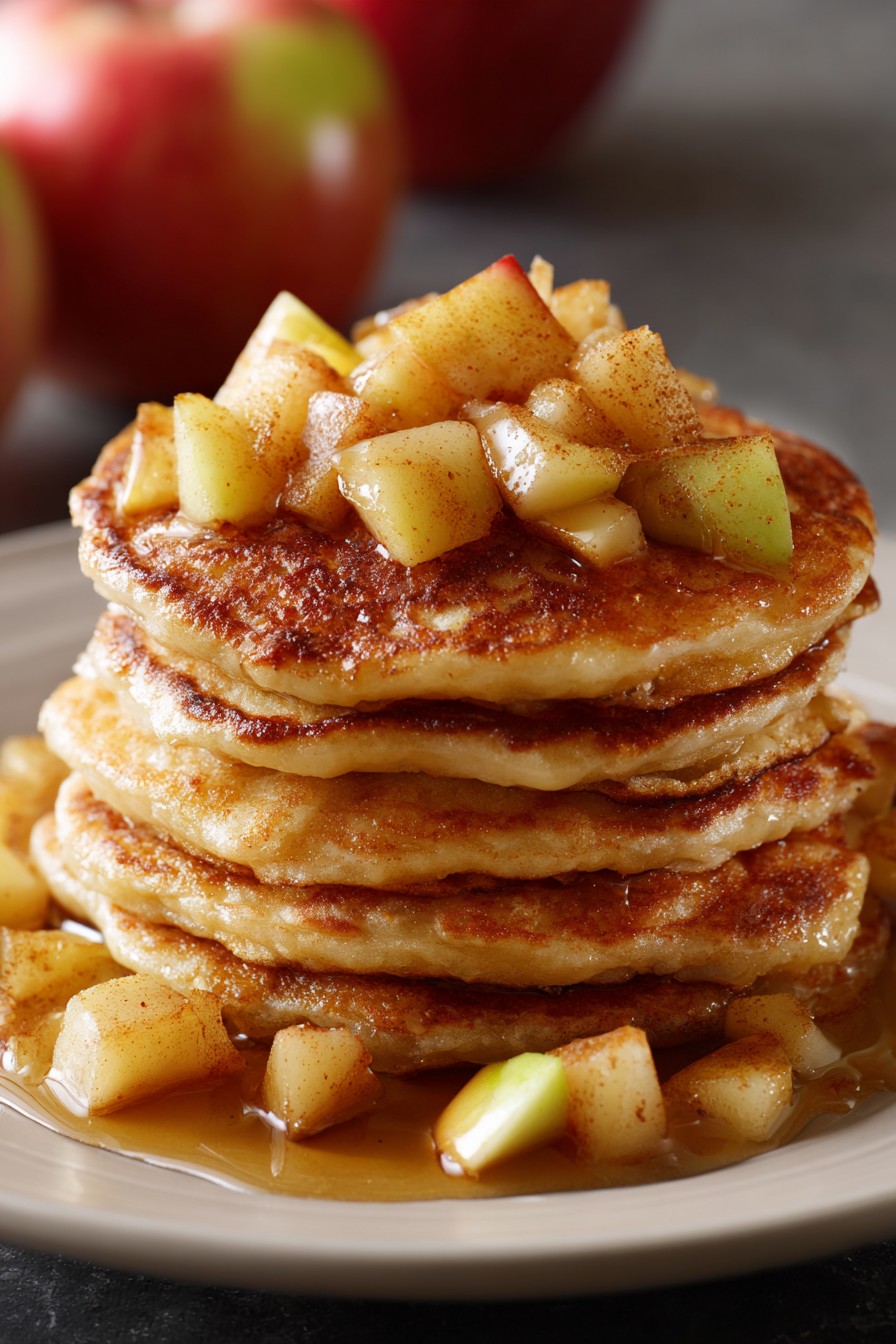
Begin by preparing your mise en place. Peel both apples. Using the large holes of a box grater, grate one apple directly into a medium bowl. Take the second apple, quarter it, core it, and dice it into ¼-inch pieces. In your preheated cast iron skillet over medium heat, melt 2 tablespoons of unsalted butter until it foams and subsides. Add the diced apple pieces and 1 tablespoon of brown sugar. Sauté, stirring occasionally, for 4 to 5 minutes until the apples have softened slightly and the sugar has created a light caramel coating on them and the pan. They should be tender but still hold their shape. Transfer the sautéed diced apples to a plate to cool completely; spreading them out prevents steaming and ensures they remain distinct when folded into the batter later. This step is crucial for developing complex flavor and preventing raw, crunchy apple bits in your final pancake.
Step 2: Combine Dry Ingredients and Create the Wet Mix
In your large mixing bowl, whisk together 1 ½ cups of all-purpose flour, 2 tablespoons of packed light brown sugar, 2 teaspoons of baking powder, 1 teaspoon of baking soda, 1 teaspoon of ground cinnamon, ½ teaspoon of freshly grated nutmeg, ¼ teaspoon of ground cloves, and ½ teaspoon of kosher salt. Ensure these are whisked thoroughly to eliminate any pockets of leavening agent, which would cause bitter spots. In the medium bowl containing your grated apple, now add the wet ingredients: 1 ¼ cups of cold full-fat buttermilk, 2 cold large eggs, 3 tablespoons of melted and cooled unsalted butter, and 1 teaspoon of pure vanilla extract. Whisk this wet mixture vigorously until it is completely homogenous and the grated apple is evenly distributed. The cold ingredients are intentional, as they help control gluten development when combined with the flour, contributing to a tender crumb. Tip: For the fluffiest results, ensure your buttermilk and eggs are straight from the refrigerator.
Step 3: Mix the Batter and Incorporate Add-Ins
Make a well in the center of your dry ingredients. Pour the entire contents of the wet ingredient bowl into this well. Using your whisk, begin combining from the center outward, drawing the dry ingredients into the wet. Mix only until the last traces of dry flour disappear; the batter will be thick and lumpy, which is correct and desirable. Overmixing at this stage develops gluten, leading to tough, chewy pancakes. Once mixed, gently fold in the cooled sautéed diced apples using a rubber spatula until just incorporated. Now, you must let the batter rest. Cover the bowl with a kitchen towel and set it aside at room temperature for a full 10 minutes. This rest period allows the flour to fully hydrate, the baking powder and soda to begin their chemical reactions, and results in a thicker, more cohesive batter that will produce taller, fluffier pancakes with fewer air bubbles on the surface.
Step 4: Cook the Pancakes to Golden Perfection
While the batter rests, prepare your cooking surface. Place your cast iron skillet or griddle over medium-low heat. After 3-4 minutes, test the heat by sprinkling a few drops of water on the surface; they should skitter and evaporate within 1-2 seconds. Add a small pat of butter (about ½ teaspoon) and swirl to coat. Using a ladle or ⅓-cup measure, portion the batter onto the hot surface, leaving at least 2 inches between each pancake to allow for spreading. Do not press or spread the batter. Cook for approximately 2 minutes and 30 seconds to 3 minutes on the first side. You are looking for three key visual cues: the top surface will be covered with small, bursting bubbles, the edges will look set and slightly dry, and the bottom, when peeked at with your spatula, should be a deep, golden brown. Tip: Resist the urge to flip more than once. Multiple flips compress the delicate structure.
Step 5: Flip, Finish, and Serve Immediately
Slide your thin, flexible spatula completely under the pancake. In one confident, swift motion, flip it. The second side will cook faster, typically 1 minute to 1 minute 30 seconds, until it is also golden brown and the center springs back lightly when pressed. Transfer the cooked pancake to a wire rack set over a baking sheet in a 200°F oven to keep warm while you cook the remaining batter, adding a small amount of fresh butter to the pan for each new batch. This method keeps them warm without steaming, which would make the exterior soggy. Serve the pancakes immediately on warmed plates. Top with a pat of high-quality unsalted butter and a generous pour of pure maple syrup. The contrast of the hot, fluffy pancake, melting butter, and cool syrup is essential to the experience. Tip: For a professional finish, warm your syrup gently in a saucepan or microwave before serving.
Tips and Tricks
For consistently round pancakes, use a squeeze bottle to dispense the batter. If your batter seems too thick after resting, do not add more liquid; this thickness is correct and ensures height. A drop of batter placed in the center of your hot pan should sizzle gently but not violently burn—this indicates the ideal 350-375°F cooking temperature. To test for doneness without cutting, press the center gently; no wet batter should seep out. For a make-ahead option, you can combine the dry ingredients and store them in an airtight container for up to a month. Combine the wet ingredients (including grated apple) and store them separately in the refrigerator for up to 24 hours; mix and rest just before cooking. Leftover cooked pancakes freeze exceptionally well. Cool completely on a rack, then layer between parchment paper in a freezer bag. Reheat directly from frozen in a toaster or a 350°F oven until hot and crisp.
Recipe Variations
- Apple Cider Pancakes: Replace ½ cup of the buttermilk with reduced apple cider. Simmer 1 cup of fresh apple cider in a saucepan until reduced to ¼ cup and cooled before adding to the wet mix. This intensifies the apple flavor dramatically.
- Ginger-Spiced: Add 1 tablespoon of finely grated fresh ginger to the wet ingredients and substitute ½ teaspoon of ground ginger for an equal amount of the cinnamon. The bright, spicy heat of ginger complements the apples beautifully.
- Oatmeal Apple Pancakes: For a heartier, whole-grain version, replace ½ cup of the all-purpose flour with ½ cup of old-fashioned oats that have been pulsed a few times in a food processor. The batter will require an additional 2-3 minutes of rest time.
- Caramel Apple: After sautéing the diced apples, deglaze the pan with 2 tablespoons of heavy cream and a pinch of salt, swirling to create a quick pan sauce. Drizzle this over the finished pancakes instead of, or in addition to, maple syrup.
- Savory-Sweet Bacon & Apple: Fold ½ cup of finely chopped, cooked thick-cut bacon into the batter along with the sautéed apples. Reduce the brown sugar in the batter to 1 tablespoon. Serve with a drizzle of maple syrup for the ultimate sweet-salty balance.
Frequently Asked Questions
Q: Can I use regular milk instead of buttermilk?
A: Not recommended. Buttermilk’s acidity is crucial for activating the baking soda, which provides lift and tenderness. For a substitute, add 1 tablespoon of white vinegar or lemon juice to 1 ¼ cups of whole milk, let it sit for 5 minutes to curdle, then use.
Q: My pancakes are raw in the middle but brown outside. What went wrong?
A: Your heat is too high. The exterior cooks before the interior can set. Always cook pancakes over medium-low to medium heat. If using an electric griddle, set it to 325-350°F. A perfectly cooked pancake will be uniformly golden.
Q: Can I make the batter the night before?
A: No. The activated leavening agents will expire, resulting in flat, dense pancakes. You can, however, prepare the dry mix and the wet mix (including grated apple) separately the night before. Refrigerate the wet mix, then combine and rest for 10 minutes in the morning.
Q: What’s the best apple variety to use?
A> Granny Smith is ideal for its firm texture and tartness, which balances the sweetness. Honeycrisp or Braeburn are excellent sweeter, crisp alternatives. Avoid very soft apples like Red Delicious, as they will turn to mush.
Q: How do I keep a batch warm for a crowd?
A> The single-layer wire rack method described in Step 5 is best. Do not stack pancakes or cover them with foil, as trapped steam creates sogginess. A 200°F oven will keep them perfect for up to 20 minutes.
Summary
This chef-inspired recipe delivers supremely fluffy apple pancakes through precise technique: dual-texture apple preparation, a cold buttermilk base, a mandatory batter rest, and controlled, patient cooking. The result is a breakfast worthy of any professional kitchen.
Apple Pancakes
4
servings20
minutes20
minutesIngredients
Instructions
- 1 Prepare Apples: Grate one apple. Dice the second apple into ¼-inch pieces. In a skillet over medium heat, melt 2 tbsp butter, add diced apples and 1 tbsp brown sugar. Sauté for 4-5 min until tender and lightly caramelized. Transfer to a plate to cool completely.
- 2 Mix Dry & Wet: In a large bowl, whisk flour, 2 tbsp brown sugar, baking powder, baking soda, cinnamon, nutmeg, cloves, and salt. In a medium bowl, combine grated apple, buttermilk, eggs, 3 tbsp melted butter, and vanilla. Whisk wet mix until uniform.
- 3 Combine & Rest: Make a well in dry ingredients. Pour in wet mix. Whisk from center outward until just combined (batter will be lumpy). Gently fold in cooled sautéed apples. Cover bowl and let batter rest for 10 minutes.
- 4 Cook First Side: Heat a skillet or griddle over medium-low heat. Add a small pat of butter. Pour ⅓ cup batter per pancake. Cook for 2 min 30 sec to 3 min, until surface is bubbly, edges are set, and bottom is deep golden brown.
- 5 Flip & Finish: Flip pancake and cook for 1 to 1 min 30 sec on second side until golden. Transfer to a wire rack in a 200°F oven to keep warm. Repeat with remaining batter, adding butter as needed. Serve immediately with warm maple syrup.