Kindle a gentle warmth within your kitchen tonight, where the simple alchemy of beef and cabbage transforms into a broth that feels like a whispered promise of comfort. This recipe is an invitation to slow down, to savor the process as much as the result, creating a meal that nourishes both body and soul with its deep, savory essence.
Why This Recipe Works
- The slow simmer coaxes a rich, complex umami from the beef bones, forming a deeply satisfying broth base.
- Savoy cabbage adds a delicate, slightly sweet texture that softens beautifully without losing its character.
- A final splash of apple cider vinegar brightens the entire dish, lifting the savory notes with a subtle, welcome tang.
- It’s a forgiving, one-pot wonder that fills your home with an aroma of pure, uncomplicated comfort.
Ingredients
- 2 pounds beef short ribs or bone-in chuck roast
- 1 large yellow onion, roughly chopped
- 3 medium carrots, peeled and cut into 1-inch pieces
- 3 celery stalks, cut into 1-inch pieces
- 4 cloves garlic, smashed
- 8 cups cold water
- 2 bay leaves
- 1 teaspoon whole black peppercorns
- 1 small head Savoy cabbage (about 1.5 lbs), cored and sliced into 1-inch ribbons
- 2 tablespoons apple cider vinegar
- 1 ½ teaspoons fine sea salt, plus more to taste
- ½ teaspoon freshly ground black pepper
- 2 tablespoons chopped fresh parsley, for garnish
Equipment Needed
- Large Dutch oven or heavy-bottomed stockpot (6-8 quart capacity)
- Sharp chef’s knife and cutting board
- Wooden spoon or spatula
- Fine-mesh strainer or slotted spoon
- Ladle
- Bowls for serving
Instructions
Prepare and Sear the Foundation
Begin by patting your beef short ribs completely dry with paper towels; this is the secret to achieving a perfect, caramelized sear rather than a steam. Place your heavy Dutch oven over medium-high heat and let it warm for a full two minutes. Carefully add the beef, ensuring the pieces are not crowded, and sear undisturbed for 4 to 5 minutes per side. You are listening for a confident sizzle and watching for a deep, mahogany-brown crust to form—this fond at the bottom of the pot is the soul of your broth’s flavor. Once beautifully browned on all sides, use tongs to transfer the beef to a clean plate. A gentle tip: do not move the meat too soon; patience here builds the foundation for everything that follows.
Build the Aromatic Base
In that same pot, now glistening with rendered beef fat, lower the heat to medium. Add your roughly chopped onion, carrot pieces, and celery. Stir them gently with a wooden spoon, scraping up any of those precious browned bits from the bottom. Cook the vegetables, stirring occasionally, for about 8 to 10 minutes. You want them to soften and become fragrant, with the onions turning translucent at the edges and taking on a light golden hue. Add the smashed garlic cloves and cook for just one more minute, until their aroma blooms and fills the air—a scent that promises warmth. This step transforms simple vegetables into the sweet, aromatic backbone that will support the rich beef.
Simmer to Develop Depth
Return the seared beef and any accumulated juices back to the pot. Pour in 8 cups of cold, fresh water—starting cold helps extract the gelatin and flavor from the bones more effectively. Add the bay leaves and whole black peppercorns. Bring the liquid just to a boil over high heat, then immediately reduce the heat to the lowest possible setting where you see only the occasional, lazy bubble break the surface. Partially cover the pot with a lid and let it simmer gently, not boil, for 2 hours and 30 minutes. This long, quiet simmer is where the magic happens, as time coaxes every bit of savory essence from the bones into the liquid, creating a broth that is both robust and clear.
Incorporate the Cabbage
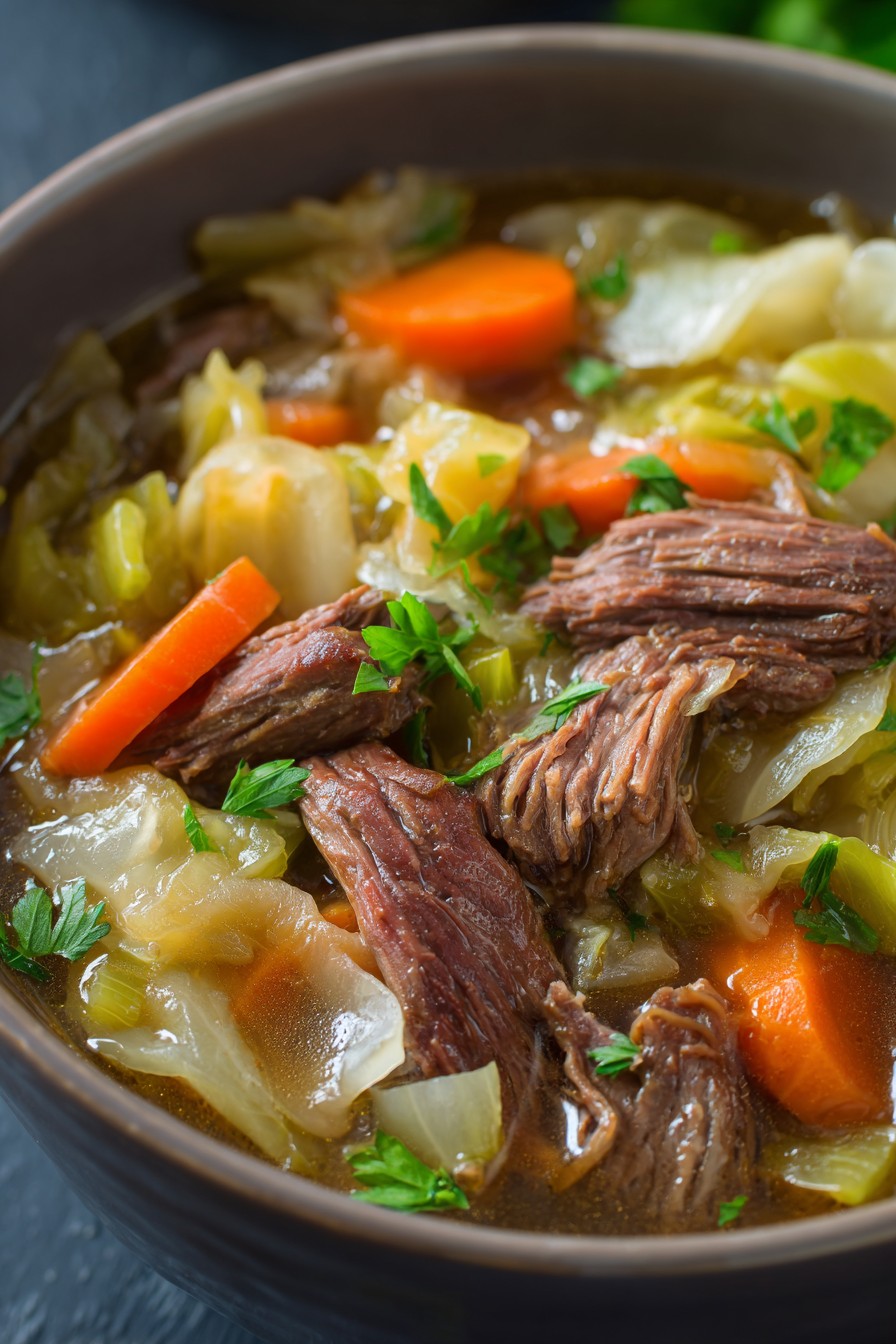
After the long simmer, the beef should be fork-tender and falling from the bone. Using tongs and a slotted spoon, carefully remove the beef and bones to a cutting board. Discard the bones, bay leaves, and any large pieces of fat. Shred the beef into bite-sized pieces using two forks, then return it to the pot. Now, add your ribbons of Savoy cabbage. They will seem like a mountain at first, but gently stir them down into the hot broth. Increase the heat to medium-low, cover the pot fully, and let it cook for 20 to 25 minutes. The cabbage is ready when the thickest ribs are tender and have lost their crunch, but the leafy parts still retain a whisper of texture and vibrant green color.
Finish and Serve with Intention
Turn off the heat. This is the moment for final seasoning and brightness. Stir in the apple cider vinegar—this is not for acidity you can taste outright, but to lift and brighten all the deep flavors you’ve built. Season with 1 ½ teaspoons of fine sea salt and ½ teaspoon of freshly ground black pepper. Taste thoughtfully; you may desire another pinch of salt. Ladle the steaming broth, tender beef, soft vegetables, and silky cabbage into deep, pre-warmed bowls. A final, generous sprinkle of chopped fresh parsley adds a burst of color and a fresh, herbal note. Serve immediately, perhaps with a slice of crusty bread for dipping, and let the simple, profound comfort of this bowl embrace you completely.
Tips and Tricks
For an even clearer, more refined broth, after the initial simmer, strain the liquid through a fine-mesh sieve lined with cheesecloth to remove all vegetable solids before adding the shredded beef and cabbage back in. If you prefer a thicker, stew-like consistency, create a simple slurry by mixing 2 tablespoons of all-purpose flour with ¼ cup of cold broth or water until smooth, then whisk it into the simmering pot during the last 10 minutes of cooking. To make this dish ahead, prepare it completely, let it cool, and store it in the refrigerator for up to 3 days; the flavors will meld and deepen beautifully. When reheating, do so gently over low heat to prevent the beef from becoming tough. For a richer mouthfeel, consider skimming and reserving the fat that rises to the top after refrigeration, then using a tablespoon or two to sauté the initial vegetables.
Recipe Variations
- Hearty Potato Addition: For a more substantial meal, add 1 pound of Yukon Gold potatoes, peeled and cut into 1-inch cubes, to the pot when you add the cabbage. They will cook through and thicken the broth slightly.
- Asian-Inspired Twist: Replace the apple cider vinegar with 2 tablespoons of soy sauce and 1 tablespoon of rice vinegar. Add a 1-inch piece of fresh ginger, sliced, with the garlic, and garnish with sliced green onions and a drizzle of toasted sesame oil.
- Tomato-Infused Version: Introduce a subtle sweetness and acidity by adding one 14.5-ounce can of diced tomatoes, with their juices, to the pot along with the water at the beginning of the simmer.
- Spicy Kick: Warm your bowl with heat by adding 1 teaspoon of crushed red pepper flakes when sautéing the vegetables, or stir in 1-2 tablespoons of your favorite hot sauce during the final seasoning.
- Root Vegetable Medley: Swap the carrots for a mix of parsnips and turnips, cut into similar-sized pieces, to introduce an earthy, sweet complexity to the broth’s foundation.
Frequently Asked Questions
Q: Can I use a different cut of beef?
A: Absolutely. While bone-in cuts like short ribs or chuck roast provide the best flavor for the broth, you can use 1.5 pounds of boneless stew meat. Sear it well, but note the final broth may be slightly less rich without the bones’ gelatin.
Q: How can I make this recipe in a slow cooker?
A: After searing the beef and sautéing the vegetables on the stove, transfer everything to your slow cooker. Add the water, bay leaves, and peppercorns. Cook on LOW for 7-8 hours. Add the shredded beef and cabbage, then cook on HIGH for an additional 30 minutes until the cabbage is tender.
Q: Is it possible to make this broth vegetarian?
A: For a plant-based version, omit the beef. Use 8 cups of robust vegetable broth. Sauté mushrooms with the initial vegetables to build umami, and add a tablespoon of white miso paste at the end for depth. Simmer for just 45 minutes before adding the cabbage.
Q: My broth tastes a bit flat. How can I fix it?
A: Flatness often needs a boost of salt or acidity. First, ensure you’ve seasoned adequately with salt. Then, try adding another teaspoon of apple cider vinegar or a squeeze of fresh lemon juice just before serving to brighten and define the flavors.
Q: Can I freeze the leftovers?
A: Yes, this broth freezes beautifully. Cool it completely, then store in airtight containers or freezer bags, leaving an inch of space for expansion. It will keep for up to 3 months. Thaw overnight in the refrigerator before reheating gently.
Summary
This beef and cabbage broth is a testament to slow, intentional cooking, where simple ingredients meld into a deeply comforting and elegant bowl of warmth, perfect for a quiet, cozy evening shared with someone special.
Beef and Cabbage Broth
4
servings20
minutes195
minutesIngredients
Instructions
- 1 Pat beef dry. In a large Dutch oven over medium-high heat, sear beef for 4-5 minutes per side until deeply browned. Transfer to a plate.
- 2 In the same pot over medium heat, cook onion, carrots, and celery for 8-10 minutes until softened. Add garlic and cook for 1 minute until fragrant.
- 3 Return beef to pot. Add water, bay leaves, and peppercorns. Bring to a boil, then reduce to a bare simmer. Partially cover and simmer gently for 2 hours 30 minutes.
- 4 Remove beef and bones. Shred beef, discard bones and bay leaves, return beef to pot. Add cabbage, stir, cover, and cook over medium-low heat for 20-25 minutes until cabbage is tender.
- 5 Turn off heat. Stir in apple cider vinegar, salt, and pepper. Taste and adjust seasoning. Ladle into bowls, garnish with parsley, and serve immediately.