On a brisk January day, few dishes offer the profound comfort and culinary satisfaction of a meticulously crafted beef stew. Our beef potato herb stew elevates this humble classic through deliberate technique and layered flavor development, transforming simple ingredients into a deeply savory, aromatic masterpiece. This recipe is designed for cooks who appreciate the transformative power of proper browning, patient simmering, and herb integration.
Why This Recipe Works
- Deep Maillard Reaction: Searing the beef in batches creates a fond—the caramelized bits on the pan bottom—which forms the flavor foundation for the entire stew.
- Layered Aromatics: Sautéing onions, carrots, and celery until deeply softened and lightly caramelized builds a sweet, complex base before deglazing.
- Dual-Starch Thickening: A flour roux provides initial body, while the natural starches released from potatoes during the final simmer create a velvety, cohesive texture without gumminess.
- Herb Integration Strategy: Adding hardy herbs like rosemary and thyme early infuses the braising liquid, while delicate parsley is stirred in at the end to preserve its bright, fresh character.
- Patient Simmering: A low, steady simmer for 90 minutes ensures the chuck roast becomes fork-tender while allowing flavors to meld and concentrate perfectly.
Ingredients
- 2.5 lbs beef chuck roast, cut into 1.5-inch cubes
- Kosher salt and freshly ground black pepper
- 3 tbsp all-purpose flour
- 3 tbsp vegetable oil, divided
- 1 large yellow onion, medium dice (about 2 cups)
- 3 medium carrots, peeled and cut into 1-inch rounds (about 1.5 cups)
- 3 celery stalks, cut into 1-inch pieces (about 1 cup)
- 4 garlic cloves, minced
- 2 tbsp tomato paste
- 1 cup dry red wine (such as Cabernet Sauvignon)
- 4 cups beef stock, preferably homemade or low-sodium
- 2 bay leaves
- 2 sprigs fresh rosemary
- 4 sprigs fresh thyme
- 1.5 lbs Yukon Gold potatoes, peeled and cut into 1.5-inch chunks
- 1/4 cup fresh parsley, finely chopped
Equipment Needed
- Large Dutch oven or heavy-bottomed pot (6-7 quart capacity)
- Wooden spoon or sturdy spatula
- Chef’s knife and cutting board
- Measuring cups and spoons
- Tongs
- Ladle
Instructions
Step 1: Prepare and Brown the Beef
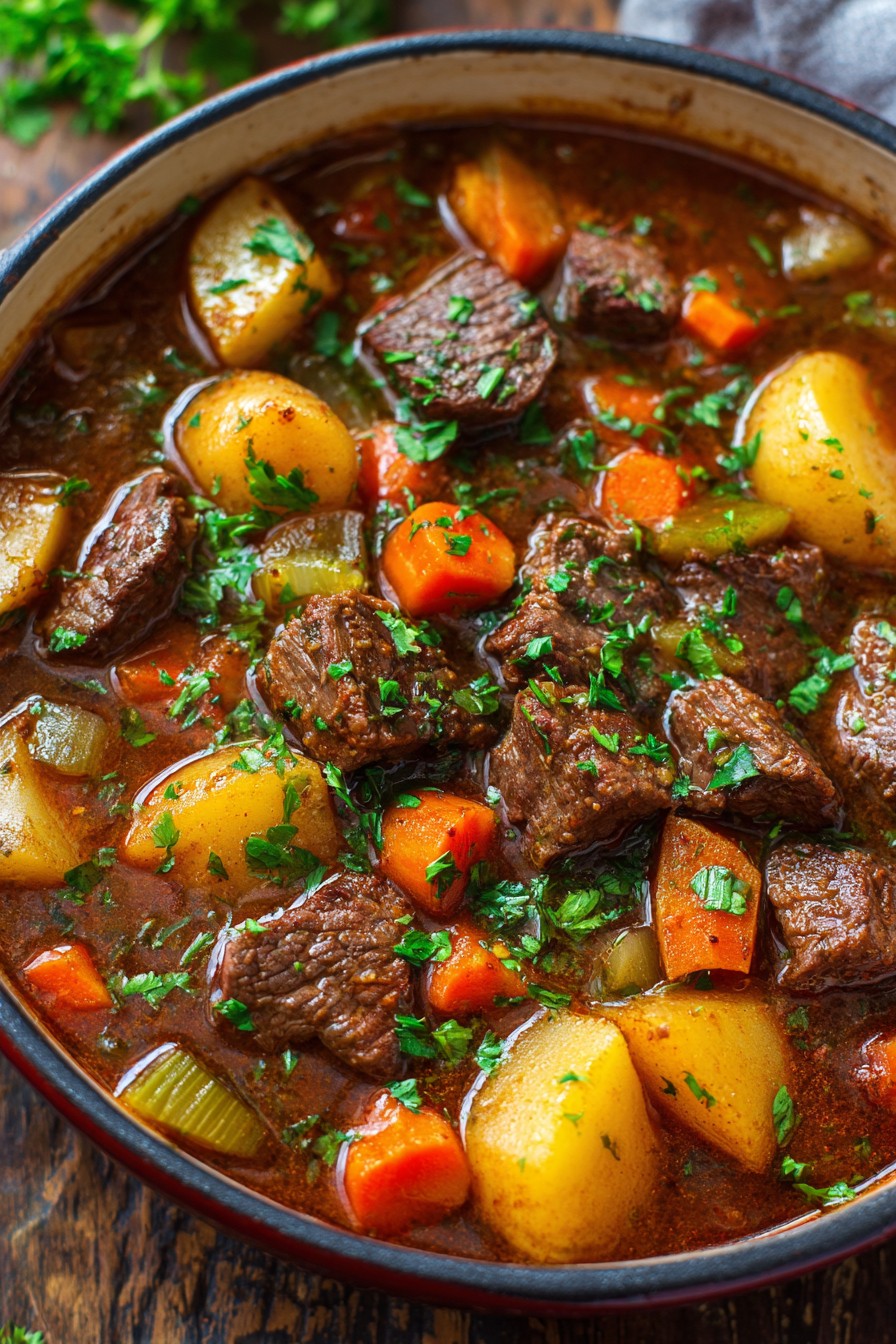
Pat the beef chuck cubes completely dry with paper towels—this is crucial for achieving proper browning, not steaming. Season all sides generously with kosher salt and freshly ground black pepper. In a large bowl, toss the seasoned beef with 3 tablespoons of all-purpose flour until each piece is lightly coated; the flour will help create a thicker stew base later. Heat 1.5 tablespoons of vegetable oil in your Dutch oven over medium-high heat until it shimmers and just begins to smoke. Working in two batches to avoid overcrowding, add half the beef cubes in a single layer, leaving at least half an inch between pieces. Sear undisturbed for 3-4 minutes until a deep brown crust forms on the bottom, then use tongs to turn and brown on all other sides, about 8-10 minutes total per batch. Transfer the first batch to a plate, add the remaining oil, and repeat with the second batch. Do not wash the pot—the browned fond left behind is essential for flavor. Tip: For the deepest flavor, wait until you see a dark brown, almost mahogany crust form on the beef before turning; pale gray meat indicates insufficient heat or overcrowding.
Step 2: Build the Aromatic Base
Reduce the heat to medium and add the diced onion, carrot rounds, and celery pieces to the same pot. Cook, stirring occasionally with a wooden spoon to scrape up the fond, for 8-10 minutes until the vegetables have softened and the onions are translucent with light golden edges. The carrots should begin to glisten, and the celery will lose its raw crunch. Add the minced garlic and cook for 60 seconds until fragrant but not browned—you should smell a sweet, nutty aroma. Stir in the 2 tablespoons of tomato paste and cook for another 2 minutes, stirring constantly, until the paste darkens to a brick-red color and coats the vegetables; this caramelizes the tomato’s sugars and eliminates any raw taste. The entire process should take 12-14 minutes and will create a deeply flavorful foundation for your stew.
Step 3: Deglaze and Create the Braising Liquid
Pour in 1 cup of dry red wine, using your wooden spoon to vigorously scrape all the browned bits from the bottom of the pot—this is called deglazing and incorporates the fond’s concentrated flavor into the liquid. Bring the wine to a simmer over medium-high heat and cook for 4-5 minutes until reduced by about half; you’ll notice the liquid thicken slightly and the sharp alcohol smell will dissipate, leaving behind a rich, fruity essence. Return all the seared beef and any accumulated juices to the pot. Add 4 cups of beef stock—it should just barely cover the meat and vegetables. Submerge the bay leaves, rosemary sprigs, and thyme sprigs into the liquid. Increase the heat to high and bring the stew to a bare simmer, then immediately reduce the heat to low. Tip: The stew should maintain small, gentle bubbles around the edges; a rolling boil will make the beef tough and cloud the broth.
Step 4: Braise the Beef to Tenderness
Partially cover the Dutch oven with its lid, leaving about a one-inch gap for steam to escape. Maintain the low simmer and braise the beef for 90 minutes. At the 45-minute mark, check the stew: the liquid should have reduced slightly, and the beef will begin to show signs of tenderizing but will not yet be fork-tender. Stir gently to redistribute. After the full 90 minutes, test a piece of beef by pressing it with the back of a spoon; it should yield easily and almost fall apart. The braising liquid will have reduced and intensified in flavor, taking on a deep brown hue. Using tongs, carefully remove and discard the bay leaves and herb stems—the rosemary needles and thyme leaves will have mostly fallen off into the stew.
Step 5: Add Potatoes and Finish the Stew
Gently stir in the peeled and chunked Yukon Gold potatoes, ensuring they are submerged in the liquid. Increase the heat to medium-low to return the stew to a gentle simmer. Partially cover again and cook for 25-30 minutes until the potatoes are tender when pierced with a paring knife but still hold their shape. Avoid overcooking, which turns them mushy. During this final simmer, the potatoes will release natural starches that further thicken the stew to a luscious, gravy-like consistency. Turn off the heat. Stir in the finely chopped fresh parsley, which adds a bright, fresh counterpoint to the rich stew. Taste and adjust seasoning with additional salt and pepper if needed. Tip: Let the stew rest off the heat, uncovered, for 15 minutes before serving; this allows the flavors to harmonize and the stew to thicken to its ideal serving consistency.
Tips and Tricks
For an even richer flavor, brown 4 ounces of diced pancetta or bacon in the pot before searing the beef, then use the rendered fat for cooking. If your stew is too thin after adding potatoes, create a beurre manié by mashing 1 tablespoon each of softened butter and flour into a paste; whisk in small bits during the last 5 minutes of simmering. For a clearer broth, after braising the beef, strain the liquid through a fine-mesh sieve, skim off any fat, then return the liquid and solids to the pot before adding potatoes. To enhance umami, add 1 tablespoon of soy sauce or Worcestershire sauce with the beef stock. If using dried herbs instead of fresh, use 1 teaspoon dried rosemary and 1 teaspoon dried thyme, adding them with the tomato paste to toast slightly and release their oils.
Recipe Variations
- Mushroom & Red Wine Reduction: Replace 1 cup of beef stock with an additional 1 cup of red wine and add 8 ounces of sliced cremini mushrooms when sautéing the aromatics for an earthy, deeply robust profile.
- Root Vegetable Medley: Substitute half the potatoes with equal parts peeled and chunked parsnips, turnips, and sweet potatoes, adding them at the same time as the potatoes for a sweeter, more complex vegetable presence.
- Spiced Moroccan Twist: Omit rosemary and thyme. Add 1 teaspoon each ground cumin, coriander, and cinnamon with the tomato paste. Stir in 1/2 cup of dried apricots and a 15-ounce can of drained chickpeas with the potatoes.
- Guinness Braised Stew: Replace the red wine with 1 cup of Guinness stout for a malty, slightly bitter depth. Add 1 tablespoon of brown sugar with the stock to balance the bitterness.
- Herb de Provence Infusion: Substitute the rosemary and thyme with 2 tablespoons of herb de Provence, adding it with the tomato paste. Finish with a tablespoon of chopped fresh tarragon instead of parsley for a distinctly French flavor.
Frequently Asked Questions
Q: Can I make this stew ahead of time?
A: Absolutely. In fact, the flavors deepen upon resting. Cool completely, refrigerate in an airtight container for up to 4 days, or freeze for 3 months. Reheat gently on the stovetop over low heat, adding a splash of stock if needed to loosen.
Q: What cut of beef is best, and can I use a substitute?
A: Chuck roast is ideal due to its marbling and connective tissue, which breaks down into tenderness during braising. Brisket or short ribs are excellent substitutes, though they may require an additional 30 minutes of braising time.
Q: My stew is too thin/thick. How can I fix it?
A: If too thin, simmer uncovered for 10-15 minutes to reduce. If too thick, stir in warm beef stock, 1/4 cup at a time, until desired consistency is reached. Avoid adding cold liquid directly to the hot stew.
Q: Can I cook this in a slow cooker or Instant Pot?
A: Yes. For a slow cooker, complete Steps 1-3 on the stovetop, then transfer everything to the cooker and cook on LOW for 7-8 hours, adding potatoes in the last 2 hours. For an Instant Pot, use the Sauté function for Steps 1-3, then pressure cook on High for 35 minutes with a natural release, adding potatoes and using Sauté to simmer until tender.
Q: Why are my potatoes disintegrating?
A: This indicates overcooking or using a starchy potato variety like Russet. Yukon Golds hold their shape better. Ensure the stew is at a gentle, not rolling, simmer after adding them, and check for doneness starting at 20 minutes.
Summary
This beef potato herb stew achieves deep flavor through meticulous searing, layered aromatics, and patient braising, resulting in tender beef, perfectly cooked potatoes, and a rich, herb-infused gravy that defines winter comfort food.
Beef Potato Herb Stew
6
servings25
minutes135
minutesIngredients
Instructions
- 1 Pat beef dry and season. Toss with flour. Heat 1.5 tbsp oil in Dutch oven over medium-high. Sear beef in batches until deeply browned on all sides, 8-10 minutes per batch. Transfer to plate.
- 2 Add onion, carrots, and celery to pot. Cook 8-10 min until softened. Add garlic; cook 1 min. Stir in tomato paste; cook 2 min until darkened.
- 3 Add wine, scrape up fond, simmer 4-5 min until reduced by half. Return beef and juices. Add stock and herbs. Bring to simmer, then reduce heat to low.
- 4 Partially cover and simmer gently for 90 minutes until beef is fork-tender. Remove and discard bay leaves and herb stems.
- 5 Stir in potatoes. Simmer partially covered 25-30 min until potatoes are tender. Off heat, stir in parsley. Season to taste. Rest 15 min before serving.