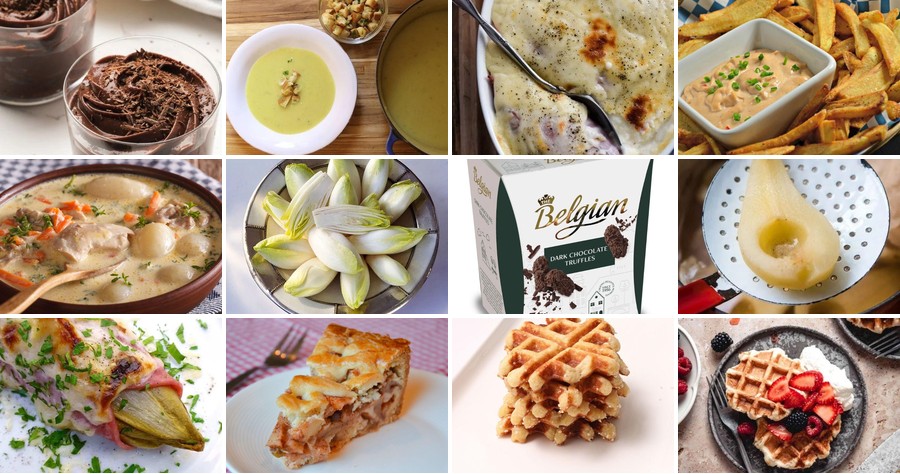
Just imagine the rich, comforting flavors of Belgium right in your own kitchen! From cozy stews to decadent chocolates, Belgian cuisine is all about hearty, soul-warming dishes perfect for sharing. We’ve gathered 20 must-try recipes that bring this European charm home—get ready to fall in love with every delicious bite. Let’s dive in and discover your new favorite comfort food!
Classic Belgian Waffles

Venturing into the quiet kitchen this morning, I find myself drawn to the comforting ritual of making waffles—not just any waffles, but the kind with deep, crisp pockets and a tender, airy crumb that feels like a warm embrace. There’s something almost meditative about measuring the flour, hearing the sizzle of butter, and watching the batter transform into golden grids, a simple pleasure that turns an ordinary morning into a small celebration.
Serving: 4 | Pre Time: 15 minutes | Cooking Time: 20 minutes
Ingredients
– 2 cups all-purpose flour, sifted
– 2 tablespoons granulated sugar
– 1 tablespoon baking powder
– ½ teaspoon fine sea salt
– 2 large pasture-raised eggs, lightly beaten
– 1¾ cups whole milk, at room temperature
– ½ cup unsalted clarified butter, melted and cooled slightly
– 1 teaspoon pure vanilla extract
– Non-stick cooking spray
Instructions
1. Preheat a Belgian waffle iron to 375°F, ensuring it reaches the correct temperature for optimal browning.
2. In a large mixing bowl, whisk together the sifted all-purpose flour, granulated sugar, baking powder, and fine sea salt until fully incorporated.
3. In a separate bowl, combine the lightly beaten pasture-raised eggs, whole milk, melted clarified butter, and pure vanilla extract, stirring gently to avoid overmixing.
4. Pour the wet ingredients into the dry ingredients, folding with a spatula until just combined; a few lumps are acceptable to prevent tough waffles.
5. Lightly coat the preheated waffle iron with non-stick cooking spray to ensure easy release.
6. Ladle approximately ½ cup of batter onto the center of the iron, spreading it slightly to the edges without overfilling.
7. Close the lid and cook for 4-5 minutes, or until steam subsides and the waffles are deep golden brown with a crisp exterior.
8. Carefully remove the waffle using a fork, repeating the process with remaining batter, and keep cooked waffles warm in a 200°F oven on a wire rack to maintain crispness.
Zestful and inviting, these waffles emerge with a delicate crunch that gives way to a soft, pillowy interior, their subtle sweetness enhanced by the rich notes of clarified butter. Serve them immediately, perhaps drizzled with warm maple syrup or topped with fresh berries and a dusting of powdered sugar for a touch of elegance that elevates this classic into a memorable morning treat.
Authentic Belgian Carbonnade Flamande
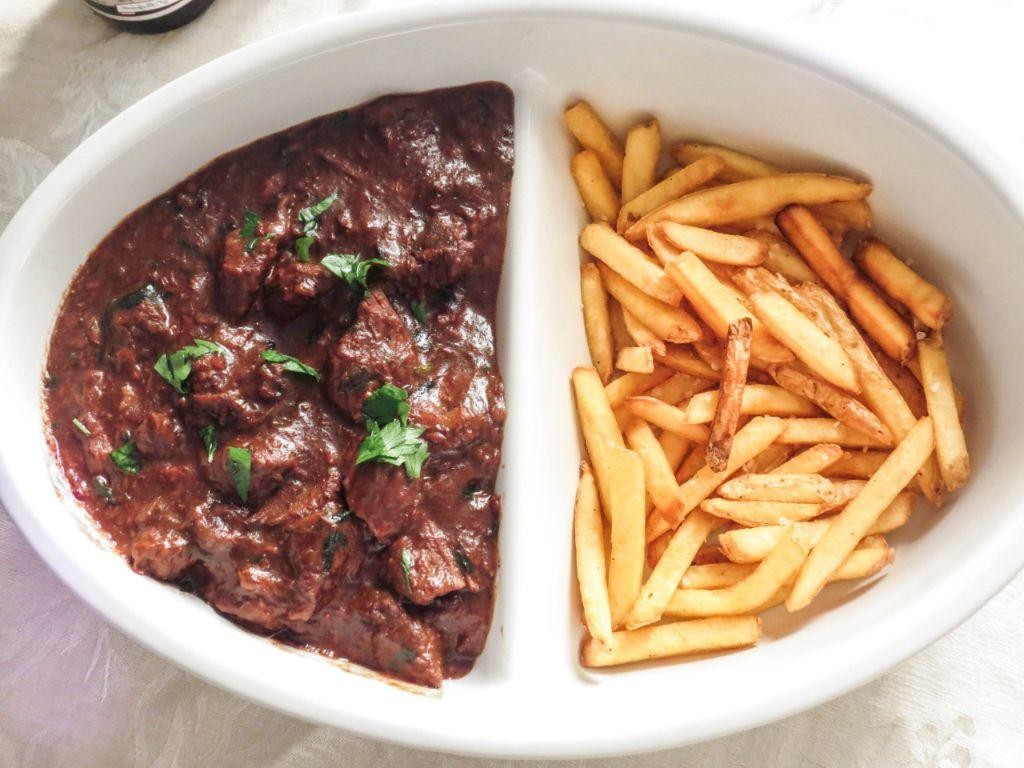
Lingering in the quiet kitchen this evening, I find myself drawn to the slow, comforting rhythms of a Belgian classic that feels like a warm embrace on a winter night. This carbonnade flamande, with its deep caramelized notes and tender beef, whispers of cozy Belgian taverns and shared meals around a simple wooden table. It’s a dish that asks for patience and rewards it with profound, soul-satisfying flavor.
Serving: 6 | Pre Time: 25 minutes | Cooking Time: 2 hours 30 minutes
Ingredients
– 2 ½ pounds beef chuck roast, cut into 1 ½-inch cubes
– 3 tablespoons clarified butter
– 2 large yellow onions, thinly sliced
– 2 tablespoons all-purpose flour
– 2 cups Belgian dark ale (such as a dubbel)
– 1 cup beef stock
– 2 tablespoons Dijon mustard
– 2 tablespoons dark brown sugar
– 2 bay leaves
– 4 sprigs fresh thyme
– 1 tablespoon apple cider vinegar
– Kosher salt and freshly ground black pepper
Instructions
1. Pat the beef chuck cubes completely dry with paper towels, then season generously on all sides with kosher salt and freshly ground black pepper.
2. Heat the clarified butter in a large Dutch oven over medium-high heat until it shimmers, about 2 minutes.
3. Working in batches to avoid crowding, sear the beef cubes until deeply browned on all sides, about 3-4 minutes per side; transfer to a plate.
4. Reduce the heat to medium and add the thinly sliced onions to the pot, scraping up any browned bits from the bottom.
5. Cook the onions, stirring occasionally, until they are deeply caramelized and golden brown, about 20-25 minutes.
6. Sprinkle the all-purpose flour over the caramelized onions and cook, stirring constantly, for 1 full minute to form a roux.
7. Slowly pour in the Belgian dark ale while stirring continuously to prevent lumps from forming.
8. Add the beef stock, Dijon mustard, dark brown sugar, bay leaves, and fresh thyme sprigs, stirring to combine.
9. Return the seared beef and any accumulated juices to the pot, ensuring the meat is mostly submerged in the liquid.
10. Bring the mixture to a very gentle simmer, then immediately reduce the heat to the lowest setting.
11. Cover the pot and let it cook undisturbed for 2 hours, checking once halfway to ensure it maintains a bare simmer.
12. After 2 hours, remove the lid and stir in the apple cider vinegar; cook uncovered for an additional 15-20 minutes until the sauce has thickened slightly.
13. Discard the bay leaves and thyme sprigs, then taste and adjust seasoning with additional salt and pepper if needed.
Perhaps the most remarkable transformation occurs in that final simmer, where the ale’s bitterness mellows into a rich, malty sweetness that clings to the fork-tender beef. The resulting stew is luxuriously thick, with onions that have nearly dissolved into the glossy, mahogany-colored sauce. For a truly authentic touch, serve it over a mound of buttery mashed potatoes or with a thick slice of crusty bread to soak up every last drop.
Crispy Belgian Fries with Homemade Mayo
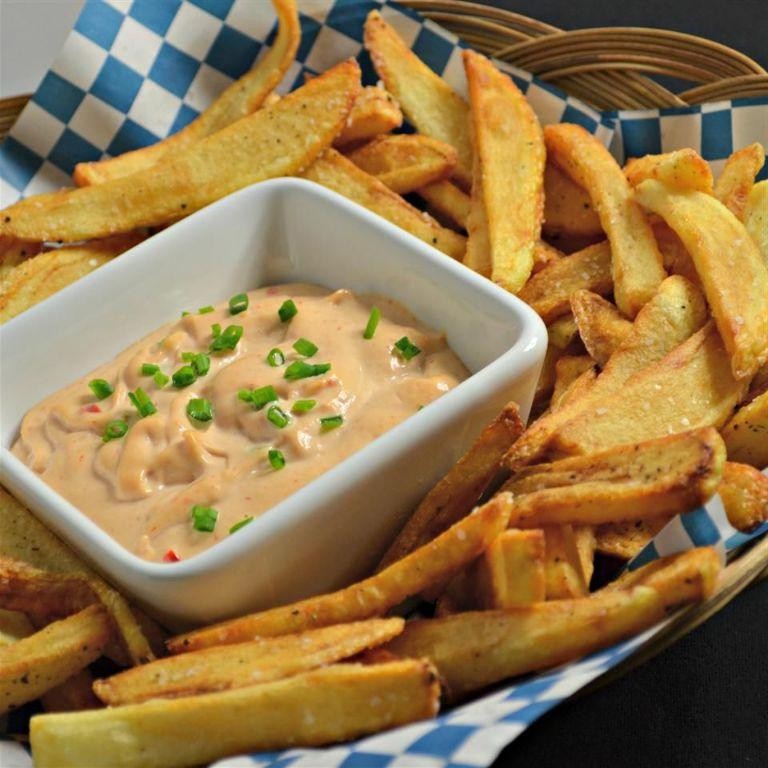
Under the soft glow of the kitchen light, there’s a quiet comfort in the ritual of preparing something simple yet deeply satisfying. The process of transforming humble potatoes into golden, crisp fries, paired with the slow, deliberate whisking of a rich homemade mayonnaise, feels like a small, personal ceremony of care. It’s a dish that rewards patience, offering warmth and a gentle crunch that seems to slow the world down for just a moment.
Serving: 4 | Pre Time: 30 minutes | Cooking Time: 25 minutes
Ingredients
– 2 pounds russet potatoes, peeled and cut into ½-inch batons
– 2 quarts peanut oil
– 1 tablespoon fine sea salt
– 2 large pasture-raised egg yolks, at room temperature
– 1 teaspoon Dijon mustard
– 1 tablespoon freshly squeezed lemon juice
– 1 cup neutral-flavored oil, such as grapeseed
– ¼ teaspoon white pepper
Instructions
1. Place the potato batons in a large bowl and cover completely with cold water; soak for 20 minutes to remove excess starch, which promotes a crispier fry.
2. Drain the potatoes and pat them thoroughly dry with clean kitchen towels, ensuring no moisture remains on the surface.
3. In a heavy-bottomed Dutch oven, heat the peanut oil to 325°F, using a deep-fry thermometer to monitor the temperature precisely.
4. Carefully add one-third of the dried potatoes to the hot oil and fry for 5 minutes, or until they are pale and slightly softened but not colored.
5. Remove the blanched fries with a spider skimmer and drain on a wire rack set over a baking sheet; repeat with the remaining potatoes in two more batches.
6. Increase the oil temperature to 375°F and fry the blanched potatoes again in batches for 2-3 minutes, or until deeply golden and crisp.
7. Transfer the finished fries to a bowl lined with paper towels, sprinkle immediately with the fine sea salt, and toss gently to coat.
8. For the mayonnaise, combine the egg yolks, Dijon mustard, and lemon juice in a medium mixing bowl; whisk vigorously until the mixture is pale and slightly thickened.
9. While whisking constantly, add the neutral-flavored oil in a very slow, thin stream to emulsify the mixture into a thick, creamy mayonnaise.
10. Season the mayonnaise with the white pepper, then transfer to a serving vessel and refrigerate until ready to use.
The fries emerge with a shatteringly crisp exterior that gives way to a fluffy, tender interior, their earthy sweetness perfectly balanced by the salty crust. The mayonnaise is luxuriously rich and velvety, with a subtle tang from the lemon and a gentle heat from the mustard. For a playful twist, try serving them in a paper cone with a sprinkle of smoked paprika over the mayo, or alongside a seared steak for a hearty, comforting meal.
Belgian Endive Gratin
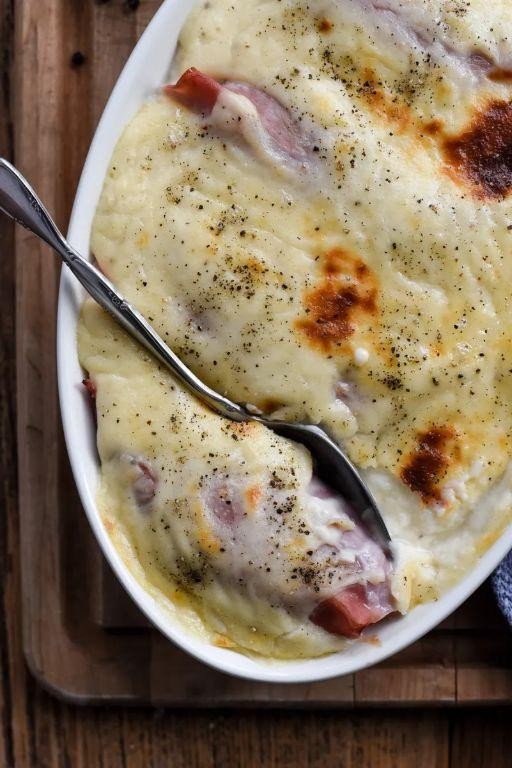
Sometimes, on quiet evenings like this, when the world outside feels distant and the kitchen glows with soft light, I find myself drawn to dishes that offer both comfort and a touch of elegance. This gratin, with its delicate endive and creamy embrace, is just that—a quiet celebration of winter’s subtle gifts.
Serving: 4 | Pre Time: 15 minutes | Cooking Time: 35 minutes
Ingredients
– 4 heads Belgian endive, trimmed and halved lengthwise
– 2 tablespoons clarified butter
– 1 cup heavy cream
– ½ cup freshly grated Gruyère cheese
– ¼ cup finely grated Parmigiano-Reggiano cheese
– 1 teaspoon Dijon mustard
– ¼ teaspoon freshly grated nutmeg
– Kosher salt, to season
– Freshly ground black pepper, to season
– 2 tablespoons fine dry breadcrumbs
– 1 tablespoon minced fresh chives
Instructions
1. Preheat your oven to 375°F (190°C).
2. In a large skillet over medium heat, melt the clarified butter until it shimmers.
3. Place the endive halves cut-side down in the skillet and cook undisturbed for 4–5 minutes, until lightly caramelized.
4. Flip the endive and cook for an additional 3 minutes to soften slightly.
5. Arrange the endive cut-side up in a single layer in a shallow baking dish.
6. In a small saucepan, gently warm the heavy cream over low heat until just steaming, about 3 minutes—avoid boiling to prevent curdling.
7. Whisk the Dijon mustard and nutmeg into the warmed cream until fully incorporated.
8. Season the cream mixture lightly with kosher salt and freshly ground black pepper.
9. Pour the seasoned cream evenly over the arranged endive in the baking dish.
10. Combine the grated Gruyère and Parmigiano-Reggiano cheeses in a small bowl.
11. Sprinkle the cheese mixture uniformly over the endive and cream.
12. Top evenly with the fine dry breadcrumbs for a delicate crunch.
13. Bake in the preheated oven for 20–25 minutes, until the top is golden brown and bubbly.
14. Remove from the oven and let rest for 5 minutes to allow the gratin to set slightly.
15. Garnish with the minced fresh chives just before serving.
Finished, this gratin emerges with a silky, tender texture beneath its crisp, golden crust. The endive’s gentle bitterness melts into the rich, nutty cream, offering a sophisticated balance that pairs beautifully with a simple roast chicken or a crisp green salad. For a festive touch, serve it in individual ramekins, each topped with an extra sprinkle of chives.
Traditional Belgian Waterzooi

Lingering in the quiet kitchen on this December evening, I find myself drawn to the gentle warmth of a Belgian classic, a dish that feels like a soft embrace after a long day. Traditional Waterzooi, with its delicate broth and tender morsels, whispers of cozy gatherings and simple comforts, inviting a moment of peaceful reflection as the year winds down.
Serving: 4 | Pre Time: 20 minutes | Cooking Time: 45 minutes
Ingredients
– 2 tablespoons clarified butter
– 1 large yellow onion, finely diced
– 2 medium carrots, peeled and cut into 1/2-inch rounds
– 2 celery stalks, thinly sliced
– 4 cups low-sodium chicken broth
– 1 cup dry white wine
– 1 pound skinless, boneless chicken thighs, cut into 1-inch pieces
– 1/2 cup heavy cream
– 2 large egg yolks, lightly beaten
– 2 tablespoons fresh parsley, finely chopped
– 1 teaspoon fresh thyme leaves
– 1 bay leaf
– Kosher salt
– Freshly ground black pepper
Instructions
1. Heat the clarified butter in a large Dutch oven over medium heat until shimmering, about 2 minutes.
2. Add the finely diced yellow onion and cook, stirring occasionally, until translucent and fragrant, about 5 minutes.
3. Stir in the carrot rounds and thinly sliced celery, cooking until slightly softened, about 4 minutes.
4. Pour in the dry white wine, scraping the bottom of the pot to deglaze, and simmer until reduced by half, about 3 minutes.
5. Add the low-sodium chicken broth, bay leaf, and fresh thyme leaves, bringing the mixture to a gentle boil.
6. Reduce the heat to low, cover the pot, and simmer for 15 minutes to allow the flavors to meld.
7. Season the chicken thigh pieces with kosher salt and freshly ground black pepper, then add them to the pot.
8. Simmer uncovered until the chicken is cooked through and tender, about 12 minutes, skimming any foam from the surface with a spoon.
9. In a small bowl, whisk together the lightly beaten egg yolks and heavy cream until smooth.
10. Slowly ladle about 1 cup of the hot broth into the egg mixture, whisking constantly to temper it and prevent curdling.
11. Gradually stir the tempered mixture back into the pot, cooking over low heat until slightly thickened, about 2 minutes, without boiling.
12. Remove the pot from the heat, discard the bay leaf, and stir in the finely chopped fresh parsley.
13. Taste and adjust seasoning with additional kosher salt and freshly ground black pepper if needed.
Comforting in its creamy texture, this Waterzooi offers a subtle richness from the egg-enriched broth, with tender chicken that melts at the touch of a fork. Serve it in shallow bowls with crusty bread for dipping, or garnish with a sprinkle of extra parsley for a touch of vibrant green against the pale gold broth.
Belgian Speculoos Cookies

Holding a warm speculoos cookie in my hand, its spicy aroma drifting up, I’m reminded of quiet winter evenings when the world outside slows down and the kitchen becomes a sanctuary. These Belgian spiced shortbreads, with their deep caramel notes and crisp, intricate imprints, are more than just a holiday treat—they’re a gentle ritual, a moment of stillness shaped by butter, spice, and time.
Serving: 24 cookies | Pre Time: 20 minutes | Cooking Time: 12 minutes
Ingredients
– 1 cup unsalted European-style butter, softened to 68°F
– ¾ cup light brown sugar, firmly packed
– ¼ cup dark molasses
– 1 large pasture-raised egg, lightly beaten
– 2 ½ cups all-purpose flour, sifted
– 1 teaspoon baking soda
– 2 teaspoons ground cinnamon
– 1 teaspoon ground ginger
– ½ teaspoon ground cardamom
– ½ teaspoon ground cloves
– ¼ teaspoon fine sea salt
Instructions
1. In the bowl of a stand mixer fitted with the paddle attachment, cream the softened butter and light brown sugar on medium speed for exactly 3 minutes, until pale and fluffy.
2. Reduce the mixer to low and slowly drizzle in the dark molasses, followed by the lightly beaten pasture-raised egg, mixing just until incorporated, about 30 seconds.
3. In a separate bowl, whisk together the sifted all-purpose flour, baking soda, ground cinnamon, ground ginger, ground cardamom, ground cloves, and fine sea salt until uniformly combined.
4. With the mixer on low, gradually add the dry ingredients to the butter mixture in three additions, mixing until a cohesive dough forms and no dry streaks remain, about 1 minute total. Tip: Avoid overmixing to prevent tough cookies.
5. Divide the dough in half, shape each portion into a flat disk, wrap tightly in plastic wrap, and refrigerate for at least 2 hours, or until firm enough to roll without sticking.
6. Preheat your oven to 350°F and line two baking sheets with parchment paper.
7. On a lightly floured surface, roll one dough disk to a precise ¼-inch thickness. Tip: Chill the dough again for 10 minutes if it becomes too soft during rolling.
8. Using a 2 ½-inch round cookie cutter, cut out shapes, re-rolling scraps once. Transfer cookies to the prepared sheets, spacing them 1 inch apart.
9. If desired, press a decorative speculoos mold firmly into each cookie to create an imprint.
10. Bake one sheet at a time in the center rack for 10–12 minutes, until the edges are set and lightly golden. Tip: Rotate the sheet halfway through for even browning.
11. Let cookies cool on the sheet for 5 minutes before transferring to a wire rack to cool completely.
Just out of the oven, they offer a delicate snap that gives way to a tender, sandy crumb, releasing waves of warm ginger and cardamom against the deep sweetness of molasses. Serve them alongside a strong espresso for a classic pairing, or crumble over vanilla ice cream for a simple, spiced dessert that feels both nostalgic and new.
Liege-Style Belgian Waffles

Cradling a warm mug on this quiet December evening, I find myself drawn to the memory of a Brussels café where I first encountered these caramelized treasures—a recipe that feels like a whispered secret from another time, passed down through generations of Belgian kitchens. The scent of pearl sugar melting into golden dough still lingers in my mind, a comforting echo of that frost-kissed morning when I learned that true Liege waffles aren’t merely breakfast, but edible heirlooms.
Serving: 6 | Pre Time: 90 minutes | Cooking Time: 4 minutes per waffle
Ingredients
– 2 ¼ cups (281g) bread flour, sifted
– ¼ cup (50g) granulated cane sugar
– 1 teaspoon (5g) fine sea salt
– 1 packet (7g) active dry yeast
– ¾ cup (180ml) whole milk, warmed to 110°F
– 2 pasture-raised eggs, lightly beaten
– 1 teaspoon (5ml) pure vanilla extract
– ¾ cup (170g) European-style unsalted butter, softened
– 1 ½ cups (225g) Belgian pearl sugar
– 2 tablespoons (30ml) clarified butter for greasing
Instructions
1. In the bowl of a stand mixer fitted with a dough hook, combine sifted bread flour, granulated cane sugar, fine sea salt, and active dry yeast.
2. Pour warmed whole milk (110°F) into the dry ingredients, then add lightly beaten pasture-raised eggs and pure vanilla extract.
3. Mix on low speed for 3 minutes until a shaggy dough forms, then increase to medium speed and knead for 5 minutes until smooth and elastic.
4. With the mixer running on medium-low, add softened European-style unsalted butter one tablespoon at a time, waiting 30 seconds between additions until fully incorporated.
5. Transfer dough to a lightly oiled bowl, cover with plastic wrap, and let rise in a warm place (75-80°F) for 1 hour until doubled in size.
6. Gently punch down the risen dough and knead in Belgian pearl sugar by hand until evenly distributed—be careful not to overwork.
7. Divide dough into 6 equal portions (about 150g each), shape into balls, place on a parchment-lined baking sheet, cover loosely, and proof for 30 minutes.
8. Preheat your Belgian waffle iron to medium-high (375°F) and brush both plates with clarified butter using a pastry brush.
9. Place one dough ball in the center of the iron, close gently, and cook for 3-4 minutes until deeply golden brown with visible caramelization from the pearl sugar.
10. Transfer waffle to a wire rack using tongs, repeat with remaining dough balls, and serve immediately.
Watching the pearl sugar melt into glassy caramel pockets creates a textural symphony—crisp, buttery edges giving way to tender, yeasted centers that practically sigh when torn apart. These waffles need no adornment beyond their own caramelized glory, though I’ve sometimes scattered them with crushed hazelnuts or served them alongside a dollop of crème fraîche for a delightful contrast of temperatures and textures.
Belgian Chocolate Mousse
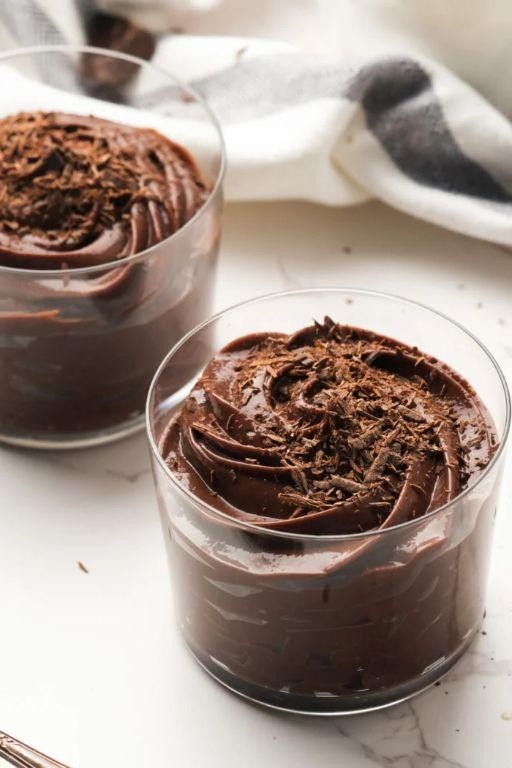
Folding the day’s quiet into the kitchen, I find myself reaching for the deep, complex notes of Belgian chocolate—a dessert that feels less like a recipe and more like a slow, deliberate ritual of indulgence. It’s a moment suspended in cocoa and cream, where each step is a gentle promise of the velvety richness to come.
Serving: 6 | Pre Time: 25 minutes | Cooking Time: 0 minutes
Ingredients
– 8 ounces high-quality Belgian dark chocolate (70% cacao), finely chopped
– 3 large pasture-raised eggs, separated
– ¼ cup granulated sugar
– 1 cup heavy cream, chilled
– 1 teaspoon pure vanilla extract
– Pinch of fine sea salt
Instructions
1. Place the finely chopped Belgian dark chocolate in a heatproof bowl set over a saucepan of gently simmering water, ensuring the bowl does not touch the water.
2. Stir the chocolate continuously with a silicone spatula until it melts completely and becomes smooth, about 5–7 minutes, then remove from heat and let cool slightly to room temperature.
3. In a separate medium bowl, whisk the egg yolks and granulated sugar vigorously until pale and thickened, about 3–4 minutes, to create a ribbon-like consistency that falls slowly from the whisk.
4. Gently fold the cooled melted chocolate into the egg yolk mixture using a folding motion until fully incorporated and uniform in color.
5. In a chilled large bowl, whip the heavy cream with an electric mixer on medium-high speed until it forms soft peaks, about 2–3 minutes, being careful not to over-whip to avoid a grainy texture.
6. Add the pure vanilla extract and a pinch of fine sea salt to the whipped cream, then fold it gently into the chocolate mixture in two additions to maintain airiness.
7. In another clean, dry bowl, whisk the egg whites with a clean whisk attachment until they form stiff peaks, about 4–5 minutes, ensuring no trace of yolk is present for optimal volume.
8. Fold the whipped egg whites into the chocolate-cream mixture delicately until no white streaks remain, working slowly to preserve the mousse’s light structure.
9. Divide the mousse evenly among six serving glasses or ramekins, tapping each gently on the counter to remove any air bubbles.
10. Cover the servings with plastic wrap and refrigerate for at least 4 hours, or ideally overnight, to allow the flavors to meld and the texture to set firmly.
Decadently smooth and luxuriously rich, this mousse settles into a cloud-like consistency that melts on the tongue with deep cocoa notes. Serve it chilled in elegant coupes, perhaps garnished with a dusting of cocoa powder or a few fresh raspberries for a bright contrast to its dark, indulgent heart.
Flemish Beef Stew
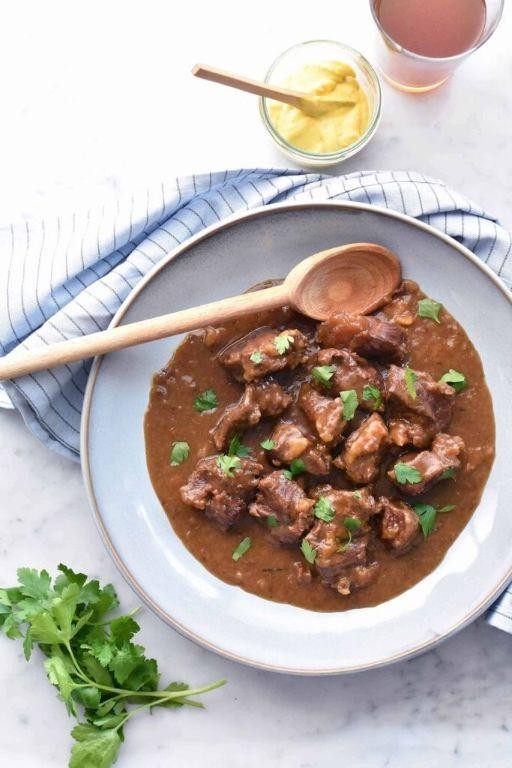
Cradling a bowl of Flemish beef stew feels like holding a piece of winter’s quiet heart—a slow-simmered, deeply comforting embrace where time itself becomes the most essential ingredient, transforming simple cuts into something profoundly tender and rich.
Serving: 4 | Pre Time: 25 minutes | Cooking Time: 2 hours 30 minutes
Ingredients
– 2 lbs beef chuck roast, cut into 1-inch cubes
– 3 tbsp clarified butter
– 2 large yellow onions, thinly sliced
– 2 cloves garlic, minced
– 2 tbsp all-purpose flour
– 12 oz dark Belgian ale
– 2 cups beef stock
– 2 tbsp Dijon mustard
– 2 tbsp dark brown sugar
– 2 bay leaves
– 4 sprigs fresh thyme
– 1 tbsp apple cider vinegar
– Kosher salt and freshly ground black pepper
Instructions
1. Pat the beef chuck cubes completely dry with paper towels and season generously on all sides with kosher salt and freshly ground black pepper.
2. Heat the clarified butter in a large Dutch oven over medium-high heat until it shimmers, about 2 minutes.
3. Working in batches to avoid overcrowding, sear the beef cubes for 3–4 minutes per side until a deep brown crust forms; transfer to a plate and set aside.
4. Reduce the heat to medium and add the thinly sliced onions to the pot, cooking for 8–10 minutes while stirring occasionally until they are softened and begin to caramelize.
5. Stir in the minced garlic and cook for 1 minute until fragrant.
6. Sprinkle the all-purpose flour over the onions and garlic, stirring constantly for 2 minutes to cook out the raw flour taste and form a roux.
7. Gradually pour in the dark Belgian ale, using a wooden spoon to scrape up any browned bits from the bottom of the pot.
8. Add the beef stock, Dijon mustard, dark brown sugar, bay leaves, and fresh thyme sprigs, stirring to combine.
9. Return the seared beef and any accumulated juices to the pot, ensuring the meat is submerged in the liquid.
10. Bring the stew to a gentle simmer, then reduce the heat to low, cover the pot, and let it cook undisturbed for 2 hours.
11. After 2 hours, remove the lid and stir in the apple cider vinegar; continue to simmer uncovered for an additional 30 minutes to allow the sauce to thicken slightly.
12. Discard the bay leaves and thyme sprigs, then taste and adjust seasoning with additional salt and pepper if needed.
13. Let the stew rest off the heat for 10 minutes before serving to allow the flavors to meld further.
A final stir reveals a stew where the beef yields to the slightest pressure, having absorbed the ale’s malty depth and the mustard’s gentle tang. Serve it ladled over a mound of buttery mashed potatoes or alongside a crusty baguette to soak up every last drop of the glossy, onion-thickened sauce—a humble dish transformed into a celebration of patience.
Belgian Sugar Waffles
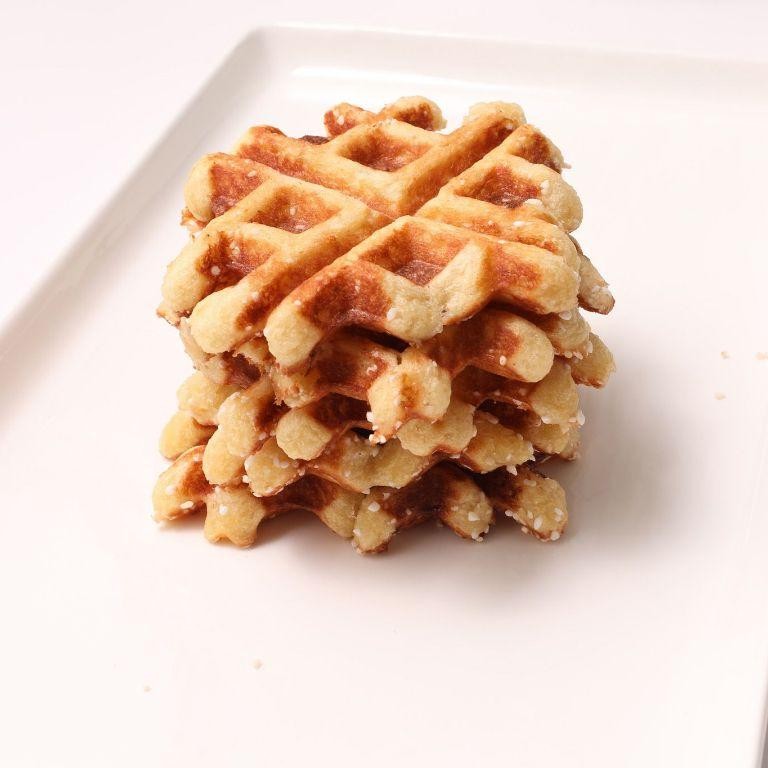
Floating through the kitchen on this quiet evening, the memory of Brussels’ cobblestone streets returns—the scent of caramelized sugar and warm yeast drifting from street carts, a simple pleasure that feels both distant and immediate. These waffles carry that nostalgic warmth, their crisp edges and tender centers a testament to patience and gentle technique.
Serving: 6 | Pre Time: 90 minutes | Cooking Time: 20 minutes
Ingredients
– 2 cups all-purpose flour, sifted
– 1/4 cup granulated sugar
– 1/4 cup pearl sugar
– 1/2 cup unsalted butter, clarified and cooled to 75°F
– 3 pasture-raised eggs, lightly beaten
– 1 cup whole milk, warmed to 110°F
– 1 packet active dry yeast (2 1/4 teaspoons)
– 1/2 teaspoon fine sea salt
– 1 teaspoon pure vanilla extract
Instructions
1. In a small bowl, combine the warmed whole milk and active dry yeast, stirring gently until fully dissolved; let it rest for 5 minutes until frothy.
2. In a large mixing bowl, whisk together the sifted all-purpose flour, granulated sugar, and fine sea salt until evenly incorporated.
3. Create a well in the center of the dry ingredients and pour in the yeast mixture, lightly beaten pasture-raised eggs, clarified butter, and pure vanilla extract.
4. Using a wooden spoon, stir the mixture from the center outward until a sticky dough forms, about 2 minutes; avoid overmixing to keep the texture light.
5. Cover the bowl with a damp kitchen towel and let the dough rise in a warm, draft-free area for 1 hour, or until it doubles in size—this slow fermentation develops deeper flavor.
6. Gently fold the pearl sugar into the risen dough until just distributed, being careful not to deflate the air pockets.
7. Preheat a Belgian waffle iron to 375°F, lightly brushing the plates with clarified butter to prevent sticking.
8. Scoop 1/2 cup of dough onto the center of the iron, close the lid, and cook for 4–5 minutes until golden brown and crisp; the pearl sugar will caramelize, creating a glossy finish.
9. Transfer each waffle to a wire rack immediately to maintain crispness, repeating with the remaining dough and brushing the iron with butter as needed.
10. Serve warm, allowing the waffles to cool slightly so the caramelized sugar sets into a delicate crunch.
Kneaded with time, these waffles emerge with a crackling exterior that gives way to a cloud-like interior, the pearl sugar melting into pockets of molten sweetness. Enjoy them plain to savor the buttery notes, or drizzle with dark chocolate for a richer contrast—either way, they hold the quiet magic of a winter morning, best shared slowly over coffee.
Belgian Rabbit in Prune Sauce

Under the soft glow of the kitchen light, as the evening settles in, there’s a quiet comfort in preparing a dish that feels both ancient and immediate, a slow-simmered stew that carries the warmth of tradition into the present moment.
Serving: 4 | Pre Time: 25 minutes | Cooking Time: 90 minutes
Ingredients
– 2.5 lbs pasture-raised rabbit, cut into 8 serving pieces
– 1 tbsp clarified butter
– 1 large yellow onion, finely diced
– 2 cloves garlic, minced
– 1 cup pitted prunes, halved
– 1 cup dry red wine
– 2 cups low-sodium chicken stock
– 2 sprigs fresh thyme
– 1 bay leaf
– 1 tbsp all-purpose flour
– 2 tbsp unsalted butter, softened
– Kosher salt and freshly ground black pepper
Instructions
1. Pat the rabbit pieces completely dry with paper towels and season generously on all sides with kosher salt and freshly ground black pepper.
2. Heat the clarified butter in a large Dutch oven over medium-high heat until it shimmers, about 2 minutes.
3. Sear the rabbit pieces in a single layer, without crowding, for 4-5 minutes per side until a deep golden-brown crust forms; work in batches if necessary and transfer seared pieces to a plate.
4. Reduce the heat to medium and add the diced onion to the pot, sautéing for 6-8 minutes until translucent and just beginning to caramelize at the edges.
5. Stir in the minced garlic and cook for 1 minute until fragrant, being careful not to let it burn.
6. Deglaze the pot with the red wine, using a wooden spoon to scrape up any browned bits from the bottom, and simmer for 4 minutes to reduce slightly.
7. Return the seared rabbit and any accumulated juices to the pot, then add the halved prunes, chicken stock, thyme sprigs, and bay leaf.
8. Bring the liquid to a bare simmer, then cover the pot, reduce the heat to low, and braise for 75 minutes until the rabbit is fork-tender.
9. While the rabbit braises, make a beurre manié by mashing the softened unsalted butter with the all-purpose flour in a small bowl until it forms a smooth paste.
10. After braising, use tongs to transfer the rabbit and prunes to a serving platter, tenting loosely with foil to keep warm.
11. Discard the thyme sprigs and bay leaf from the braising liquid, then bring the sauce to a gentle simmer over medium heat.
12. Whisk small pieces of the beurre manié into the simmering sauce, one at a time, until fully incorporated and the sauce has thickened to a glossy, coating consistency, about 3-4 minutes.
13. Taste the sauce and adjust seasoning with a final pinch of salt if needed, then pour it over the plated rabbit and prunes.
Comforting in its depth, the rabbit yields effortlessly to the fork, its richness perfectly balanced by the sweet-tart prunes and the velvety, wine-infused sauce. For a complete meal, serve it over a bed of buttery mashed potatoes or creamy polenta to soak up every last drop, perhaps with a simple green salad on the side to cut through the richness.
Belgian Stoemp with Sausage
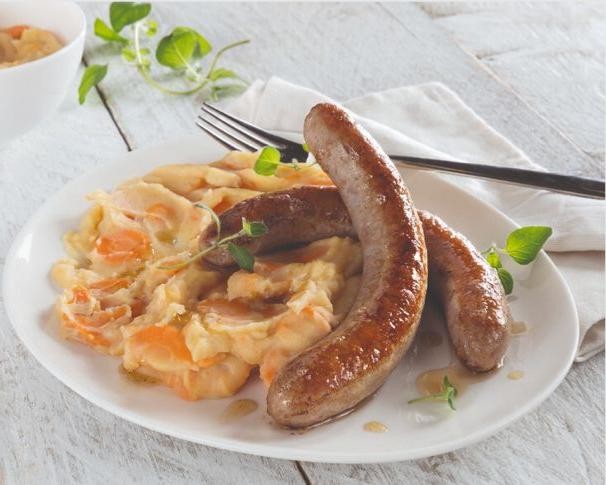
Huddled in the kitchen’s quiet warmth, I find myself returning to the simple, earthy comfort of Belgian stoemp—a humble mash of potatoes and root vegetables, enriched with cream and butter, then paired with seared sausages. It feels like a gentle embrace on a winter evening, each spoonful grounding and deeply satisfying. This version, with its caramelized onions and crisp sausage, is my favorite way to welcome the season’s stillness.
Serving: 4 | Pre Time: 20 minutes | Cooking Time: 40 minutes
Ingredients
– 1½ pounds Yukon Gold potatoes, peeled and quartered
– 1 large parsnip, peeled and cut into ½-inch chunks
– 3 tablespoons unsalted butter, divided
– 1 large yellow onion, thinly sliced
– ¾ cup heavy cream, warmed
– 1 tablespoon whole-grain mustard
– 4 pork bratwurst sausages
– 2 tablespoons extra-virgin olive oil
– Kosher salt and freshly ground black pepper
Instructions
1. Place the quartered potatoes and parsnip chunks in a large pot, cover with cold water by 1 inch, and add 1 tablespoon of kosher salt.
2. Bring to a boil over high heat, then reduce to a simmer and cook until the vegetables are fork-tender, about 20–25 minutes.
3. While the vegetables cook, melt 1 tablespoon of unsalted butter in a skillet over medium-low heat.
4. Add the thinly sliced onion and cook, stirring occasionally, until deeply golden and caramelized, about 15–20 minutes.
5. In a separate skillet, heat the extra-virgin olive oil over medium heat.
6. Add the pork bratwurst sausages and cook, turning occasionally, until browned on all sides and cooked through, about 10–12 minutes.
7. Drain the cooked potatoes and parsnip, then return them to the pot over low heat for 1 minute to evaporate excess moisture.
8. Mash the vegetables with a potato masher until smooth but with some texture.
9. Stir in the warmed heavy cream, remaining 2 tablespoons of unsalted butter, whole-grain mustard, and caramelized onions until fully incorporated.
10. Season the stoemp generously with kosher salt and freshly ground black pepper.
11. Serve the stoemp immediately, topped with the seared sausages.
The stoemp should be luxuriously creamy yet retain a rustic texture from the parsnip, with the mustard adding a subtle tang that cuts through the richness. For a beautiful presentation, spoon it into shallow bowls, nestle the sausages on top, and finish with a drizzle of the pan juices from the skillet.
Belgian Apple Tart
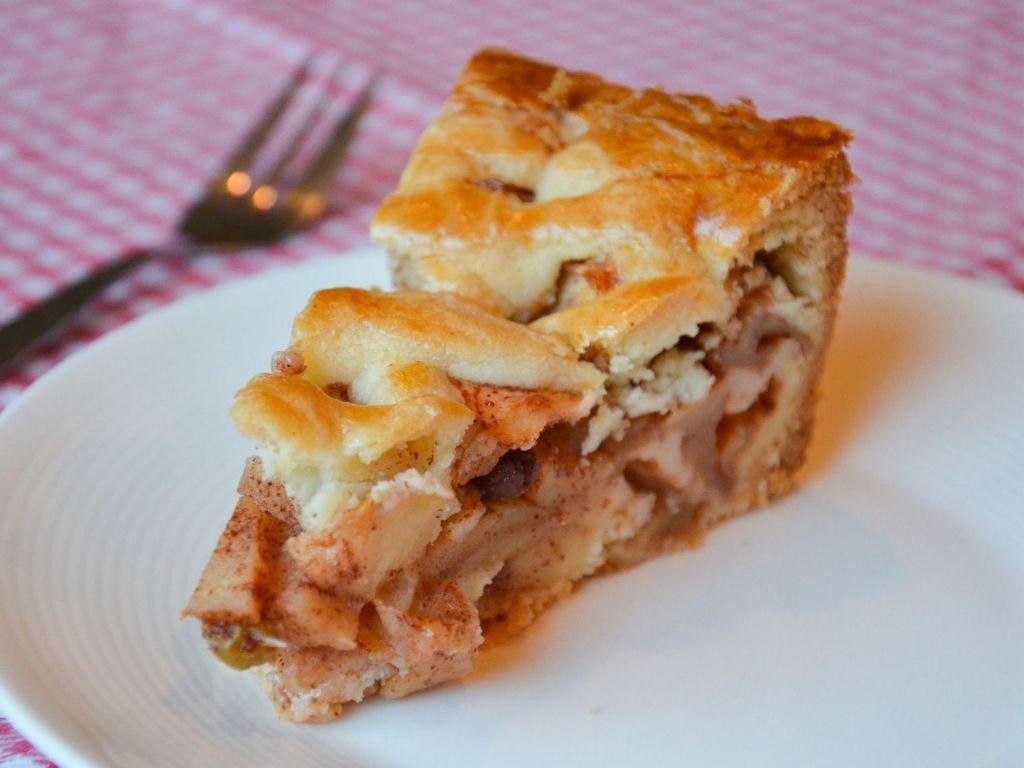
Musing on this quiet December evening, as the last light fades, I find myself drawn to the simple, rustic comfort of baking. There’s a particular solace in the slow, methodical process of transforming humble apples into a golden, fragrant tart, a tradition that feels both timeless and deeply personal.
Serving: 8 | Pre Time: 30 minutes | Cooking Time: 45 minutes
Ingredients
– 1 ¼ cups all-purpose flour, sifted
– ½ cup granulated sugar
– ¼ teaspoon fine sea salt
– ½ cup unsalted European-style butter, chilled and cubed
– 3 tablespoons ice water
– 4 large Granny Smith apples, peeled, cored, and thinly sliced
– ¼ cup light brown sugar, firmly packed
– 1 teaspoon ground Ceylon cinnamon
– ¼ teaspoon freshly grated nutmeg
– 1 tablespoon clarified butter, melted
– 1 large pasture-raised egg, lightly beaten
– 2 tablespoons turbinado sugar
Instructions
1. In a large mixing bowl, combine the sifted all-purpose flour, granulated sugar, and fine sea salt.
2. Add the chilled, cubed unsalted European-style butter to the dry ingredients.
3. Using a pastry blender or your fingertips, work the butter into the flour mixture until it resembles coarse crumbs with some pea-sized pieces remaining.
4. Drizzle the ice water over the mixture, one tablespoon at a time, while stirring with a fork just until the dough begins to clump together.
5. Tip: Handle the dough as little as possible to prevent the butter from melting and ensure a flaky crust.
6. Gather the dough into a ball, flatten it into a disk, wrap tightly in plastic wrap, and refrigerate for exactly 30 minutes to allow the gluten to relax.
7. While the dough chills, in a separate bowl, toss the thinly sliced Granny Smith apples with the firmly packed light brown sugar, ground Ceylon cinnamon, and freshly grated nutmeg until evenly coated.
8. Preheat your oven to 375°F (190°C) and position a rack in the center.
9. On a lightly floured surface, roll the chilled dough out into a 12-inch circle, about ⅛-inch thick.
10. Carefully transfer the dough to a 9-inch tart pan with a removable bottom, gently pressing it into the edges and trimming any excess.
11. Arrange the seasoned apple slices in concentric circles over the dough, slightly overlapping them.
12. Evenly brush the arranged apples with the melted clarified butter.
13. Tip: Brushing with clarified butter prevents burning and promotes an even, golden sheen.
14. Fold the excess dough edges over the outer rim of the apples to create a rustic border.
15. Lightly brush the folded dough edges with the beaten pasture-raised egg.
16. Sprinkle the entire surface, including the crust, with the turbinado sugar for a sparkling, crisp finish.
17. Tip: Turbinado sugar adds texture and caramelization without dissolving like granulated sugar.
18. Bake the tart on the center rack at 375°F (190°C) for 40-45 minutes, or until the crust is deeply golden brown and the apples are tender when pierced with a fork.
19. Remove the tart from the oven and allow it to cool completely in the pan on a wire rack for at least 1 hour before serving.
When the tart has cooled, the crust yields a satisfying, buttery crunch that contrasts with the soft, spiced apples within. Each slice offers a warm, caramelized sweetness, perfect for serving slightly warmed with a dollop of crème fraîche or a scoop of vanilla bean ice cream to complement its rustic elegance.
Belgian Witloof Salad

Holding a pale, tightly furled head of Belgian witloof, its ivory leaves cool against my palm, I’m reminded how winter’s quiet gifts often hide the most delicate flavors. This salad coaxes out its gentle bitterness, balancing it with toasted nuts and a bright, citrus-kissed dressing to create something quietly celebratory.
Serving: 4 | Pre Time: 20 minutes | Cooking Time: 8 minutes
Ingredients
– 2 medium heads Belgian witloof (chicory), trimmed and leaves separated
– 1/2 cup raw walnut halves
– 1/4 cup cold-pressed extra virgin olive oil
– 2 tbsp freshly squeezed lemon juice
– 1 tsp Dijon mustard
– 1/4 tsp fine sea salt
– 1/8 tsp freshly cracked black pepper
– 2 oz Parmigiano-Reggiano cheese, shaved with a vegetable peeler
Instructions
1. Preheat your oven to 350°F (177°C) and line a small baking sheet with parchment paper.
2. Arrange the walnut halves in a single layer on the prepared baking sheet.
3. Toast the walnuts in the preheated oven for 6–8 minutes, until fragrant and lightly golden, then transfer immediately to a plate to cool completely. Tip: Toasting nuts unlocks their oils and deepens flavor—watch closely to prevent burning.
4. In a small mixing bowl, combine the cold-pressed extra virgin olive oil, freshly squeezed lemon juice, Dijon mustard, fine sea salt, and freshly cracked black pepper.
5. Whisk the dressing vigorously for about 30 seconds, until fully emulsified and slightly thickened.
6. Place the separated Belgian witloof leaves in a large salad bowl.
7. Pour the emulsified dressing over the witloof leaves.
8. Using salad tongs, gently toss the leaves until each one is lightly and evenly coated with the dressing. Tip: Handle the delicate witloof leaves gently to avoid bruising and maintain their crisp texture.
9. Roughly chop the cooled toasted walnut halves into smaller pieces.
10. Scatter the chopped toasted walnuts and the shaved Parmigiano-Reggiano cheese over the dressed witloof leaves.
11. Give the salad one final, very gentle toss to distribute the walnuts and cheese. Tip: Adding cheese and nuts last prevents them from becoming soggy and ensures distinct textures in each bite.
Leaves yield a satisfying crunch that contrasts with the creamy, salty cheese shavings, while the toasted walnuts add a warm, earthy depth. For a playful twist, serve individual portions on chilled plates or garnish with edible flowers like nasturtiums to echo the peppery notes.
Belgian Meatballs in Cherry Beer Sauce
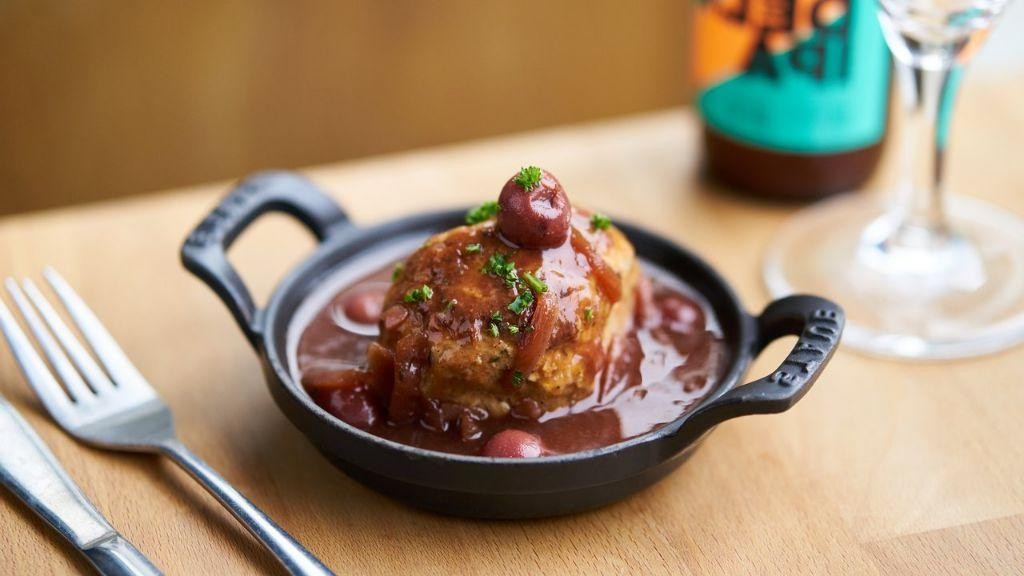
Gently, as the afternoon light fades on this winter’s eve, I find myself drawn to the quiet comfort of the kitchen, to the slow, deliberate process of creating something that feels both nourishing and celebratory. The rich, savory aroma of meat browning and the deep, fruity notes of a dark beer reducing into a sauce are a meditation in themselves, a perfect prelude to a cozy evening. This dish, with its roots in Belgian tradition, transforms simple ingredients into a deeply satisfying meal that seems to slow time itself.
Serving: 4 | Pre Time: 20 minutes | Cooking Time: 40 minutes
Ingredients
– 1 lb ground beef chuck (80/20 blend)
– 1/2 cup panko breadcrumbs
– 1/4 cup whole milk, at room temperature
– 1 large pasture-raised egg, lightly beaten
– 2 tbsp finely minced yellow onion
– 1 tbsp Dijon mustard
– 1 tsp kosher salt
– 1/2 tsp freshly ground black pepper
– 1/4 tsp freshly grated nutmeg
– 2 tbsp clarified butter
– 1 tbsp all-purpose flour
– 12 oz Belgian kriek (cherry lambic) beer
– 1 cup beef stock
– 2 tbsp cherry preserves
– 1 tbsp red wine vinegar
– 2 tbsp heavy cream
– 2 tbsp chopped fresh flat-leaf parsley
Instructions
1. In a large mixing bowl, combine the panko breadcrumbs and whole milk, allowing them to soak for 5 minutes until the milk is fully absorbed.
2. To the soaked breadcrumbs, add the ground beef chuck, lightly beaten egg, minced yellow onion, Dijon mustard, kosher salt, black pepper, and grated nutmeg.
3. Using your hands, gently mix the ingredients until just combined, being careful not to overwork the meat, which can lead to tough meatballs.
4. Portion the mixture into 16 equal pieces and roll each into a smooth, compact ball about 1 1/2 inches in diameter.
5. In a large, heavy-bottomed skillet or Dutch oven, heat the clarified butter over medium heat until it shimmers.
6. Working in batches to avoid crowding, add the meatballs and cook for 8-10 minutes, turning frequently, until evenly browned on all sides and cooked through; transfer to a clean plate.
7. To the same skillet, add the all-purpose flour to the remaining fat and cook, stirring constantly with a wooden spoon, for 90 seconds to form a light brown roux.
8. Gradually whisk in the Belgian kriek beer, scraping up any browned bits from the bottom of the pan, followed by the beef stock and cherry preserves.
9. Bring the sauce to a gentle simmer over medium-low heat and cook for 15-20 minutes, stirring occasionally, until reduced by one-third and slightly thickened.
10. Whisk in the red wine vinegar and heavy cream, then return the meatballs to the skillet, spooning the sauce over them.
11. Reduce the heat to low, cover the skillet, and let the meatballs simmer gently in the sauce for 10 minutes to allow the flavors to meld.
12. Remove from heat, stir in the chopped fresh parsley, and serve immediately.
Here, the tender, well-seasoned meatballs offer a savory contrast to the luxuriously velvety sauce, which carries the complex, tart-sweet essence of cherries and malt. For a delightful presentation, serve them over a bed of creamy mashed potatoes or buttered egg noodles to soak up every last drop of the rich, aromatic sauce.
Belgian Seafood Croquettes

Evenings like this, with the light fading gently outside, I find myself drawn to recipes that feel like a quiet celebration—dishes that unfold slowly, inviting you to savor each step. Belgian seafood croquettes are just that: a tender, golden-crisp embrace of the sea, perfect for a reflective moment at the kitchen counter.
Serving: 4 | Pre Time: 30 minutes | Cooking Time: 15 minutes
Ingredients
– 1/2 cup unsalted butter
– 3/4 cup all-purpose flour
– 1 cup whole milk, warmed to 110°F
– 1/2 teaspoon freshly grated nutmeg
– 1/2 pound raw shrimp, peeled, deveined, and finely chopped
– 1/4 pound cooked lump crabmeat, picked over for shells
– 2 tablespoons finely chopped fresh parsley
– 1 teaspoon fine sea salt
– 1/2 teaspoon freshly ground white pepper
– 2 large pasture-raised eggs, lightly beaten
– 1 cup panko breadcrumbs
– 2 cups vegetable oil, for frying
– 1/4 cup clarified butter, for browning
Instructions
1. Melt the unsalted butter in a medium saucepan over medium-low heat until fully liquid and just beginning to foam, about 3 minutes.
2. Whisk in the all-purpose flour all at once to form a smooth roux, cooking while stirring constantly until it turns a pale golden color and smells nutty, about 2 minutes.
3. Gradually pour in the warmed whole milk, whisking vigorously to prevent lumps, until the mixture thickens into a cohesive béchamel sauce, about 3–4 minutes.
4. Remove the saucepan from the heat and stir in the freshly grated nutmeg, then fold in the finely chopped raw shrimp, lump crabmeat, finely chopped fresh parsley, fine sea salt, and freshly ground white pepper until evenly distributed.
5. Spread the seafood mixture onto a parchment-lined baking sheet into an even layer, about 1/2-inch thick, and refrigerate uncovered until firm to the touch, about 20 minutes.
6. Shape the chilled mixture into 12 equal cylinders, each about 2 inches long and 1 inch in diameter, using lightly dampened hands to prevent sticking.
7. Dredge each cylinder first in the lightly beaten pasture-raised eggs, letting excess drip off, then roll thoroughly in the panko breadcrumbs to coat completely, pressing gently to adhere.
8. Heat the vegetable oil and clarified butter in a deep skillet over medium heat until it reaches 350°F on a deep-fry thermometer, ensuring an even golden fry.
9. Fry the croquettes in batches of 4, without crowding, until deeply golden brown and crisp on all sides, about 2–3 minutes per batch, turning once with tongs for even coloring.
10. Transfer the fried croquettes to a wire rack set over a baking sheet to drain, sprinkling lightly with additional sea salt while still hot to enhance flavor.
Softly crisp on the outside with a creamy, briny interior, these croquettes offer a delicate contrast that feels both comforting and elegant. Serve them warm with a simple lemon wedge or alongside a lightly dressed arugula salad for a complete, quietly satisfying meal.
Belgian Leek and Potato Soup

Remembering the quiet winter evenings of my childhood, I find myself drawn to the humble comfort of a simmering pot, where earthy leeks and starchy potatoes meld into something deeply nourishing. This Belgian leek and potato soup, with its velvety texture and subtle sweetness, feels like a warm embrace on a cold December night, a simple yet profound reminder of how basic ingredients can transform into soul-satisfying fare.
Serving: 4 | Pre Time: 15 minutes | Cooking Time: 35 minutes
Ingredients
– 2 tablespoons clarified butter
– 3 large leeks, white and light green parts only, thinly sliced
– 2 cloves garlic, minced
– 1 pound Yukon Gold potatoes, peeled and diced into ½-inch cubes
– 4 cups low-sodium vegetable broth
– 1 cup heavy cream
– ½ teaspoon freshly ground white pepper
– 1 teaspoon fine sea salt
– Fresh chives, finely chopped, for garnish
Instructions
1. In a large Dutch oven over medium-low heat, melt 2 tablespoons of clarified butter until it shimmers lightly, about 2 minutes.
2. Add 3 large leeks, thinly sliced, and sauté gently, stirring occasionally, until they are softened and translucent but not browned, approximately 8–10 minutes.
3. Stir in 2 cloves of minced garlic and cook for 1 minute until fragrant, being careful not to let it burn.
4. Tip: For a deeper flavor, allow the leeks to sweat slowly without browning to develop their natural sweetness.
5. Add 1 pound of diced Yukon Gold potatoes and 4 cups of low-sodium vegetable broth to the pot, ensuring the potatoes are fully submerged.
6. Increase the heat to medium-high and bring the mixture to a gentle boil, then reduce to a simmer and cook uncovered for 20 minutes, or until the potatoes are fork-tender.
7. Tip: Simmering uncovered helps concentrate the flavors without overcooking the vegetables.
8. Carefully transfer the soup in batches to a blender and purée until completely smooth, or use an immersion blender directly in the pot for ease.
9. Return the puréed soup to the pot over low heat and stir in 1 cup of heavy cream, ½ teaspoon of freshly ground white pepper, and 1 teaspoon of fine sea salt.
10. Heat the soup gently for 5 minutes, stirring occasionally, until it is warmed through but not boiling to prevent the cream from curdling.
11. Tip: For a silkier texture, strain the soup through a fine-mesh sieve after blending to remove any fibrous bits from the leeks.
12. Ladle the soup into bowls and garnish with freshly chopped chives just before serving.
A silky, pale green elixir awaits, with a velvety mouthfeel that coats the spoon and a delicate balance of sweet leeks and earthy potatoes. Serve it warm in shallow bowls, perhaps with a drizzle of extra virgin olive oil or a sprinkle of crispy fried leek ribbons for added texture, making it a versatile centerpiece for a cozy holiday meal or a quiet weeknight supper.
Belgian Pears in Syrup
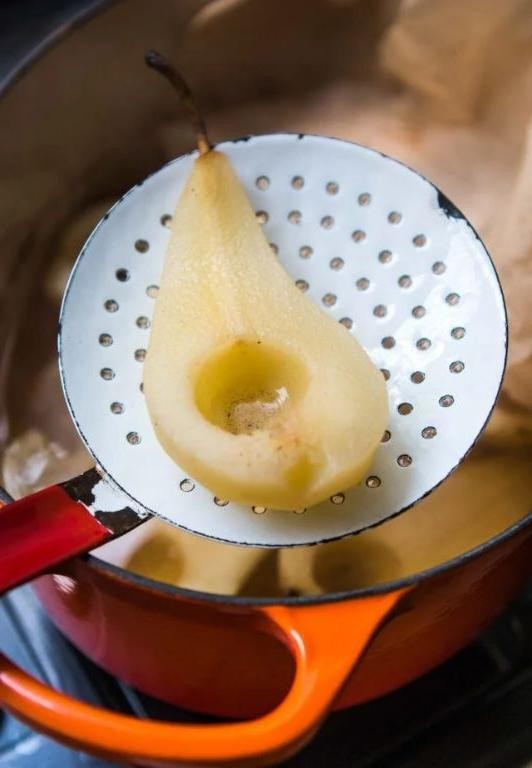
Frosted windows frame the quiet kitchen as winter settles in, and today I find myself drawn to a simple, comforting ritual—transforming humble pears into something softly luxurious. This Belgian tradition of poaching fruit in syrup feels like preserving a moment of stillness, a gentle simmer that fills the house with the warm scent of vanilla and spice.
Serving: 4 | Pre Time: 15 minutes | Cooking Time: 25 minutes
Ingredients
– 4 firm Bosc pears, peeled with stems intact
– 1 cup granulated sugar
– 2 cups filtered water
– 1 whole vanilla bean, split lengthwise
– 1 cinnamon stick
– 2 whole star anise pods
– 1 tablespoon freshly squeezed lemon juice
Instructions
1. Combine 1 cup granulated sugar and 2 cups filtered water in a heavy-bottomed saucepan.
2. Scrape the seeds from 1 split vanilla bean into the saucepan, then add the pod.
3. Add 1 cinnamon stick and 2 whole star anise pods to the saucepan.
4. Heat the mixture over medium heat, stirring occasionally with a wooden spoon, until the sugar fully dissolves (about 3–4 minutes).
5. Bring the syrup to a gentle simmer (approximately 200°F), then reduce heat to maintain a bare simmer.
6. Carefully lower 4 peeled Bosc pears into the syrup using a slotted spoon, ensuring they’re fully submerged.
7. Poach the pears for 20–25 minutes, turning them halfway through with the spoon for even cooking.
8. Test doneness by inserting a paring knife into the thickest part of a pear—it should slide in with slight resistance.
9. Remove the saucepan from heat and stir in 1 tablespoon freshly squeezed lemon juice.
10. Let the pears cool completely in the syrup (about 1 hour) to allow flavors to meld.
11. Transfer the pears and syrup to an airtight container, discarding the whole spices and vanilla pod.
12. Refrigerate for at least 4 hours before serving to fully develop the flavors.
Gently spoon the chilled pears into shallow bowls, their flesh now translucent and yielding to the slightest pressure. The syrup has thickened to a delicate amber gloss that carries whispers of vanilla and warm spice—perfect drizzled over vanilla bean ice cream or layered with crème fraîche and crushed amaretti cookies for textural contrast.
Belgian Chicory and Ham Rolls
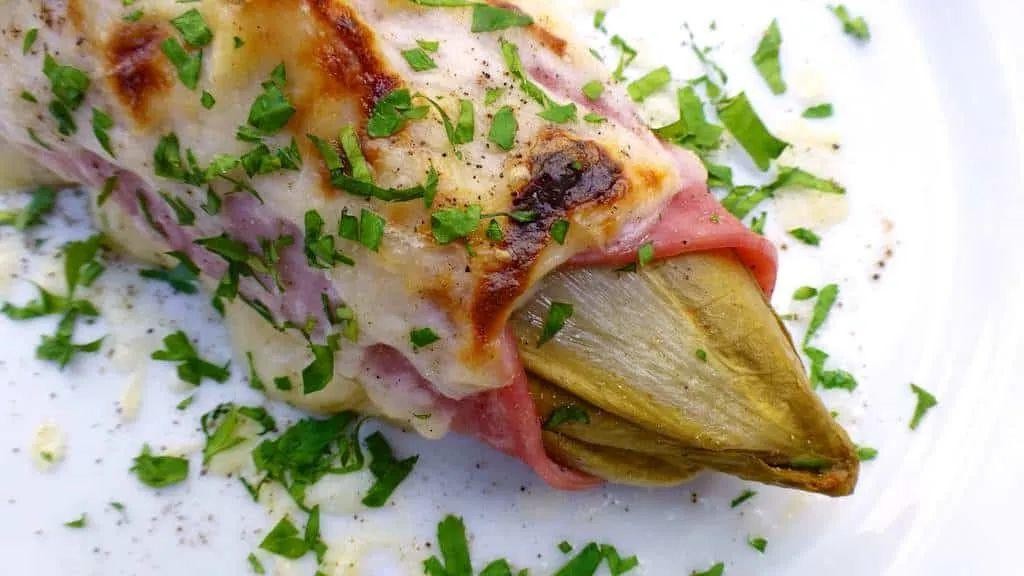
Maybe it’s the quiet hush of a winter afternoon, the way the light slants low and gold, that makes me crave something both comforting and elegant. These rolls, with their gentle bitterness and savory heart, feel like a whispered secret, a small indulgence to prepare slowly, with care, as the day softens around you.
Serving: 4 | Pre Time: 20 minutes | Cooking Time: 25 minutes
Ingredients
– 4 large heads of Belgian chicory (endive)
– 8 thin slices of Black Forest ham
– 2 tablespoons clarified butter
– 1 cup heavy cream
– 1/2 cup finely grated Gruyère cheese
– 1/4 teaspoon freshly grated nutmeg
– 1/4 teaspoon fine sea salt
– 1/8 teaspoon freshly ground white pepper
Instructions
1. Preheat your oven to 375°F (190°C).
2. Carefully trim the root end from each chicory head and remove any wilted outer leaves.
3. Bring a large pot of salted water to a rolling boil.
4. Blanch the chicory heads for 5 minutes to soften them slightly, then transfer immediately to an ice bath to halt the cooking process and preserve their color.
5. Gently pat each blanched chicory head completely dry with paper towels to ensure the ham adheres properly.
6. Wrap each dried chicory head snugly with two slices of Black Forest ham, overlapping the slices to fully encase the vegetable.
7. Melt the clarified butter in a large oven-safe skillet over medium heat.
8. Place the ham-wrapped chicory rolls seam-side down in the skillet and sear for 2-3 minutes per side, or until the ham is lightly golden and crisp.
9. In a separate bowl, whisk together the heavy cream, grated Gruyère, nutmeg, sea salt, and white pepper until just combined.
10. Pour the cream mixture evenly over and around the seared rolls in the skillet.
11. Transfer the skillet to the preheated oven and bake, uncovered, for 15-18 minutes, or until the sauce is bubbling vigorously and has thickened slightly.
12. Remove the skillet from the oven and let the rolls rest in the sauce for 5 minutes before serving to allow the flavors to meld.
Buttery and rich, the sauce clings to the rolls, its creaminess a perfect foil to the chicory’s lingering, sophisticated bitterness. The ham provides a salty, smoky counterpoint that makes each bite complex. For a striking presentation, serve them directly from the skillet, garnished with a final whisper of nutmeg over the glossy sauce.
Belgian Dark Chocolate Truffles
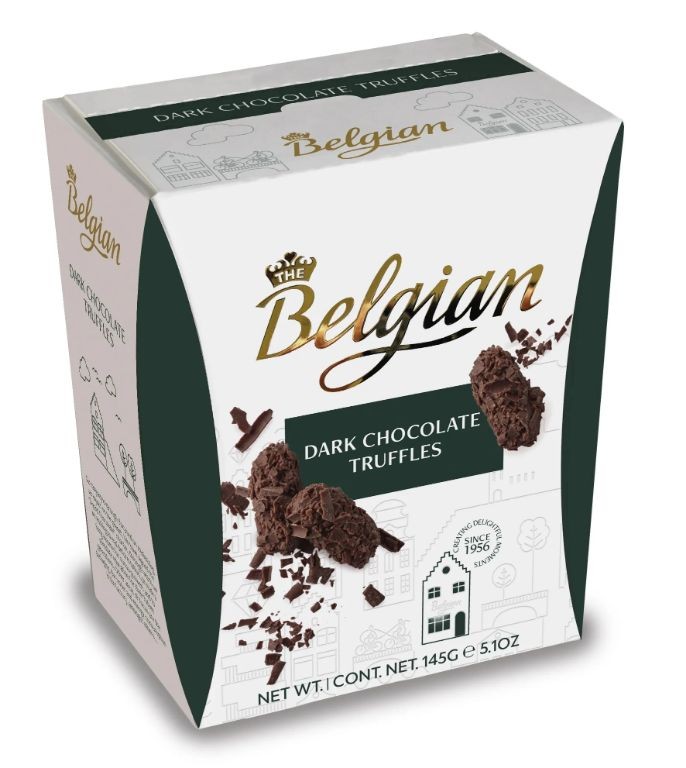
Wandering through the quiet evening, the rich aroma of dark chocolate seems to linger in the air, a gentle reminder of the simple, profound pleasure found in crafting something by hand. There’s a certain magic in transforming a few humble ingredients into these velvety spheres—a quiet, meditative process that yields pure indulgence. Let’s begin.
Serving: 24 truffles | Pre Time: 30 minutes | Cooking Time: 5 minutes
Ingredients
– 8 ounces high-quality Belgian dark chocolate (70% cacao), finely chopped
– 1/2 cup heavy cream (36-40% milkfat)
– 2 tablespoons unsalted European-style butter, at room temperature
– 1/4 cup Dutch-process cocoa powder, for coating
Instructions
1. Place the finely chopped Belgian dark chocolate into a medium heatproof bowl.
2. In a small saucepan, heat the heavy cream over medium heat until it reaches 185°F and small bubbles form around the edges, about 3-4 minutes; do not let it boil.
3. Pour the hot cream over the chopped chocolate and let it stand undisturbed for 2 minutes to allow the chocolate to melt gently.
4. Using a silicone spatula, stir the mixture slowly from the center outward until it becomes a smooth, glossy ganache, about 1 minute.
5. Add the room-temperature unsalted butter to the ganache and stir until fully incorporated and the mixture is silky, about 30 seconds.
6. Cover the bowl tightly with plastic wrap, pressing it directly onto the surface of the ganache to prevent a skin from forming.
7. Refrigerate the ganache until it is firm enough to scoop but not hard, about 1 hour and 30 minutes; test by pressing lightly with a finger—it should hold an indent without sticking.
8. Using a melon baller or small spoon, portion the ganache into 24 equal pieces, each about 1 teaspoon in size.
9. Roll each portion quickly between your palms into a smooth, round ball, working swiftly to prevent melting from hand heat.
10. Place the Dutch-process cocoa powder in a shallow dish and roll each truffle in the powder until evenly coated, tapping off any excess.
11. Arrange the finished truffles in a single layer on a parchment-lined baking sheet and refrigerate for 15 minutes to set fully.
12. Transfer the truffles to an airtight container, separating layers with parchment paper, and store in the refrigerator until ready to serve.
Soft and yielding to the bite, these truffles reveal a deep, complex chocolate flavor with a hint of bitterness balanced by the cream’s richness. Serve them slightly chilled alongside a glass of port or crumbled over vanilla bean ice cream for an elegant dessert twist.
Summary
Tantalizingly diverse, these 20 Belgian recipes offer a delicious journey from comforting stews to delicate waffles. We hope this collection inspires you to bring a taste of Belgium into your kitchen! Give a recipe a try, then leave a comment telling us your favorite. If you enjoyed this roundup, please share it on Pinterest to help other home cooks discover these delights. Happy cooking!