On a crisp January morning, as dawn’s light filters through my kitchen window, I’m transported to the bustling street markets of Southeast Asia, where the sizzle of woks heralds the day. This dish, a humble yet profound fusion, marries the comforting familiarity of American breakfast with the vibrant, umami-rich traditions of Asian street food, creating a cross-cultural symphony on a plate that awakens the senses and honors global culinary journeys.
Why This Recipe Works
- The high-heat stir-fry technique locks in flavors and creates a delightful smoky wok hei (breath of the wok) essence, reminiscent of Hong Kong’s dai pai dong stalls.
- Using day-old noodles ensures they fry without becoming mushy, a tip borrowed from Thai street vendors who prize texture.
- The scrambled eggs are cooked separately first, then reintroduced, a method from Chinese cuisine that keeps them tender and distinct.
- A splash of rice vinegar at the end adds a bright, balancing acidity, inspired by Vietnamese pho garnishes.
- The combination of soy sauce and oyster sauce builds a deep, savory base layer, echoing the complex profiles found in Malaysian hawker centers.
Ingredients
- 8 ounces dried lo mein or ramen noodles
- 3 large eggs, lightly beaten
- 2 tablespoons vegetable oil, divided
- 1 medium yellow onion, thinly sliced
- 3 cloves garlic, minced
- 1 cup thinly sliced napa cabbage
- 1 medium carrot, julienned
- 2 green onions, sliced, whites and greens separated
- 3 tablespoons soy sauce
- 1 tablespoon oyster sauce
- 1 teaspoon toasted sesame oil
- 1 teaspoon rice vinegar
- 1/2 teaspoon freshly ground black pepper
- Optional garnish: cilantro leaves, chili crisp
Equipment Needed
- Large pot or Dutch oven
- Colander
- Large wok or 12-inch skillet
- Spatula or wok spatula
- Mixing bowls
- Measuring spoons and cups
- Cutting board and chef’s knife
Instructions
Step 1: Prepare the Noodles and Eggs
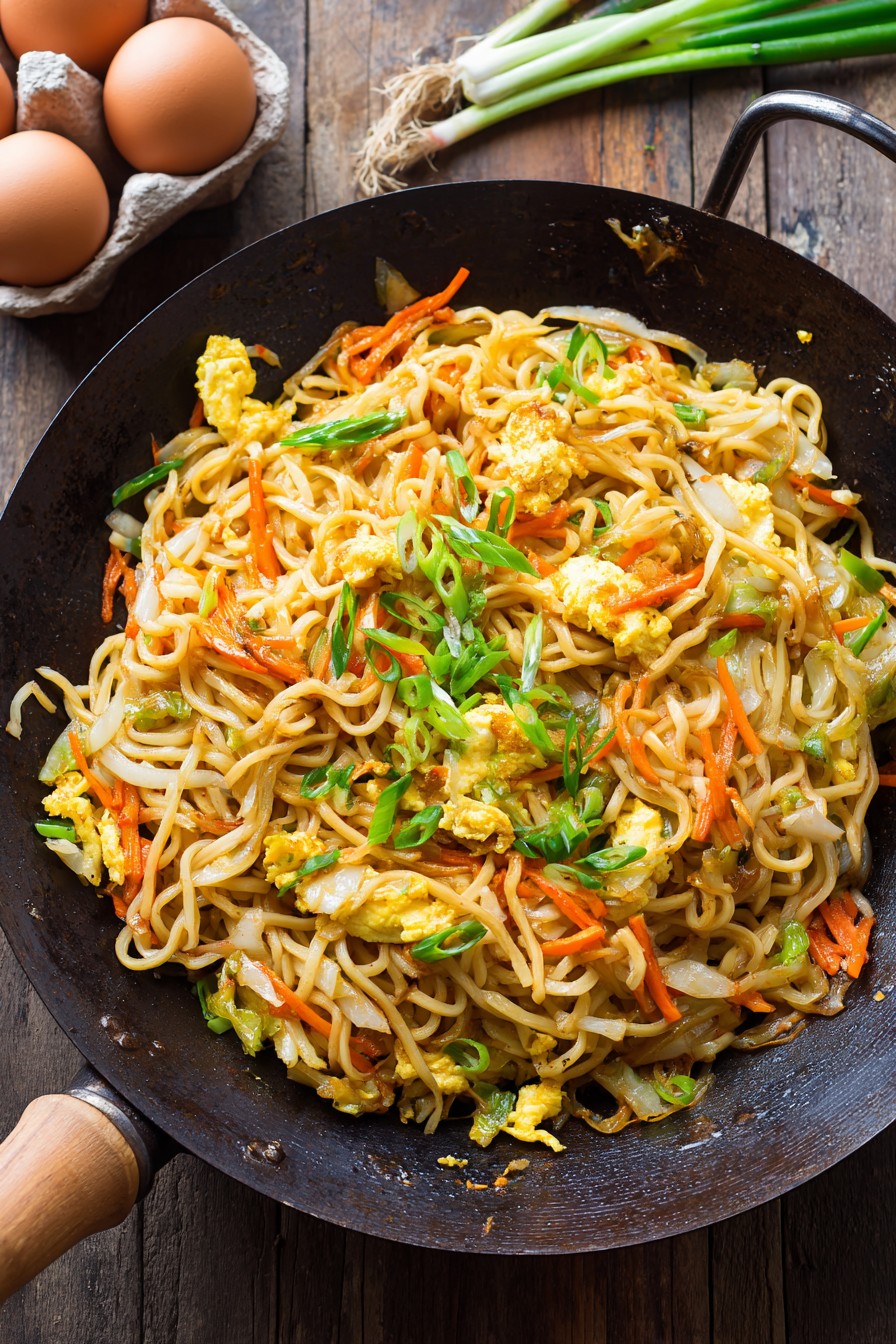
Begin by bringing a large pot of water to a rolling boil, salting it generously like the Mediterranean sea. Add the dried noodles and cook according to package directions until al dente, typically 4-5 minutes, stirring occasionally to prevent sticking. Drain immediately in a colander and rinse under cool running water to halt the cooking process, a technique I learned from Tokyo ramen masters who value perfect noodle texture. Toss the noodles with 1/2 tablespoon of vegetable oil to prevent clumping, then set aside. In a separate bowl, lightly beat the three eggs until just combined, with small bubbles forming on the surface—this ensures fluffy, tender curds when cooked. Tip: For best results, use day-old cooked noodles or spread freshly cooked noodles on a baking sheet to dry for 30 minutes; this reduces moisture and improves fryability.
Step 2: Scramble the Eggs to Perfection
Heat your wok or large skillet over medium-high heat until a drop of water sizzles and evaporates instantly. Add 1 tablespoon of vegetable oil, swirling to coat the surface evenly. Pour in the beaten eggs and let them set for 10-15 seconds without stirring, allowing the bottom to form a golden crust. Then, using your spatula, gently push the eggs from the edges toward the center, creating large, soft curds—think of the delicate folds in a French omelette. Cook for another 45-60 seconds, until the eggs are just set but still slightly moist, then immediately transfer to a clean plate. This quick removal prevents overcooking, preserving that custardy texture prized in Cantonese egg dishes. The eggs should be tender and slightly runny in spots, as they’ll finish cooking later.
Step 3: Sauté the Aromatics and Vegetables
Return the wok to high heat and add the remaining 1/2 tablespoon of vegetable oil. Once shimmering, add the thinly sliced onion and cook for 2-3 minutes, stirring frequently, until they begin to soften and turn translucent at the edges. Add the minced garlic and white parts of the green onions, stirring constantly for 30-45 seconds until fragrant—be careful not to burn the garlic, as it can turn bitter. Next, incorporate the julienned carrot and napa cabbage, stir-frying for 3-4 minutes until the cabbage wilts slightly but retains a crisp-tender bite, reminiscent of the vibrant veggie mixes in Korean japchae. The vegetables should be brightly colored and slightly caramelized at the edges.
Step 4: Combine and Fry the Noodles
Add the prepared noodles to the wok, tossing vigorously with the vegetables to combine. Increase the heat to its highest setting and let the noodles sit undisturbed for 60-90 seconds to develop a slight char on the bottom, evoking the smoky essence of Singaporean hawker stalls. Then, drizzle the soy sauce and oyster sauce evenly over the noodles, tossing continuously for 2-3 minutes until the noodles are uniformly coated and heated through. The sauces should sizzle and reduce slightly, creating a glossy sheen. Tip: For extra depth, splash a bit of sauce down the sides of the hot wok to caramelize it before mixing in.
Step 5: Final Assembly and Seasoning
Return the scrambled eggs to the wok, gently folding them into the noodle mixture to avoid breaking the curds. Add the green parts of the green onions, toasted sesame oil, rice vinegar, and black pepper, tossing everything together for 30-45 seconds just to warm through. The rice vinegar adds a bright, tangy finish, inspired by the balancing act in Vietnamese cuisine. Taste and adjust seasoning if needed—the dish should be savory with a hint of sweetness from the caramelized vegetables. Tip: For a restaurant-style presentation, garnish with fresh cilantro leaves and a drizzle of chili crisp just before serving.
Tips and Tricks
For an authentic touch, use a carbon steel wok seasoned over time—it develops a non-stick patina and enhances flavor. If using fresh noodles, reduce initial cooking time by 1-2 minutes. To make this dish ahead, prepare components separately and combine just before serving; reheating in a hot wok restores texture. For a vegetarian version, substitute oyster sauce with mushroom stir-fry sauce or additional soy sauce. Experiment with different noodles like udon or soba for varied textures. Always have all ingredients prepped and within reach (mise en place) before heating the wok, as stir-frying happens quickly. A splash of Shaoxing wine added with the sauces can deepen the umami profile, echoing Chinese culinary traditions.
Recipe Variations
- Spicy Szechuan Twist: Add 1-2 teaspoons of Szechuan peppercorns (toasted and ground) and 1 tablespoon of chili bean paste with the sauces for a numbing, fiery kick reminiscent of Chengdu street food.
- Mediterranean Fusion: Swap soy and oyster sauces for 2 tablespoons of lemon juice, 1/4 cup of crumbled feta, and a handful of Kalamata olives, finished with fresh oregano—a nod to Greek breakfast flavors.
- Thai-Inspired Version: Incorporate 1 tablespoon of fish sauce, 1/2 cup of bean sprouts, and a squeeze of lime juice, garnished with crushed peanuts and Thai basil for Bangkok market vibes.
- Protein-Powered Upgrade: Stir-fry 1/2 cup of diced chicken, shrimp, or tofu with the aromatics before adding vegetables, drawing from Japanese yakisoba traditions.
- Breakfast Burrito Style: Serve the noodles wrapped in a warm flour tortilla with avocado slices and a dollop of salsa, blending Asian and Mexican morning rituals.
Frequently Asked Questions
Q: Can I use spaghetti instead of Asian noodles?
A: Absolutely! Spaghetti or linguine work well—cook al dente and rinse to mimic the texture. This substitution reflects Italian pasta traditions adapting to global flavors, though the dish may taste slightly less authentic.
Q: How do I prevent the noodles from sticking to the wok?
A: Ensure your wok is properly heated before adding oil, and use enough oil to coat. Stir frequently and avoid overcrowding. This technique is key in Chinese stir-frying to achieve that coveted wok hei without clumping.
Q: Is this recipe freezer-friendly?
A: It’s best enjoyed fresh, as freezing can alter the texture of eggs and noodles. However, you can store leftovers in the fridge for up to 2 days and reheat in a skillet to revive crispness.
Q: Can I make this gluten-free?
A: Yes, use gluten-free noodles and substitute soy sauce with tamari or coconut aminos. Oyster sauce can be replaced with a gluten-free stir-fry sauce, maintaining the umami depth.
Q: What’s the origin of egg fried noodles for breakfast?
A: This dish draws from Chinese chow mein and Japanese yakisoba, often eaten as street food in Asia. Its adaptation as breakfast blends these traditions with Western morning habits, symbolizing culinary globalization.
Summary
This breakfast egg fried noodles recipe weaves global culinary threads into a comforting morning dish, celebrating textures and flavors from Southeast Asia to your home kitchen with every savory, aromatic bite.
Breakfast Egg Fried Noodles
3
servings15
minutes15
minutesIngredients
Instructions
- 1 Cook noodles according to package directions until al dente, drain, rinse, and toss with 1/2 tablespoon oil. Beat eggs lightly.
- 2 Heat wok over medium-high, add 1 tablespoon oil, scramble eggs until just set, then transfer to a plate.
- 3 Return wok to high heat, add remaining oil, sauté onion for 2-3 minutes, add garlic and green onion whites for 30-45 seconds, then add carrot and cabbage for 3-4 minutes until crisp-tender.
- 4 Add noodles to wok, increase heat to high, let char for 60-90 seconds, then add soy sauce and oyster sauce, tossing for 2-3 minutes until coated.
- 5 Return eggs to wok, add green onion greens, sesame oil, rice vinegar, and pepper, toss for 30-45 seconds, garnish if desired, and serve immediately.