Musing on the world’s simplest yet most profound culinary pleasures, one dish consistently bridges continents and cultures: buttered egg noodles. From the cozy kitchens of Central Europe, where they’re known as ‘nudeln mit butter,’ to the bustling street stalls of Asia where similar wheat-based strands are tossed with fragrant fats, this humble combination speaks a universal language of comfort. Today, we embark on a journey to perfect this timeless staple, infusing it with the soulful simplicity that has made it a beloved canvas for flavors across the globe.
Why This Recipe Works
- Using a generous amount of salted butter creates a rich, emulsified sauce that clings perfectly to each noodle strand, delivering consistent flavor in every bite.
- Cooking the noodles in well-salted water until just al dente ensures they maintain a pleasant chewiness that contrasts beautifully with the silky butter coating.
- Reserving a cup of starchy pasta water allows you to adjust the sauce consistency, helping the butter emulsify into a creamy, cohesive coating rather than separating.
- Finishing with a final pat of cold butter off the heat adds a luxurious gloss and fresh butter flavor that elevates the dish from simple to sublime.
Ingredients
- 1 pound (16 ounces) dried egg noodles
- 8 tablespoons (1 stick) unsalted butter, divided
- 2 teaspoons fine sea salt for pasta water, plus more to taste
- 1/2 cup reserved starchy pasta water
- Freshly ground black pepper to taste
- 2 tablespoons chopped fresh parsley for garnish (optional)
Equipment Needed
- Large stockpot (6-8 quarts)
- Colander or spider strainer
- Tongs or pasta fork
- Large skillet or sauté pan (12-inch preferred)
- Measuring cups and spoons
- Liquid measuring cup for pasta water
Instructions
Prepare Your Pasta Water Foundation
Fill your large stockpot with 4-5 quarts of cold water—this ample volume prevents the noodles from sticking together as they cook. Place the pot over high heat and bring to a rolling boil, where bubbles vigorously break the surface. Once boiling, add 2 teaspoons of fine sea salt; the water should taste pleasantly salty, like a mild broth, which seasons the noodles from within. This technique, reminiscent of Italian ‘acqua ben salata,’ ensures your noodles carry flavor through their entire structure rather than relying solely on surface seasoning. As you wait for the boil, consider how this simple step connects you to pasta traditions from Rome to Budapest, where properly salted water is considered non-negotiable for perfect noodle texture and taste.
Cook the Noodles to Al Dente Perfection
Add the entire pound of dried egg noodles to the vigorously boiling salted water. Stir immediately with tongs or a pasta fork to separate the strands and prevent clumping. Cook according to package directions, typically 6-8 minutes, but begin testing for doneness at the 5-minute mark. The noodles should be tender yet firm to the bite—what Italians poetically call ‘al dente’ or ‘to the tooth.’ This texture provides the ideal foundation for butter to cling to, creating a satisfying mouthfeel that soft noodles cannot achieve. As they cook, notice how the water becomes cloudy with released starch, a valuable ingredient we’ll harness later. When perfectly cooked, immediately reserve 1/2 cup of this starchy liquid before draining, a technique borrowed from Roman pasta masters who understand this cloudy water’s magical emulsifying properties.
Create the Butter Emulsion Base
While the noodles cook, melt 6 tablespoons of the butter in your large skillet over medium-low heat. Swirl the pan occasionally as the butter melts, watching for it to become fully liquid and just beginning to foam—this indicates it’s hot enough to coat noodles but not so hot that it will brown or burn. The gentle heat preserves butter’s delicate flavor notes, from its creamy sweetness to subtle grassy undertones. This careful approach reflects French beurre monté techniques, where butter is warmed just enough to become sauce without breaking. As the butter melts, appreciate how this single ingredient has traveled from ancient Tibetan yak butter traditions to European dairy cultures, becoming a universal culinary connector that transforms simple carbohydrates into comforting sustenance.
Combine and Emulsify the Elements
Transfer the drained noodles directly into the skillet with the melted butter. Immediately add 1/4 cup of the reserved starchy pasta water. Using tongs, lift and toss the noodles vigorously, coating each strand with the butter mixture. The starchy water will help create a creamy emulsion that clings to the noodles rather than pooling at the bottom of the pan. Continue tossing for 1-2 minutes over medium heat until the sauce thickens slightly and coats the noodles uniformly. Notice how the transformation occurs—the butter and starch water marry into a silky coating that recalls both Hungarian nokedli and Japanese abura soba in its perfect cling. The sound of noodles hitting the pan should be a gentle sizzle, not a violent spatter, indicating proper temperature control.
Finish with Cold Butter and Seasoning
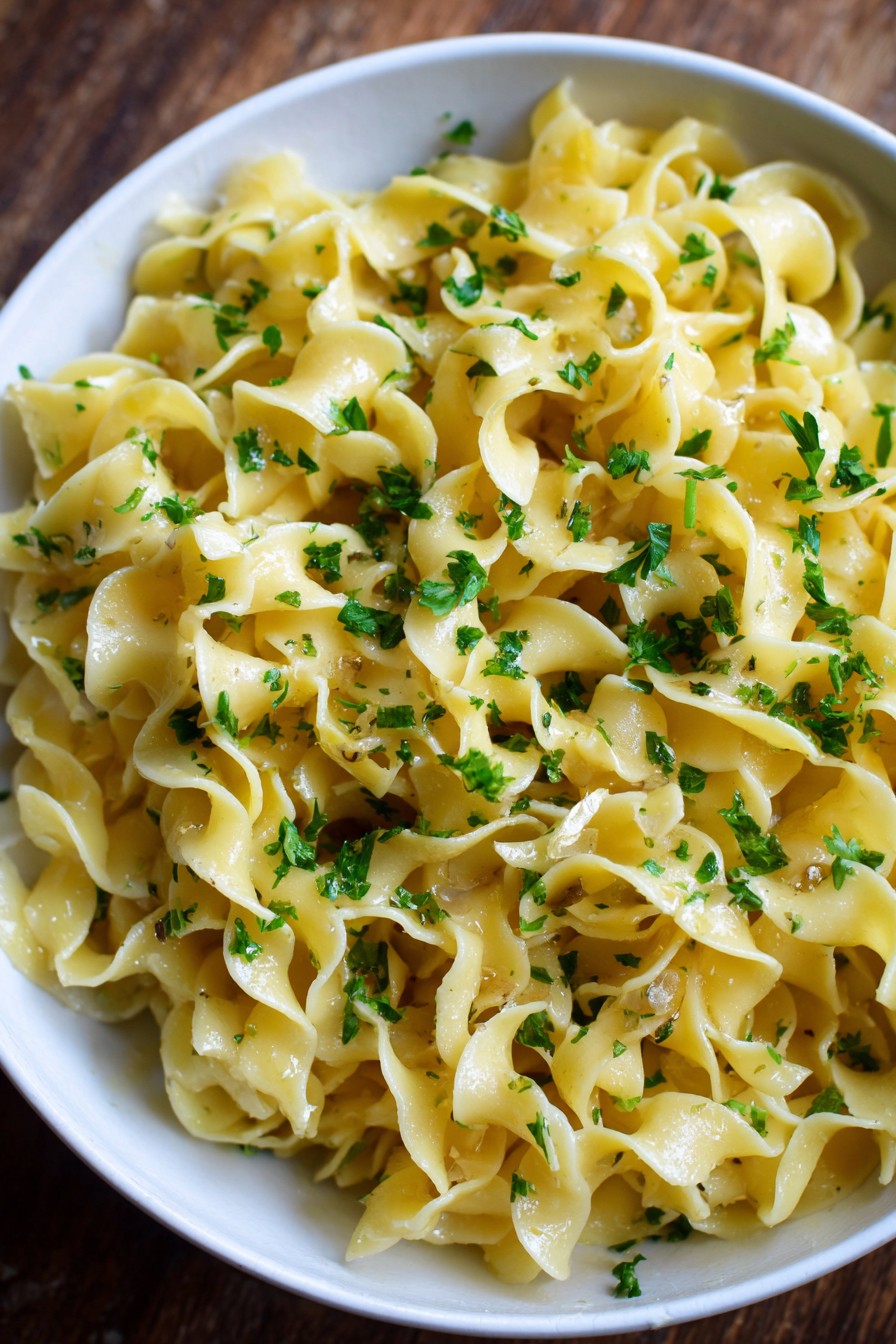
Remove the skillet from heat and add the remaining 2 tablespoons of cold butter, cut into small pieces. The residual heat will melt this final addition slowly, creating a fresh, glossy finish that brightens the dish—a technique inspired by French ‘monter au beurre.’ Season generously with freshly ground black pepper, which adds subtle heat and aromatic complexity. Taste and adjust salt if needed, remembering the noodles absorbed salt from the cooking water. For a vibrant finish, sprinkle with chopped fresh parsley if desired, adding color and a herbal note that references Middle Eastern noodle dishes. Serve immediately while steaming hot, appreciating how this simple combination has nourished generations from Alpine villages to American farmhouses, proving that true culinary artistry often lies in perfecting the fundamentals.
Tips and Tricks
For deeper flavor, consider browning half the butter before adding the noodles—this creates nutty, caramelized notes reminiscent of French beurre noisette. If using salted butter, reduce added salt by half and taste before final seasoning. For extra richness, substitute 2 tablespoons of butter with high-quality olive oil, introducing fruity notes that nod to Mediterranean pasta traditions. When reheating leftovers, add a splash of water or broth and warm gently over low heat to revive the emulsion. For restaurant-style presentation, use tongs to twirl portions into neat nests before serving. Experiment with different noodle shapes—wider pappardelle-style egg noodles will create a more substantial, Northern Italian-inspired dish, while thinner tagliatelle offers greater sauce adherence. Always use freshly ground black pepper rather than pre-ground for maximum aromatic impact.
Recipe Variations
- Herb-Infused Butter Noodles: Steep chopped fresh herbs (parsley, chives, dill) in the melted butter for 2 minutes before adding noodles, creating a garden-fresh version that channels Provençal flavors.
- Garlic Butter Egg Noodles: Add 3 minced garlic cloves to the butter during the last 30 seconds of melting, producing aromatic notes that recall Italian aglio e olio with an egg noodle twist.
- Lemon-Pepper Butter Noodles: Stir in 1 teaspoon lemon zest and 1/2 teaspoon cracked black pepper with the final butter, adding bright acidity that cuts through richness, inspired by Greek avgolemono principles.
- Brown Butter Sage Noodles: Cook butter until golden brown with 8 fresh sage leaves until crisp, creating nutty, earthy flavors that echo Northern Italian pumpkin ravioli accompaniments.
- Cheese-Enriched Butter Noodles: Fold in 1/2 cup grated Parmesan or Pecorino Romano with the final butter, adding salty umami depth that transforms the dish into a quick cacio e pepe variation.
Frequently Asked Questions
Q: Can I use fresh egg noodles instead of dried?
A: Absolutely! Fresh egg noodles typically cook in 2-3 minutes and require slightly less butter since they’re more tender. Reduce cooking water salt slightly as fresh noodles absorb seasoning more readily. The result will be exceptionally delicate, similar to German spätzle in texture.
Q: What’s the purpose of reserving pasta water?
A: The starchy water acts as an emulsifier, helping butter coat noodles evenly without separating. This technique, fundamental to Italian pasta-making, creates a silky sauce that clings perfectly. Without it, butter may pool at the bottom of your bowl.
Q: Can I make this dish ahead of time?
A: While best served immediately, you can prepare components ahead. Cook noodles until slightly underdone, toss with 1 tablespoon oil to prevent sticking, and refrigerate. Reheat gently with butter and a splash of water when ready to serve.
Q: What protein pairs well with buttered egg noodles?
A: These noodles beautifully accompany simply prepared proteins. Try roasted chicken (like French poulet rôti), pan-seared pork chops (German schnitzel-style), or sautéed mushrooms for a vegetarian option that channels Eastern European forest foraging traditions.
Q: Can I use margarine or oil instead of butter?
A: While butter provides signature flavor, olive oil creates a Mediterranean variation, and ghee offers rich, nutty notes. Margarine may work but lacks butter’s complexity. For dairy-free versions, try high-quality olive oil with a pinch of nutritional yeast for umami.
Summary
This globally inspired buttered egg noodle recipe transforms simple ingredients into comforting perfection through proper technique, from salted cooking water to emulsified butter sauce. It celebrates culinary traditions across continents while delivering consistently delicious results.
Buttered Egg Noodles
4
servings5
minutes15
minutesIngredients
Instructions
- 1 Bring 4-5 quarts water to a rolling boil in a large pot. Add 2 teaspoons salt.
- 2 Add egg noodles and cook according to package directions until al dente, 6-8 minutes. Reserve 1/2 cup pasta water before draining.
- 3 While noodles cook, melt 6 tablespoons butter in a large skillet over medium-low heat until just foaming.
- 4 Add drained noodles to skillet with 1/4 cup reserved pasta water. Toss vigorously for 1-2 minutes until sauce emulsifies and coats noodles.
- 5 Remove from heat. Add remaining 2 tablespoons cold butter and season with black pepper and additional salt if needed. Garnish with parsley if desired. Serve immediately.