Yielding to the aromatic allure of chai, this homemade latte recipe transforms simple ingredients into a wellness-focused beverage. You’ll discover how to craft a deeply satisfying drink that balances traditional spices with modern nutritional awareness, offering a comforting ritual that nourishes both body and soul.
Why This Recipe Works
- Uses whole spices for maximum flavor extraction and antioxidant benefits
- Combines black tea with warming spices like cinnamon and ginger for digestive support
- Employs a gentle simmering technique to preserve delicate spice oils
- Offers dairy-free alternatives without compromising creamy texture
- Balances natural sweetness to avoid blood sugar spikes
Ingredients
- 2 cups filtered water
- 2 tablespoons loose-leaf black tea (such as Assam or Darjeeling)
- 4 whole green cardamom pods, lightly crushed
- 2 whole cloves
- 1 cinnamon stick (about 3 inches long)
- 4 thin slices fresh ginger (about 1 tablespoon when minced)
- 1/4 teaspoon freshly grated nutmeg
- 1/4 teaspoon black peppercorns
- 2 cups unsweetened almond milk (or milk of choice)
- 2 tablespoons pure maple syrup (or sweetener of choice)
- 1/2 teaspoon pure vanilla extract
Equipment Needed
- Medium saucepan (2-3 quart capacity)
- Fine mesh strainer
- Measuring cups and spoons
- Knife and cutting board
- Microplane or grater for nutmeg
- Muddler or mortar and pestle (for crushing cardamom)
- Whisk or milk frother (optional)
Instructions
Prepare Your Spice Blend
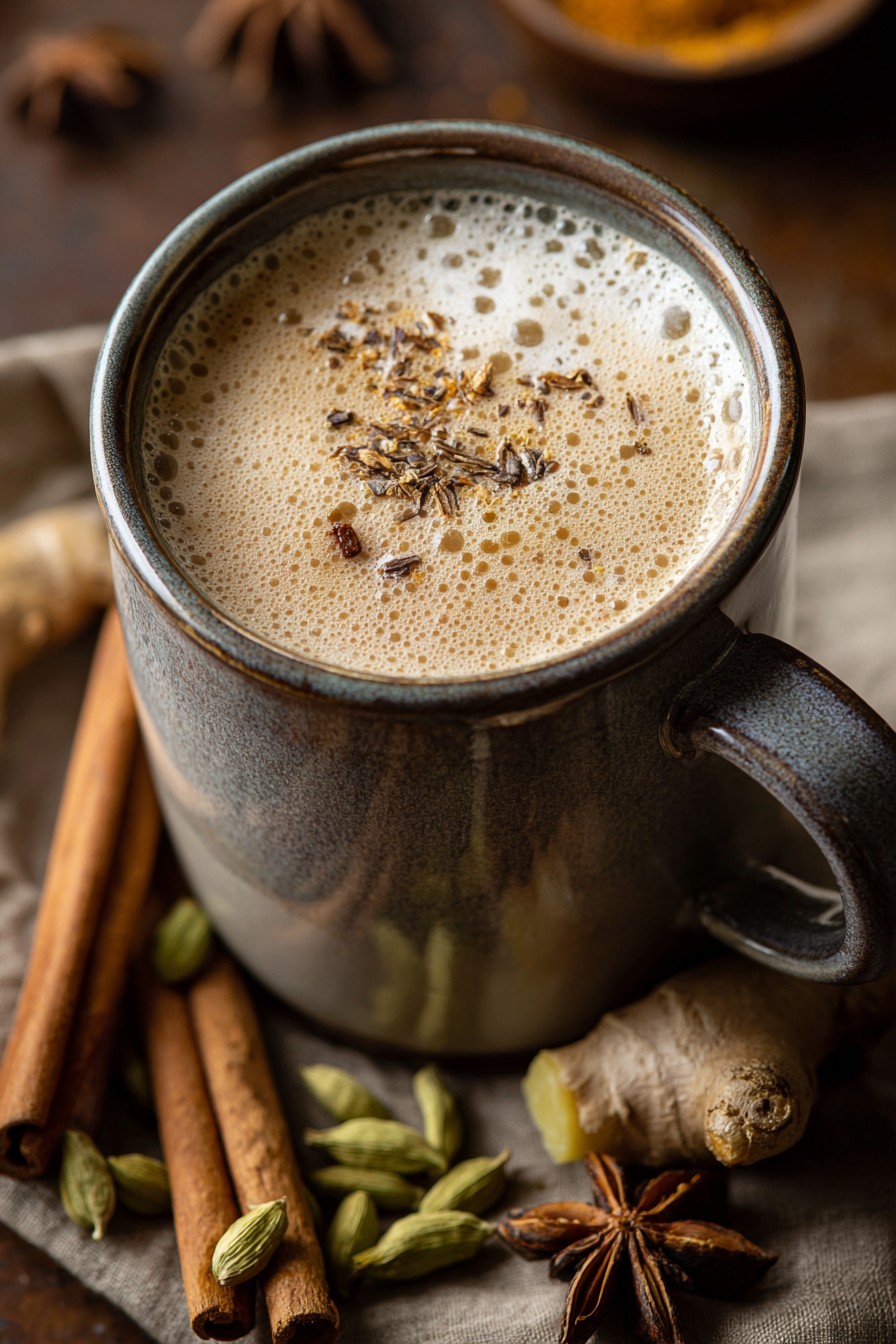
Begin by assembling your whole spices to create a balanced aromatic foundation. Take your 4 green cardamom pods and gently crush them using a muddler or the back of a spoon—this releases the essential oils within the seeds while keeping the pods intact for easy straining later. Combine these with 2 whole cloves, 1 cinnamon stick broken into pieces, 4 thin slices of fresh ginger (each about 1/8-inch thick), 1/4 teaspoon of freshly grated nutmeg, and 1/4 teaspoon of black peppercorns. The fresh ginger provides natural anti-inflammatory compounds called gingerols, while the cinnamon offers blood sugar-regulating benefits. Using whole spices rather than pre-ground versions ensures you’re getting the full spectrum of volatile oils and phytochemicals that contribute both flavor and health benefits. This careful preparation sets the stage for optimal extraction during the simmering process.
Simmer the Spice Infusion
Pour 2 cups of filtered water into your medium saucepan and add all the prepared spices. Place the saucepan over medium-high heat and bring the mixture to a gentle boil, which should take approximately 3-4 minutes. Once bubbles begin forming around the edges, immediately reduce the heat to low, maintaining a temperature between 180-190°F—you want to see small bubbles rising slowly rather than a rolling boil. Cover the saucepan with a lid and let the spices simmer gently for exactly 8 minutes. This controlled low-temperature simmer allows the water to extract the beneficial compounds from the spices without destroying delicate volatile oils. The water will transform from clear to a light amber color, and your kitchen will fill with the unmistakable aroma of warming spices. This slow extraction method maximizes both flavor complexity and the bioavailability of the spices’ antioxidant compounds.
Brew the Tea Base
After your spices have simmered for 8 minutes, it’s time to introduce the tea. Add 2 tablespoons of loose-leaf black tea directly to the simmering spice water. The robust Assam or Darjeeling varieties work particularly well as they can stand up to the strong spice flavors without becoming bitter. Immediately remove the saucepan from heat, cover it again, and let the tea steep for exactly 4 minutes. This off-heat steeping prevents the tea from developing bitter tannins while allowing the leaves to fully unfurl and release their complex flavors. The water temperature will naturally drop to around 160-170°F during this steeping period, which is ideal for black tea extraction. You’ll notice the liquid darkening to a rich mahogany color as the tea compounds mingle with the spice infusion. Tip: For a stronger tea flavor without increasing bitterness, you can increase the steeping time to 5 minutes, but never exceed 6 minutes as this will extract undesirable compounds.
Strain and Sweeten
Position your fine mesh strainer over a clean container or directly into your serving mugs. Carefully pour the chai concentrate through the strainer, pressing gently on the solids with the back of a spoon to extract every last drop of flavorful liquid. Discard the spent spices and tea leaves—they’ve given their all to create this aromatic base. To the strained chai concentrate, add 2 tablespoons of pure maple syrup. This natural sweetener provides a subtle caramel note that complements the spices beautifully while offering trace minerals like manganese and zinc. Alternatively, you could use 1-2 tablespoons of honey (for additional antimicrobial benefits) or 1-2 teaspoons of coconut sugar (for a lower glycemic impact). Stir thoroughly until the sweetener is completely dissolved. The concentrate should now be deeply aromatic with balanced sweetness—taste and adjust if needed, remembering that you’ll be diluting it with milk next.
Froth and Combine the Milk
Pour 2 cups of unsweetened almond milk into a separate saucepan and warm it over medium heat until it reaches 150-160°F, which typically takes 3-4 minutes. You’ll see steam rising and small bubbles forming around the edges, but the milk should not boil. For optimal frothing, you can use a handheld milk frother or whisk vigorously for 30-45 seconds until the milk develops a creamy foam. Add 1/2 teaspoon of pure vanilla extract to the warmed milk—this enhances the natural sweetness and adds aromatic depth. Divide the sweetened chai concentrate evenly between two large mugs (about 1 cup each), then slowly pour the frothed milk over the concentrate, holding back the foam with a spoon. Finally, spoon the remaining foam on top. The layering creates a beautiful presentation while allowing the drinker to experience the evolving flavors as they sip through the foam into the spiced tea below. Tip: For extra creaminess without dairy, try using oat milk, which naturally froths well due to its starch content.
Tips and Tricks
For optimal spice extraction, consider toasting your whole spices in a dry skillet over medium heat for 1-2 minutes before simmering—this enhances their aromatic oils. If you prefer a stronger ginger presence, increase to 6 slices and muddle them slightly before adding to the water. When making larger batches, you can prepare the chai concentrate up to 5 days in advance and store it refrigerated in an airtight container; simply reheat and add freshly frothed milk when ready to serve. For those monitoring caffeine intake, note that the 4-minute steeping time extracts approximately 40-50mg of caffeine per serving—you can reduce this to 2 minutes for a lighter caffeine content or use decaffeinated black tea. To create an iced version, brew the concentrate double-strength, sweeten while warm, then pour over ice and top with cold frothed milk.
Recipe Variations
- Golden Chai Latte: Replace black tea with 1 tablespoon turmeric powder and 1/2 teaspoon black pepper added during the spice simmering stage. The pepper enhances curcumin absorption from turmeric, creating an anti-inflammatory powerhouse beverage with a vibrant yellow hue.
- Adaptogenic Chai: Add 1 teaspoon ashwagandha powder and 1/2 teaspoon reishi mushroom powder to the milk while frothing. These adaptogens help support stress response and immune function, transforming your latte into a functional wellness drink.
- Protein-Packed Chai: Blend 1 scoop of vanilla plant-based protein powder into the warmed milk before frothing. This variation provides approximately 20 grams of complete protein, making it an excellent post-workout recovery beverage.
- Decaffeinated Evening Chai: Substitute the black tea with rooibos tea, which is naturally caffeine-free and rich in antioxidants. Add 1 star anise pod to the spice blend for additional licorice-like sweetness that complements rooibos’ natural notes.
- Dairy-Free Creamy Version: Use full-fat coconut milk instead of almond milk for an exceptionally rich texture. The medium-chain triglycerides in coconut milk provide sustained energy while the natural fats help with absorption of fat-soluble compounds from the spices.
Frequently Asked Questions
Q: Can I use tea bags instead of loose-leaf tea?
A: Absolutely. Substitute 2 black tea bags for the loose-leaf tea. However, loose-leaf typically offers better quality leaves and more complex flavor. If using bags, steep for the same 4 minutes but avoid squeezing them as this releases bitter compounds.
Q: How can I make this recipe sugar-free?
A: For a completely sugar-free version, omit the maple syrup and add 5-10 drops of liquid stevia or monk fruit extract to taste after straining. Alternatively, use 1-2 pitted dates blended into the warm milk for natural sweetness with fiber benefits.
Q: What’s the best milk alternative for frothing?
A: Oat milk generally froths most similarly to dairy milk due to its starch content. Look for “barista blend” versions of plant milks, which often contain added fats or stabilizers specifically designed for optimal frothing and heat stability.
Q: Can I make a larger batch of chai concentrate?
A: Yes, simply multiply all ingredients proportionally. The concentrate stores well in the refrigerator for up to 5 days. For longer storage (up to 3 months), freeze in ice cube trays and thaw as needed.
Q: Are there any spice substitutions for allergies?
A: If allergic to specific spices, you can omit them without compromising the base recipe. For cinnamon allergies, try using 1/4 teaspoon allspice. Cardamom can be replaced with 1/4 teaspoon coriander seeds for a different but complementary citrusy note.
Summary
This health-conscious chai latte recipe combines whole spices and quality tea for a beverage rich in antioxidants and digestive benefits. With customizable sweetness and dairy-free options, it offers a nourishing alternative to coffeehouse versions while supporting overall wellness through thoughtfully selected ingredients.
Homemade Chai Latte
2
servings5
minutes15
minutesIngredients
Instructions
- 1 Combine water and all spices in a saucepan. Bring to a boil, then reduce heat and simmer covered for 8 minutes.
- 2 Remove from heat, add tea leaves, cover, and steep for 4 minutes.
- 3 Strain the mixture through a fine mesh strainer into a container.
- 4 Add maple syrup to the strained liquid and stir until dissolved.
- 5 Warm almond milk to 150-160°F, add vanilla extract, and froth until creamy. Divide chai concentrate between two mugs and top with frothed milk.