Just as a blank canvas invites creativity, a bowl of creamy polenta welcomes endless possibilities. This Italian staple transforms humble cornmeal into a rich, comforting base. It requires minimal effort for maximum reward, making it an ideal weeknight side or elegant foundation for toppings.
Why This Recipe Works
- Uses a 4:1 liquid-to-cornmeal ratio for perfect creaminess without being thin.
- Simmers for 30 minutes, allowing the cornmeal to fully hydrate and soften.
- Incorporates butter and Parmesan at the end for a rich, savory finish.
- Starts with a quick boil, then reduces to a bare simmer to prevent sticking.
- Relies on coarse cornmeal for superior texture and authentic flavor.
Ingredients
- 4 cups water
- 1 cup coarse yellow cornmeal (polenta)
- 1 teaspoon fine sea salt
- 2 tablespoons unsalted butter
- 1/2 cup freshly grated Parmesan cheese
- Freshly ground black pepper, to taste
Equipment Needed
- Heavy-bottomed medium saucepan (3-quart capacity)
- Wooden spoon or sturdy whisk
- Measuring cups and spoons
- Grater for Parmesan cheese
Instructions
Step 1: Combine Water and Salt
Pour 4 cups of cold water into a heavy-bottomed medium saucepan. Add 1 teaspoon of fine sea salt. Place the saucepan over high heat. Bring the water to a rolling boil, which will take approximately 5 to 7 minutes. You will see large, vigorous bubbles breaking the surface consistently across the entire pot. This initial boil ensures the salt dissolves completely and prepares the liquid for the cornmeal. Using cold water from the tap is fine; there is no need for pre-heated or warm water. The heavy-bottomed pot is crucial as it distributes heat evenly, preventing hot spots that could cause the polenta to scorch later during the long simmer. Ensure your pot is large enough to accommodate the polenta as it bubbles during cooking without risk of overflow.
Step 2: Whisk in the Cornmeal
Once the water reaches a full, rolling boil, reduce the heat to medium. Take 1 cup of coarse yellow cornmeal and begin to add it to the boiling water in a very slow, steady stream. Use your other hand to whisk constantly and vigorously as you pour. This continuous whisking is critical to prevent the cornmeal from clumping together into lumps. Pouring slowly allows the individual grains to be separated by the water as they enter the pot. Continue whisking for about 1 full minute after all the cornmeal has been added. The mixture will look thin and milky at this stage. You should not see any dry pockets of cornmeal floating on the surface. Tip: For absolute lump prevention, you can combine the cornmeal with 1 cup of cold water in a separate bowl first to make a slurry, then whisk that into the boiling water.
Step 3: Simmer and Stir
After whisking, immediately reduce the heat to the lowest possible setting on your burner. The polenta should now maintain a bare simmer, with only a few small bubbles breaking the surface occasionally. Cover the pot partially, leaving about a 1-inch gap for steam to escape. Cook for 30 minutes, stirring thoroughly with a wooden spoon every 5 to 7 minutes. When you stir, scrape the bottom and sides of the pot completely to incorporate any polenta that may have started to set. The polenta will gradually thicken. After 30 minutes, it should be very thick, pull away from the sides of the pot slightly when stirred, and have a smooth, creamy consistency with no gritty texture. The total volume will have reduced noticeably.
Step 4: Incorporate Butter and Cheese
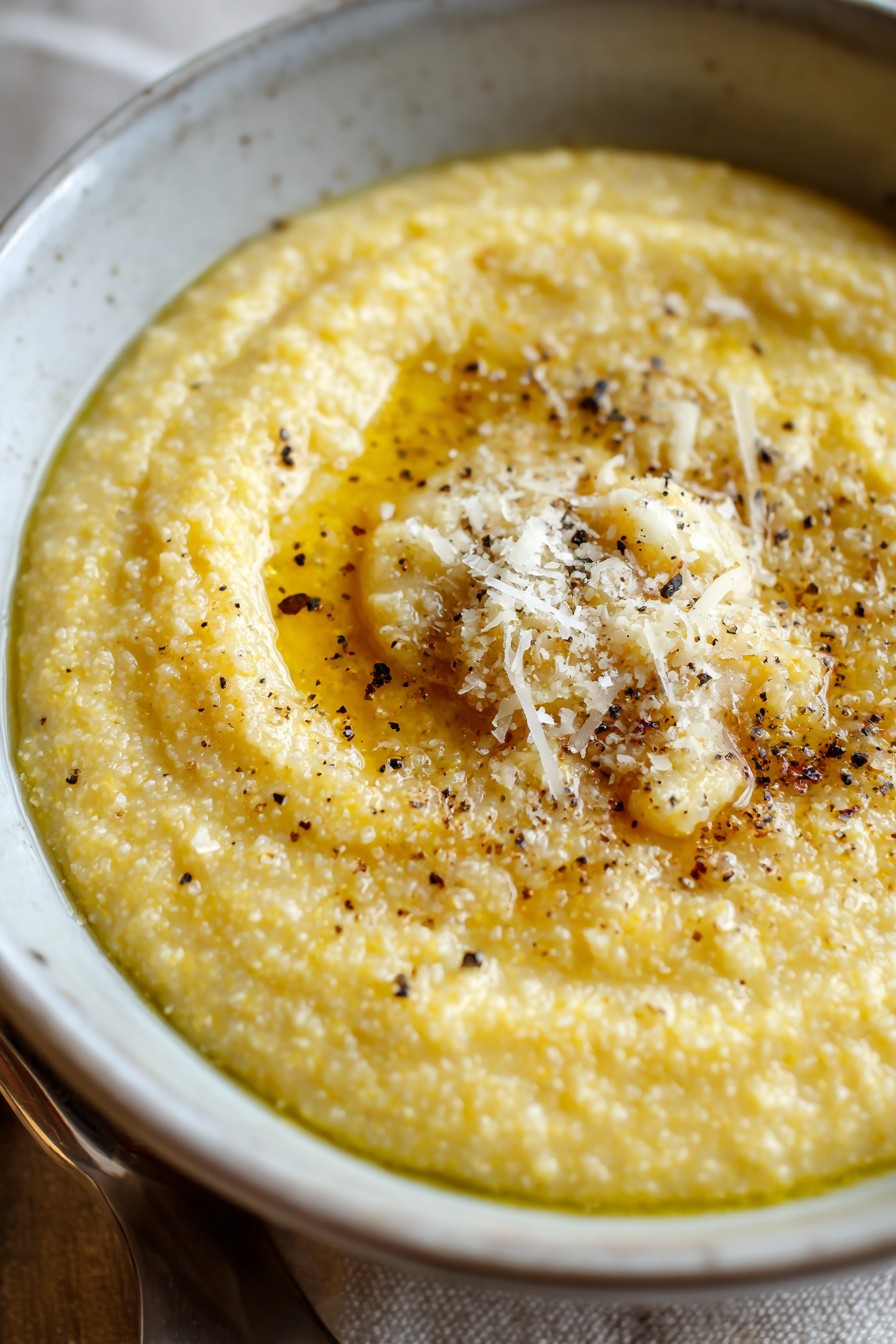
Remove the pot from the heat. Add 2 tablespoons of unsalted butter and 1/2 cup of freshly grated Parmesan cheese directly to the hot polenta. Stir vigorously with the wooden spoon until both the butter and cheese are fully melted and incorporated, which should take about 1 minute. The polenta will become glossier and even creamier. Taste the polenta and adjust the seasoning. Add freshly ground black pepper to your preference—start with 1/4 teaspoon and add more if desired. If it needs more salt, add a small pinch and stir it in. Tip: For the best flavor, use a high-quality, freshly grated Parmesan like Parmigiano-Reggiano. Pre-grated cheese often contains anti-caking agents that can make the polenta less smooth.
Step 5: Serve Immediately
Polenta is best served immediately after finishing, as it continues to thicken and firm up as it cools. Spoon the creamy polenta into warm, shallow bowls. It can be served as a simple side dish, or used as a base for other components. Classic pairings include sautéed mushrooms, a rich meat ragu, roasted vegetables, or simply a drizzle of good olive oil. If you must hold it for a short time, keep it covered in the pot off the heat; it will stay warm for about 15 minutes. To reheat leftovers, add a splash of water or milk and warm gently over low heat, stirring constantly. Tip: For an extra layer of flavor, stir in a tablespoon of chopped fresh herbs like rosemary or thyme along with the butter and cheese.
Tips and Tricks
For hands-free cooking, you can bake polenta. After whisking the cornmeal into boiling water, transfer it to a greased baking dish, cover tightly with foil, and bake at 350°F for 40-50 minutes, stirring once halfway through. This method requires less frequent stirring. If your polenta becomes too thick upon standing, loosen it by whisking in warm water, broth, or milk a tablespoon at a time until it reaches your desired consistency. For a dairy-free version, omit the butter and Parmesan. Finish with a generous drizzle of extra-virgin olive oil and a pinch of nutritional yeast for a cheesy flavor. Always use a coarse-ground cornmeal labeled specifically for polenta; fine cornmeal or corn flour will result in a pasty texture. If you only have instant or quick-cooking polenta, follow the package instructions for liquid ratios and cooking times, as they differ from traditional coarse cornmeal.
Recipe Variations
- Herb-Infused: Add 2 sprigs of fresh rosemary or thyme to the water as it boils. Remove before serving. Stir in 2 tablespoons of chopped fresh parsley or chives with the butter.
- Creamy Garlic: Sauté 3 minced garlic cloves in the 2 tablespoons of butter until fragrant, about 1 minute. Use this garlic butter to finish the polenta instead of plain butter.
- Polenta Cakes: Pour the finished polenta into a greased 8×8-inch pan, smooth the top, and refrigerate until firm, about 2 hours. Cut into squares or triangles. Pan-fry in olive oil over medium heat for 3-4 minutes per side until golden and crispy.
- Broth-Based: Replace 2 cups of the water with low-sodium chicken or vegetable broth for a deeper, savory flavor. Adjust the added salt accordingly, as broth contains sodium.
- Rich & Creamy: Substitute 1 cup of the water with whole milk or heavy cream for an indulgent, restaurant-style texture. Add it at the beginning with the water.
Frequently Asked Questions
Q: Can I use instant or quick-cooking polenta?
A: Yes, but the method changes. Instant polenta typically cooks in about 5 minutes. Follow the package instructions for the correct liquid ratio, which is often less than the 4:1 used for coarse cornmeal. The texture will be slightly different.
Q: My polenta is too thick. How can I fix it?
A: Simply whisk in additional warm liquid—water, broth, or milk—one tablespoon at a time over low heat until it reaches your desired consistency. The polenta will readily absorb the extra moisture.
Q: Can I make polenta ahead of time?
A: For creamy, loose polenta, it’s best served immediately. However, you can make it ahead if you plan to chill and slice it for polenta cakes. Pour it into a pan, chill, then fry when ready to serve.
Q: What’s the difference between polenta and grits?
A: Both are ground corn, but polenta is traditionally made from Italian flint corn (yellow), while grits are from American dent corn (often white). Flint corn gives polenta a slightly heartier, less starchy texture.
Q: Is constant stirring really necessary?
A: Not constant, but frequent. Stirring every 5-7 minutes prevents the polenta from sticking and scorching on the bottom of the pot and ensures even cooking without lumps.
Summary
Creamy polenta is a versatile, comforting dish made from cornmeal, water, and salt, enriched with butter and cheese. Its simple process yields a perfect texture for pairing with countless toppings or enjoying on its own.
Creamy Polenta
4
servings5
minutes35
minutesIngredients
Instructions
- 1 In a heavy-bottomed medium saucepan, bring 4 cups of water and 1 teaspoon of salt to a rolling boil over high heat.
- 2 Reduce heat to medium. Slowly whisk in 1 cup of cornmeal in a steady stream. Whisk constantly for 1 minute to prevent lumps.
- 3 Reduce heat to the lowest setting. Partially cover and simmer for 30 minutes, stirring thoroughly every 5-7 minutes, until thick and creamy.
- 4 Remove from heat. Stir in 2 tablespoons of butter and 1/2 cup of Parmesan until melted and incorporated. Season with black pepper.
- 5 Serve immediately in warm bowls.