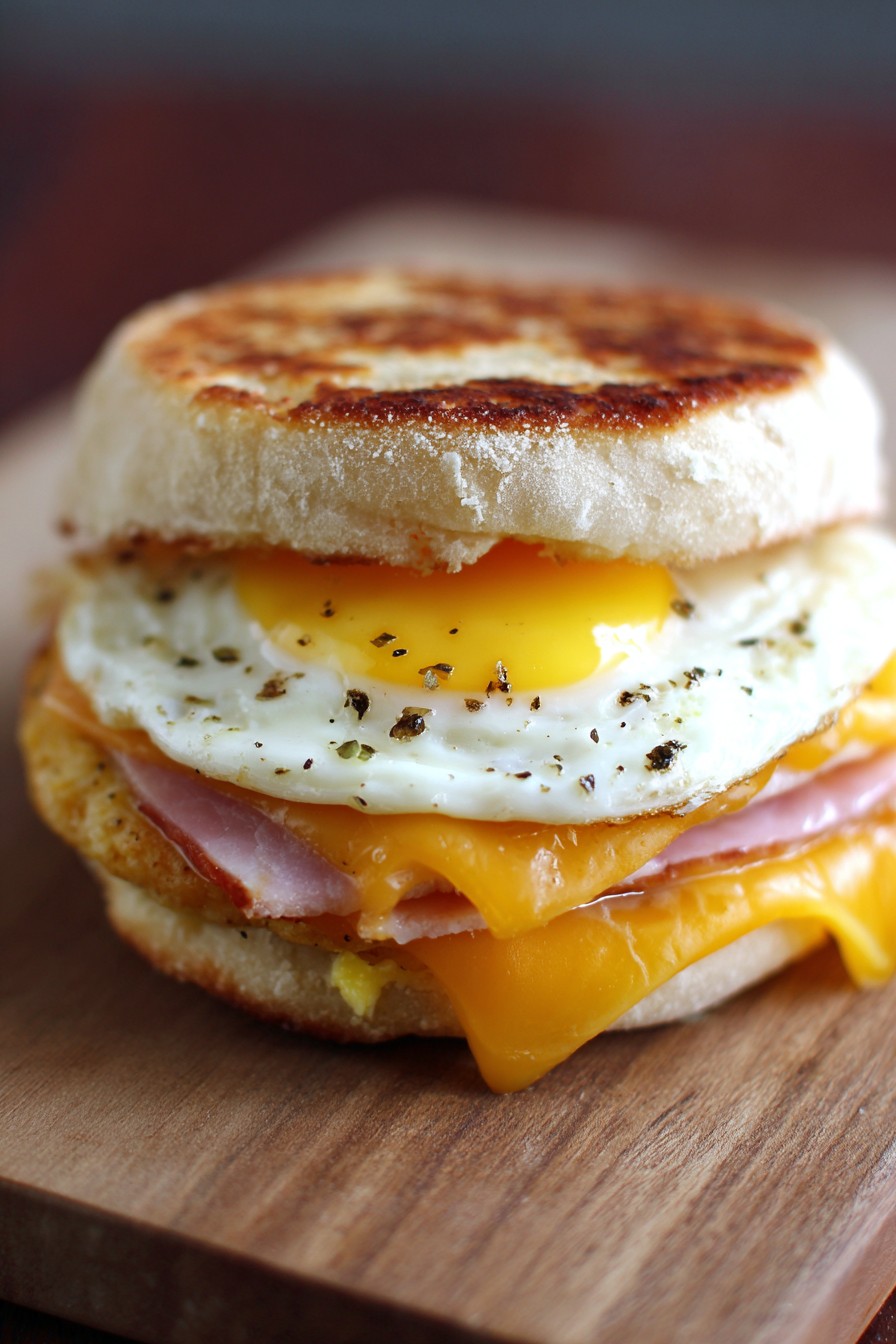
Unbelievably, the culinary gods decided to bless us mere mortals with a creation so simple, so elegant, so perfectly engineered for those mornings when your brain is still buffering. You know the ones—where operating anything more complex than a toaster feels like advanced astrophysics. This isn’t just a sandwich; it’s a warm, cheesy, eggy hug in edible form, a beacon of hope in the foggy battlefield of dawn.
Why This Recipe Works
- The English muffin’s nooks and crannies are not just for show—they’re flavor traps, eagerly soaking up every drop of melted butter and yolk.
- Gently scrambling the egg in the ring creates a perfect, fluffy disc that fits the muffin like Cinderella’s slipper, no messy overhang.
- Using a lid to steam-melt the cheese is a pro-move that transforms rubbery shreds into a velvety, oozy blanket without overcooking the egg.
- Toasting the muffin in the same pan infuses it with savory, buttery goodness, making it a cohesive unit rather than two separate entities awkwardly holding hands.
Ingredients
- 1 large egg (the star of the show, preferably not still in its shell)
- 1 plain English muffin (the trusty vehicle, split like a good book)
- 1 slice of American cheese or 1/4 cup shredded cheddar (the gooey glue that binds us all)
- 1 tablespoon unsalted butter (divided, because sharing is caring, even with your pan)
- Salt and freshly ground black pepper to taste (the dynamic duo of seasoning)
- Optional: 1 thin slice of ham or Canadian bacon (for the meat-inclined adventurer)
Equipment Needed
- Small non-stick skillet (your 6-inch culinary stage)
- Spatula (the trusty sidekick for all your flipping needs)
- Lid that fits the skillet (for the magical steam-melting act)
- Toaster or toaster oven (a backup singer for the muffin, if you’re not pan-toasting)
- Small bowl and fork (for the egg’s pre-game whisking)
- Butter knife (for spreading joy, literally)
Instructions
Step 1: The Muffin Metamorphosis
First, let’s address the carbohydrate in the room. Take your English muffin and perform a clean split right down its equator—no jagged edges, we’re civilized here. Now, grab half of your tablespoon of butter (that’s about 1/2 tablespoon for the math-averse) and slather it generously on the cut sides of both halves. Think of it as applying sunscreen; you want full, even coverage. Heat your small non-stick skillet over medium heat. Once it’s warm (a drop of water should sizzle and dance), place the muffin halves butter-side down directly into the pan. Let them toast for 2 to 3 minutes, until they achieve a gorgeous, golden-brown tan and smell like buttery heaven. This isn’t just toasting; it’s building a flavor foundation. Once gloriously crisp, remove them to a plate. Tip: For extra credit, lightly toast the outer, rounded sides for a few seconds too—this creates a sturdier vessel that won’t get soggy.
Step 2: Egg-cellent Containment Strategy
With the muffin halves resting (they’ve earned it), keep the skillet over medium heat and add the remaining 1/2 tablespoon of butter. Let it melt and get foamy. While that’s happening, crack your egg into a small bowl, add a pinch of salt and a few grinds of black pepper, and give it a vigorous whisk with a fork until it’s uniformly pale yellow and slightly frothy. Now, here’s the trick: pour that whisked egg into the center of the buttery pan. Immediately, take one of the toasted muffin halves (yes, we’re using it as a tool!) and gently place the ring mold you can make from a wide-mouth jar lid or a proper egg ring if you have one over the egg. If you don’t have a ring, just pour carefully to keep it in a rough circle. The goal is to contain the egg’s wanderlust, convincing it to form a perfect, muffin-sized disc. Cook undisturbed for about 90 seconds.
Step 3: The Great Cheese Meltdown
After your egg has set on the bottom (the edges will look cooked, and it should release easily when you nudge it with the spatula), it’s time for the main event: the cheese. If you’re using a slice of American, drape it lovingly over the entire egg surface. If you went with shredded cheddar, sprinkle it evenly, trying to keep most of it on the egg and not the pan (we’re not making cheese crisps today, though that’s not a bad idea). Now, cover the skillet with a lid. This is non-negotiable. The trapped steam will work its magic, melting the cheese into a luscious, velvety sauce in about 60 to 90 seconds without overcooking the egg into a rubbery hockey puck. Tip: Add your optional ham slice on top of the egg right before the cheese, letting it warm through during the steam bath.
Step 4: The Assembly Line of Deliciousness
Lift the lid—behold the cheesy masterpiece! The cheese should be fully melted and possibly even bubbling slightly. Using your spatula, carefully slide it under the entire egg-and-cheese disc. If you used a ring mold, you can remove it now. In one confident motion, lift and transfer this golden prize directly onto the bottom half of your waiting, toasted English muffin. The warmth from the egg will slightly soften the muffin, creating a perfect marriage of textures. Immediately crown it with the top muffin half. Gently press down—just enough to encourage cohesion, not so hard that the egg squirts out the sides in a saucy protest.
Step 5: The Final Countdown (a.k.a. The Rest)
This is the hardest step, requiring immense willpower. You must let the sandwich rest for exactly 60 seconds on the cutting board. I know, I know—the aroma is intoxicating, and your stomach is composing symphonies of complaint. But this brief pause is crucial. It allows the heat to distribute evenly, melting the cheese just a touch more into the muffin’s crannies, and it lets the structure set so that your first bite doesn’t result in a catastrophic, yolk-on-shirt situation. Use this time to admire your handiwork, pour a cup of coffee, or practice your deep breathing. After the minute is up, slice it in half if you’re fancy, or just pick it up and take that glorious, messy, perfect first bite. Tip: For a truly next-level experience, spread a thin layer of mayonnaise or a dab of hot sauce on the top muffin half before assembling.
Tips and Tricks
Want to ascend to Egg Muffin Master status? First, consider your cheese choices. While American is classic for its melt, a combo of sharp cheddar and a little Monterey Jack brings both flavor and gooeyness. For the egg, try adding a teaspoon of milk or cream to the whisking stage for an even fluffier, richer texture. If you’re ring-mold-less, a clean, empty tuna can with both ends removed makes a perfect (if slightly larger) substitute. To make multiple sandwiches for a crowd, cook the eggs in batches and keep them warm on a baking sheet in a 200°F oven while you toast all the muffins. Finally, for a crispier muffin interior, after buttering, toast them in the skillet cut-side down for 2 minutes, then flip and toast the rounded side for 1 minute—it creates a delightful contrast with the soft egg.
Recipe Variations
- The Benedict Pretender: Swap the cheese for a slice of Canadian bacon and top the finished egg with a spoonful of quick hollandaise (mix mayo, lemon juice, and a pinch of cayenne).
- Green Machine: Add a handful of fresh baby spinach to the skillet just before the egg, let it wilt, then pour the egg over it. Use pepper jack cheese for a kick.
- Everything Bagel Vibe: Butter the muffin and press the cut sides into a mix of everything bagel seasoning before toasting. Use a schmear of cream cheese instead of, or in addition to, the slice cheese.
- Southwestern Sunrise: Mix a tablespoon of diced green chiles into the whisked egg. Use pepper jack cheese and serve with a side of salsa for dipping.
- Pizza My Heart: Spread a teaspoon of marinara sauce on the toasted muffin, top the egg with a few slices of pepperoni and a sprinkle of mozzarella before the lid-steam step.
Frequently Asked Questions
Q: Can I make this ahead of time?
A: The egg and muffin are best fresh, but you can pre-toast the muffins and store them in an airtight container for a day. Re-toast lightly before assembling. For a true make-ahead, cook the egg patties, let them cool, and freeze between parchment paper. Reheat in a skillet or microwave.
Q: My cheese isn’t melting nicely. What gives?
A: The lid is your best friend! It creates a mini steam oven. Also, ensure your heat is medium, not high—high heat will cook the egg too fast before the cheese melts. Finely shredded cheese melts quicker than thick shreds or a cold slice.
Q: What’s the best egg style for this sandwich?
A: A gently scrambled disc (as in the recipe) is the champion for structural integrity and even cheese distribution. A fried egg with a runny yolk is delicious but messier. Poached is a bridge too far for a handheld sandwich.
Q: Can I use a different type of bread?
A: Absolutely! A soft brioche bun, a sturdy croissant, or even a slice of sourdough can work. The key is toasting it well so it can handle the moisture from the egg and cheese without becoming a sad, soggy mess.
Q: Is this recipe easily doubled or tripled?
A: Yes, but cook in batches unless you have a giant griddle. Keep finished egg patties warm in a low oven (200°F) while you work through the queue. It’s the breakfast equivalent of a well-organized assembly line.
Summary
This egg and cheese English muffin is your foolproof ticket to breakfast bliss. With its perfect textural contrasts, customizable nature, and 10-minute timeline, it outshines any drive-thru offering. Master the steam-melt, respect the rest, and never underestimate the power of a well-buttered nook.
Egg & Cheese English Muffin
1
servings3
minutes7
minutesIngredients
Instructions
- 1 Butter the cut sides of the English muffin halves with 1/2 tablespoon butter. Toast them butter-side down in a small non-stick skillet over medium heat for 2-3 minutes until golden brown. Remove to a plate.
- 2 Add remaining 1/2 tablespoon butter to the skillet. Whisk egg with salt and pepper in a bowl. Pour into skillet and use a ring mold or pour carefully to form a muffin-sized disc. Cook undisturbed for 90 seconds.
- 3 Place cheese (and optional ham) on the egg. Cover skillet with a lid and cook for 60-90 seconds until cheese is fully melted.
- 4 Use a spatula to transfer the egg and cheese onto the bottom muffin half. Top with the other half.
- 5 Let the sandwich rest for 60 seconds before slicing and serving.