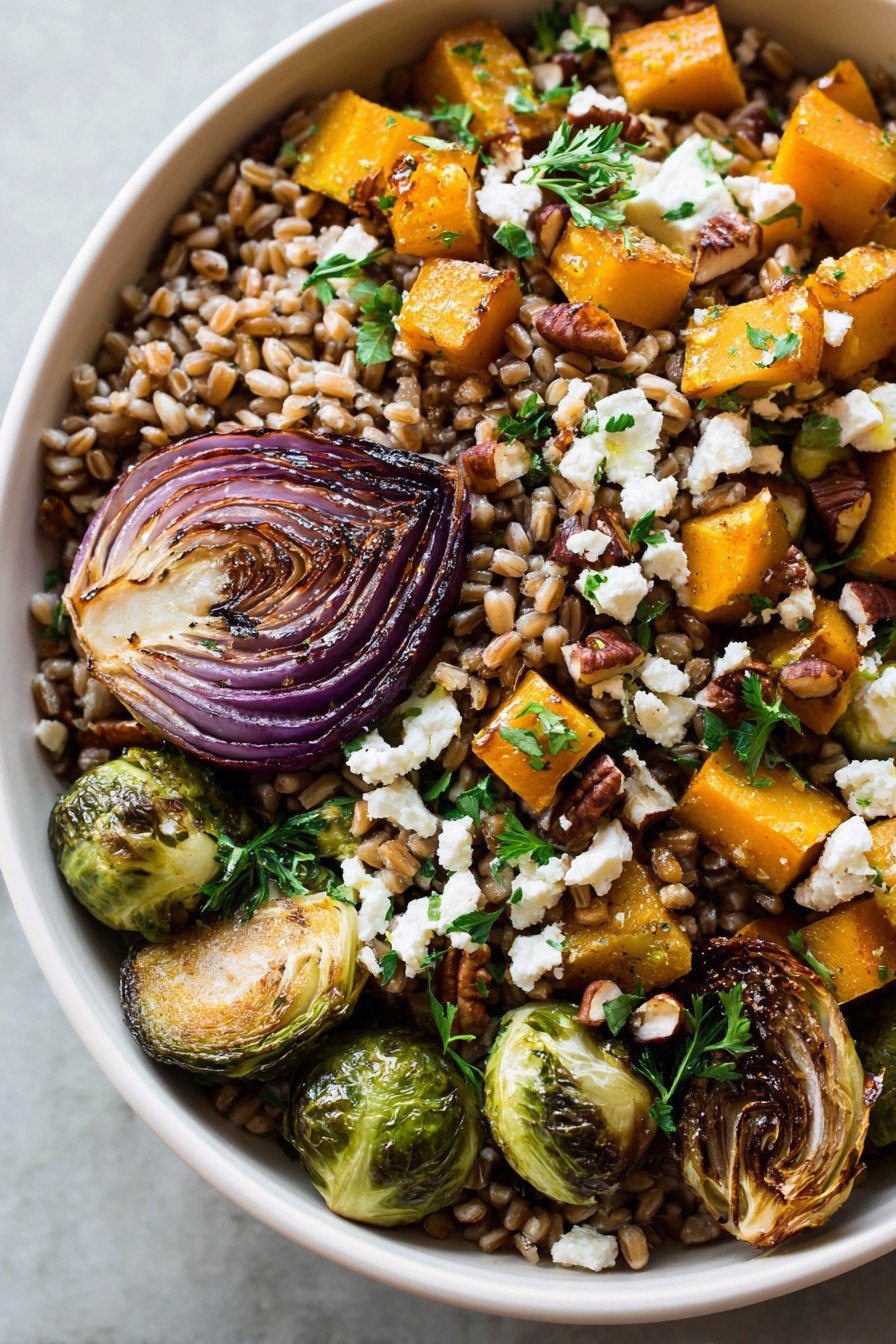
Unlocking the full potential of whole grains and seasonal produce requires a methodical approach. This farro roasted vegetable salad exemplifies culinary precision, where each component is treated with intention to build layers of flavor and contrasting textures. Ultimately, it delivers a satisfying, nutrient-dense meal that stands as a complete dish or a sophisticated side.
Why This Recipe Works
- High-heat roasting caramelizes vegetable sugars, creating deep, concentrated flavors that farro readily absorbs.
- Simmering farro in a seasoned vegetable broth, rather than water, infuses the grain with a savory foundation from the inside out.
- A two-stage dressing application—tossing the warm farro first, then finishing the assembled salad—ensures maximum flavor adhesion and a bright final accent.
- The combination of chewy farro, tender-crisp roasted vegetables, crunchy nuts, and creamy cheese creates a dynamic and satisfying textural profile.
Ingredients
- 1 ½ cups semi-pearled farro
- 4 cups low-sodium vegetable broth
- 1 large red onion, cut into 1-inch wedges
- 1 pound Brussels sprouts, trimmed and halved
- 1 medium butternut squash (about 2 lbs), peeled, seeded, and cut into ¾-inch cubes
- 6 tablespoons extra-virgin olive oil, divided
- 2 teaspoons kosher salt, divided
- 1 teaspoon freshly ground black pepper, divided
- 1 teaspoon smoked paprika
- ½ cup raw pecans, roughly chopped
- 4 ounces crumbled feta cheese
- ¼ cup fresh parsley, finely chopped
- Zest and juice of 1 large lemon
- 1 tablespoon whole-grain mustard
- 1 teaspoon pure maple syrup
- 1 garlic clove, minced
Equipment Needed
- Large rimmed baking sheet (half-sheet pan)
- Medium saucepan with lid
- Fine-mesh strainer
- Large mixing bowl
- Small mixing bowl or jar for dressing
- Chef’s knife and cutting board
- Vegetable peeler
- Microplane or fine grater (for lemon zest)
- Whisk
Instructions
Step 1: Prepare and Roast the Vegetables
Preheat your oven to 425°F (218°C). On your large rimmed baking sheet, combine the red onion wedges, halved Brussels sprouts, and cubed butternut squash. Drizzle with 3 tablespoons of the extra-virgin olive oil and sprinkle with 1 teaspoon of the kosher salt, ½ teaspoon of the black pepper, and the smoked paprika. Using your hands, toss the vegetables thoroughly until they are evenly coated in the oil and seasoning. Arrange them in a single, uncrowded layer to ensure proper caramelization and avoid steaming. Roast on the middle rack for 25 minutes. At the 25-minute mark, remove the pan from the oven, add the chopped pecans, and carefully stir the vegetables and nuts to promote even browning. Return the pan to the oven and continue roasting for an additional 10-15 minutes, or until the vegetables are tender and deeply caramelized at the edges, and the pecans are fragrant and lightly toasted. Tip: Cutting the squash to a uniform ¾-inch size is critical; larger pieces will remain hard, while smaller pieces may burn before the other vegetables are done.
Step 2: Cook the Farro
While the vegetables roast, rinse the farro under cold water in a fine-mesh strainer. In your medium saucepan, combine the rinsed farro and the 4 cups of vegetable broth. Bring to a boil over high heat, then immediately reduce the heat to maintain a gentle simmer. Cover the pot and cook for 25-30 minutes. The farro is done when it is tender to the bite but still retains a pleasant, chewy texture (al dente). It will have absorbed most, but not necessarily all, of the broth. Drain any excess liquid through the strainer, then immediately transfer the hot farro to your large mixing bowl. Tip: Cooking the farro in a flavorful broth, rather than plain water, builds a savory base layer into the grain itself, which plain seasoning later cannot replicate.
Step 3: Make the Lemon-Herb Vinaigrette
In your small bowl or jar, combine the remaining 3 tablespoons of extra-virgin olive oil, the lemon zest, lemon juice, whole-grain mustard, maple syrup, minced garlic, the remaining 1 teaspoon of kosher salt, and the remaining ½ teaspoon of black pepper. Whisk vigorously until the mixture is fully emulsified—the oil and acid should be completely integrated, not separated. The dressing should be slightly thickened and coat the back of a spoon. Taste and adjust seasoning if necessary, keeping in mind the saltiness of the feta to be added later.
Step 4: Assemble the Warm Farro Base
While the drained farro is still very warm, pour approximately two-thirds of the prepared lemon-herb vinaigrette over it. Using a rubber spatula or large spoon, fold the dressing into the farro until every grain is evenly coated. The residual heat from the farro will help it absorb the dressing, mellowing the sharpness of the garlic and lemon while allowing the flavors to penetrate. Let this mixture sit for 5 minutes. This resting period is a crucial step for flavor development, as it allows the seasoned farro to cool slightly and become the perfect base to receive the roasted components without becoming gummy or mushy.
Step 5: Final Assembly and Service
To the bowl of dressed farro, add the entire contents of the baking sheet: the roasted vegetables and toasted pecans. Also add the crumbled feta cheese and the finely chopped fresh parsley. Drizzle the remaining one-third of the vinaigrette over the top. Gently fold all ingredients together just until combined, taking care not to break down the roasted vegetables or over-mix. The goal is a cohesive but distinct composition of ingredients. Tip: For optimal texture and temperature contrast, serve the salad immediately while the roasted vegetables are still slightly warm and the farro is at room temperature. This preserves the distinct textures of the chewy grain, tender vegetables, and crunchy nuts.
Tips and Tricks
For a more pronounced nutty flavor, toast the farro in a dry saucepan over medium heat for 3-4 minutes before adding the broth, stirring constantly until fragrant. If your vegetables are releasing too much water on the sheet pan (a sign of overcrowding or low oven temp), roast them on a wire rack set inside the pan to promote air circulation and better browning. To make this salad ahead, prepare the farro, vegetables, and dressing separately. Store them in airtight containers in the refrigerator for up to 2 days. Combine and add the final drizzle of dressing just before serving to maintain ideal texture. For a vegan variation, omit the feta and add a tablespoon of nutritional yeast to the dressing for a cheesy, umami note.
Recipe Variations
- Grain Swap: Substitute farro with an equal amount of cooked wheat berries, freekeh, or hulled barley. Adjust cooking times according to the grain’s package instructions to achieve a similar al dente texture.
- Seasonal Vegetable Rotation: In spring, use asparagus spears and baby artichokes. For summer, swap in zucchini, bell peppers, and cherry tomatoes. In autumn, incorporate cubed sweet potato and cauliflower florets alongside the squash.
- Protein Addition: Transform this into a heartier main course by folding in 2 cups of shredded rotisserie chicken, 1 can of drained and rinsed chickpeas added to the sheet pan for the last 10 minutes of roasting, or 8 ounces of pan-seared salmon flaked on top.
- Dressing & Cheese Alternatives: Replace the lemon-herb vinaigrette with a tahini-lemon sauce or a red wine vinaigrette. Swap feta for creamy goat cheese, sharp aged cheddar cubes, or shaved Parmesan.
Frequently Asked Questions
Q: Can I use quick-cooking or pre-cooked farro?
A: Yes, but adjust the method. For pre-cooked farro, simply reheat it gently with a splash of broth. For quick-cooking, follow package directions but still use broth instead of water. The texture may be slightly softer, and you’ll miss the flavor infusion from simmering.
Q: My roasted vegetables are soggy, not caramelized. What went wrong?
A: The most common culprits are overcrowding the pan and insufficient oven temperature. Vegetables must be in a single layer with space between them to allow moisture to evaporate. Ensure your oven is fully preheated to 425°F and use a heavy-duty, rimmed sheet pan for even heat distribution.
Q: How long will leftovers keep, and how should I store them?
A: Store assembled salad in an airtight container in the refrigerator for up to 3 days. The farro will continue to absorb dressing, so you may wish to refresh leftovers with a small drizzle of olive oil and a squeeze of fresh lemon juice before serving again.
Q: Is this salad served warm, cold, or at room temperature?
A: It is best served at a “chef’s kitchen” temperature: the roasted vegetables and toasted nuts should be slightly warm, while the dressed farro and cheese are at room temperature. This maximizes the contrast in textures and the vibrancy of the flavors.
Summary
This recipe leverages high-heat roasting and broth-simmering to build deep flavor, then unites components with a bright vinaigrette for a textured, satisfying salad that excels as a make-ahead meal.
Farro Roasted Vegetable Salad
6
servings20
minutes45
minutesIngredients
Instructions
- 1 Roast Vegetables: Preheat oven to 425°F. On a large rimmed baking sheet, toss onion, Brussels sprouts, and squash with 3 tbsp oil, 1 tsp salt, ½ tsp pepper, and paprika. Roast for 25 min. Add pecans, stir, and roast 10-15 min more until caramelized.
- 2 Cook Farro: Rinse farro. In a saucepan, combine with broth. Bring to a boil, then simmer covered for 25-30 min until al dente. Drain and transfer to a large bowl.
- 3 Make Vinaigrette: Whisk remaining 3 tbsp oil, lemon zest/juice, mustard, maple syrup, garlic, and remaining 1 tsp salt and ½ tsp pepper until emulsified.
- 4 Dress Farro: Pour ⅔ of the vinaigrette over the hot farro and fold to combine. Let sit for 5 minutes.
- 5 Assemble Salad: To the farro, add roasted vegetables/pecans, feta, and parsley. Drizzle with remaining vinaigrette and gently fold to combine. Serve immediately.