Holding a glass of freshly squeezed orange juice takes me right back to my grandmother’s sun-drenched kitchen table, where the morning light would catch the pulp floating like tiny flecks of gold. Her hands, wrinkled and strong, would work the juicer with a rhythm that promised a day begun with pure, unadulterated sweetness. It was more than a drink; it was a ritual of love, a simple act that turned ordinary mornings into something sacred and warm.
Why This Recipe Works
- Using room-temperature oranges yields significantly more juice than cold ones, making every squeeze count.
- Rolling the oranges firmly on the counter before cutting breaks down the internal membranes, releasing the liquid treasure inside more easily.
- Straining through a fine-mesh sieve removes the bitter pith and seeds, ensuring a smooth, sweet sip every time.
- Choosing navel or Valencia oranges, known for their balance of sweetness and acidity, creates a perfectly rounded flavor profile.
- Serving it immediately captures the vibrant, volatile aromatics that begin to fade moments after juicing, offering the truest taste of the fruit.
Ingredients
- 8 large navel oranges (about 4 pounds), at room temperature
- 1 tablespoon fresh lemon juice (optional, for brightness)
- 1-2 teaspoons granulated sugar or honey (optional, to taste)
- Ice cubes, for serving (optional)
- Fresh mint sprig, for garnish (optional)
Equipment Needed
- Cutting board
- Sharp chef’s knife
- Citrus juicer (hand-held reamer or electric juicer)
- Fine-mesh sieve
- Large bowl or pitcher (at least 8-cup capacity)
- Wooden spoon or spatula
- Measuring spoons
Instructions
Prepare Your Oranges with Care
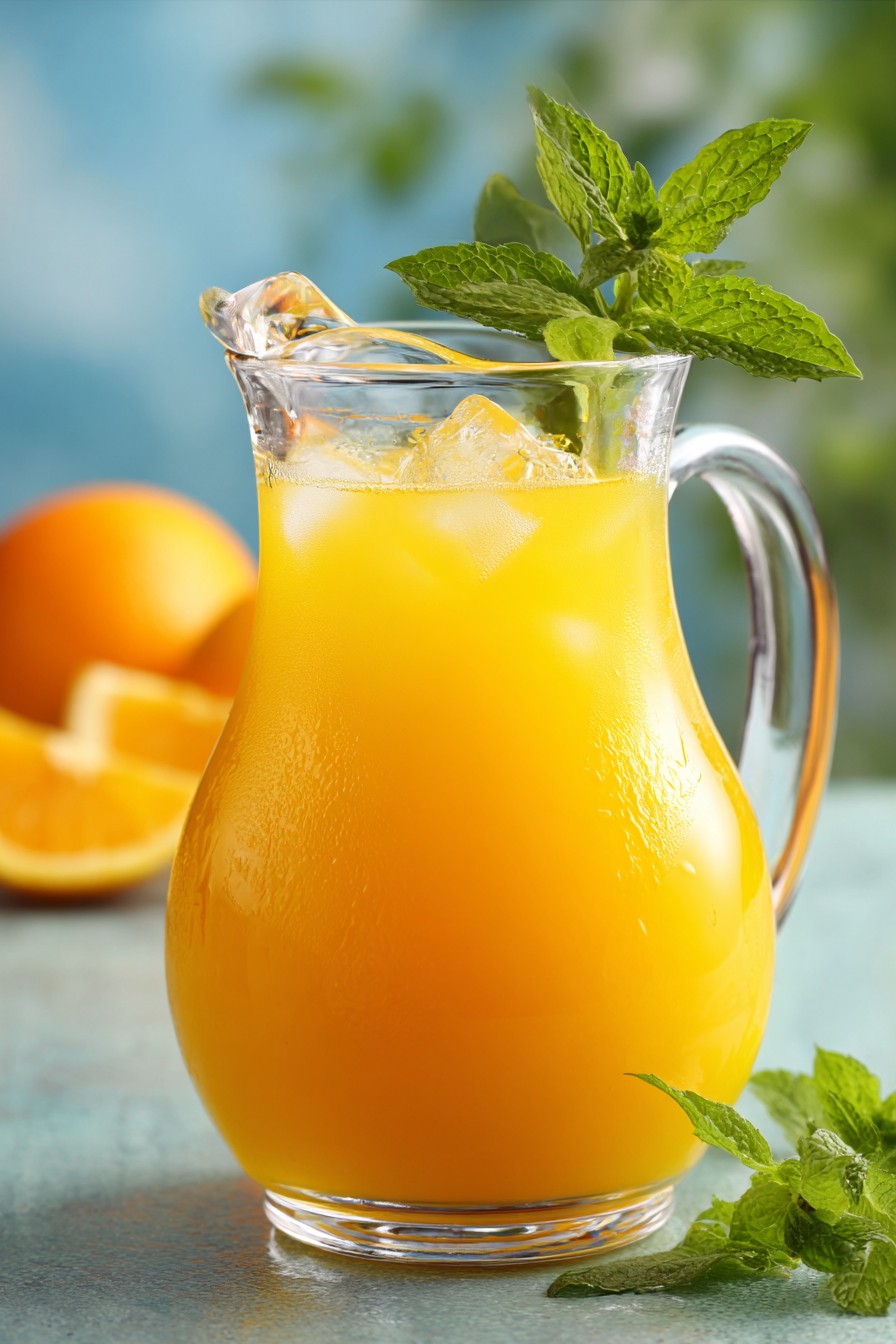
Begin by gently rolling each orange on your countertop, applying firm pressure with the palm of your hand for about 10 seconds per fruit. This isn’t just a step; it’s a tender preparation, much like my grandfather would massage an orange before handing it to me, saying it woke the juice up. Feel the fruit give slightly under your touch. Then, using a sharp knife, slice each orange in half crosswise, right through its equator. You’ll notice the flesh looks ready to burst. As you cut, remember that a dull knife can crush the cells and make the juice bitter, so keep that blade honed. Place the halved oranges cut-side up on your board, their bright faces waiting. This moment of preparation always feels meditative, connecting you directly to the source of your nourishment.
Juice with Purpose and Patience
Now, take your juicer. If using a handheld reamer, press it into the center of one orange half and twist firmly, rotating the fruit against the ridges. You’ll feel the resistance give way as the juicy vesicles rupture. For an electric juicer, simply place the half onto the spinning cone. Juice each half completely, applying steady pressure until you see mostly white pith. Don’t rush. I can still hear my grandmother’s voice, soft and sure, saying, “Let the orange tell you when it’s done.” You should get about 1/3 to 1/2 cup of juice from each large orange. As you work, the fresh, zesty scent will fill your kitchen—a perfume of sunshine and simplicity. Tip: If you want to maximize yield, after the initial juicing, take the squeezed half and gently scrape the inside with a spoon to release any remaining liquid trapped in the membranes.
Strain for Silky Perfection
Set your fine-mesh sieve over your large bowl or pitcher. Slowly pour the freshly squeezed juice through the sieve. Use a wooden spoon or spatula to gently press any pulp caught in the mesh, but avoid forcing the bitter white pith through. Watch as the vibrant liquid streams through, leaving behind the seeds and larger bits of membrane. This straining is crucial; it’s what transforms rustic, homemade juice into something elegantly smooth, reminiscent of the crystal-clear glasses my mother would set out for Sunday brunch. If you prefer some pulp, you can reserve a tablespoon or two from the sieve and stir it back in later. Let the juice strain fully; this should take about a minute for the entire batch.
Taste and Adjust to Your Heart’s Content
Now, dip a clean spoon into the bowl and taste your creation. Close your eyes. Does it bring back a memory? The flavor should be bright, sweet, and slightly tangy. If your oranges were particularly tart, you might stir in a teaspoon of sugar or honey, dissolving it completely. For a burst of extra brightness, add that optional tablespoon of fresh lemon juice—it makes the orange flavor pop in a magical way. Stir gently with your spoon, thinking of all the hands that have stirred pitchers in kitchens before yours. This is your moment to tailor the taste to your family’s preference, just as my aunt always did, making it a little sweeter for the kids.
Serve Immediately with Love
Fresh orange juice is at its absolute peak the moment it’s made. The vibrant flavors and healthful vitamins begin to degrade quickly upon exposure to air. So, pour it now into chilled glasses—you can add a few ice cubes if desired, though purists like my dad always took it straight up. Garnish with a small, fresh mint sprig for a touch of color and aroma. Serve it alongside warm toast or pancakes, and watch as the first sip brings a smile. There’s no substitute for this immediacy; it’s a fleeting gift, best enjoyed in the moment, shared with those you love around your own sunlit table.
Tips and Tricks
For the absolute best flavor, seek out organic oranges when possible, as you’ll be using the zest-adjacent outer layer in the juicing process. If you must juice ahead of time, store the juice in an airtight container in the refrigerator for up to 24 hours; any longer and it will lose its vibrant spark. To minimize oxidation (which can slightly dull the flavor and color), you can add a tiny squeeze of lemon juice before storing. If you find yourself with leftover juice, freeze it in ice cube trays—these orange juice cubes are perfect for adding a burst of flavor to smoothies or iced tea later. For a creamier, frothier texture, blend the strained juice for just 5 seconds on high speed before serving. And remember, the color of the juice can vary from deep orange to pale yellow depending on the orange variety; they’re all beautiful and delicious in their own way.
Recipe Variations
- Sunrise Splash: Add a 1/4 cup of freshly squeezed carrot juice to the orange juice for a beta-carotene boost and a subtly earthy sweetness that reminds me of garden-fresh mornings.
- Tropical Breeze: Blend in a 1/2 cup of fresh pineapple chunks or a splash of coconut water for a vacation-in-a-glass feel, evoking memories of family beach trips.
- Spiced Citrus: Infuse warmth by adding a pinch of ground cinnamon or a drop of vanilla extract to the pitcher, a cozy twist my mother loved during the holiday season.
- Berry-Orange Blush: Gently muddle a handful of fresh raspberries or strawberries in the bottom of the glass before pouring the juice over, creating a beautiful, layered drink and a nod to summer berry picking.
- Herbal Refreshment: Steep a sprig of fresh rosemary or basil in the juice for 10 minutes before removing, adding an sophisticated, aromatic note that surprises and delights.
Frequently Asked Questions
Q: Can I use bottled lemon juice instead of fresh?
A: I highly recommend fresh lemon juice. The bottled variety often contains preservatives and lacks the bright, clean acidity that perfectly complements fresh orange juice. That fresh squeeze makes all the difference, just like grandma always said.
Q: My juice tastes bitter. What went wrong?
A: Bitterness usually comes from too much white pith or membrane being squeezed into the juice. Ensure you’re using a fine-mesh sieve and not over-pressing the citrus halves. Also, very fresh, in-season oranges are less likely to be bitter.
Q: How far in advance can I juice oranges?
A: For the very best flavor and maximum vitamin C content, drink it immediately. If necessary, you can refrigerate it in a sealed container for up to 24 hours, but expect some flavor degradation.
Q: Is it worth buying a specific citrus juicer?
A: A simple handheld reamer is inexpensive and works wonderfully, evoking a sense of traditional craftsmanship. An electric juicer is faster for large batches. Choose based on how often you’ll make it and the connection to the process you desire.
Q: Can I use this method for other citrus fruits?
A: Absolutely! The same rolling, juicing, and straining technique works beautifully for grapefruits, tangerines, and blood oranges. Mixing citrus creates wonderful blends, like the “citrus sunrise” my family adored.
Summary
This recipe is more than instructions; it’s an invitation to slow down and savor a pure, sun-kissed tradition. With a few simple oranges and a loving touch, you can create a glass of liquid sunshine that carries the warmth of family kitchens and the promise of a bright new day.
Fresh Orange Juice
4
servings15
minutesIngredients
Instructions
- 1 Prepare Your Oranges: Roll each orange firmly on the countertop for 10 seconds. Slice each orange in half crosswise.
- 2 Juice the Oranges: Using a citrus juicer, juice each orange half completely into a bowl.
- 3 Strain the Juice: Pour the juice through a fine-mesh sieve into a pitcher, pressing gently on the pulp.
- 4 Adjust Flavor: Taste the juice. If desired, stir in optional lemon juice, sugar, or honey until dissolved.
- 5 Serve: Pour into glasses immediately over ice if desired. Garnish with a mint sprig.