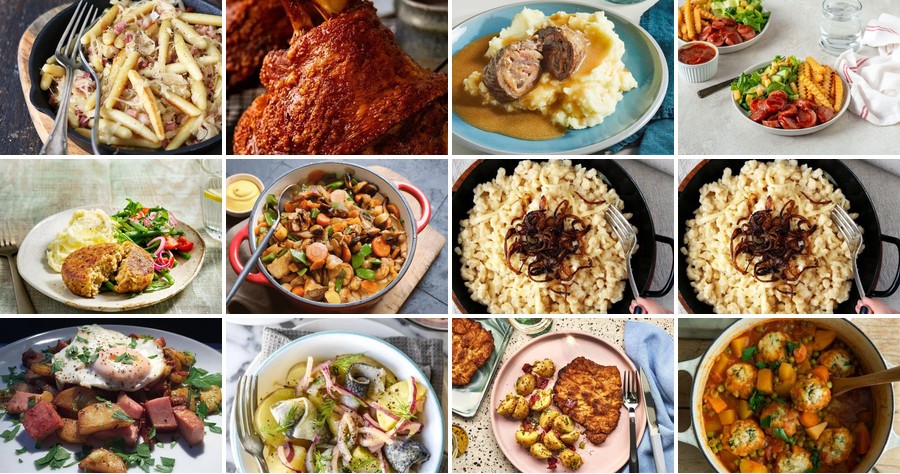
Brimming with hearty comfort and rich tradition, German cuisine offers more than just bratwurst and pretzels. From cozy schnitzel to warming stews, these 19 classic dinner recipes bring authentic flavor straight to your kitchen. Perfect for family meals or impressing guests, each dish is a delicious dive into Germany’s culinary heritage. Ready to explore? Let’s get cooking!
Sauerbraten with Red Cabbage
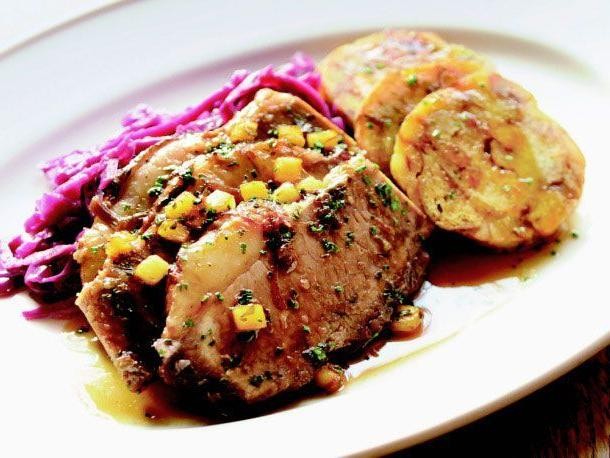
Nothing says holiday comfort like a classic German-inspired meal that warms both kitchen and heart. Now, let’s dive into making this tender, tangy sauerbraten with sweet-and-sour red cabbage—a perfect centerpiece for any festive gathering.
Serving: 6 | Pre Time: 30 minutes | Cooking Time: 3 hours 30 minutes
Ingredients
For the marinade and beef:
– 3 lbs beef chuck roast
– 1 cup red wine vinegar
– 1 cup water
– 1 onion, sliced
– 10 whole black peppercorns
– 5 whole cloves
– 2 bay leaves
– 1 tbsp kosher salt
For cooking the sauerbraten:
– 2 tbsp vegetable oil
– 1/4 cup all-purpose flour
– 2 cups beef broth
– 1/4 cup crushed gingersnap cookies (about 5 cookies)
For the red cabbage:
– 1 head red cabbage, shredded (about 8 cups)
– 2 apples, peeled and diced
– 1/4 cup brown sugar
– 1/4 cup apple cider vinegar
– 1 tbsp butter
– 1/2 tsp ground cloves
Instructions
1. Combine the beef chuck roast, red wine vinegar, water, sliced onion, black peppercorns, whole cloves, bay leaves, and kosher salt in a large non-reactive bowl or resealable bag. 2. Cover and refrigerate for 3 days, turning the beef once daily to ensure even marinating. 3. Remove the beef from the marinade and pat it completely dry with paper towels; reserve 1 cup of the marinade liquid. 4. Heat the vegetable oil in a large Dutch oven over medium-high heat until shimmering, about 2 minutes. 5. Sear the beef on all sides until deeply browned, about 4-5 minutes per side. 6. Sprinkle the all-purpose flour over the beef and cook for 1 minute, stirring to coat. 7. Pour in the reserved 1 cup of marinade and beef broth, scraping up any browned bits from the bottom. 8. Bring to a simmer, then reduce heat to low, cover, and cook for 3 hours, until the beef is fork-tender. 9. Stir in the crushed gingersnap cookies and cook for 10 more minutes until the gravy thickens. 10. Meanwhile, melt the butter in a large skillet over medium heat. 11. Add the shredded red cabbage, diced apples, brown sugar, apple cider vinegar, and ground cloves. 12. Cook, stirring occasionally, for 30 minutes until the cabbage is tender but still slightly crisp. 13. Remove the sauerbraten from the Dutch oven and let it rest for 10 minutes before slicing against the grain. 14. Serve the sliced beef with the gravy and red cabbage on the side.
Outstanding in both texture and taste, this dish features melt-in-your-mouth beef with a rich, tangy gravy that balances beautifully with the sweet, slightly tart red cabbage. For a creative twist, serve it over buttery spaetzle or with a side of roasted potatoes to soak up every last drop of that flavorful sauce.
Bratwurst with Sauerkraut and Mustard

Nothing says comfort food quite like a hearty bratwurst dish, especially when paired with tangy sauerkraut and sharp mustard. Now, let’s walk through this classic combination step-by-step, perfect for a cozy dinner or game-day gathering. You’ll find it’s simpler than you think to bring these bold flavors to your table.
Serving: 4 | Pre Time: 10 minutes | Cooking Time: 25 minutes
Ingredients
For the bratwurst:
– 4 fresh bratwurst sausages (about 1 pound total)
– 1 tablespoon vegetable oil
For the sauerkraut:
– 1 (16-ounce) jar sauerkraut, drained
– 1 small yellow onion, thinly sliced
– 1 tablespoon unsalted butter
– 1/2 cup chicken broth
– 1 teaspoon caraway seeds
For serving:
– 4 hot dog buns
– 1/4 cup yellow mustard
Instructions
1. Heat the vegetable oil in a large skillet over medium heat until it shimmers, about 2 minutes.
2. Add the bratwurst sausages to the skillet in a single layer.
3. Cook the bratwurst for 12–15 minutes, turning every 3–4 minutes, until browned on all sides and the internal temperature reaches 160°F on an instant-read thermometer.
4. Transfer the cooked bratwurst to a plate and cover loosely with aluminum foil to keep warm.
5. In the same skillet, melt the unsalted butter over medium heat.
6. Add the thinly sliced yellow onion and cook for 5–7 minutes, stirring occasionally, until softened and lightly golden.
7. Stir in the drained sauerkraut and caraway seeds, coating them with the onions and butter.
8. Pour in the chicken broth and bring the mixture to a simmer.
9. Reduce the heat to low, cover the skillet, and let the sauerkraut cook for 10 minutes, stirring once halfway through, until most of the liquid is absorbed.
10. While the sauerkraut simmers, lightly toast the hot dog buns in a toaster or oven at 350°F for 3–4 minutes until warm and crisp.
11. Place one bratwurst in each toasted bun.
12. Top each bratwurst with a generous spoonful of the sauerkraut mixture.
13. Drizzle about 1 tablespoon of yellow mustard over each serving.
Enjoy the satisfying contrast of the juicy, savory bratwurst against the crunchy, tangy sauerkraut, all brought together by the sharp mustard. For a creative twist, serve it open-faced on a pretzel bun or alongside a cold potato salad to balance the richness.
Schnitzel with Potato Salad

While many think of schnitzel as restaurant fare, this classic German dish is surprisingly approachable for home cooks. We’ll walk through creating a crispy, golden schnitzel paired with a creamy, tangy potato salad, perfect for a comforting weeknight dinner or a casual gathering. You’ll master the technique of breading and frying the cutlet to perfection and learn how to build layers of flavor in the salad.
Serving: 4 | Pre Time: 25 minutes | Cooking Time: 20 minutes
Ingredients
For the Schnitzel:
– 4 boneless pork chops (about 1/2 inch thick)
– 1/2 cup all-purpose flour
– 2 large eggs
– 1 cup plain breadcrumbs
– 1/2 teaspoon salt
– 1/4 teaspoon black pepper
– 1 cup vegetable oil (for frying)
For the Potato Salad:
– 1.5 pounds Yukon Gold potatoes
– 1/2 cup mayonnaise
– 2 tablespoons Dijon mustard
– 1/4 cup finely chopped red onion
– 2 tablespoons chopped fresh dill
– 1 tablespoon apple cider vinegar
– 1/2 teaspoon salt
– 1/4 teaspoon black pepper
Instructions
1. Place the potatoes in a large pot, cover with cold water, and bring to a boil over high heat.
2. Reduce the heat to medium and simmer the potatoes for 15-20 minutes, or until a fork pierces them easily.
3. Drain the potatoes in a colander and let them cool until they are safe to handle, about 10 minutes.
4. While the potatoes cool, place a pork chop between two sheets of plastic wrap on a cutting board.
5. Use a meat mallet or rolling pin to pound the pork chop evenly to a 1/4-inch thickness; repeat with the remaining chops.
6. Season both sides of each pounded chop with the 1/2 teaspoon salt and 1/4 teaspoon black pepper.
7. Set up three shallow dishes: place the flour in the first, beat the eggs in the second, and combine the breadcrumbs with the 1/2 teaspoon salt and 1/4 teaspoon pepper in the third.
8. Dredge one pork chop in the flour, shaking off any excess.
9. Dip the floured chop into the beaten eggs, allowing the excess to drip off.
10. Press the chop into the breadcrumb mixture, coating both sides evenly; place the breaded chop on a wire rack and repeat with the remaining chops.
11. Heat the 1 cup of vegetable oil in a large skillet over medium-high heat until it reaches 350°F, using a deep-fry or candy thermometer to check.
12. Carefully place one breaded pork chop into the hot oil and fry for 2-3 minutes per side, or until golden brown and crispy.
13. Transfer the cooked schnitzel to a paper towel-lined plate to drain; repeat with the remaining chops, working in batches to avoid crowding the pan.
14. Peel the cooled potatoes and cut them into 1/2-inch cubes, placing them in a large mixing bowl.
15. Add the mayonnaise, Dijon mustard, chopped red onion, chopped dill, apple cider vinegar, 1/2 teaspoon salt, and 1/4 teaspoon black pepper to the bowl with the potatoes.
16. Gently fold all the ingredients together until the potatoes are evenly coated.
17. Let the potato salad sit at room temperature for 5 minutes to allow the flavors to meld.
18. Serve the warm schnitzel immediately alongside the potato salad.
Let the schnitzel rest for a minute after frying to ensure the crust stays extra crisp. The potato salad offers a cool, creamy contrast with a bright tang from the vinegar and mustard. For a fun twist, try serving the schnitzel on a bed of the potato salad or with a squeeze of fresh lemon juice over the top.
Kartoffelpuffer with Applesauce
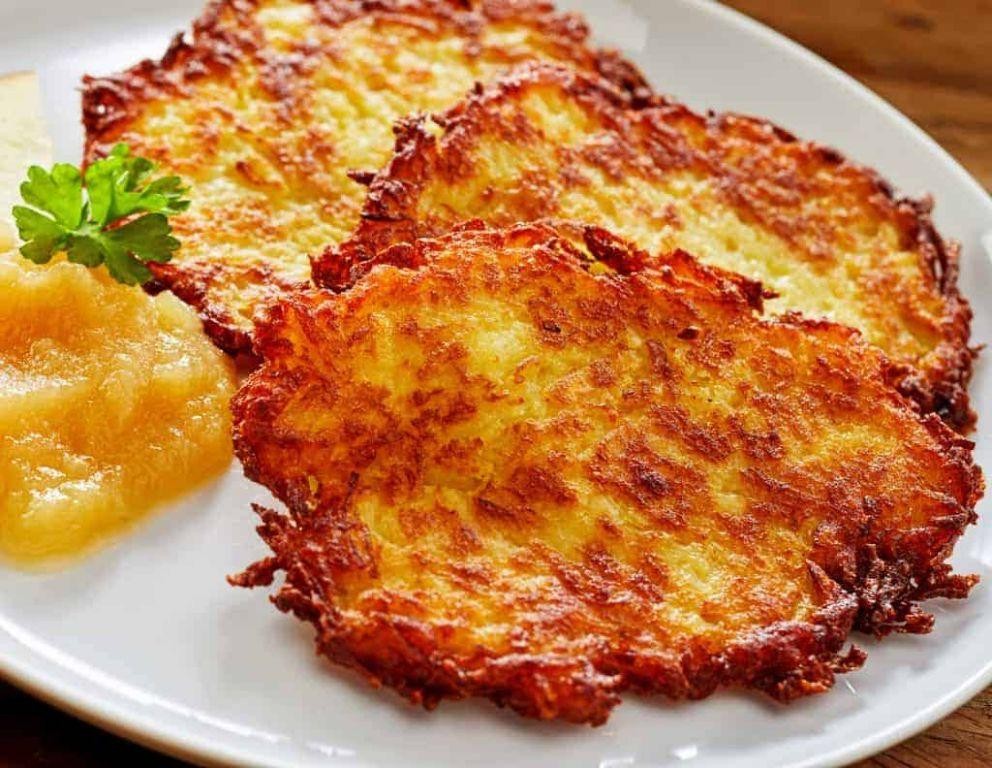
A crispy, comforting German classic, Kartoffelpuffer with Applesauce transforms humble potatoes and apples into a delightful meal that’s perfect for breakfast, lunch, or a cozy dinner. This recipe guides you through creating golden-brown potato pancakes paired with a sweet, homemade applesauce, using simple techniques for maximum flavor. Let’s get started with the ingredients and step-by-step instructions to make this delicious dish.
Serving: 4 | Pre Time: 20 minutes | Cooking Time: 25 minutes
Ingredients
For the Applesauce:
– 4 medium apples (such as Granny Smith or Fuji), peeled, cored, and chopped into 1-inch pieces
– 1/4 cup water
– 2 tablespoons granulated sugar
– 1/2 teaspoon ground cinnamon
For the Kartoffelpuffer:
– 2 pounds russet potatoes, peeled
– 1 small yellow onion
– 1 large egg
– 1/4 cup all-purpose flour
– 1 teaspoon salt
– 1/4 teaspoon black pepper
– 1/2 cup vegetable oil, for frying
Instructions
1. Prepare the applesauce by placing the chopped apples, water, sugar, and cinnamon in a medium saucepan over medium heat.
2. Cover the saucepan and cook the apples for 15 minutes, stirring occasionally, until they are soft and easily mashed with a fork.
3. Remove the saucepan from the heat and mash the apples with a potato masher or fork until smooth, then set aside to cool slightly.
4. Grate the peeled potatoes and onion using the large holes of a box grater into a large bowl.
5. Tip: Squeeze the grated potato-onion mixture firmly with your hands over the sink to remove excess moisture, which helps the pancakes crisp up better.
6. Add the egg, flour, salt, and pepper to the grated mixture, then stir until well combined.
7. Heat the vegetable oil in a large skillet over medium-high heat until it reaches 350°F, using a candy thermometer to check.
8. Scoop 1/4 cup portions of the potato mixture into the hot oil, flattening each with a spatula to form 3-inch rounds.
9. Fry the pancakes for 3-4 minutes per side, flipping once, until they are golden brown and crispy on both edges.
10. Tip: Fry in batches to avoid overcrowding the skillet, which ensures even cooking and prevents the oil temperature from dropping.
11. Transfer the fried pancakes to a paper towel-lined plate to drain excess oil, repeating until all the mixture is used.
12. Serve the Kartoffelpuffer immediately with the warm applesauce on the side.
13. Tip: For extra flavor, sprinkle the pancakes with a pinch of salt right after frying while they’re still hot.
Now you have a batch of savory, crunchy Kartoffelpuffer ready to enjoy. Naturally, the contrast between the crispy potato pancakes and the smooth, sweet applesauce creates a satisfying balance that’s both hearty and refreshing. Try serving them with a dollop of sour cream or a sprinkle of fresh chives for a creative twist that elevates this traditional dish.
Rouladen with Mashed Potatoes
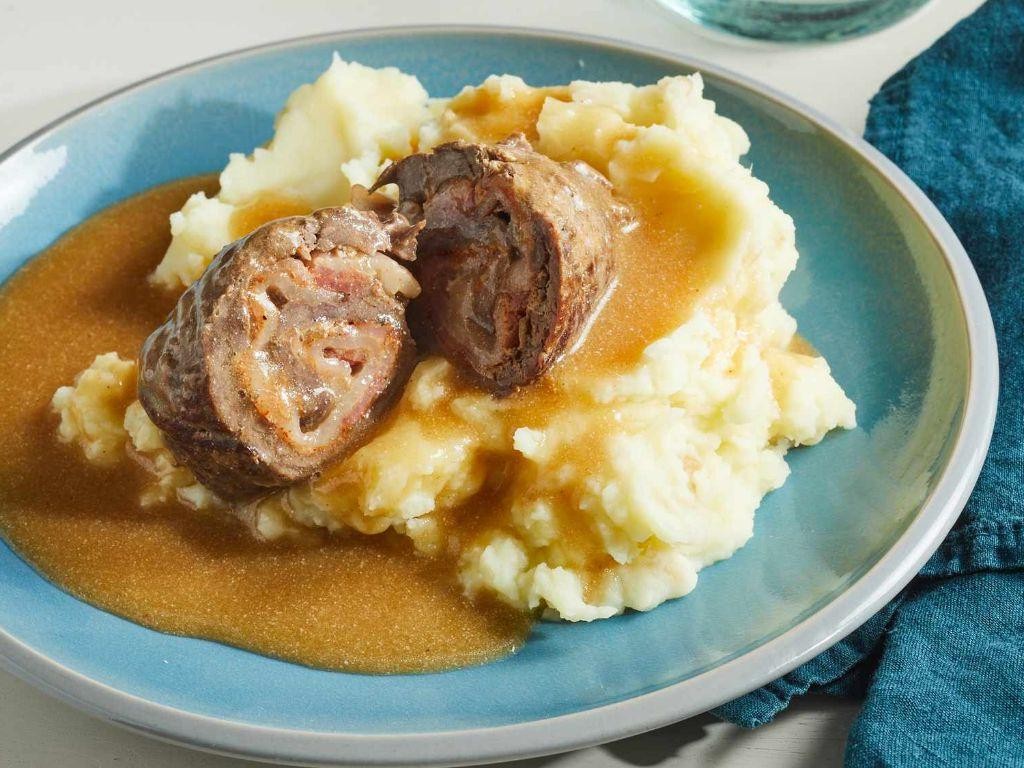
Every home cook needs a comforting, impressive dish in their repertoire, and Rouladen with Mashed Potatoes fits the bill perfectly. This classic German-inspired meal features tender beef rolls stuffed with savory fillings, served over creamy mashed potatoes for a hearty, satisfying dinner that’s surprisingly straightforward to prepare. Let’s walk through each step methodically to ensure success.
Serving: 4 | Pre Time: 25 minutes | Cooking Time: 90 minutes
Ingredients
– For the Rouladen: 4 beef top round steaks (about ¼ inch thick, 6 ounces each), 2 tbsp Dijon mustard, 4 slices bacon, 1 medium yellow onion (thinly sliced), 4 dill pickle spears, 2 tbsp vegetable oil, salt and black pepper
– For the Mashed Potatoes: 2 lbs Yukon Gold potatoes (peeled and quartered), ½ cup whole milk, 4 tbsp unsalted butter, salt
– For the Sauce: 2 cups beef broth, 1 tbsp all-purpose flour, 2 tbsp cold water
Instructions
1. Lay the beef steaks flat on a cutting board and season both sides evenly with salt and black pepper.
2. Spread ½ tbsp of Dijon mustard evenly over one side of each steak using the back of a spoon.
3. Place one slice of bacon, a quarter of the sliced onion, and one pickle spear lengthwise on the mustard-coated side of each steak.
4. Roll up each steak tightly around the fillings, starting from a short end, and secure with kitchen twine or toothpicks.
5. Heat 2 tbsp of vegetable oil in a large Dutch oven or heavy-bottomed pot over medium-high heat until shimmering, about 2 minutes.
6. Add the beef rolls and sear for 3-4 minutes per side until deeply browned all over; work in batches if needed to avoid overcrowding.
7. Tip: Searing creates a flavorful crust—don’t rush this step to ensure rich color and taste.
8. Pour 2 cups of beef broth into the pot, scraping up any browned bits from the bottom with a wooden spoon.
9. Reduce heat to low, cover the pot, and simmer for 1 hour and 15 minutes until the beef is fork-tender.
10. While the Rouladen cooks, place the peeled and quartered potatoes in a large pot and cover with cold water by 1 inch.
11. Bring to a boil over high heat, then reduce to a simmer and cook for 15-20 minutes until the potatoes are easily pierced with a fork.
12. Drain the potatoes thoroughly and return them to the pot over low heat for 1 minute to evaporate excess moisture.
13. Mash the potatoes with a potato masher or ricer until smooth.
14. Heat ½ cup of whole milk and 4 tbsp of unsalted butter in a small saucepan over medium heat until the butter melts, about 3 minutes.
15. Gradually stir the warm milk mixture into the mashed potatoes until creamy, and season with salt to taste.
16. Tip: Warm the milk and butter first to prevent the potatoes from becoming gummy when mixed.
17. After the Rouladen is cooked, remove them from the pot and set aside on a plate, tented with foil to keep warm.
18. In a small bowl, whisk together 1 tbsp of all-purpose flour and 2 tbsp of cold water until smooth to make a slurry.
19. Whisk the slurry into the simmering broth in the pot and cook for 5 minutes, stirring constantly, until the sauce thickens to a gravy-like consistency.
20. Tip: Use a cold liquid for the slurry to avoid lumps in your sauce.
21. Remove the twine or toothpicks from the beef rolls and slice them into 1-inch rounds.
22. Serve the sliced Rouladen over a bed of mashed potatoes, topped generously with the thickened sauce.
Velvety mashed potatoes cradle the savory, tender beef rolls, with the sauce adding a rich, umami depth that ties everything together. For a creative twist, garnish with fresh parsley or serve alongside roasted vegetables like carrots or green beans to balance the meal’s heartiness.
Spätzle with Cheese and Onions
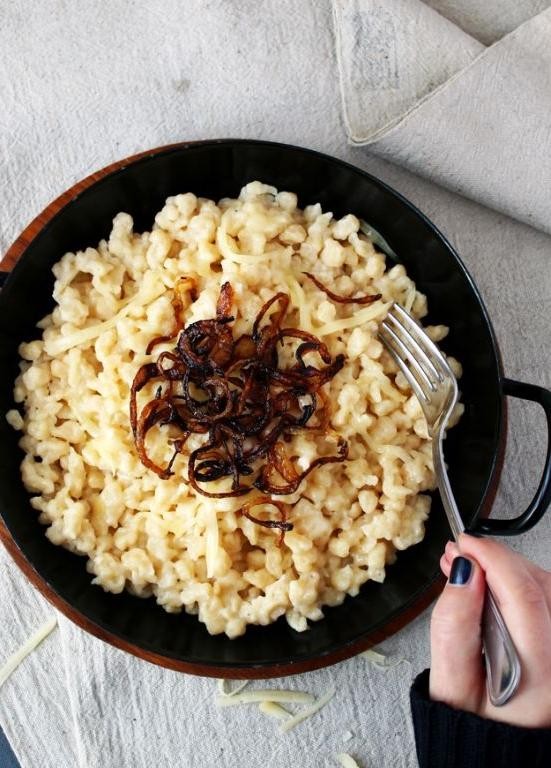
Unquestionably comforting and perfect for chilly evenings, this Spätzle with Cheese and Onions transforms simple ingredients into a hearty, satisfying meal. Let’s walk through each step together to ensure your dish turns out perfectly.
Serving: 4 | Pre Time: 20 minutes | Cooking Time: 25 minutes
Ingredients
For the spätzle dough:
– 2 cups all-purpose flour
– 3 large eggs
– 1/2 cup whole milk
– 1/2 teaspoon salt
For cooking and assembly:
– 4 tablespoons unsalted butter
– 1 large yellow onion, thinly sliced
– 1 1/2 cups shredded Gruyère cheese
– 1/4 teaspoon freshly ground black pepper
Instructions
1. In a large bowl, whisk together 2 cups all-purpose flour and 1/2 teaspoon salt.
2. Add 3 large eggs and 1/2 cup whole milk to the bowl, then mix until a sticky dough forms with no dry spots.
3. Bring a large pot of salted water to a rolling boil over high heat.
4. Hold a spätzle maker or colander with large holes over the pot, then press the dough through into the boiling water using a spatula.
5. Cook the spätzle for 2-3 minutes until they float to the surface, then immediately remove with a slotted spoon and drain.
6. In a large skillet, melt 2 tablespoons unsalted butter over medium heat.
7. Add 1 thinly sliced large yellow onion and cook for 8-10 minutes, stirring occasionally, until golden brown and caramelized.
8. Transfer the cooked onions to a plate, then add the remaining 2 tablespoons butter to the skillet.
9. Add the drained spätzle to the skillet and cook for 3-4 minutes, stirring gently, until lightly golden.
10. Sprinkle 1 1/2 cups shredded Gruyère cheese evenly over the spätzle, then top with the caramelized onions and 1/4 teaspoon black pepper.
11. Cover the skillet and cook over low heat for 2-3 minutes until the cheese is fully melted.
12. Remove from heat and let rest for 1 minute before serving.
Finally, this dish offers a delightful contrast of tender spätzle, creamy melted cheese, and sweet caramelized onions. For a creative twist, top it with crispy bacon bits or serve alongside a fresh green salad to balance the richness.
Goulash with Dumplings

Picture a cold winter evening where a hearty, comforting meal is just what you need to warm up from the inside out. Perfect for a family dinner, this classic goulash with fluffy dumplings combines tender beef, rich paprika-spiced broth, and soft, pillowy dumplings all in one pot. Preparing it is straightforward, making it an ideal project for a beginner cook looking to impress.
Serving: 6 | Pre Time: 20 minutes | Cooking Time: 2 hours 30 minutes
Ingredients
For the Goulash:
– 2 tablespoons vegetable oil
– 2 pounds beef chuck, cut into 1-inch cubes
– 1 large yellow onion, diced
– 2 cloves garlic, minced
– 2 tablespoons sweet paprika
– 1 teaspoon caraway seeds
– 4 cups beef broth
– 1 (14.5-ounce) can diced tomatoes
– 2 large carrots, peeled and sliced into ½-inch rounds
– 1 large potato, peeled and cut into 1-inch cubes
– Salt and black pepper
For the Dumplings:
– 2 cups all-purpose flour
– 1 tablespoon baking powder
– ½ teaspoon salt
– 1 cup milk
– 2 tablespoons unsalted butter, melted
Instructions
1. Heat the vegetable oil in a large Dutch oven or heavy-bottomed pot over medium-high heat until it shimmers, about 2 minutes.
2. Pat the beef chuck cubes dry with paper towels to ensure a good sear, then add them to the pot in a single layer without overcrowding.
3. Sear the beef for 3-4 minutes per side until deeply browned on all sides, working in batches if necessary to avoid steaming the meat.
4. Transfer the seared beef to a plate and set aside, leaving any drippings in the pot.
5. Reduce the heat to medium and add the diced onion to the pot, cooking for 5-7 minutes until softened and translucent.
6. Stir in the minced garlic, sweet paprika, and caraway seeds, cooking for 1 minute until fragrant to bloom the spices.
7. Pour in the beef broth and diced tomatoes with their juices, using a wooden spoon to scrape up any browned bits from the bottom of the pot for added flavor.
8. Return the seared beef and any accumulated juices to the pot, then bring the mixture to a boil over high heat.
9. Once boiling, reduce the heat to low, cover the pot with a lid, and simmer for 1 hour and 30 minutes to tenderize the beef.
10. Add the sliced carrots and cubed potato to the pot, cover again, and continue simmering for 30 more minutes until the vegetables are fork-tender.
11. While the goulash simmers, prepare the dumpling dough by whisking together the all-purpose flour, baking powder, and salt in a medium bowl.
12. In a separate small bowl, combine the milk and melted unsalted butter, then pour this mixture into the dry ingredients.
13. Stir the wet and dry ingredients together with a fork just until a shaggy dough forms, being careful not to overmix to keep the dumplings light.
14. After the goulash has finished simmering, season it with salt and black pepper to your liking, then drop tablespoon-sized scoops of the dumpling dough directly onto the simmering surface.
15. Cover the pot tightly with the lid and cook the dumplings for 15 minutes without peeking to allow them to steam properly and double in size.
16. Remove the pot from the heat and let it sit, covered, for 5 minutes before serving to allow the dumplings to set.
Rich and savory, the goulash boasts tender beef that falls apart with a fork, swimming in a deeply flavorful, paprika-infused broth with soft carrots and potatoes. The dumplings, steamed right on top, are fluffy and absorb some of the rich sauce, making each bite a comforting blend of textures. For a creative twist, serve it in shallow bowls garnished with a dollop of sour cream and a sprinkle of fresh parsley to brighten the hearty flavors.
Königsberger Klopse with Caper Sauce
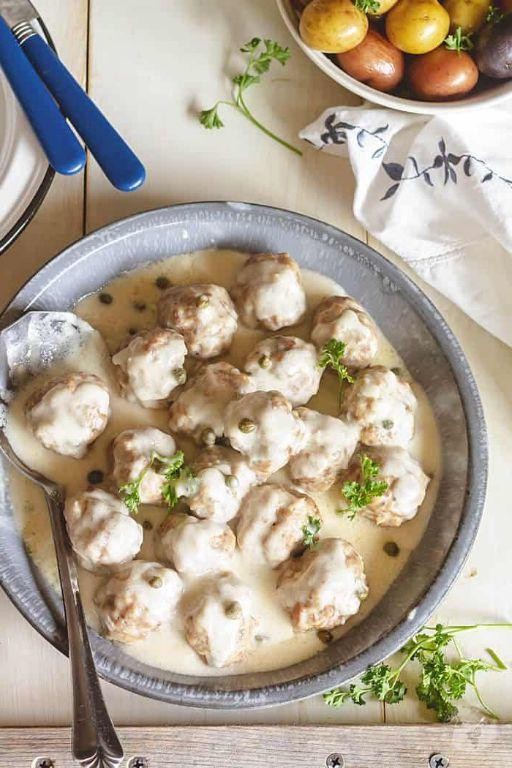
Perfect for a cozy winter evening, these tender German meatballs in a tangy caper sauce offer a comforting twist on classic comfort food. Preparing them step-by-step ensures a flavorful, restaurant-quality meal right at home.
Serving: 4 | Pre Time: 20 minutes | Cooking Time: 30 minutes
Ingredients
For the meatballs:
- 1 pound ground beef (80% lean)
- 1/2 cup breadcrumbs
- 1/4 cup milk
- 1 large egg
- 1/2 small onion, finely minced
- 1 tablespoon chopped fresh parsley
- 1/2 teaspoon salt
- 1/4 teaspoon black pepper
- 1/4 teaspoon ground nutmeg
For the sauce:
- 2 tablespoons unsalted butter
- 2 tablespoons all-purpose flour
- 2 cups beef broth
- 1/4 cup heavy cream
- 2 tablespoons capers, drained
- 1 tablespoon fresh lemon juice
Instructions
- In a small bowl, combine the breadcrumbs and milk, letting it soak for 5 minutes until softened.
- In a large mixing bowl, add the ground beef, soaked breadcrumb mixture, egg, minced onion, parsley, salt, pepper, and nutmeg.
- Using your hands, gently mix the ingredients until just combined, being careful not to overwork the meat to keep the meatballs tender.
- Shape the mixture into 12 equal-sized meatballs, each about 1.5 inches in diameter.
- Bring a large pot of salted water to a gentle simmer over medium heat, where small bubbles just break the surface.
- Carefully add the meatballs to the simmering water and cook for 15 minutes, until they float to the top and are firm to the touch.
- Using a slotted spoon, remove the meatballs from the water and set them aside on a plate, reserving 1 cup of the cooking liquid.
- In a large skillet, melt the butter over medium heat until it foams slightly.
- Whisk in the flour and cook for 2 minutes, stirring constantly, to form a light golden roux, which will thicken the sauce smoothly.
- Gradually pour in the beef broth and reserved cooking liquid, whisking continuously to prevent lumps.
- Bring the sauce to a simmer and cook for 5 minutes, until it thickens enough to coat the back of a spoon.
- Stir in the heavy cream, capers, and lemon juice, then return the meatballs to the skillet.
- Simmer everything together for 5 more minutes, allowing the flavors to meld, and tip: taste the sauce now—if it needs more brightness, add an extra teaspoon of lemon juice.
Lusciously creamy with a briny kick from the capers, this dish boasts meatballs that are incredibly tender and moist. Serve it over a bed of buttery egg noodles or mashed potatoes to soak up every drop of the rich sauce, and garnish with extra parsley for a fresh, colorful finish.
Kasseler with Sauerkraut and Potatoes
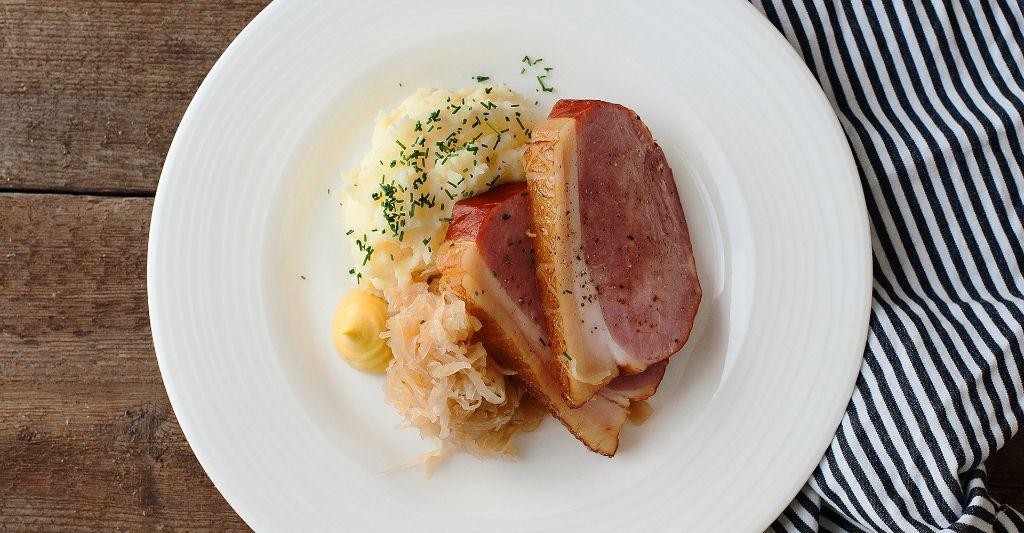
Just in time for a cozy winter evening, this classic German dish brings smoky, savory, and tangy flavors together in one comforting plate. Join me as we walk through each simple step to create Kasseler with Sauerkraut and Potatoes, perfect for beginners looking to expand their cooking repertoire.
Serving: 4 | Pre Time: 15 minutes | Cooking Time: 45 minutes
Ingredients
For the potatoes:
– 1.5 pounds Yukon Gold potatoes, peeled and quartered
– 2 tablespoons unsalted butter
– 1/4 cup whole milk, warmed
– 1 teaspoon salt
For the sauerkraut:
– 1 pound sauerkraut, drained
– 1 small onion, thinly sliced
– 1 tablespoon vegetable oil
– 1/2 cup chicken broth
– 1 teaspoon caraway seeds
For the kasseler:
– 4 kasseler pork chops (about 6 ounces each)
– 1 tablespoon vegetable oil
Instructions
1. Place the quartered potatoes in a large pot and cover with cold water by 1 inch. Add 1 teaspoon of salt to the water.
2. Bring the pot to a boil over high heat, then reduce to a simmer and cook for 15–20 minutes, until the potatoes are fork-tender. Tip: Start with cold water to ensure even cooking and prevent the potatoes from becoming mushy.
3. While the potatoes cook, heat 1 tablespoon of vegetable oil in a large skillet over medium heat. Add the sliced onion and cook for 5–7 minutes, stirring occasionally, until softened and lightly golden.
4. Stir in the drained sauerkraut and caraway seeds, then pour in 1/2 cup of chicken broth. Reduce the heat to low, cover, and simmer for 20 minutes, stirring once halfway through. Tip: Simmering the sauerkraut with broth mellows its tanginess and enhances the flavor.
5. In a separate skillet, heat 1 tablespoon of vegetable oil over medium-high heat. Pat the kasseler pork chops dry with paper towels to ensure a good sear.
6. Add the pork chops to the skillet and cook for 4–5 minutes per side, until browned and heated through. Tip: Avoid overcrowding the skillet to allow proper browning and even cooking.
7. Drain the cooked potatoes and return them to the pot. Add 2 tablespoons of unsalted butter and 1/4 cup of warmed whole milk.
8. Mash the potatoes with a potato masher until smooth and creamy, about 2–3 minutes.
9. Divide the mashed potatoes among four plates, top with the simmered sauerkraut, and place a kasseler pork chop alongside each serving.
Buttery mashed potatoes provide a creamy base that contrasts beautifully with the smoky, tender kasseler and tangy sauerkraut. For a creative twist, serve it with a dollop of whole-grain mustard on the side to add a sharp, spicy kick that complements the rich flavors.
Leberkäse with Fried Eggs and Pickles
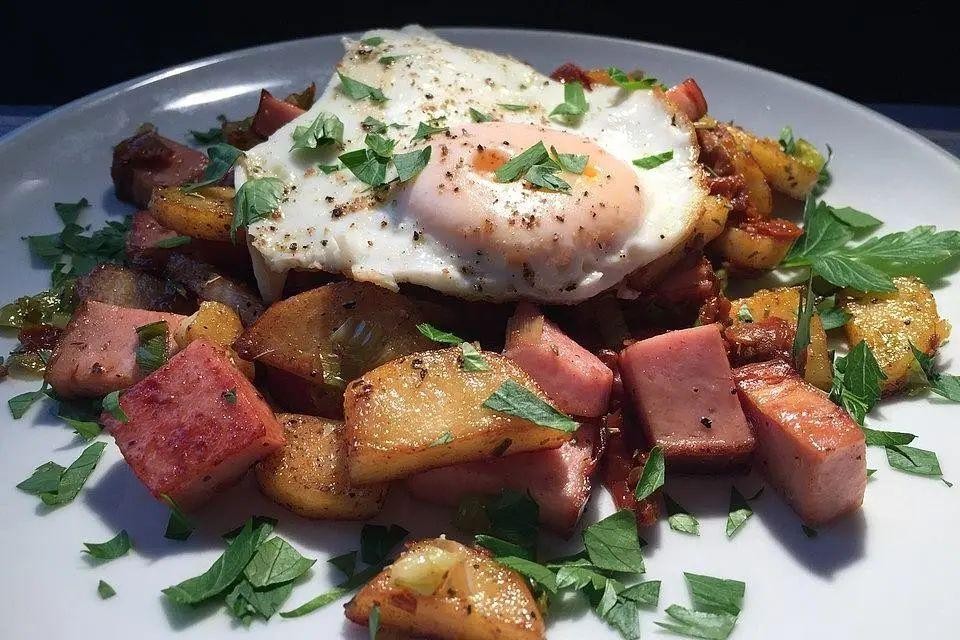
Unfussy comfort food doesn’t get much better than this hearty German-inspired plate. Leberkäse with Fried Eggs and Pickles is a satisfying meal that comes together quickly, perfect for a busy weeknight or a lazy weekend brunch.
Serving: 2 | Pre Time: 5 minutes | Cooking Time: 15 minutes
Ingredients
For the Leberkäse:
– 1 (8-ounce) pre-cooked Leberkäse loaf
– 1 tablespoon vegetable oil
For the Fried Eggs:
– 2 large eggs
– 1 tablespoon unsalted butter
– Pinch of salt
For Serving:
– 4 dill pickle spears
Instructions
1. Remove the pre-cooked Leberkäse loaf from its packaging and pat it dry with a paper towel to ensure a good sear.
2. Heat 1 tablespoon of vegetable oil in a medium skillet over medium-high heat until it shimmers, about 2 minutes.
3. Carefully place the Leberkäse loaf in the hot skillet. Sear for 3-4 minutes per side until a deep golden-brown crust forms. Tip: Avoid moving it too much to develop that perfect crust.
4. Transfer the seared Leberkäse to a plate and loosely cover it with foil to keep warm.
5. Reduce the skillet heat to medium-low and add 1 tablespoon of unsalted butter, letting it melt completely.
6. Crack 2 large eggs directly into the skillet, taking care not to break the yolks. Season with a pinch of salt.
7. Cook the eggs for 2-3 minutes until the whites are fully set but the yolks are still runny. Tip: For over-easy eggs, gently flip them after 2 minutes and cook for 30 seconds more.
8. While the eggs cook, arrange 4 dill pickle spears on two serving plates.
9. Slice the warm Leberkäse into 1/2-inch thick pieces and divide between the plates.
10. Use a spatula to carefully place one fried egg on top of each Leberkäse portion. Tip: The residual heat from the Leberkäse will slightly warm the egg yolk.
Delight in the contrast of textures and flavors: the savory, crisp-crusted meatloaf pairs wonderfully with the rich, runny egg yolk, while the tangy pickles cut through the richness. For a fun twist, try serving it open-faced on a slice of toasted rye bread or with a side of warm German potato salad.
Currywurst with French Fries
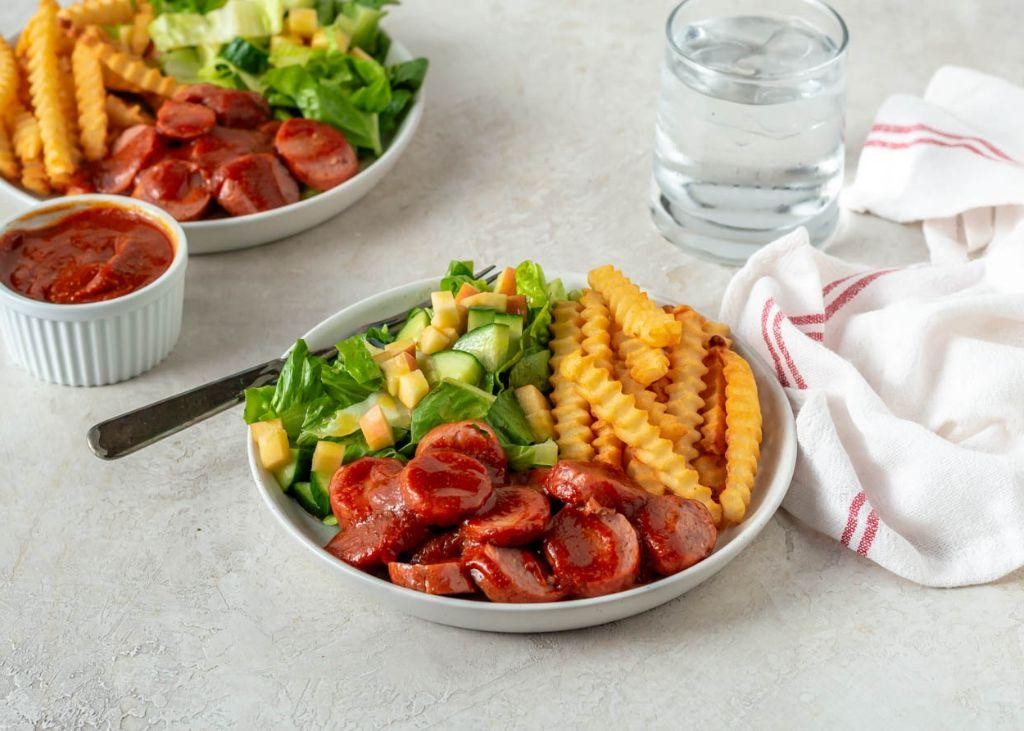
Haven’t you ever craved that perfect street food combination of savory sausage and crispy potatoes? Currywurst with French Fries brings together German comfort food with American practicality in a dish that’s surprisingly simple to make at home. Let’s walk through each component methodically so you can recreate this satisfying meal in your own kitchen.
Serving: 4 | Pre Time: 15 minutes | Cooking Time: 30 minutes
Ingredients
For the French Fries:
– 4 large russet potatoes (about 2 lbs)
– 4 cups vegetable oil
– 1 tsp salt
For the Currywurst:
– 4 bratwurst sausages (about 1 lb)
– 1 tbsp vegetable oil
For the Curry Ketchup Sauce:
– 1 cup ketchup
– 2 tbsp water
– 1 tbsp curry powder
– 1 tsp paprika
– 1/2 tsp onion powder
Instructions
1. Preheat your oven to 200°F to keep cooked components warm.
2. Peel 4 large russet potatoes completely with a vegetable peeler.
3. Cut each potato lengthwise into 1/2-inch thick planks using a sharp chef’s knife.
4. Stack the planks and cut them into 1/2-inch wide batons to create uniform French fries.
5. Soak the cut potatoes in cold water for 10 minutes to remove excess starch, which helps achieve crispier results.
6. Drain the potatoes thoroughly and pat them completely dry with paper towels.
7. Heat 4 cups of vegetable oil in a large Dutch oven to 325°F, checking with a deep-fry thermometer.
8. Carefully add the dried potatoes to the hot oil and fry for 5 minutes until lightly golden but still pale.
9. Remove the par-fried potatoes with a slotted spoon and drain on a paper towel-lined baking sheet.
10. Increase the oil temperature to 375°F, waiting until the thermometer reads accurately.
11. Return the potatoes to the hot oil and fry for 3-4 minutes until deeply golden brown and crispy.
12. Transfer the finished fries to the preheated oven and sprinkle immediately with 1 tsp salt.
13. While the fries cook, heat 1 tbsp vegetable oil in a large skillet over medium heat.
14. Add 4 bratwurst sausages to the skillet and cook for 8-10 minutes, turning every 2 minutes until browned on all sides.
15. Remove the cooked sausages to a cutting board and slice them diagonally into 1-inch pieces.
16. In a small saucepan, combine 1 cup ketchup, 2 tbsp water, 1 tbsp curry powder, 1 tsp paprika, and 1/2 tsp onion powder.
17. Whisk the sauce ingredients together thoroughly until no dry spices remain visible.
18. Heat the sauce over low heat for 5 minutes, stirring constantly until warmed through and fragrant.
19. Arrange the sliced bratwurst on a serving platter and pour the warm curry ketchup sauce over the top.
20. Remove the French fries from the oven and serve alongside the currywurst immediately.
Golden brown fries provide the perfect crispy contrast to the tender, sauce-coated sausage. The curry ketchup delivers warm, aromatic notes that elevate the simple bratwurst into something special. For a fun presentation, serve everything on newspaper-lined trays with extra sauce for dipping.
Eintopf with Sausage and Vegetables
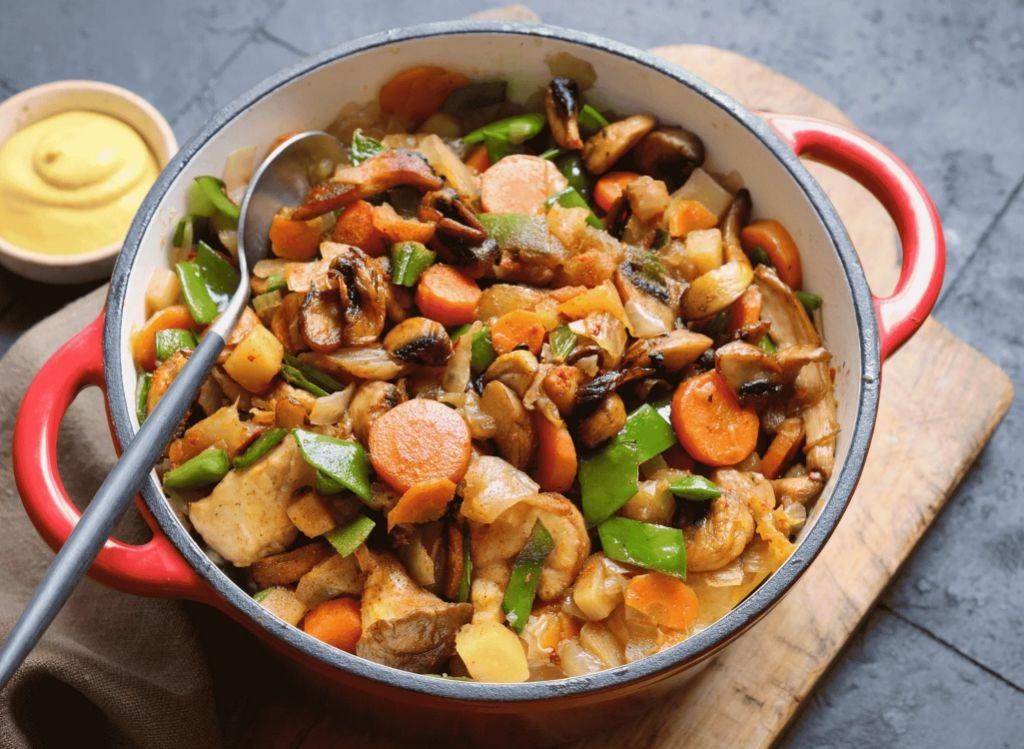
Gathering around a warm, hearty meal is one of winter’s greatest comforts, and this Eintopf with Sausage and Vegetables delivers exactly that. It’s a simple one-pot wonder that combines savory sausage, tender vegetables, and rich broth into a satisfying dish perfect for chilly evenings. Let’s walk through each step together to build layers of flavor effortlessly.
Serving: 6 | Pre Time: 15 minutes | Cooking Time: 45 minutes
Ingredients
For Browning and Base:
– 1 tablespoon olive oil
– 1 pound smoked sausage, sliced into 1/2-inch rounds
– 1 large yellow onion, diced
– 2 cloves garlic, minced
For Vegetables and Broth:
– 3 medium carrots, peeled and sliced into 1/2-inch pieces
– 2 medium potatoes, peeled and cubed into 1-inch pieces
– 4 cups low-sodium chicken broth
– 1 teaspoon dried thyme
– 1/2 teaspoon black pepper
– 1 bay leaf
For Finishing:
– 2 cups chopped kale, stems removed
– Salt, as needed
Instructions
1. Heat 1 tablespoon olive oil in a large Dutch oven or heavy pot over medium-high heat until it shimmers, about 2 minutes.
2. Add 1 pound sliced smoked sausage to the pot in a single layer. Cook without stirring for 3-4 minutes until browned on one side, then flip and brown the other side for another 3-4 minutes. Tip: Resist moving the sausage too early to develop a flavorful crust.
3. Transfer the browned sausage to a plate using a slotted spoon, leaving the rendered fat in the pot.
4. Add 1 diced yellow onion to the pot. Cook, stirring occasionally, for 5-6 minutes until softened and translucent.
5. Stir in 2 minced garlic cloves and cook for 1 minute until fragrant, being careful not to burn it.
6. Add 3 sliced carrots and 2 cubed potatoes to the pot. Stir to combine with the onions and garlic.
7. Pour in 4 cups low-sodium chicken broth, ensuring it covers the vegetables. Tip: Using low-sodium broth allows you to control the salt level better later.
8. Add 1 teaspoon dried thyme, 1/2 teaspoon black pepper, and 1 bay leaf to the pot. Stir gently.
9. Bring the mixture to a boil over high heat, then reduce the heat to low. Cover the pot and simmer for 25 minutes until the potatoes and carrots are fork-tender.
10. Return the browned sausage to the pot. Stir to combine.
11. Add 2 cups chopped kale to the pot. Tip: Push the kale down into the broth to help it wilt quickly.
12. Simmer uncovered for 5 minutes until the kale is wilted and vibrant green.
13. Taste the broth and add salt if needed, starting with 1/4 teaspoon and adjusting to preference. Remove and discard the bay leaf.
Vividly hearty, this Eintopf boasts tender vegetables and smoky sausage in a savory broth that deepens as it sits. The kale adds a pleasant texture contrast, staying slightly crisp against the soft potatoes. Serve it with crusty bread for dipping, or let it rest overnight—the flavors meld beautifully, making leftovers even more delicious the next day.
Schweinshaxe with Beer Gravy
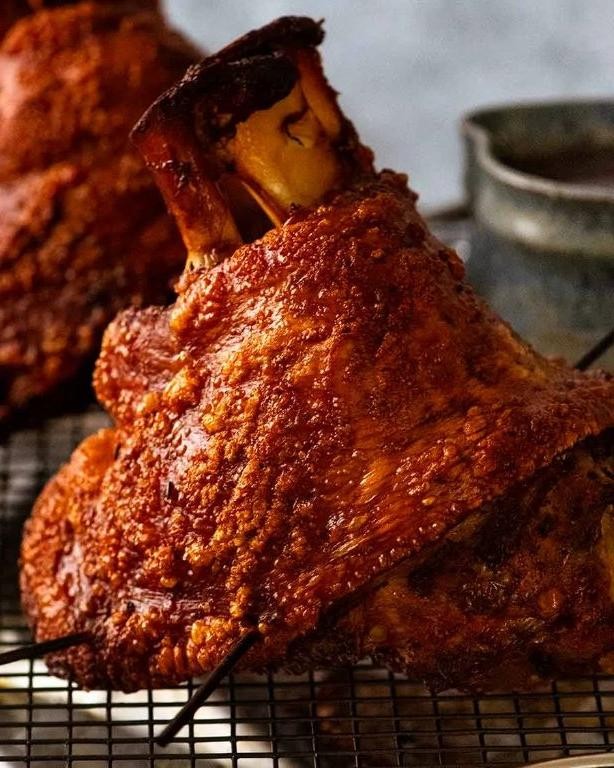
Perfect for a festive winter gathering, this German-inspired Schweinshaxe with Beer Gravy transforms a humble pork shank into a show-stopping centerpiece through slow roasting and a rich, savory sauce. Preparing it requires patience, but the reward is fall-off-the-bone meat with a crackling crust that’s well worth the wait.
Serving: 4 | Pre Time: 20 minutes | Cooking Time: 3 hours 30 minutes
Ingredients
For the Pork Shanks:
– 4 pork shanks (about 1 lb each)
– 2 tbsp vegetable oil
– 1 tbsp kosher salt
– 1 tsp black pepper
– 1 tsp caraway seeds
For the Roasting Base:
– 2 large yellow onions, roughly chopped
– 4 cloves garlic, smashed
– 2 carrots, roughly chopped
– 2 celery stalks, roughly chopped
For the Beer Gravy:
– 2 cups German lager or pilsner beer
– 4 cups low-sodium chicken broth
– 2 tbsp all-purpose flour
– 2 tbsp unsalted butter
– 2 sprigs fresh thyme
– 1 bay leaf
Instructions
1. Preheat your oven to 450°F. Pat the pork shanks completely dry with paper towels—this is crucial for achieving a crispy skin later.
2. Rub the shanks evenly with vegetable oil, then season all over with kosher salt, black pepper, and caraway seeds.
3. Place the chopped onions, garlic, carrots, and celery in the bottom of a large roasting pan to create a vegetable trivet.
4. Arrange the seasoned pork shanks on top of the vegetables, ensuring they are not touching each other.
5. Roast the shanks at 450°F for 30 minutes to start rendering the fat and browning the exterior.
6. Reduce the oven temperature to 325°F. Carefully pour 1 cup of beer and 2 cups of chicken broth around the shanks, avoiding the skin.
7. Add the thyme sprigs and bay leaf to the liquid. Loosely cover the pan with aluminum foil.
8. Roast at 325°F for 2 hours and 30 minutes, basting the shanks with the pan juices every 45 minutes to keep them moist.
9. Remove the foil and increase the oven temperature to 400°F. Roast uncovered for another 30 minutes to crisp the skin, checking that it turns golden brown and crackly.
10. Transfer the cooked shanks and vegetables to a serving platter. Tent loosely with foil to keep warm.
11. For the gravy, strain the pan juices into a measuring cup, skimming off excess fat. You should have about 2 cups of liquid.
12. In a saucepan over medium heat, melt the butter. Whisk in the flour and cook for 2 minutes until it forms a light brown roux.
13. Gradually whisk in the strained pan juices, remaining 1 cup of beer, and remaining 2 cups of chicken broth until smooth.
14. Bring the gravy to a simmer, stirring constantly, and cook for 5-7 minutes until it thickens to a coating consistency. Discard the thyme stems and bay leaf.
That succulent, slow-roasted pork pulls apart effortlessly with a fork, while the crispy skin offers a satisfying crunch. The malty beer gravy deepens the savory flavors, making it ideal for serving over a bed of buttery mashed potatoes or with a side of tangy red cabbage to cut through the richness.
Käsespätzle with Caramelized Onions
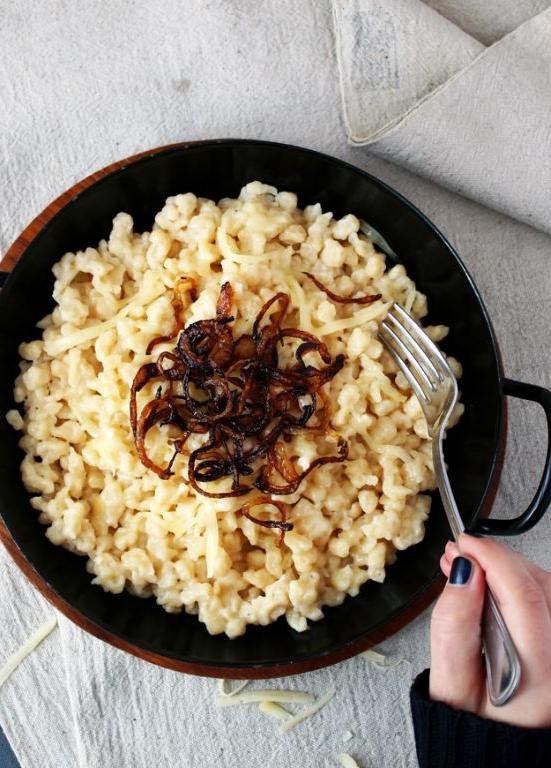
A comforting German classic, Käsespätzle with caramelized onions transforms simple ingredients into a rich, cheesy delight perfect for cozy evenings. This recipe breaks down the process into manageable steps, ensuring even beginners can achieve the perfect balance of tender noodles, melted cheese, and sweet, golden onions.
Serving: 4 | Pre Time: 20 minutes | Cooking Time: 40 minutes
Ingredients
For the spätzle dough:
– 2 cups all-purpose flour
– 3 large eggs
– 1/2 cup whole milk
– 1/2 teaspoon salt
For the caramelized onions:
– 2 large yellow onions, thinly sliced
– 2 tablespoons unsalted butter
– 1 tablespoon olive oil
– 1/4 teaspoon salt
For assembly:
– 8 ounces Gruyère cheese, shredded
– 2 tablespoons unsalted butter
– 1/4 teaspoon freshly ground black pepper
Instructions
1. In a large bowl, whisk together 2 cups all-purpose flour and 1/2 teaspoon salt. 2. Add 3 large eggs and 1/2 cup whole milk to the bowl, then mix until a sticky, smooth dough forms. 3. Let the dough rest at room temperature for 15 minutes to relax the gluten. 4. While the dough rests, heat 2 tablespoons unsalted butter and 1 tablespoon olive oil in a large skillet over medium heat. 5. Add 2 thinly sliced yellow onions and 1/4 teaspoon salt to the skillet, stirring to coat. 6. Cook the onions for 25–30 minutes, stirring every 5 minutes, until they turn deep golden brown and sweet. 7. Bring a large pot of salted water to a rolling boil. 8. Press the rested dough through a spätzle maker or colander with large holes directly into the boiling water. 9. Cook the spätzle for 2–3 minutes, until they float to the surface. 10. Drain the spätzle immediately in a colander. 11. Preheat your oven to 375°F. 12. In a greased baking dish, layer half of the drained spätzle. 13. Sprinkle half of 8 ounces shredded Gruyère cheese evenly over the spätzle layer. 14. Spread all of the caramelized onions evenly over the cheese. 15. Layer the remaining spätzle on top of the onions. 16. Sprinkle the remaining shredded Gruyère cheese over the top layer. 17. Dot 2 tablespoons unsalted butter in small pieces over the cheese. 18. Sprinkle 1/4 teaspoon freshly ground black pepper over the top. 19. Bake in the preheated oven for 15–20 minutes, until the cheese is bubbly and lightly browned. 20. Remove from the oven and let it rest for 5 minutes before serving.
Oozing with melted Gruyère, this dish offers a delightful contrast between the soft, eggy spätzle and the crisp, golden cheese topping. The caramelized onions add a subtle sweetness that balances the richness, making it ideal for serving alongside a crisp green salad or roasted vegetables to cut through the decadence.
Frikadellen with Potato Mash
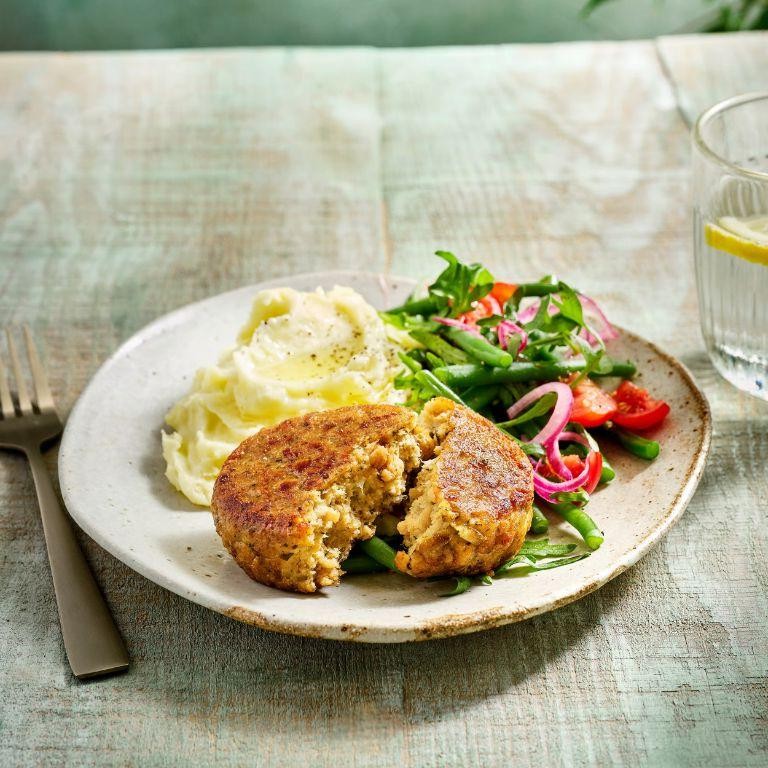
Frikadellen with potato mash is a comforting German classic that transforms simple ground meat and potatoes into a hearty, satisfying meal. Follow these methodical steps to create perfectly seasoned patties and creamy mashed potatoes, ideal for a cozy dinner.
Serving: 4 | Pre Time: 20 minutes | Cooking Time: 30 minutes
Ingredients
For the Frikadellen:
– 1 lb ground beef (80% lean)
– 1/2 cup breadcrumbs
– 1/4 cup milk
– 1 large egg
– 1 small onion, finely chopped
– 2 tbsp chopped fresh parsley
– 1 tsp salt
– 1/2 tsp black pepper
– 1/4 tsp ground nutmeg
– 2 tbsp vegetable oil
For the Potato Mash:
– 2 lbs Yukon Gold potatoes, peeled and quartered
– 1/2 cup whole milk, warmed
– 4 tbsp unsalted butter
– 1 tsp salt
– 1/4 tsp white pepper
Instructions
1. In a large bowl, soak 1/2 cup breadcrumbs in 1/4 cup milk for 5 minutes until softened.
2. Add 1 lb ground beef, 1 large egg, 1 small finely chopped onion, 2 tbsp chopped parsley, 1 tsp salt, 1/2 tsp black pepper, and 1/4 tsp ground nutmeg to the bowl.
3. Mix all ingredients with your hands until just combined; overmixing can make the patties tough.
4. Divide the mixture into 8 equal portions and shape each into a 3/4-inch-thick patty.
5. Heat 2 tbsp vegetable oil in a large skillet over medium-high heat until shimmering, about 350°F.
6. Place patties in the skillet without crowding; cook for 4-5 minutes per side until deeply browned and internal temperature reaches 160°F.
7. While patties cook, place 2 lbs quartered potatoes in a large pot, cover with cold water by 1 inch, and add 1 tsp salt.
8. Bring potatoes to a boil over high heat, then reduce to a simmer and cook for 15-20 minutes until fork-tender.
9. Drain potatoes thoroughly and return them to the pot over low heat for 1 minute to evaporate excess moisture.
10. Mash potatoes with a potato ricer or masher until smooth.
11. Stir in 4 tbsp unsalted butter, 1/2 cup warmed milk, and 1/4 tsp white pepper until creamy; add more milk if needed for desired consistency.
12. Serve frikadellen hot over potato mash.
Enjoy the contrast of crispy, savory patties against the velvety smooth mash, with nutmeg adding a subtle warmth. For a creative twist, top with caramelized onions or serve alongside tangy German cucumber salad.
Kohlrouladen with Tomato Sauce

A comforting German classic, kohlrouladen transforms humble cabbage leaves into tender parcels filled with savory ground meat, all simmered in a rich tomato sauce. This step-by-step guide will walk you through blanching the cabbage, preparing the filling, rolling the bundles, and creating the sauce, resulting in a hearty, satisfying meal perfect for a cozy dinner.
Serving: 6 | Pre Time: 30 minutes | Cooking Time: 90 minutes
Ingredients
For the cabbage rolls:
– 1 large head green cabbage (about 3 lbs)
– 1 lb ground beef (80% lean)
– 1/2 cup cooked white rice
– 1/4 cup finely chopped yellow onion
– 1 large egg
– 2 tbsp chopped fresh parsley
– 1 tsp salt
– 1/2 tsp black pepper
– 6 slices bacon
– 2 tbsp vegetable oil
For the tomato sauce:
– 1 (28 oz) can crushed tomatoes
– 1 cup beef broth
– 1/4 cup finely chopped yellow onion
– 2 tbsp tomato paste
– 1 tsp dried thyme
– 1 bay leaf
Instructions
1. Bring a large pot of water to a boil over high heat.
2. Carefully remove 12 large outer leaves from the cabbage head.
3. Blanch the cabbage leaves in the boiling water for 3 minutes until pliable.
4. Transfer the blanched leaves to a bowl of ice water to stop the cooking process, then pat them dry with paper towels. Tip: Trimming the thick center rib of each leaf with a paring knife after blanching makes rolling easier.
5. In a medium bowl, combine the ground beef, cooked rice, 1/4 cup chopped onion, egg, parsley, salt, and black pepper.
6. Divide the meat mixture into 12 equal portions, about 1/4 cup each.
7. Place one portion of meat mixture in the center of a cabbage leaf.
8. Fold the sides of the leaf over the filling, then roll tightly from the stem end to form a bundle.
9. Wrap one slice of bacon around each cabbage roll and secure with kitchen twine or a toothpick.
10. Heat the vegetable oil in a large Dutch oven or heavy-bottomed pot over medium-high heat.
11. Brown the cabbage rolls on all sides for about 8-10 minutes total, working in batches if necessary to avoid crowding.
12. Remove the cabbage rolls from the pot and set them aside on a plate.
13. In the same pot, add the remaining 1/4 cup chopped onion and cook for 3 minutes until softened.
14. Stir in the tomato paste and cook for 1 minute until fragrant.
15. Add the crushed tomatoes, beef broth, dried thyme, and bay leaf, scraping up any browned bits from the bottom of the pot.
16. Return the cabbage rolls to the pot, nestling them in the sauce.
17. Bring the sauce to a simmer, then reduce the heat to low, cover the pot, and cook for 75 minutes. Tip: Check occasionally and add a splash of water if the sauce reduces too much.
18. After 75 minutes, remove the lid and cook uncovered for an additional 15 minutes to slightly thicken the sauce. Tip: The rolls are done when a fork easily pierces the cabbage and the internal temperature of the filling reaches 160°F.
19. Carefully remove the bay leaf and discard it.
20. Serve the cabbage rolls hot, spooning the sauce over the top.
Dense with flavor, the tender cabbage leaves give way to a well-seasoned, juicy filling, while the tomato sauce provides a bright, herbaceous balance. For a complete meal, serve these rouladen over a bed of buttery egg noodles or creamy mashed potatoes to soak up every last drop of the savory sauce.
Herring Salad with Boiled Potatoes
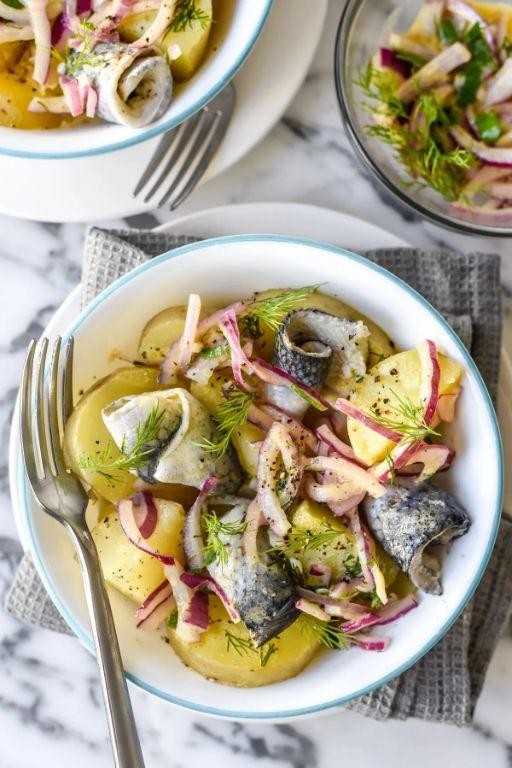
Many classic comfort dishes get overlooked in today’s fast-paced world, but this Herring Salad with Boiled Potatoes is a timeless, satisfying meal that’s surprisingly simple to prepare. Mastering this recipe involves just a few key techniques for perfectly cooked potatoes and a balanced, creamy dressing. Let’s walk through each step together to create a dish that’s both hearty and refreshing.
Serving: 4 | Pre Time: 15 minutes | Cooking Time: 20 minutes
Ingredients
For the potatoes:
– 1.5 lbs Yukon Gold potatoes, scrubbed
– 4 cups cold water
– 1 tsp salt
For the salad assembly:
– 8 oz jarred herring fillets in wine sauce, drained and chopped
– 1/2 cup sour cream
– 2 tbsp mayonnaise
– 1 tbsp white vinegar
– 1/2 tsp sugar
– 1/4 tsp black pepper
– 1/2 small red onion, finely diced
– 2 hard-boiled eggs, peeled and chopped
– 2 tbsp fresh dill, chopped
Instructions
1. Place the scrubbed potatoes in a medium saucepan and cover them completely with 4 cups of cold water.
2. Add 1 tsp of salt to the water, which helps season the potatoes from the inside as they cook.
3. Set the saucepan over high heat and bring the water to a rolling boil, which should take about 5-7 minutes.
4. Once boiling, reduce the heat to medium-low to maintain a gentle simmer, cover the pan partially with a lid, and cook for 15-20 minutes.
5. Test the potatoes for doneness by inserting a fork into the center of the largest one; it should slide in easily without resistance.
6. Drain the potatoes in a colander and let them cool until they are safe to handle, about 10 minutes, which prevents them from becoming mushy when cut.
7. While the potatoes cool, combine the sour cream, mayonnaise, white vinegar, sugar, and black pepper in a medium mixing bowl, whisking until smooth.
8. Peel the cooled potatoes and cut them into 1/2-inch cubes, placing them in a large salad bowl.
9. Add the chopped herring, diced red onion, chopped hard-boiled eggs, and fresh dill to the bowl with the potatoes.
10. Pour the dressing over the salad ingredients and use a large spoon to gently fold everything together until evenly coated, being careful not to break up the potatoes.
11. Cover the bowl with plastic wrap and refrigerate the salad for at least 30 minutes to allow the flavors to meld.
Zesty and creamy, this salad features tender potato cubes that hold their shape against the rich, tangy dressing and briny herring. For a creative twist, serve it on a bed of crisp lettuce leaves or with rye crackers for added texture, making it a versatile centerpiece for picnics or light dinners.
Zwiebelrostbraten with Roasted Potatoes
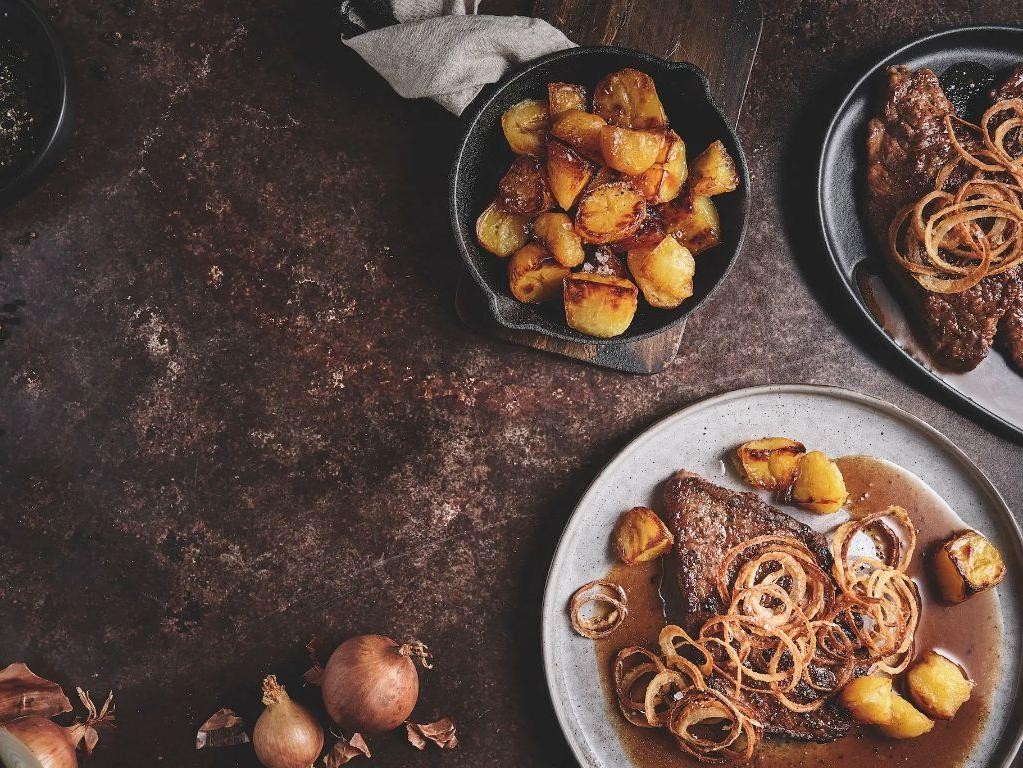
While the name might sound fancy, Zwiebelrostbraten is simply a comforting, pan-seared steak smothered in a rich onion gravy, and it’s surprisingly straightforward to make at home. We’ll pair it with crispy roasted potatoes for a complete, hearty meal that’s perfect for a special dinner. Let’s walk through each step together to ensure success.
Serving: 4 | Prep Time: 20 minutes | Cooking Time: 45 minutes
Ingredients
For the Steak & Potatoes:
– 4 (8-ounce) beef top sirloin steaks, about 1 inch thick
– 2 pounds Yukon Gold potatoes, cut into 1-inch cubes
– 3 tablespoons olive oil, divided
– 1 teaspoon kosher salt, divided
– 1/2 teaspoon black pepper, divided
For the Onion Gravy:
– 2 large yellow onions, thinly sliced
– 2 tablespoons unsalted butter
– 1 tablespoon all-purpose flour
– 1 cup beef broth
– 1/4 cup dry red wine
– 1 teaspoon Worcestershire sauce
Instructions
1. Preheat your oven to 425°F.
2. Toss the potato cubes with 2 tablespoons of olive oil, 1/2 teaspoon salt, and 1/4 teaspoon pepper on a rimmed baking sheet.
3. Roast the potatoes for 35-40 minutes, stirring halfway through, until golden brown and fork-tender.
4. Pat the steaks completely dry with paper towels to ensure a good sear.
5. Season both sides of the steaks evenly with the remaining 1/2 teaspoon salt and 1/4 teaspoon pepper.
6. Heat the remaining 1 tablespoon of olive oil in a large skillet over medium-high heat until shimmering.
7. Sear the steaks for 4-5 minutes per side without moving them to develop a deep brown crust.
8. Transfer the cooked steaks to a plate and loosely tent with foil to rest.
9. Reduce the skillet heat to medium and add the butter.
10. Add the sliced onions to the skillet and cook for 15-18 minutes, stirring occasionally, until deeply caramelized and golden brown.
11. Sprinkle the flour over the onions and cook, stirring constantly, for 1 minute to form a roux.
12. Whisk in the beef broth, red wine, and Worcestershire sauce, scraping up any browned bits from the pan bottom.
13. Bring the gravy to a simmer and cook for 3-5 minutes, until slightly thickened.
14. Return the steaks and any accumulated juices to the skillet, spooning the gravy over them to warm through for 1 minute.
Perfectly seared steak yields to a tender, juicy interior, beautifully complemented by the sweet, savory depth of the onion gravy. The roasted potatoes provide a crispy, golden contrast that soaks up every last drop. For a creative twist, serve it family-style on a large platter with a simple arugula salad on the side to cut through the richness.
Schupfnudeln with Bacon and Sauerkraut
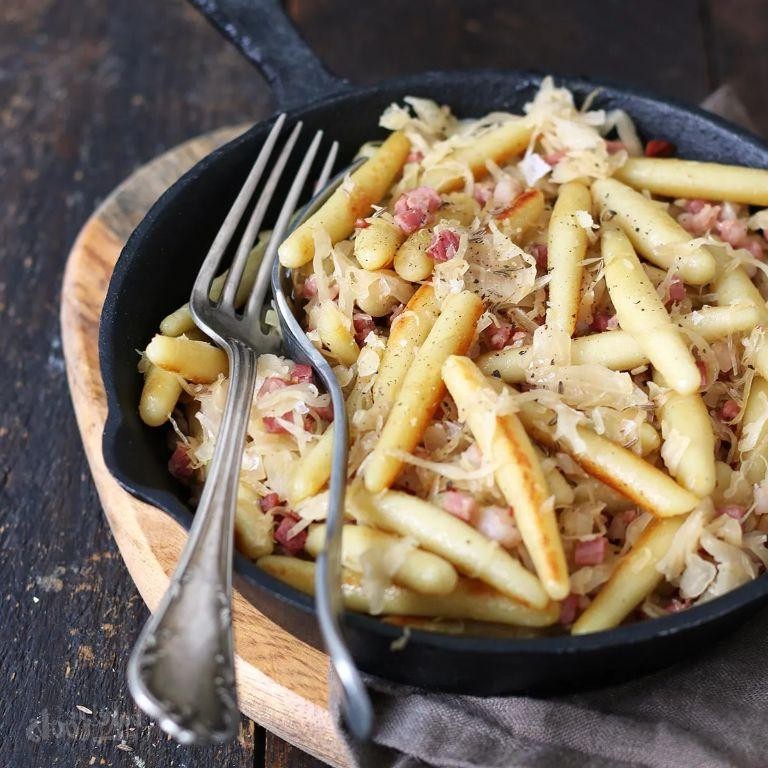
Kicking off our cozy winter cooking session, let’s dive into a hearty German-inspired dish that’s perfect for chilly evenings. Schupfnudeln are soft potato dumplings that pair beautifully with savory bacon and tangy sauerkraut, creating a comforting meal that feels both rustic and satisfying. This recipe walks you through each stage methodically, so even beginners can achieve delicious results.
Serving: 4 | Pre Time: 20 minutes | Cooking Time: 25 minutes
Ingredients
For the Schupfnudeln:
– 2 cups mashed potatoes (cooled)
– 1 cup all-purpose flour
– 1 large egg
– 1/2 tsp salt
For the Bacon and Sauerkraut:
– 6 oz thick-cut bacon, diced
– 1 tbsp unsalted butter
– 1 lb sauerkraut, drained
– 1/2 cup chicken broth
– 1/4 tsp black pepper
Instructions
1. In a large bowl, combine the mashed potatoes, flour, egg, and salt until a dough forms. Tip: Use cold mashed potatoes to prevent the dough from becoming sticky.
2. On a floured surface, roll the dough into 1/2-inch thick ropes, then cut them into 2-inch pieces.
3. Bring a large pot of salted water to a boil over high heat.
4. Carefully add the Schupfnudeln pieces to the boiling water and cook for 3–4 minutes until they float to the surface. Tip: Avoid overcrowding the pot to ensure even cooking.
5. Drain the Schupfnudeln using a slotted spoon and set them aside on a plate.
6. In a large skillet over medium heat, cook the diced bacon for 5–7 minutes until crispy and browned.
7. Remove the bacon from the skillet with a slotted spoon, leaving about 1 tbsp of bacon fat in the pan.
8. Add the butter to the skillet and melt it over medium heat.
9. Stir in the drained sauerkraut and cook for 2 minutes to warm it through.
10. Pour in the chicken broth and black pepper, then simmer for 5 minutes until the liquid reduces slightly.
11. Add the cooked Schupfnudeln and crispy bacon to the skillet, tossing gently to combine and heat for 2–3 minutes. Tip: Gently stir to avoid breaking the dumplings.
12. Remove from heat and serve immediately.
Offering a delightful contrast, the soft, pillowy Schupfnudeln soak up the smoky bacon flavors while the sauerkraut adds a bright, tangy crunch. For a creative twist, top it with a fried egg or serve alongside roasted apples to balance the richness with a touch of sweetness.
Summary
Delving into these 19 classic German dinners is a delicious way to bring authentic European comfort food to your table. We hope you’re inspired to try a recipe or two! Don’t forget to leave a comment telling us your favorite, and if you loved this roundup, please share it on Pinterest to help other home cooks discover these gems. Guten Appetit!