
Oh, the humble Japanese eggplant—so versatile and packed with flavor! If you’re looking to spice up your weeknight dinners with something deliciously savory, you’ve come to the right place. From quick stir-fries to comforting bakes, these 19 recipes will transform this veggie into a star. Ready to get cooking? Dive in and discover your new favorite dish!
Grilled Japanese Eggplant with Miso Glaze
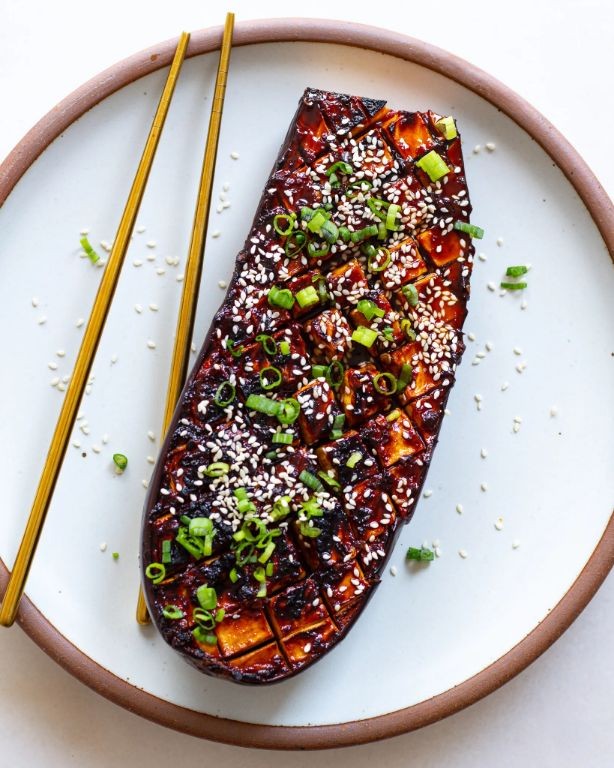
Fragrant and deeply savory, grilled Japanese eggplant with miso glaze transforms a humble vegetable into an elegant centerpiece, its tender flesh absorbing the sweet-salty richness of the glaze while developing a beautiful char. This dish, with its glossy finish and umami depth, is a stunning yet simple addition to any summer table, offering a sophisticated balance of flavors that feels both comforting and refined.
Serving: 4 | Pre Time: 15 minutes | Cooking Time: 15 minutes
Ingredients
- 4 Japanese eggplants, about 1 lb total—I look for slender, firm ones with smooth, shiny skin for even cooking.
- 2 tbsp white miso paste, my favorite brand for its mild, slightly sweet flavor.
- 2 tbsp mirin, which adds a subtle sweetness and helps the glaze caramelize beautifully.
- 1 tbsp soy sauce, preferably low-sodium to control the saltiness.
- 1 tbsp rice vinegar, for a bright, balancing acidity.
- 1 tsp toasted sesame oil, which I always keep on hand for its nutty aroma.
- 1 tbsp neutral oil, like avocado or grapeseed, for high-heat grilling.
- 1 tsp toasted sesame seeds, for a final crunchy garnish.
- 2 scallions, thinly sliced, using both the white and green parts for color and freshness.
Instructions
- Preheat a grill or grill pan to medium-high heat, about 400°F, ensuring it’s hot before adding the eggplant.
- Trim the ends off the 4 Japanese eggplants and slice each one in half lengthwise.
- Score the cut sides of each eggplant half in a crosshatch pattern, about ¼-inch deep, to help them absorb the glaze.
- Brush the cut sides of the eggplant halves lightly with 1 tbsp neutral oil to prevent sticking.
- Place the eggplant halves cut-side down on the preheated grill and cook for 5-7 minutes, until grill marks appear and the flesh softens slightly.
- Flip the eggplant halves and cook for another 4-5 minutes on the skin side, until tender when pierced with a fork.
- While the eggplant grills, whisk together 2 tbsp white miso paste, 2 tbsp mirin, 1 tbsp soy sauce, 1 tbsp rice vinegar, and 1 tsp toasted sesame oil in a small bowl until smooth.
- Tip: If the glaze seems too thick, add a teaspoon of water to thin it slightly for easier brushing.
- Once the eggplant is tender, brush the miso glaze generously over the cut sides of each half.
- Return the glazed eggplant to the grill and cook for 1-2 minutes more, just until the glaze bubbles and caramelizes slightly.
- Tip: Watch closely during this step to avoid burning the glaze, as the sugars in the mirin can char quickly.
- Remove the eggplant from the grill and transfer to a serving platter.
- Sprinkle the grilled eggplant with 1 tsp toasted sesame seeds and 2 thinly sliced scallions as a garnish.
- Tip: Let the eggplant rest for a minute before serving to allow the flavors to meld and the texture to set.
When served, the eggplant offers a delightful contrast: the flesh becomes meltingly tender with a subtle smokiness from the grill, while the miso glaze forms a sticky, savory-sweet crust that glistens under the light. For a creative twist, pair it with a scoop of steamed jasmine rice or layer it into a grain bowl with edamame and pickled ginger, letting the rich umami notes shine through in every bite.
Spicy Garlic Soy-Glazed Japanese Eggplant
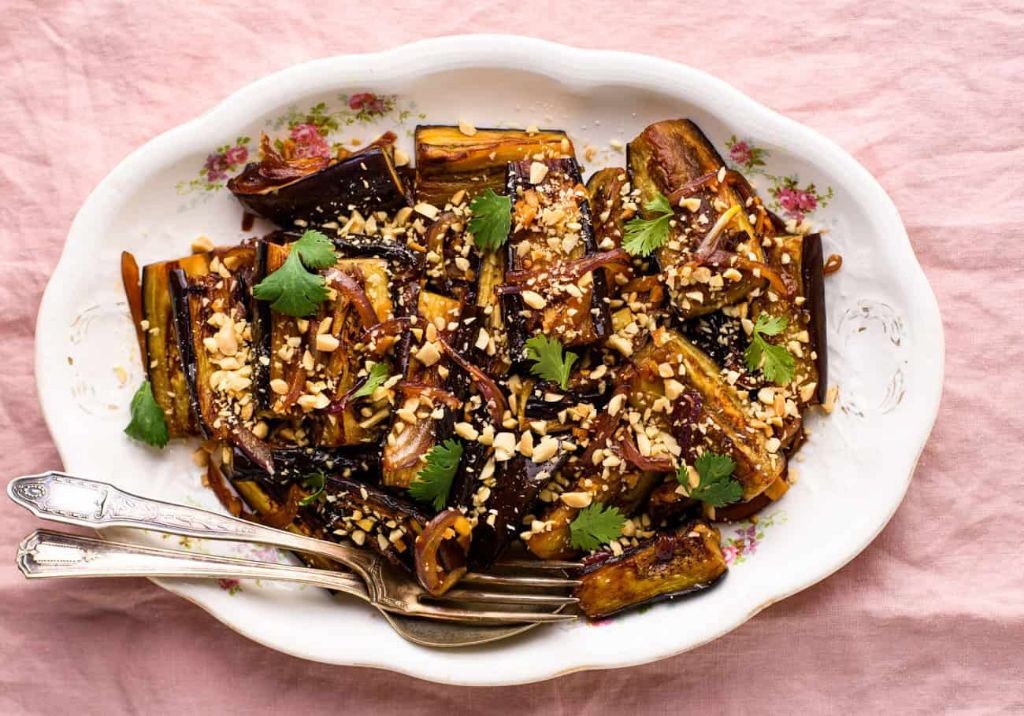
Juxtaposing the delicate sweetness of Japanese eggplant with the bold punch of garlic and spice creates a dish that feels both comforting and sophisticated. This Spicy Garlic Soy-Glazed version transforms the humble vegetable into a glossy, caramelized centerpiece, perfect for elevating a weeknight dinner or impressing guests at a gathering. Its aromatic allure and vibrant color make it as visually stunning as it is delicious.
Serving: 4 | Pre Time: 15 minutes | Cooking Time: 20 minutes
Ingredients
– 4 medium Japanese eggplants, sliced into 1/2-inch rounds (their slender shape cooks evenly)
– 3 tablespoons avocado oil (my go-to for high-heat cooking due to its neutral flavor)
– 6 cloves garlic, minced (freshly minced releases the best aroma)
– 2 tablespoons low-sodium soy sauce (I prefer this to control saltiness)
– 1 tablespoon rice vinegar (adds a bright, tangy note)
– 1 tablespoon honey (for a touch of sweetness to balance the heat)
– 1 teaspoon toasted sesame oil (just a drizzle enhances depth)
– 1/2 teaspoon red pepper flakes (adjust to your spice tolerance)
– 2 green onions, thinly sliced (for a fresh garnish)
– 1 tablespoon toasted sesame seeds (adds a delightful crunch)
Instructions
1. Preheat your oven to 425°F and line a baking sheet with parchment paper for easy cleanup.
2. Arrange the eggplant rounds in a single layer on the baking sheet, ensuring they do not overlap to promote even roasting.
3. Drizzle 2 tablespoons of avocado oil over the eggplant, tossing gently to coat each piece lightly.
4. Roast the eggplant in the preheated oven for 15 minutes, or until the edges are golden brown and the centers are tender when pierced with a fork.
5. While the eggplant roasts, heat the remaining 1 tablespoon of avocado oil in a small saucepan over medium heat.
6. Add the minced garlic to the saucepan and sauté for 1-2 minutes, stirring constantly until fragrant but not browned to avoid bitterness.
7. Stir in the soy sauce, rice vinegar, honey, toasted sesame oil, and red pepper flakes, bringing the mixture to a gentle simmer for 2 minutes to thicken slightly into a glaze.
8. Remove the roasted eggplant from the oven and immediately brush or spoon the warm glaze evenly over each round, coating them thoroughly.
9. Return the glazed eggplant to the oven and bake for an additional 5 minutes, allowing the glaze to caramelize and adhere to the surface.
10. Transfer the eggplant to a serving platter and garnish with sliced green onions and toasted sesame seeds while still hot.
Achieving a perfect balance of textures, this dish offers tender, melt-in-your-mouth eggplant with a sticky, glossy exterior that crackles with umami richness. Serve it over steamed jasmine rice to soak up the savory sauce, or alongside grilled proteins for a vibrant, flavor-packed meal that highlights the eggplant’s versatility.
Japanese Eggplant Tempura with Dipping Sauce
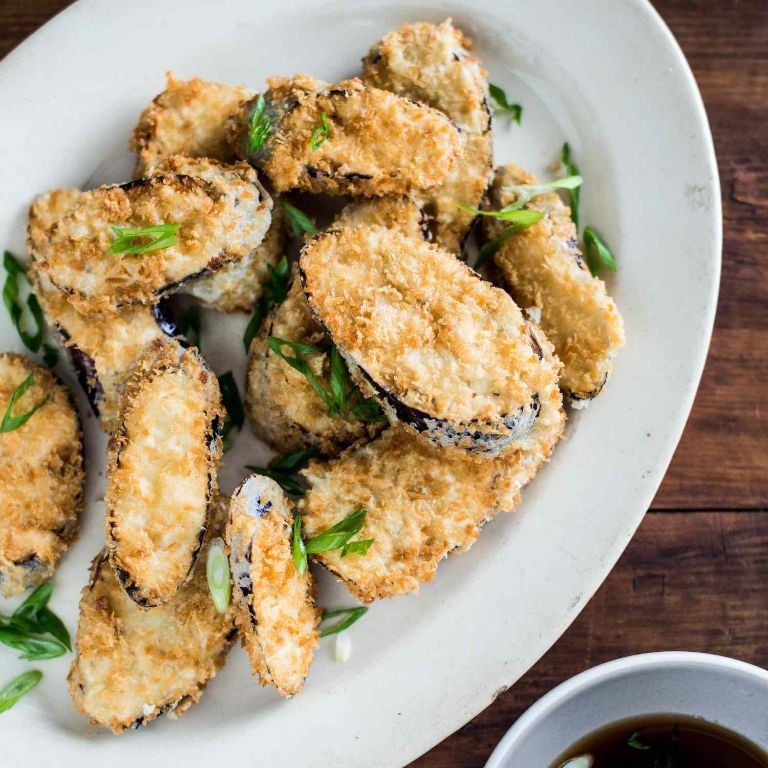
Crisp, golden, and impossibly light, Japanese eggplant tempura is a study in elegant simplicity, transforming the humble vegetable into a delicate, airy masterpiece that shatters with the slightest touch. Paired with a savory-sweet dipping sauce, it’s a dish that feels both celebratory and comforting, perfect for a festive appetizer or a stunning side. Serving: 4 | Pre Time: 15 minutes | Cooking Time: 10 minutes
Ingredients
– 2 medium Japanese eggplants, sliced into 1/4-inch rounds (their slender shape yields perfect, uniform pieces)
– 1 cup all-purpose flour, plus 1/4 cup for dusting (I keep a small bowl separate for this to avoid clumping)
– 1 cup ice-cold sparkling water (the bubbles are key for that signature airy crunch)
– 1 large egg, lightly beaten (room temperature helps it incorporate smoothly)
– 1 quart vegetable oil, for frying (I use a neutral oil like canola for a clean flavor)
– 1/4 cup soy sauce
– 2 tablespoons mirin
– 1 tablespoon granulated sugar
– 1 teaspoon freshly grated ginger (a microplane makes this effortless)
Instructions
1. In a small saucepan over medium heat, combine 1/4 cup soy sauce, 2 tablespoons mirin, and 1 tablespoon granulated sugar.
2. Whisk the mixture constantly for 3 minutes, or until the sugar is fully dissolved and the sauce is slightly thickened.
3. Remove the saucepan from the heat and stir in 1 teaspoon freshly grated ginger; set the dipping sauce aside to cool.
4. Pat 2 medium Japanese eggplants, sliced into 1/4-inch rounds, completely dry with paper towels to ensure the batter adheres.
5. Lightly dust the dried eggplant rounds with 1/4 cup all-purpose flour, tapping off any excess.
6. In a large mixing bowl, whisk together 1 large egg, lightly beaten, and 1 cup ice-cold sparkling water until just combined.
7. Gently fold 1 cup all-purpose flour into the wet ingredients using chopsticks or a fork, leaving the batter slightly lumpy; overmixing develops gluten and makes it heavy.
8. In a heavy-bottomed pot or Dutch oven, heat 1 quart vegetable oil to 350°F, using a deep-fry thermometer for accuracy.
9. Working in batches to avoid crowding, dip each floured eggplant round into the batter, letting excess drip off.
10. Carefully lower the battered eggplant into the hot oil and fry for 2 to 3 minutes, flipping once, until golden brown and crisp.
11. Transfer the fried tempura to a wire rack set over a baking sheet; this keeps them crispy by allowing steam to escape.
12. Repeat the frying process with the remaining eggplant rounds, allowing the oil to return to 350°F between batches.
13. Serve the tempura immediately with the prepared dipping sauce on the side.
Nothing compares to the initial crunch giving way to the eggplant’s creamy, tender interior, a textural contrast heightened by the sauce’s salty-sweet depth. Nestle the tempura alongside a bowl of steamed rice or present it as a standalone centerpiece garnished with shiso leaves for a vibrant, aromatic finish.
Stir-Fried Japanese Eggplant with Ginger and Sesame
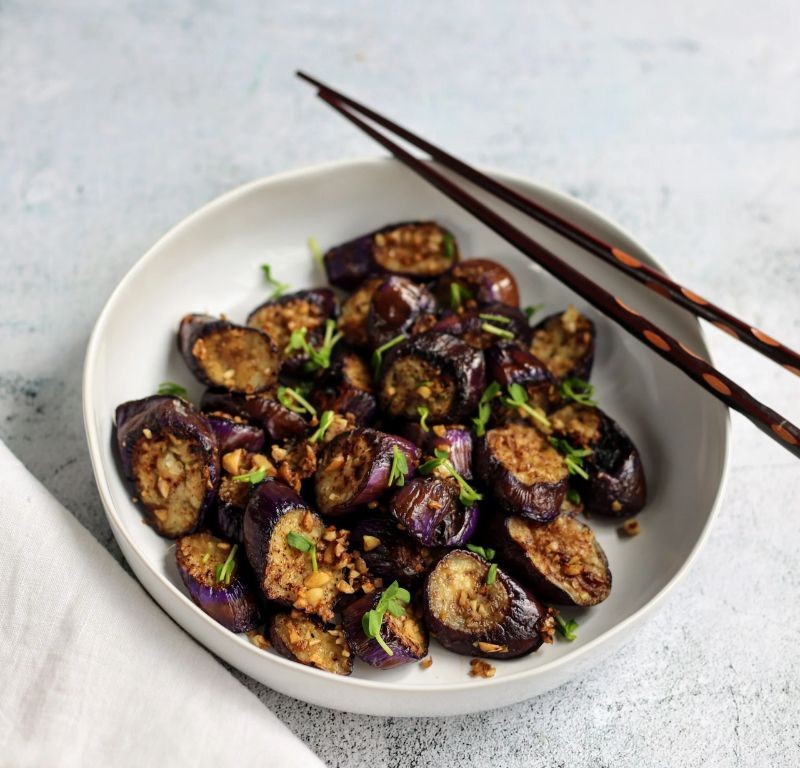
Kicking off the holiday cooking with a dish that brings both elegance and comfort to the table, this stir-fried Japanese eggplant celebrates the season with its vibrant colors and aromatic warmth. Perfect for a festive yet simple side, it transforms humble ingredients into something truly special with just a pan and a few minutes of attention.
Serving: 4 | Pre Time: 15 minutes | Cooking Time: 10 minutes
Ingredients
– 1.5 pounds Japanese eggplant, sliced into ½-inch rounds—I find their slender shape cooks more evenly than globe varieties.
– 3 tablespoons toasted sesame oil, which adds a nutty depth that regular oil just can’t match.
– 2 tablespoons fresh ginger, minced—grate it just before using to preserve its bright, zesty punch.
– 3 cloves garlic, thinly sliced for a subtle, sweet infusion rather than overpowering.
– ¼ cup low-sodium soy sauce, my go-to for balancing saltiness without overwhelming the dish.
– 1 tablespoon rice vinegar, which lends a gentle tang to cut through the richness.
– 1 teaspoon honey, for a touch of sweetness that rounds out the flavors beautifully.
– 2 green onions, thinly sliced on the bias—reserve the green tops for a fresh garnish at the end.
– 1 tablespoon sesame seeds, toasted lightly in a dry pan until golden for extra crunch.
Instructions
1. Heat a large skillet or wok over medium-high heat and add 2 tablespoons of toasted sesame oil, swirling to coat the surface evenly.
2. Add the sliced Japanese eggplant in a single layer, working in batches if needed to avoid crowding, and cook for 3–4 minutes until the edges start to brown and soften.
3. Flip each eggplant round with tongs and cook for another 3–4 minutes until tender but not mushy—a tip: press gently with a spatula; it should yield slightly without breaking apart.
4. Push the eggplant to the sides of the pan, reduce the heat to medium, and add the remaining 1 tablespoon of sesame oil to the center.
5. Sauté the minced ginger and sliced garlic in the oil for 1–2 minutes until fragrant but not browned, stirring constantly to prevent burning.
6. In a small bowl, whisk together the low-sodium soy sauce, rice vinegar, and honey until fully combined.
7. Pour the sauce mixture over the eggplant and aromatics, tossing everything together to coat evenly, and simmer for 2–3 minutes until the sauce thickens slightly and clings to the eggplant.
8. Remove from heat and stir in most of the sliced green onions, reserving some for garnish.
9. Transfer to a serving dish and sprinkle with the toasted sesame seeds and remaining green onions.
Marvel at the tender, silky texture of the eggplant, which soaks up the ginger-sesame sauce for a savory-sweet bite with a hint of tang. Serve it warm over steamed jasmine rice or alongside grilled fish for a complete meal, and don’t be surprised if it becomes a holiday staple—its vibrant flavors and quick prep make it irresistibly repeatable.
Japanese Eggplant Miso Soup
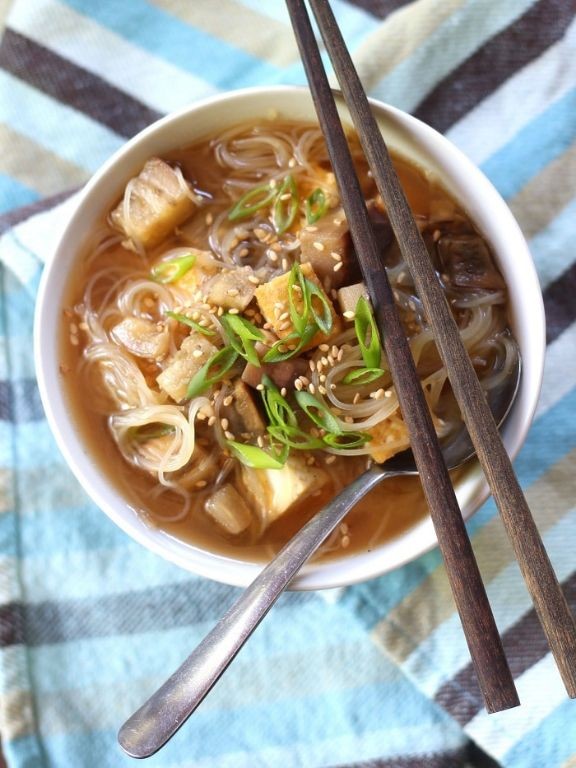
A silky, umami-rich broth cradles tender Japanese eggplant in this elegant miso soup, transforming humble ingredients into a soul-warming bowl that feels both nourishing and sophisticated. Perfect for a quiet winter lunch or as a refined start to a multi-course meal, its deep flavors unfold with each spoonful.
Serving: 4 | Pre Time: 10 minutes | Cooking Time: 20 minutes
Ingredients
– 4 cups cold water (I always use filtered for the cleanest broth)
– 2 medium Japanese eggplants (about 1 lb total), sliced into 1/2-inch rounds
– 4 tbsp white miso paste (my favorite brand is Hikari, for its smooth, sweet profile)
– 1 tbsp toasted sesame oil (this adds a wonderful nutty aroma)
– 1 tsp grated fresh ginger (I keep a knob in the freezer for easy grating)
– 2 green onions, thinly sliced, white and green parts separated
– 1 sheet nori, torn into small pieces (optional, but I love the oceanic hint)
Instructions
1. In a medium pot over medium-high heat, add the cold water and bring it to a gentle simmer, which should take about 5-7 minutes.
2. While the water heats, heat the toasted sesame oil in a large skillet over medium heat until it shimmers, about 1 minute.
3. Add the eggplant rounds to the skillet in a single layer, cooking for 3-4 minutes per side until they are lightly browned and slightly softened. (Tip: Avoid overcrowding the skillet to ensure even browning.)
4. Transfer the browned eggplant to the pot of simmering water.
5. Reduce the heat to low and stir in the white miso paste until it is fully dissolved, about 1 minute. (Tip: Never boil miso, as high heat can destroy its delicate probiotics.)
6. Add the grated ginger and the white parts of the green onions to the pot, simmering gently for 10 minutes to allow the flavors to meld.
7. Remove the pot from the heat and let it sit for 2 minutes to cool slightly. (Tip: This resting time helps the miso integrate smoothly without curdling.)
8. Ladle the soup into bowls and garnish with the green parts of the green onions and the torn nori pieces, if using.
You’ll find the eggplant becomes meltingly tender against the savory, slightly sweet broth, with a subtle kick from the ginger. For a creative twist, top each bowl with a drizzle of chili oil or serve alongside steamed rice for a heartier meal.
Braised Japanese Eggplant with Mirin and Soy Sauce

Nestled within the vibrant tapestry of Japanese home cooking, braised eggplant transforms humble vegetables into a dish of profound umami depth and silken texture. This version, glazed with mirin and soy sauce, achieves a perfect balance of sweet and savory notes that cling to each tender slice. It’s the kind of comforting side that elevates a simple weeknight meal into something quietly special.
Serving: 4 | Pre Time: 10 minutes | Cooking Time: 20 minutes
Ingredients
– 4 Japanese eggplants (about 1½ lbs total), sliced into 1-inch rounds—their slender shape cooks evenly and absorbs flavors beautifully.
– 2 tablespoons neutral oil (I use grapeseed for its high smoke point).
– ¼ cup mirin, the sweet rice wine that adds a delicate sweetness without being cloying.
– 3 tablespoons soy sauce (I prefer low-sodium to control saltiness).
– 1 tablespoon granulated sugar, which helps create a glossy glaze.
– 1 cup water, for braising.
– 2 green onions, thinly sliced, for a fresh, crisp finish.
Instructions
1. Pat the eggplant rounds dry with paper towels to ensure they brown nicely instead of steaming.
2. Heat the oil in a large skillet over medium-high heat until it shimmers, about 1 minute.
3. Add the eggplant in a single layer, working in batches if needed to avoid crowding, and cook until golden brown on both sides, 3–4 minutes per side.
4. Reduce the heat to medium and return all eggplant to the skillet.
5. Pour in the mirin, soy sauce, sugar, and water, stirring gently to combine.
6. Bring the mixture to a simmer, then cover the skillet with a lid.
7. Braise the eggplant for 10–12 minutes, until the slices are tender when pierced with a fork but still hold their shape.
8. Uncover the skillet and increase the heat to medium-high to reduce the sauce, stirring occasionally, until it thickens to a syrupy consistency, about 3–4 minutes.
9. Remove from heat and sprinkle with green onions.
The eggplant emerges meltingly soft with a rich, caramelized glaze that clings to every bite. Serve it warm over steamed rice to soak up the savory sauce, or alongside grilled fish for a light yet satisfying meal.
Japanese Eggplant and Tofu Stir-Fry
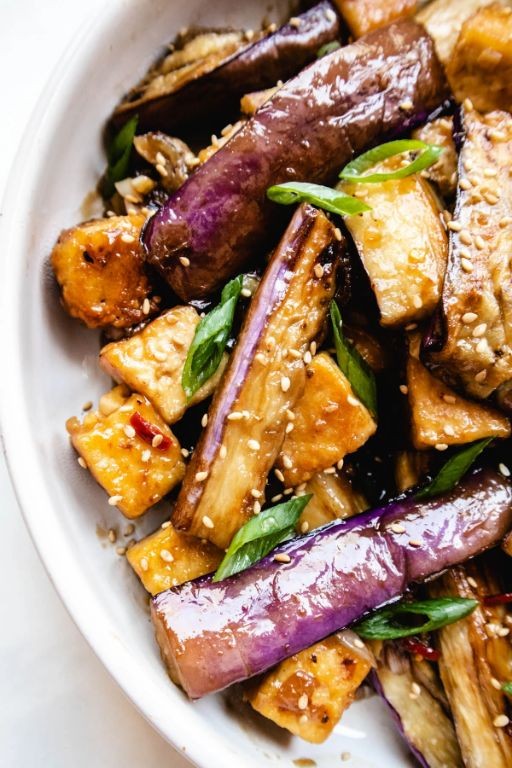
Meticulously balancing delicate textures and savory flavors, this Japanese Eggplant and Tofu Stir-Fry transforms humble ingredients into an elegant weeknight meal. The silky eggplant and crisp tofu create a satisfying contrast, while a glossy, umami-rich sauce ties everything together beautifully. It’s a dish that feels both nourishing and indulgent, perfect for a quick yet impressive dinner.
Serving: 4 | Pre Time: 15 minutes | Cooking Time: 15 minutes
Ingredients
- 2 medium Japanese eggplants (about 1 lb total), sliced into 1/2-inch rounds—I find their slender shape and fewer seeds yield a creamier texture.
- 14 oz firm tofu, pressed for 30 minutes and cubed into 1-inch pieces; pressing removes excess water for a crispier sear.
- 2 tbsp vegetable oil, divided—a neutral oil like grapeseed works perfectly here.
- 3 cloves garlic, minced; fresh garlic adds a fragrant punch.
- 1-inch piece fresh ginger, grated (about 1 tbsp); I keep mine frozen for easy grating.
- 1/4 cup low-sodium soy sauce; I prefer this to control saltiness.
- 2 tbsp rice vinegar, for a bright, tangy note.
- 1 tbsp honey, to balance the savory elements with a touch of sweetness.
- 1 tsp toasted sesame oil, added at the end for its nutty aroma.
- 2 green onions, thinly sliced, for a fresh garnish.
- 1 tbsp sesame seeds, toasted lightly for extra crunch.
Instructions
- Pat the pressed tofu cubes dry with paper towels to ensure they brown evenly in the pan.
- Heat 1 tbsp vegetable oil in a large skillet or wok over medium-high heat until shimmering, about 1 minute.
- Add the tofu cubes in a single layer and cook undisturbed for 3-4 minutes until golden brown on one side.
- Flip the tofu cubes and cook for another 3-4 minutes until browned on all sides, then transfer to a plate.
- Add the remaining 1 tbsp vegetable oil to the same skillet over medium-high heat.
- Add the eggplant slices in a single layer and cook for 4-5 minutes, turning once, until tender and lightly charred.
- Push the eggplant to the sides of the skillet and add the minced garlic and grated ginger to the center.
- Cook the garlic and ginger for 30 seconds until fragrant, stirring constantly to prevent burning.
- Return the tofu to the skillet and toss gently with the eggplant, garlic, and ginger.
- In a small bowl, whisk together the soy sauce, rice vinegar, and honey until smooth.
- Pour the sauce mixture over the eggplant and tofu in the skillet.
- Cook, stirring frequently, for 2-3 minutes until the sauce thickens slightly and coats the ingredients.
- Remove the skillet from heat and drizzle with the toasted sesame oil, tossing to combine.
- Transfer the stir-fry to a serving dish and garnish with sliced green onions and toasted sesame seeds.
Just as satisfying as it is simple, this stir-fry offers a delightful interplay of textures—the eggplant melts into creaminess while the tofu retains a pleasant bite. The sauce, with its savory depth from soy sauce and bright acidity from rice vinegar, clings to every morsel. For a creative twist, serve it over a bed of steamed jasmine rice or alongside soba noodles, and consider topping it with a sprinkle of crushed red pepper for a gentle heat.
Roasted Japanese Eggplant with Shichimi Togarashi
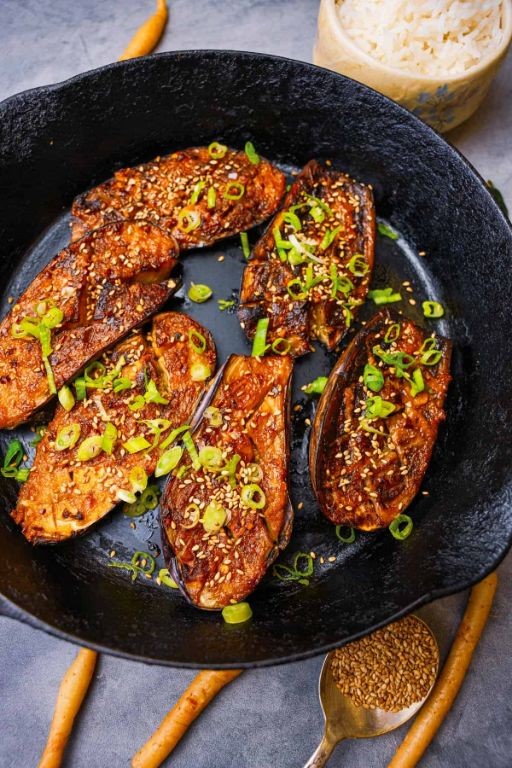
While many associate Japanese cuisine with raw fish or steaming bowls of ramen, the humble eggplant transforms into something truly spectacular when roasted. This Roasted Japanese Eggplant with Shichimi Togarashi is a study in elegant simplicity, where high heat coaxes out deep, smoky sweetness, and a vibrant spice blend adds a final, electrifying touch. It’s a dish that feels both comforting and excitingly new, perfect for a quiet weeknight or as a stunning side for guests.
Serving: 4 | Pre Time: 10 minutes | Cooking Time: 25 minutes
Ingredients
– 4 slender Japanese eggplants (about 1.5 lbs total), their glossy purple skin is key for holding shape
– 3 tablespoons extra virgin olive oil, my go-to for its fruity notes that complement the eggplant
– 1 teaspoon fine sea salt, to properly season the flesh
– 1 tablespoon toasted sesame oil, for its deep, nutty aroma
– 2 teaspoons shichimi togarashi (Japanese seven-spice blend), adjust to your heat preference—I love the citrusy kick
– 1 tablespoon fresh lime juice, squeezed just before serving for bright acidity
– 2 tablespoons chopped fresh cilantro, for a fresh, herbal finish
Instructions
1. Preheat your oven to 425°F (218°C) and line a large, rimmed baking sheet with parchment paper for easy cleanup.
2. Trim the stem ends from the Japanese eggplants and slice each one in half lengthwise.
3. Using the tip of a sharp knife, score the cut side of each eggplant half in a crosshatch pattern, about 1/4-inch deep, which helps the flesh absorb seasoning and cook evenly.
4. Place the eggplant halves, cut-side up, on the prepared baking sheet.
5. Drizzle the extra virgin olive oil evenly over the scored surfaces of the eggplants.
6. Sprinkle the fine sea salt uniformly over the oiled eggplants.
7. Roast the eggplants in the preheated oven for 20-25 minutes, until the flesh is deeply golden, tender when pierced with a fork, and the edges are slightly caramelized.
8. Carefully remove the baking sheet from the oven and transfer the roasted eggplant halves to a serving platter.
9. While the eggplants are still hot, drizzle the toasted sesame oil evenly over them.
10. Sprinkle the shichimi togarashi evenly across the eggplants.
11. Squeeze the fresh lime juice directly over the spiced eggplants.
12. Garnish the dish with the chopped fresh cilantro.
Zesty and aromatic, the finished dish offers a beautiful contrast: the eggplant flesh becomes luxuriously creamy and smoky, while the shichimi togarashi provides a complex, warming spice with hints of citrus and sesame. For a creative twist, serve it over a bed of steamed jasmine rice or alongside grilled salmon, allowing the flavorful oils to mingle with the other components.
Japanese Eggplant and Shrimp Sauté
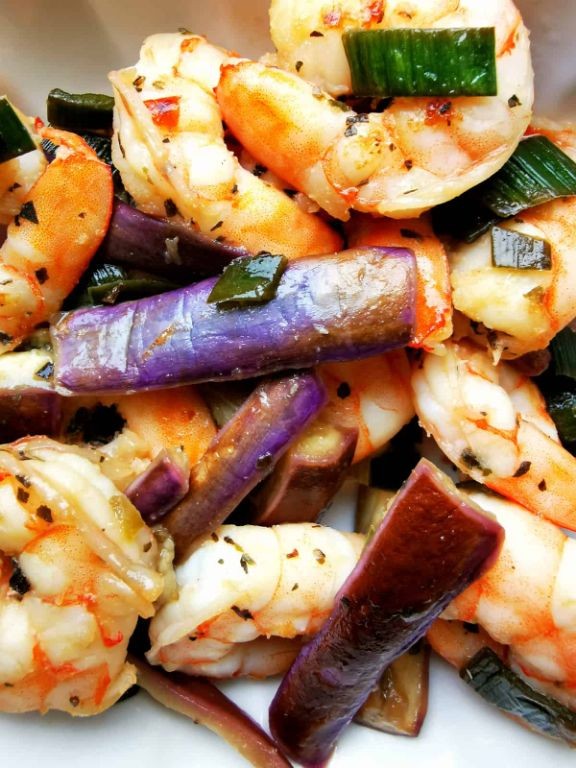
Tender Japanese eggplant, with its slender shape and delicate skin, meets plump shrimp in this elegant sauté—a dish that balances earthy sweetness with briny depth, perfect for a sophisticated weeknight dinner or an impressive weekend gathering. The combination creates a harmonious blend of textures and flavors that feels both comforting and refined, showcasing how simple ingredients can transform into something truly special. With minimal prep and quick cooking, it’s a recipe that delivers restaurant-quality results right from your own kitchen.
Serving: 4 | Pre Time: 15 minutes | Cooking Time: 15 minutes
Ingredients
– 1 lb large shrimp, peeled and deveined (I prefer wild-caught for their sweet, clean flavor)
– 4 Japanese eggplants, about 1 lb total, sliced into ½-inch rounds (their thin skin doesn’t require peeling)
– 3 tbsp extra virgin olive oil, my go-to for its fruity notes
– 2 cloves garlic, minced (freshly minced releases the best aroma)
– 1 tbsp soy sauce (use a low-sodium variety to control saltiness)
– 1 tsp sesame oil, for a nutty finish
– ½ tsp red pepper flakes, adjust to your heat preference
– Fresh cilantro, chopped, for garnish (it adds a bright, herbal pop)
Instructions
1. Pat the shrimp dry with paper towels to ensure they sear properly instead of steaming.
2. Heat 2 tablespoons of olive oil in a large skillet over medium-high heat until it shimmers, about 2 minutes.
3. Add the eggplant slices in a single layer, working in batches if needed to avoid overcrowding.
4. Cook the eggplant for 4-5 minutes per side until golden brown and tender when pierced with a fork.
5. Transfer the cooked eggplant to a plate and set aside.
6. In the same skillet, add the remaining 1 tablespoon of olive oil and reduce the heat to medium.
7. Add the minced garlic and red pepper flakes, sautéing for 30 seconds until fragrant but not browned.
8. Increase the heat to medium-high and add the shrimp in a single layer.
9. Cook the shrimp for 2-3 minutes per side until they turn pink and opaque throughout.
10. Return the eggplant to the skillet with the shrimp.
11. Pour in the soy sauce and sesame oil, stirring gently to coat everything evenly.
12. Cook for 1 more minute to let the flavors meld, then remove from heat.
13. Garnish with chopped cilantro before serving.
Yielded with a glossy sheen from the sesame oil, this dish offers tender eggplant that melts against the firm, juicy shrimp, all wrapped in a savory, slightly spicy sauce. For a creative twist, serve it over steamed jasmine rice or alongside crisp greens to soak up every last drop of flavor.
Japanese Eggplant Curry with Coconut Milk

Heralding the arrival of a dish that masterfully balances delicate sweetness with aromatic warmth, this Japanese Eggplant Curry with Coconut Milk is a celebration of creamy textures and complex spices. It transforms humble ingredients into an elegant, soul-satisfying meal that feels both comforting and sophisticated, perfect for a cozy winter evening or a refined dinner gathering.
Serving: 4 | Pre Time: 15 minutes | Cooking Time: 30 minutes
Ingredients
– 2 medium Japanese eggplants, sliced into 1-inch rounds (their slender shape and fewer seeds make them ideal for this dish)
– 1 large yellow onion, finely diced
– 3 cloves garlic, minced (freshly minced releases the best flavor)
– 1 tablespoon fresh ginger, grated
– 2 tablespoons vegetable oil (a neutral oil like avocado is my preference for high-heat sautéing)
– 2 tablespoons curry powder
– 1 teaspoon ground turmeric
– 1 (13.5-ounce) can full-fat coconut milk, well-shaken (the rich creaminess is essential)
– 1 cup vegetable broth
– 1 tablespoon soy sauce
– 1 tablespoon maple syrup (a touch of sweetness to round out the spices)
– Fresh cilantro leaves, for garnish
– Cooked jasmine rice, for serving (its floral notes pair beautifully)
Instructions
1. Place the sliced eggplant rounds in a single layer on a baking sheet lined with paper towels and sprinkle generously with salt. Let them sit for 10 minutes to draw out excess moisture, then pat them completely dry with fresh paper towels—this prevents a soggy texture.
2. Heat the vegetable oil in a large, heavy-bottomed pot or Dutch oven over medium-high heat until it shimmers, about 1 minute.
3. Add the eggplant slices in a single layer, working in batches if necessary to avoid crowding. Cook for 3-4 minutes per side until they develop a golden-brown sear and become tender. Transfer the seared eggplant to a clean plate and set aside.
4. Reduce the heat to medium and add the diced onion to the same pot. Sauté for 5-7 minutes, stirring frequently, until the onion turns translucent and begins to soften.
5. Add the minced garlic and grated ginger to the pot. Sauté for 1 minute, just until fragrant, being careful not to let the garlic burn.
6. Sprinkle in the curry powder and ground turmeric. Stir constantly for 30 seconds to toast the spices and unlock their full aromatic potential—this brief bloom is a key flavor-building step.
7. Pour in the coconut milk, vegetable broth, soy sauce, and maple syrup. Use a whisk to stir everything together until the sauce is completely smooth and uniform.
8. Bring the sauce to a gentle simmer over medium heat, then reduce the heat to low. Let it simmer uncovered for 10 minutes, stirring occasionally, to allow the flavors to meld and the sauce to thicken slightly.
9. Gently return the seared eggplant slices to the pot, nestling them into the sauce. Simmer for an additional 5 minutes to reheat the eggplant and let it absorb the curry flavors.
10. Remove the pot from the heat. Taste the curry and adjust seasoning only if absolutely necessary, as the balance should already be harmonious.
Creamy and luxuriously textured, the tender eggplant melts into the velvety coconut curry, which carries layers of warm spice and a subtle sweetness. Serve it ladled over a mound of fragrant jasmine rice, garnished generously with fresh cilantro for a bright, herbal finish that makes this dish feel truly special.
Japanese Eggplant Donburi Bowl
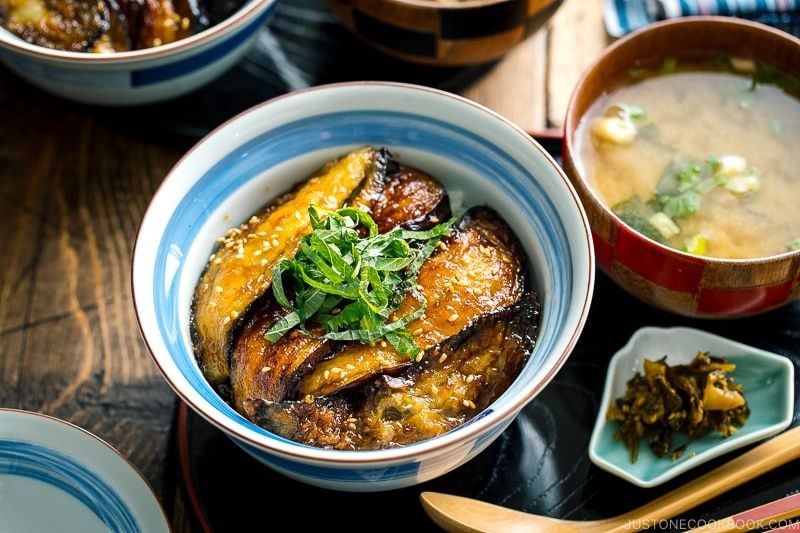
Savor the delicate fusion of Japanese eggplant, tenderly simmered in a savory-sweet glaze, nestled atop a bed of steaming rice for a comforting yet sophisticated donburi bowl that transforms humble ingredients into an elegant weeknight meal. This dish celebrates the eggplant’s velvety texture, which absorbs the rich umami flavors while maintaining its structural integrity. It’s a perfect balance of simplicity and depth, ideal for both quick dinners and impressive gatherings.
Serving: 2 | Pre Time: 10 minutes | Cooking Time: 20 minutes
Ingredients
– 2 medium Japanese eggplants (I prefer the slender, firm ones for even cooking)
– 1 cup short-grain white rice, rinsed until the water runs clear (this removes excess starch for fluffier results)
– 1 ½ cups water for cooking rice
– 3 tablespoons soy sauce (use a high-quality brand for deeper flavor)
– 2 tablespoons mirin, my go-to for its subtle sweetness
– 1 tablespoon granulated sugar
– 2 cloves garlic, minced (freshly minced releases the best aroma)
– 1 tablespoon vegetable oil, for a neutral base that won’t overpower
– 2 green onions, thinly sliced, for a bright finish
– 1 teaspoon toasted sesame seeds, to add a nutty crunch
Instructions
1. Rinse 1 cup of short-grain white rice under cold water until the water runs clear, about 2-3 times, to remove surface starch.
2. Combine the rinsed rice and 1 ½ cups of water in a medium saucepan, bring to a boil over high heat, then reduce to low, cover, and simmer for 15 minutes until the water is absorbed and the rice is tender.
3. While the rice cooks, slice 2 medium Japanese eggplants into ½-inch thick rounds.
4. Heat 1 tablespoon of vegetable oil in a large skillet over medium-high heat until it shimmers, about 1 minute.
5. Add the eggplant slices in a single layer and cook for 4-5 minutes per side until golden brown and slightly softened.
6. In a small bowl, whisk together 3 tablespoons soy sauce, 2 tablespoons mirin, 1 tablespoon granulated sugar, and 2 cloves minced garlic until the sugar dissolves.
7. Reduce the heat to medium-low and pour the sauce mixture over the eggplant in the skillet.
8. Simmer the eggplant in the sauce for 5-7 minutes, turning occasionally, until the sauce thickens and coats the eggplant evenly.
9. Remove the skillet from heat and let the eggplant rest for 2 minutes to absorb the flavors fully.
10. Fluff the cooked rice with a fork and divide it evenly between two bowls.
11. Top the rice with the glazed eggplant slices, spooning any remaining sauce over them.
12. Garnish with 2 thinly sliced green onions and 1 teaspoon toasted sesame seeds.
Consider the silky texture of the eggplant, which melts gently against the fluffy rice, enhanced by the glossy, umami-rich glaze. For a creative twist, serve it with a side of pickled ginger or a soft-boiled egg to add contrasting flavors and textures, making each bite a harmonious blend of comfort and refinement.
Pan-Seared Japanese Eggplant with Ponzu Sauce
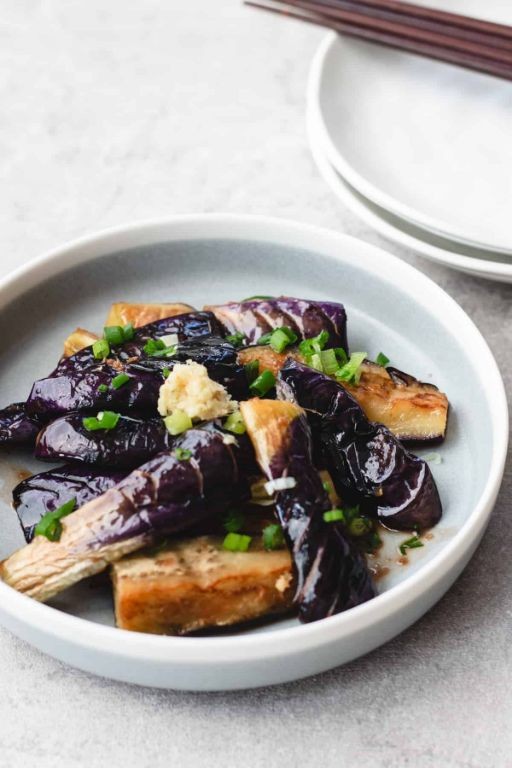
Fragrant and sophisticated, this pan-seared Japanese eggplant dish transforms humble ingredients into an elegant centerpiece. With its silky interior and caramelized edges, each slice becomes a perfect canvas for the bright, citrusy ponzu sauce. It’s a celebration of minimalism where quality shines through in every bite.
Serving: 4 | Pre Time: 10 minutes | Cooking Time: 15 minutes
Ingredients
– 2 medium Japanese eggplants (about 1 lb total), sliced into ½-inch rounds—I look for firm, glossy skins without blemishes.
– 3 tablespoons extra virgin olive oil, my go-to for its fruity notes that complement the eggplant.
– ¼ cup ponzu sauce, preferably a high-quality brand for its balanced tang and umami depth.
– 2 tablespoons toasted sesame seeds, which I toast lightly in a dry pan until golden for maximum aroma.
– 2 green onions, thinly sliced on the bias for a crisp garnish.
– ½ teaspoon kosher salt, which I sprinkle generously to draw out moisture from the eggplant.
Instructions
1. Place the eggplant rounds in a single layer on a paper towel-lined baking sheet and sprinkle evenly with kosher salt. Let sit for 10 minutes to draw out excess moisture, then pat dry thoroughly with paper towels—this prevents sogginess and ensures a crisp sear.
2. Heat extra virgin olive oil in a large non-stick skillet over medium-high heat until shimmering, about 2 minutes.
3. Add the eggplant rounds in a single layer, working in batches if necessary to avoid overcrowding. Cook for 4–5 minutes per side, until deeply golden brown and tender when pierced with a fork.
4. Transfer the seared eggplant to a serving platter, arranging the rounds slightly overlapping for visual appeal.
5. Drizzle the ponzu sauce evenly over the warm eggplant, allowing it to soak in slightly—the heat enhances the sauce’s citrus notes.
6. Sprinkle toasted sesame seeds and sliced green onions over the top as a final garnish.
7. Serve immediately while warm. For an extra tip, let the eggplant rest for a minute after searing to lock in its silky texture before saucing.
Rich and velvety, the eggplant melts on the tongue with a subtle sweetness that contrasts beautifully with the ponzu’s zesty kick. Consider pairing it with steamed jasmine rice or layering it into a grain bowl for a complete meal, where the textures play off each other delightfully.
Japanese Eggplant and Mushroom Hot Pot
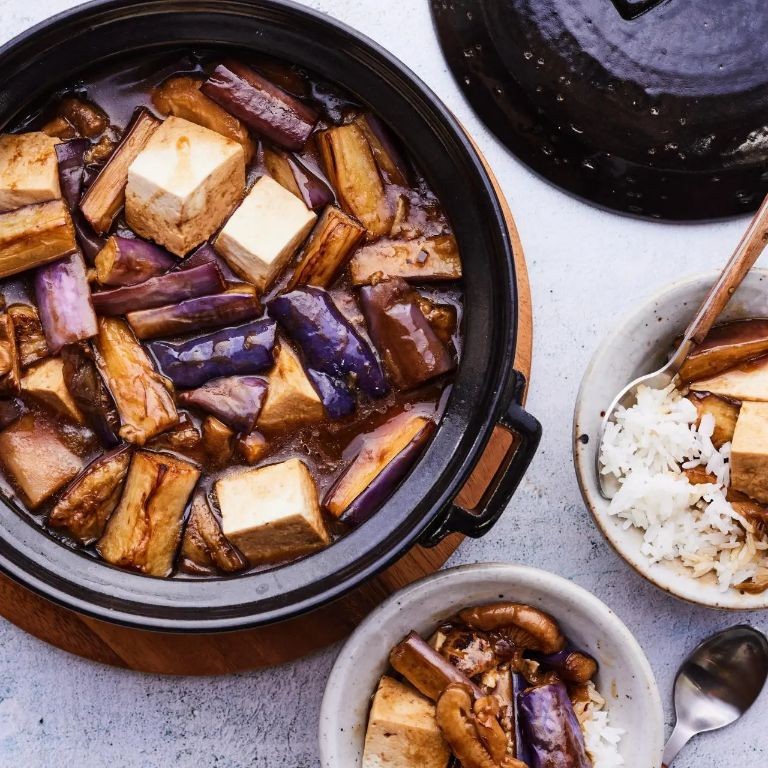
Kindly imagine a steaming pot filled with slender Japanese eggplants and earthy mushrooms, simmering in a fragrant broth that warms the soul on a crisp winter day. This hot pot, a celebration of umami and comfort, transforms humble vegetables into an elegant, one-pot meal perfect for gathering around the table. Its simplicity belies a depth of flavor that feels both nourishing and deeply satisfying.
Serving: 4 | Pre Time: 15 minutes | Cooking Time: 25 minutes
Ingredients
– 4 Japanese eggplants, sliced into 1-inch rounds (their tender skin doesn’t require peeling)
– 8 oz cremini mushrooms, sliced (I love their meaty texture here)
– 1 tbsp toasted sesame oil, my secret for a nutty aroma
– 4 cups vegetable broth, preferably low-sodium for better control
– 3 tbsp soy sauce, to build that savory base
– 1 tbsp rice vinegar, for a subtle bright note
– 2 cloves garlic, minced (freshly minced makes all the difference)
– 1-inch piece ginger, grated
– 2 green onions, thinly sliced, reserving the green tops for garnish
– 1 tsp cornstarch mixed with 1 tbsp water, for a silky broth
Instructions
1. Heat the toasted sesame oil in a large pot or Dutch oven over medium heat until it shimmers, about 1 minute.
2. Add the sliced cremini mushrooms and cook, stirring occasionally, until they release their liquid and turn golden brown, approximately 5-7 minutes.
3. Stir in the minced garlic and grated ginger, cooking for 30 seconds until fragrant to bloom their flavors.
4. Add the Japanese eggplant rounds to the pot, tossing gently to coat them in the oil and aromatics.
5. Pour in the vegetable broth and soy sauce, then bring the mixture to a gentle boil over high heat.
6. Reduce the heat to low, cover the pot, and simmer for 15 minutes until the eggplants are tender when pierced with a fork.
7. In a small bowl, whisk the cornstarch with 1 tbsp water until smooth to create a slurry.
8. Stir the slurry into the hot pot, then add the rice vinegar, cooking for 2 more minutes until the broth thickens slightly.
9. Turn off the heat and fold in most of the sliced green onions, saving some for garnish.
10. Ladle the hot pot into bowls and top with the reserved green onion slices.
Perfectly tender eggplants melt into the rich, savory broth, while the mushrooms add a satisfying chew. The hint of ginger and sesame lingers on the palate, making each spoonful a cozy delight. For a creative twist, serve it over a bed of steamed jasmine rice or with a side of crusty bread to soak up every last drop.
Japanese Eggplant Sushi Rolls
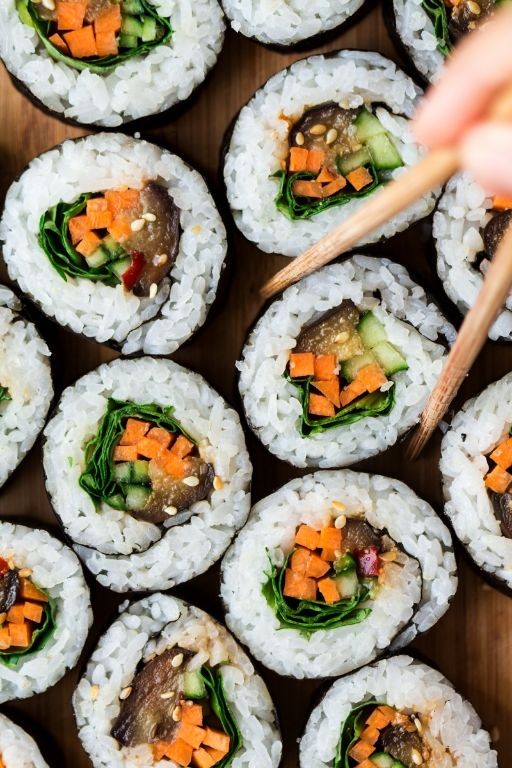
Beneath the delicate artistry of traditional sushi lies a delightful vegetarian twist: Japanese eggplant sushi rolls, where tender roasted eggplant replaces raw fish, offering a smoky-sweet heartiness wrapped in seasoned rice and crisp nori. This elegant plant-based creation transforms humble ingredients into a visually stunning centerpiece, perfect for impressing guests or elevating a weeknight dinner with its sophisticated flavors. With its creamy texture and umami-rich profile, it’s a dish that celebrates simplicity while delivering a memorable culinary experience.
Serving: 4 | Pre Time: 20 minutes | Cooking Time: 25 minutes
Ingredients
– 2 medium Japanese eggplants, sliced lengthwise into ¼-inch strips (their slender shape is ideal for rolling)
– 1 cup sushi rice, rinsed until the water runs clear (this removes excess starch for perfect stickiness)
– 1½ cups water
– 2 tablespoons rice vinegar, plus 1 teaspoon for the eggplant marinade (I prefer seasoned rice vinegar for a subtle sweetness)
– 1 tablespoon granulated sugar
– 1 teaspoon kosher salt
– 4 sheets nori (seaweed), toasted lightly if you enjoy a crisper texture
– 1 tablespoon toasted sesame oil, for brushing the eggplant (its nutty aroma enhances the roasting)
– ½ avocado, sliced thinly (choose one that yields slightly to pressure for creaminess)
– ½ cucumber, julienned into matchsticks (I like English cucumbers for their fewer seeds)
– Soy sauce or tamari, for serving (low-sodium is my go-to to control saltiness)
– Pickled ginger and wasabi, optional for garnish
Instructions
1. Preheat your oven to 400°F and line a baking sheet with parchment paper.
2. Place the eggplant strips on the prepared baking sheet and brush both sides evenly with the toasted sesame oil using a pastry brush.
3. Roast the eggplant in the preheated oven for 15–18 minutes, flipping halfway through, until the strips are tender and lightly golden brown at the edges.
4. While the eggplant roasts, combine the sushi rice and water in a medium saucepan and bring to a boil over high heat.
5. Reduce the heat to low, cover the saucepan tightly with a lid, and simmer the rice for 15 minutes exactly, without stirring, until all the water is absorbed. Tip: Let the rice rest off the heat for 10 minutes after cooking to firm up slightly for easier handling.
6. In a small bowl, whisk together the rice vinegar, sugar, and kosher salt until the sugar and salt dissolve completely.
7. Transfer the cooked rice to a large, non-metallic bowl and gently fold in the vinegar mixture with a rice paddle or spatula, fanning the rice as you mix to help it cool and develop a glossy sheen. Tip: Avoid overmixing to prevent the rice from becoming mushy.
8. Lay a nori sheet shiny-side down on a bamboo sushi mat, with the long edge facing you.
9. Spread about ¾ cup of the seasoned rice evenly over the nori, leaving a 1-inch border at the top edge farthest from you.
10. Arrange 2–3 roasted eggplant strips horizontally across the center of the rice, followed by a few avocado slices and cucumber matchsticks.
11. Lift the edge of the mat closest to you and roll it away from you, tucking the fillings in tightly as you go to form a compact cylinder. Tip: Moisten the top border of nori with a dab of water to seal the roll securely.
12. Repeat steps 8–11 with the remaining ingredients to make 4 rolls total.
13. Use a sharp knife dipped in water to slice each roll into 8 even pieces, wiping the knife clean between cuts for neat edges.
14. Arrange the sushi pieces on a serving platter and serve immediately with soy sauce, pickled ginger, and wasabi if desired.
When you bite into these rolls, the contrast of the silky roasted eggplant against the firm, vinegared rice and crisp vegetables creates a harmonious blend of textures, while the smoky notes from the sesame oil mingle with the fresh, clean flavors of cucumber and avocado. For a creative presentation, drizzle with a spicy mayo or sprinkle with black sesame seeds, making it a versatile dish that’s as beautiful on a holiday table as it is for a casual lunch.
Japanese Eggplant Salad with Sesame Dressing
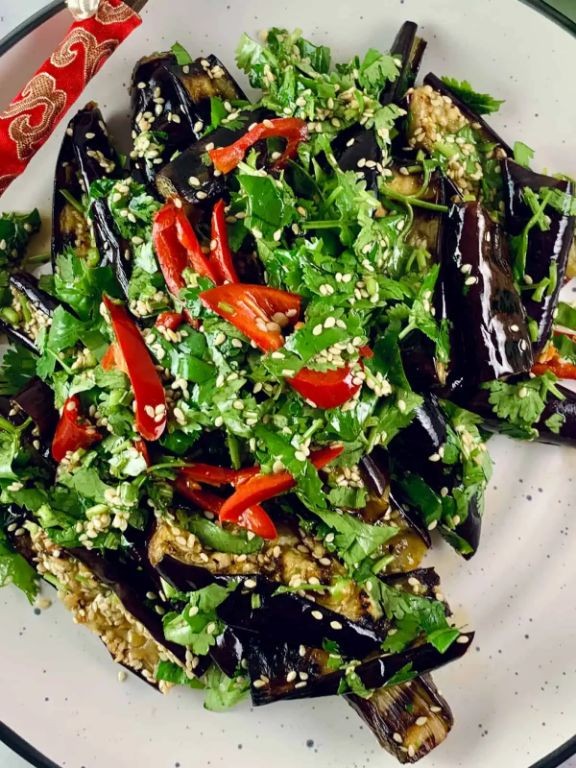
Often overlooked in Western kitchens, the slender Japanese eggplant transforms into a silky, luxurious canvas when roasted, its delicate flesh absorbing the nutty richness of toasted sesame. This elegant salad celebrates that transformation with a dressing that balances umami depth with bright acidity, creating a dish that feels both comforting and sophisticated. Perfect for holiday gatherings or a light winter lunch, it brings unexpected warmth to the table.
Serving: 4 | Pre Time: 15 minutes | Cooking Time: 25 minutes
Ingredients
– 4 Japanese eggplants (about 1½ lbs total), sliced into ½-inch rounds—their slender shape means less seeding and quicker cooking.
– 2 tablespoons toasted sesame oil, my secret for deep, aromatic nuttiness that raw oil can’t match.
– ¼ cup rice vinegar, which offers a cleaner acidity than other vinegars here.
– 2 tablespoons soy sauce (I use low-sodium to control saltiness).
– 1 tablespoon honey, for a subtle sweetness that rounds out the dressing.
– 1 teaspoon freshly grated ginger, about a 1-inch knob—freshly grated makes all the difference.
– 2 cloves garlic, minced finely to distribute flavor evenly.
– 2 tablespoons white sesame seeds, toasted until golden for extra crunch.
– ¼ cup thinly sliced scallions, both green and white parts for color and bite.
– 1 tablespoon neutral oil (like avocado oil), for roasting without overpowering.
– ½ teaspoon kosher salt, to draw moisture from the eggplant.
Instructions
1. Preheat your oven to 425°F and line a baking sheet with parchment paper.
2. In a large bowl, toss the eggplant rounds with 1 tablespoon neutral oil and ½ teaspoon kosher salt until evenly coated.
3. Arrange the eggplant in a single layer on the prepared baking sheet, ensuring pieces don’t touch for even browning.
4. Roast for 20–25 minutes, flipping halfway through, until the eggplant is tender and caramelized at the edges.
5. While the eggplant roasts, toast the sesame seeds in a dry skillet over medium heat for 2–3 minutes, shaking frequently, until fragrant and lightly golden—watch closely to prevent burning.
6. In a small bowl, whisk together 2 tablespoons toasted sesame oil, ¼ cup rice vinegar, 2 tablespoons soy sauce, 1 tablespoon honey, 1 teaspoon grated ginger, and 2 cloves minced garlic until fully emulsified.
7. Once the eggplant is done, let it cool on the baking sheet for 5 minutes to prevent it from becoming mushy when dressed.
8. Transfer the slightly cooled eggplant to a serving platter and drizzle evenly with the sesame dressing.
9. Sprinkle the toasted sesame seeds and ¼ cup sliced scallions over the top just before serving.
10. Gently toss everything together to coat, being careful not to break the tender eggplant pieces.
Perfectly silky with a slight char, this salad offers a delightful contrast of textures from the creamy eggplant to the crunchy sesame seeds. The dressing clings beautifully, delivering a harmonious blend of savory, sweet, and tangy notes that deepen as it sits. For a creative twist, serve it atop a bed of soba noodles or alongside grilled fish to make it a heartier meal.
Japanese Eggplant and Pork Belly Stir-Fry
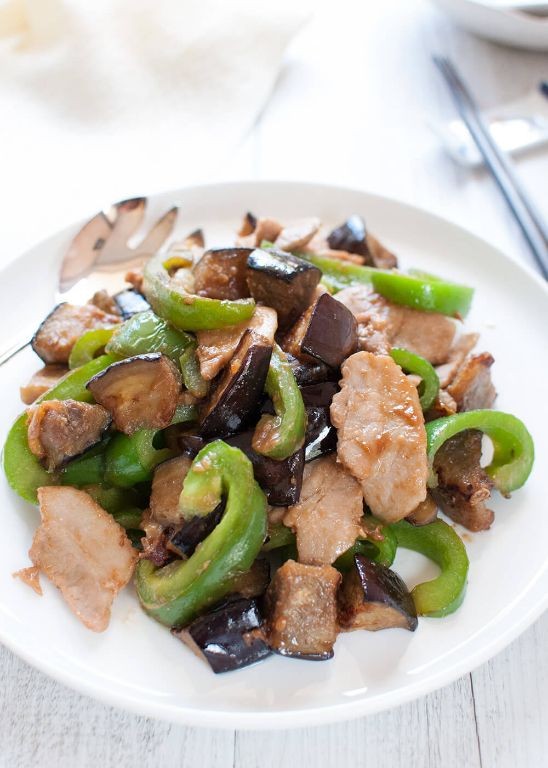
Lusciously tender Japanese eggplant meets rich, caramelized pork belly in this elegant stir-fry that transforms humble ingredients into a restaurant-worthy weeknight dinner. The combination creates a beautiful balance of textures and flavors, with the eggplant absorbing the savory-sweet sauce while the pork belly adds a satisfying richness. This dish comes together surprisingly quickly, making it perfect for both casual family meals and impressive dinner parties.
Serving: 4 | Pre Time: 15 minutes | Cooking Time: 20 minutes
Ingredients
– 1.5 lbs Japanese eggplant, sliced into 1-inch rounds (I prefer the slender variety for quicker cooking)
– 1 lb pork belly, cut into ½-inch cubes (look for well-marbled pieces for maximum flavor)
– 3 tbsp vegetable oil (a neutral oil works best for high-heat cooking)
– 4 garlic cloves, minced (freshly minced makes all the difference)
– 1-inch piece fresh ginger, grated (I keep mine frozen for easy grating)
– ¼ cup soy sauce (I use reduced-sodium to control saltiness)
– 2 tbsp mirin (this sweet rice wine adds wonderful depth)
– 1 tbsp brown sugar (light or dark both work beautifully)
– 2 green onions, thinly sliced (reserve the green tops for garnish)
– 1 tsp toasted sesame oil (added at the end for aromatic finish)
Instructions
1. Place eggplant rounds in a colander, sprinkle with 1 teaspoon salt, and let sit for 10 minutes to draw out excess moisture—this prevents soggy eggplant.
2. Pat eggplant dry thoroughly with paper towels while heating vegetable oil in a large wok or skillet over medium-high heat until shimmering.
3. Add pork belly cubes and cook undisturbed for 3 minutes until bottoms develop a golden-brown crust, then stir and cook 4 more minutes until evenly browned.
4. Transfer pork to a plate using a slotted spoon, leaving rendered fat in the pan.
5. Increase heat to high and add eggplant in a single layer, cooking 2 minutes per side until lightly charred and tender when pierced with a fork.
6. Push eggplant to the sides of the pan, add garlic and ginger to the center, and cook 30 seconds until fragrant but not browned.
7. Return pork to the pan along with soy sauce, mirin, and brown sugar, stirring to combine all ingredients evenly.
8. Reduce heat to medium and simmer uncovered for 5 minutes, stirring occasionally, until sauce thickens slightly and coats the ingredients.
9. Remove from heat and stir in sesame oil and most of the green onions, reserving some green tops for garnish.
10. Transfer to serving dish and garnish with remaining green onions.
Velvety eggplant practically melts against the crisp-edged pork belly, while the glossy sauce delivers umami depth with subtle sweetness. Serve this over steamed jasmine rice to catch every drop of sauce, or alongside crisp roasted vegetables for a lighter meal. The leftovers reheat beautifully, with flavors deepening overnight—if you can resist eating it all at once.
Japanese Eggplant and Scallion Pancakes
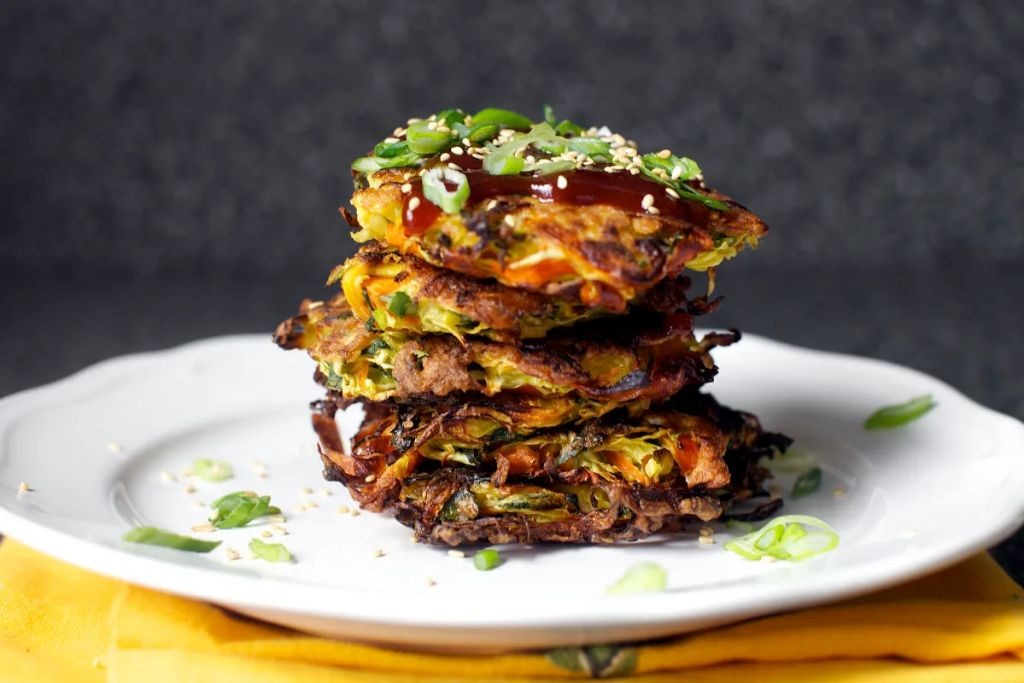
Venturing beyond traditional breakfast fare, these Japanese Eggplant and Scallion Pancakes offer a savory, sophisticated twist that transforms humble vegetables into golden, crisp-edged delights. With their delicate texture and umami-rich flavor, they make for an elegant brunch centerpiece or a light dinner when paired with a simple salad. The subtle sweetness of the eggplant melds beautifully with the sharp freshness of scallions, creating a dish that feels both comforting and refined.
Serving: 4 | Pre Time: 15 minutes | Cooking Time: 20 minutes
Ingredients
- 2 medium Japanese eggplants, sliced into ¼-inch rounds (their slender shape yields tender, quick-cooking pieces)
- 1 bunch scallions, thinly sliced (reserve a few green tops for garnish—they add a vibrant pop of color)
- 1 cup all-purpose flour (I always sift mine for a lighter batter)
- 2 large eggs, at room temperature (this helps them incorporate smoothly)
- ¾ cup cold water (chilled liquid keeps the batter from becoming gummy)
- 1 tablespoon soy sauce (use a naturally brewed variety for deeper flavor)
- 1 teaspoon toasted sesame oil (my secret for an aromatic finish)
- ½ teaspoon fine sea salt
- ¼ teaspoon freshly ground black pepper
- 4 tablespoons neutral oil, such as grapeseed (it has a high smoke point for perfect browning)
Instructions
- Place the eggplant rounds in a colander, sprinkle with ½ teaspoon of the salt, and let them sit for 10 minutes to draw out excess moisture—this prevents sogginess.
- Pat the eggplant dry thoroughly with paper towels to ensure a crisp texture when cooked.
- In a large bowl, whisk together the flour, remaining salt, and pepper until well combined.
- Add the eggs, cold water, soy sauce, and sesame oil to the dry ingredients, whisking vigorously until a smooth, lump-free batter forms, about 1 minute.
- Gently fold in the dried eggplant rounds and sliced scallions until evenly coated with the batter.
- Heat 2 tablespoons of the neutral oil in a large nonstick skillet over medium heat until it shimmers, about 2 minutes.
- For each pancake, ladle about ¼ cup of the batter into the skillet, spreading it slightly with the back of the spoon to form 3-inch rounds.
- Cook the pancakes for 3–4 minutes per side, or until they are golden brown and crisp at the edges—flip only once to avoid breaking them.
- Transfer the cooked pancakes to a wire rack set over a baking sheet; this keeps them from steaming and losing their crunch.
- Repeat with the remaining batter, adding the remaining 2 tablespoons of oil to the skillet as needed between batches.
These pancakes emerge with a satisfying contrast: a crisp, lacy exterior gives way to a tender, almost creamy interior from the eggplant. Their savory depth, accentuated by the scallions’ brightness, pairs wonderfully with a drizzle of ponzu sauce or a dollop of ginger-scallion aioli for an extra layer of complexity. Try stacking them high on a platter, garnished with the reserved scallion greens, for an impressive yet approachable presentation.
Japanese Eggplant Gratin with Cheese and Miso
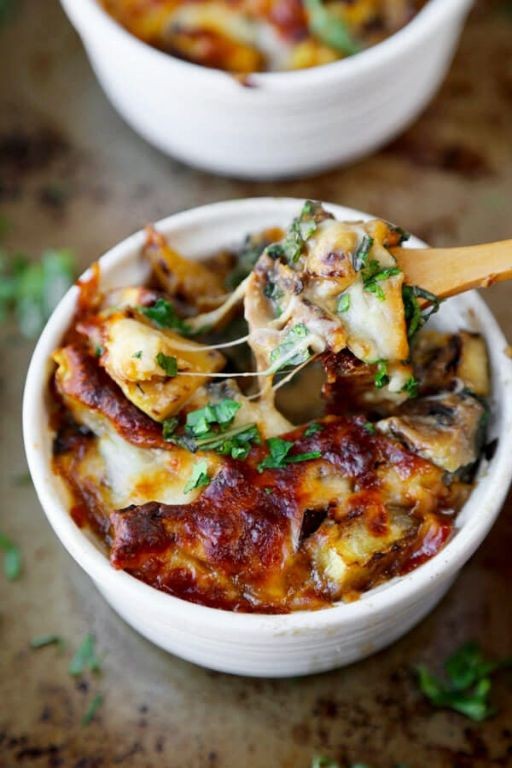
Kindly imagine a dish that transforms humble eggplant into a luxurious, umami-rich gratin, where Japanese eggplant meets creamy cheese and savory miso in a harmonious bake. This elegant creation offers a sophisticated twist on comfort food, perfect for impressing guests or elevating a weeknight dinner with its refined flavors and beautiful presentation.
Serving: 4 | Pre Time: 15 minutes | Cooking Time: 35 minutes
Ingredients
– 2 medium Japanese eggplants (about 1 lb total), sliced into 1/2-inch rounds—their slender shape and tender skin make them ideal for this dish.
– 1 tbsp extra virgin olive oil, my go-to for its fruity notes that complement the eggplant.
– 2 tbsp white miso paste, which adds a deep, savory sweetness without overpowering.
– 1/2 cup heavy cream, for a rich, velvety sauce that clings to every slice.
– 1 cup shredded Gruyère cheese, my preference for its nutty flavor that melts beautifully.
– 1/4 cup grated Parmesan cheese, to add a salty, crispy top layer.
– 1/4 tsp freshly ground black pepper, for a subtle kick that balances the richness.
– 1 tbsp chopped fresh parsley, a bright garnish that cuts through the creaminess.
Instructions
1. Preheat your oven to 400°F (200°C) to ensure even baking from the start.
2. Arrange the eggplant rounds in a single layer on a baking sheet lined with parchment paper.
3. Brush both sides of the eggplant with the extra virgin olive oil using a pastry brush for even coating.
4. Roast the eggplant in the preheated oven for 15 minutes, or until tender and lightly golden, flipping halfway through for uniform cooking.
5. While the eggplant roasts, whisk together the white miso paste and heavy cream in a small bowl until smooth, scraping down the sides to incorporate fully.
6. Remove the eggplant from the oven and reduce the temperature to 375°F (190°C) for the final bake.
7. Transfer the roasted eggplant to a 9×9-inch baking dish, arranging the slices slightly overlapping.
8. Pour the miso-cream mixture evenly over the eggplant, ensuring each slice is coated.
9. Sprinkle the shredded Gruyère cheese and grated Parmesan cheese over the top in an even layer.
10. Season with freshly ground black pepper, distributing it lightly across the surface.
11. Bake in the reduced oven for 20 minutes, or until the cheese is bubbly and golden brown, with edges crisping slightly.
12. Remove from the oven and let rest for 5 minutes to allow the flavors to meld and the dish to set.
13. Garnish with chopped fresh parsley just before serving for a pop of color and freshness.
Creating this gratin yields a dish with a creamy, tender interior and a crisp, cheesy crust that melts in the mouth. Complement its savory depth by pairing it with a simple arugula salad dressed in lemon vinaigrette, or serve as a standout side alongside grilled salmon for an elegant meal.
Japanese Eggplant and Chicken Teriyaki Skewers
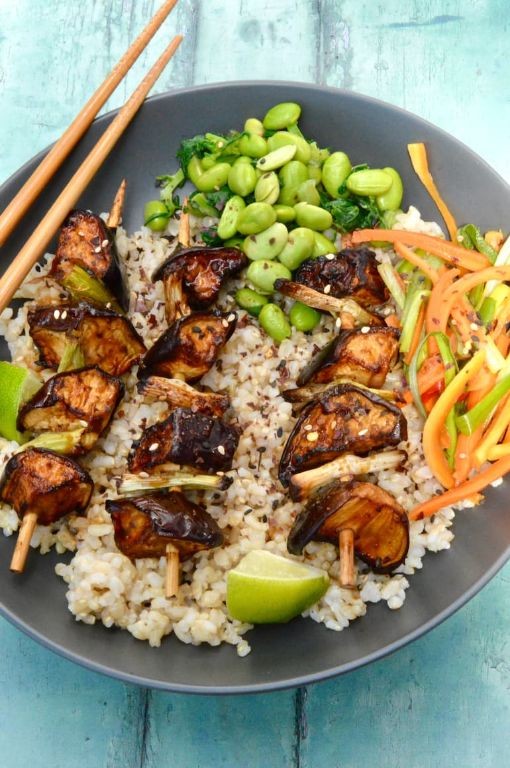
Yield to the allure of Japanese Eggplant and Chicken Teriyaki Skewers, where tender chicken and silky eggplant unite under a glossy, sweet-savory glaze. This elegant yet approachable dish transforms simple ingredients into a stunning centerpiece, perfect for weeknight dinners or festive gatherings. The interplay of textures and flavors creates a memorable experience that feels both familiar and excitingly new.
Serving: 4 | Pre Time: 20 minutes | Cooking Time: 15 minutes
Ingredients
– 1.5 lbs boneless, skinless chicken thighs, cut into 1-inch cubes (I find thighs stay juicier than breasts on the grill)
– 2 medium Japanese eggplants, cut into 1-inch rounds (their slender shape and fewer seeds make them ideal for skewering)
– 1/2 cup low-sodium soy sauce (my go-to for better control over saltiness)
– 1/4 cup mirin
– 2 tbsp granulated sugar
– 1 tbsp grated fresh ginger (nothing beats the bright, spicy kick of fresh)
– 2 cloves garlic, minced
– 1 tbsp vegetable oil
– 1 tbsp toasted sesame seeds, for garnish
– 2 green onions, thinly sliced, for garnish
Instructions
1. Soak 8 wooden skewers in water for at least 30 minutes to prevent burning.
2. In a small saucepan over medium heat, combine soy sauce, mirin, sugar, ginger, and garlic.
3. Bring the mixture to a simmer, stirring until the sugar dissolves completely, about 2 minutes.
4. Reduce heat to low and let the sauce simmer gently until it thickens slightly and coats the back of a spoon, about 5-7 minutes; set aside half for basting and half for serving. Tip: Simmering slowly prevents the sugar from burning and ensures a smooth, glossy teriyaki glaze.
5. Preheat a grill or grill pan to medium-high heat (approximately 400°F).
6. Thread chicken cubes and eggplant rounds alternately onto the soaked skewers.
7. Brush the skewers lightly with vegetable oil to prevent sticking.
8. Place skewers on the preheated grill and cook for 5 minutes.
9. Flip the skewers and brush generously with the reserved basting teriyaki sauce.
10. Continue grilling for another 4-5 minutes, flipping and basting once more, until the chicken reaches an internal temperature of 165°F and the eggplant is tender with grill marks. Tip: Use an instant-read thermometer to check the chicken for perfect doneness without overcooking.
11. Remove skewers from the grill and let them rest for 3 minutes to allow juices to redistribute.
12. Drizzle with the remaining serving teriyaki sauce and garnish with sesame seeds and green onions. Tip: Garnishing while the skewers are still warm helps the sesame seeds adhere for a beautiful presentation.
Savor the contrast of the smoky, caramelized exterior against the succulent chicken and creamy eggplant, all enveloped in that iconic teriyaki sweetness. Serve these skewers over a bed of steamed jasmine rice to soak up every drop of sauce, or alongside a crisp cucumber salad for a refreshing balance. The elegant presentation makes them a standout dish that’s as pleasing to the eye as it is to the palate.
Summary
Lovingly curated, these 19 Japanese eggplant recipes offer a world of savory possibilities for your kitchen. We hope you’ve found inspiration to try something new! Please share which dish you loved most in the comments below, and if you enjoyed this roundup, we’d be so grateful if you pinned it to your Pinterest boards to help other home cooks discover these delicious ideas. Happy cooking!