Crafting a standout Mediterranean orzo salad demands a meticulous balance of textures and a bold, aromatic dressing. This recipe elevates the humble pasta salad into a sophisticated, make-ahead dish perfect for gatherings or a flavorful lunch. By focusing on technique-driven preparation, we ensure each component—from the al dente orzo to the briny olives and crisp vegetables—retains its integrity while harmonizing in a bright, herbaceous vinaigrette.
Why This Recipe Works
- Toasting the orzo in olive oil before boiling deepens its nutty flavor and prevents clumping.
- A high-quality extra-virgin olive oil forms the base of a vibrant lemon-herb vinaigrette that clings perfectly to the pasta.
- Salting the cucumber and red onion draws out excess moisture, preventing a soggy salad.
- Incorporating fresh herbs like mint and parsley at the end preserves their bright, aromatic qualities.
- Allowing the salad to rest for at least one hour lets the flavors meld and intensify.
Ingredients
- 1 ½ cups (about 10 ounces) dried orzo pasta
- 3 tablespoons extra-virgin olive oil, divided
- 1 teaspoon kosher salt, plus more for pasta water and seasoning
- 1 medium English cucumber, finely diced (about 2 cups)
- ½ medium red onion, thinly sliced (about ¾ cup)
- 1 cup cherry tomatoes, halved
- ¾ cup pitted Kalamata olives, halved
- ¾ cup crumbled feta cheese (about 4 ounces)
- ⅓ cup chopped fresh flat-leaf parsley
- ¼ cup chopped fresh mint
- Zest and juice of 1 large lemon (about 3 tablespoons juice)
- 2 cloves garlic, minced
- 1 teaspoon dried oregano
- ½ teaspoon freshly ground black pepper
- ¼ teaspoon red pepper flakes (optional)
Equipment Needed
- Large saucepan or Dutch oven
- Fine-mesh strainer
- Large mixing bowl
- Medium mixing bowl
- Whisk
- Chef’s knife and cutting board
- Microplane or fine grater (for lemon zest)
- Measuring cups and spoons
- Rubber spatula
Instructions
Step 1: Toast and Cook the Orzo
Begin by toasting the orzo to develop a deeper, nuttier flavor profile. Heat 1 tablespoon of extra-virgin olive oil in a large saucepan or Dutch oven over medium heat until it shimmers, about 90 seconds. Add the 1 ½ cups of dried orzo and toast, stirring constantly with a wooden spoon, until the pasta turns a light golden brown and emits a toasted aroma, approximately 3 to 4 minutes. Meanwhile, bring 4 quarts of water to a rolling boil in a separate pot or kettle. Carefully pour the boiling water into the saucepan with the toasted orzo, add 1 tablespoon of kosher salt, and return to a boil. Reduce the heat to maintain a vigorous simmer and cook, uncovered, stirring occasionally, until the orzo is al dente—tender yet firm to the bite. This should take precisely 8 to 9 minutes. Immediately drain the orzo through a fine-mesh strainer, rinse briefly under cool running water to halt the cooking process, and shake vigorously to remove excess water. Transfer the orzo to a large mixing bowl and toss with 1 tablespoon of olive oil to prevent sticking, then spread it in a single layer on a baking sheet to cool completely to room temperature, about 20 minutes. Tip: Toasting the orzo before boiling is a crucial step that unlocks a richer flavor and ensures the grains remain separate, avoiding a gummy texture.
Step 2: Prepare and Salt the Vegetables
Properly preparing the vegetables is essential for texture and preventing a watery salad. Take your 1 medium English cucumber, peel it if desired for a more refined texture, and cut it lengthwise. Use a spoon to scrape out the watery seed core, then proceed to finely dice the flesh into ¼-inch pieces, yielding approximately 2 cups. For the ½ medium red onion, peel it and slice it thinly into half-moons, aiming for about ¾ cup. Place both the diced cucumber and sliced red onion in a colander or medium bowl, sprinkle with ½ teaspoon of kosher salt, and toss thoroughly to coat. Allow this mixture to rest for 15 to 20 minutes; the salt will osmotically draw out excess liquid. After resting, firmly press the vegetables against the sides of the colander or wrap them in a clean kitchen towel and squeeze to expel the released moisture. This step, known as “sweating,” ensures your salad remains crisp and the dressing is not diluted. Pat the vegetables dry with paper towels if necessary before adding them to the cooled orzo.
Step 3: Construct the Lemon-Herb Vinaigrette
A vibrant, emulsified vinaigrette is the backbone of this salad. In a medium mixing bowl, combine the zest and juice of 1 large lemon, which should yield about 3 tablespoons of fresh juice. Add 2 cloves of minced garlic, 1 teaspoon of dried oregano, ½ teaspoon of freshly ground black pepper, ¼ teaspoon of red pepper flakes (if using), and the remaining 1 teaspoon of kosher salt. Whisk these ingredients together vigorously for 30 seconds to begin dissolving the salt and blending the flavors. While continuously whisking, slowly drizzle in the remaining 2 tablespoons of high-quality extra-virgin olive oil in a thin, steady stream. This technique, called emulsification, encourages the oil and acid to bind into a cohesive, slightly thickened dressing that will coat every ingredient evenly. Whisk for an additional minute until the vinaigrette is fully combined and has a glossy appearance. Taste and adjust seasoning with more salt or pepper if desired. Set the dressing aside to allow the garlic and oregano flavors to infuse while you assemble the remaining components.
Step 4: Assemble the Salad Base
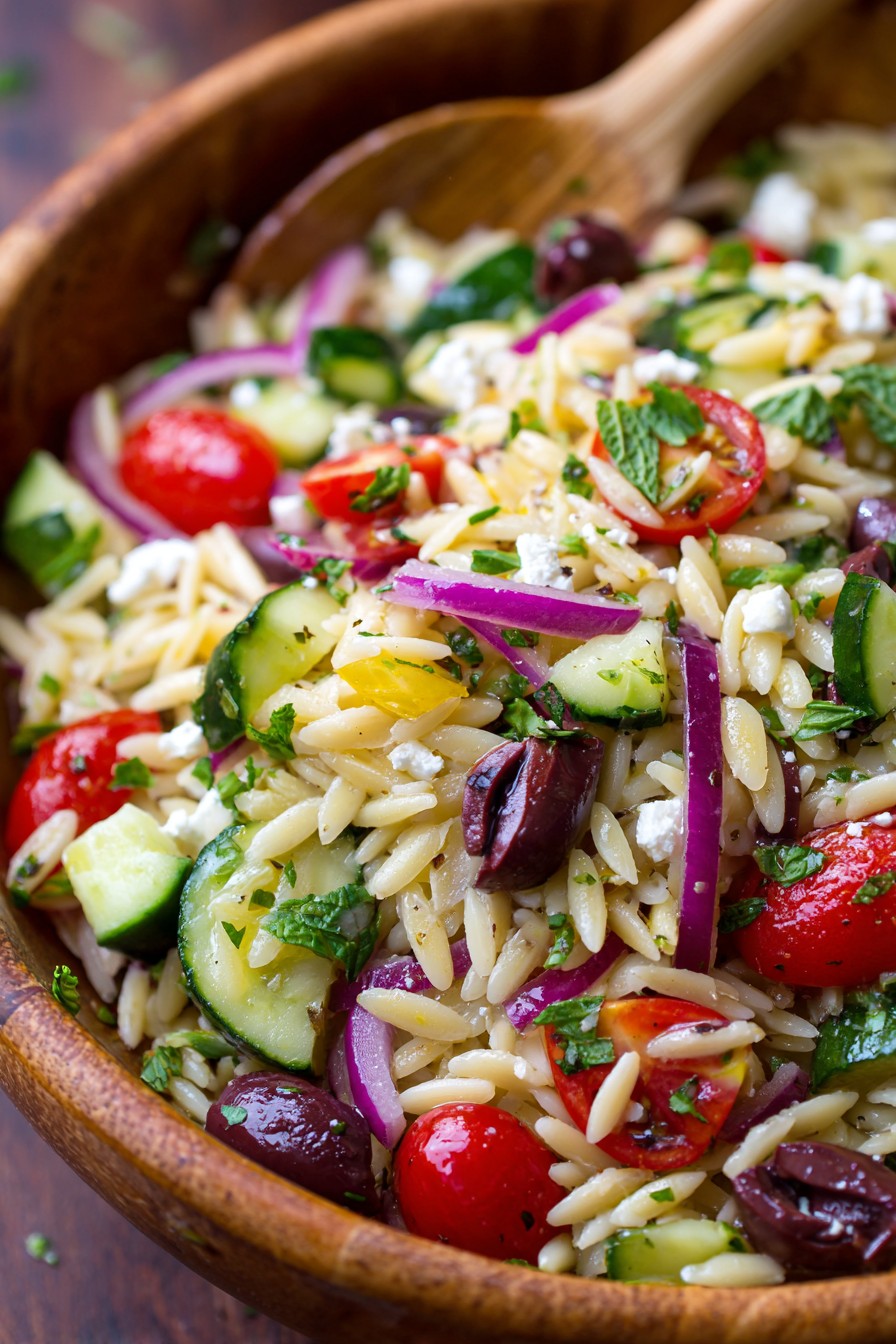
Now, bring all the prepared components together with precision. To the large mixing bowl containing the completely cooled orzo, add the salted and drained cucumber and red onion. Incorporate 1 cup of halved cherry tomatoes, ¾ cup of halved pitted Kalamata olives, and ¾ cup of crumbled feta cheese. Using a rubber spatula, gently fold these ingredients together until they are evenly distributed throughout the orzo. Take care not to over-mix, as this can break down the tender vegetables and crush the orzo. The goal is a heterogeneous mixture where each bite offers a variety of textures and flavors. Once combined, pour approximately two-thirds of the prepared lemon-herb vinaigrette over the salad. Fold again gently until the dressing lightly coats all the ingredients. Tip: Reserve a portion of the dressing to adjust seasoning and moisture level just before serving, as the orzo will continue to absorb liquid as it rests.
Step 5: Incorporate Fresh Herbs and Final Seasoning
The addition of fresh herbs is a final, non-negotiable step that provides aromatic lift. Just before the salad is ready to serve or rest, measure ⅓ cup of chopped fresh flat-leaf parsley and ¼ cup of chopped fresh mint. Sprinkle these herbs over the assembled salad. Using your rubber spatula, fold them in with a light hand, making just 4 to 5 turns to integrate them without bruising the delicate leaves. At this stage, perform a critical taste test. Take a small spoonful, assessing the balance of acidity, salt, and herbal notes. If the salad seems dry, add the remaining reserved vinaigrette. Adjust seasoning with an extra pinch of salt or a squeeze of fresh lemon juice if needed. For optimal flavor development, cover the bowl tightly with plastic wrap and refrigerate for a minimum of 1 hour, or ideally up to 4 hours. This resting period allows the orzo to fully absorb the dressing and the flavors to marry. Tip: Always add delicate fresh herbs at the very end of assembly to preserve their vibrant color and potent aroma, which can diminish if added too early.
Tips and Tricks
For an even more pronounced flavor, consider toasting the dried oregano in a dry skillet over low heat for 1 minute before adding it to the vinaigrette; this awakens its essential oils. If making the salad a full day ahead, hold back the fresh herbs and tomatoes, adding them 1-2 hours before serving to maintain their texture. To achieve a professional presentation, use a ring mold to plate individual portions, gently pressing the salad to form a neat cylinder before unmolding. For a richer dressing, substitute 1 tablespoon of the olive oil with a robust, cold-pressed variety or infuse the oil beforehand with a sprig of rosemary over very low heat for 10 minutes, then let it cool. When salting the cucumber and onion, if time permits, let them drain in the refrigerator for 30 minutes; the colder temperature firms them up slightly for an even crisper bite.
Recipe Variations
- Protein-Packed Version: Fold in 2 cups of shredded rotisserie chicken, 1 ½ cups of cooked and chilled chickpeas, or 8 ounces of grilled and sliced shrimp during the final assembly for a heartier main course.
- Herb Swaps: Replace the mint and parsley with equal parts fresh dill and basil for a distinctly Greek profile, or use cilantro and a pinch of sumac for a Levantine twist.
- Cheese Alternatives: Swap the feta for an equal amount of creamy goat cheese crumbles, salty halloumi (grilled and cubed), or for a dairy-free option, use ½ cup of nutritional yeast for a cheesy flavor.
- Grain Substitution: Use an equal amount of pearl couscous, farro, or quinoa in place of orzo; adjust cooking times and liquid according to package directions for the chosen grain.
- Vegetable Add-Ins: Incorporate 1 cup of roasted red peppers (julienned), ½ cup of toasted pine nuts or slivered almonds, or 1 cup of marinated artichoke hearts (chopped) for additional layers of flavor and texture.
Frequently Asked Questions
Q: Can I make this salad ahead of time, and how long will it keep?
A: Absolutely. This salad’s flavor improves with time. Assemble it completely (including dressing) up to 24 hours in advance. Store covered in the refrigerator. Add the fresh herbs within the last 2-4 hours before serving for best results. It will keep for up to 3 days, though the vegetables will soften slightly.
Q: Is rinsing the cooked orzo necessary, and won’t it make the salad cold?
A: Rinsing is critical to stop the cooking process and remove excess starch, which prevents clumping. Yes, it cools the pasta, but since this is a chilled salad, that’s ideal. Ensure the orzo is cooled to room temperature before adding other ingredients to avoid wilting the fresh herbs.
Q: My salad seems dry after chilling. What did I do wrong?
A> The orzo continues to absorb liquid. This is why reserving some dressing is advised. Simply drizzle 1-2 tablespoons of extra virgin olive oil or a fresh squeeze of lemon juice over the salad and toss gently to revive it just before serving.
Q: Can I use a different type of pasta if I don’t have orzo?
A: Yes, but choose a small shape with good sauce-clinging ability. Ditalini, small shells, or even acini di pepe are excellent substitutes. Follow the same toasting technique if possible, and adjust the cook time based on the package instructions for your chosen pasta.
Q: How can I make this recipe gluten-free or vegan?
A: For gluten-free, use certified gluten-free orzo or substitute with an equal amount of cooked quinoa. For vegan, omit the feta cheese. Consider adding ½ cup of chopped sun-dried tomatoes or ⅓ cup of capers for a salty, umami punch to replace the feta’s flavor.
Summary
This Mediterranean Orzo Salad masterfully combines technique and flavor. By toasting the pasta, properly preparing vegetables, and building a bright vinaigrette, you create a dish that is both robust and refreshing, perfect for any occasion.
Mediterranean Orzo Salad
6
servings25
minutes10
minutesIngredients
Instructions
- 1 Heat 1 tbsp oil in a large saucepan over medium heat. Toast orzo for 3-4 mins until golden. Add 4 quarts boiling water and 1 tbsp salt. Boil for 8-9 mins until al dente. Drain, rinse under cool water, and toss with 1 tbsp oil. Spread on a sheet to cool completely.
- 2 Dice cucumber and slice onion. Toss with ½ tsp salt in a colander. Let sit 15-20 mins, then press firmly to drain all excess liquid.
- 3 In a bowl, whisk lemon zest, juice, garlic, oregano, pepper, red pepper flakes (if using), and 1 tsp salt. Slowly drizzle in remaining 2 tbsp oil while whisking to emulsify.
- 4 In a large bowl, combine cooled orzo, drained vegetables, tomatoes, olives, and feta. Gently fold. Pour about two-thirds of the dressing over and fold to coat.
- 5 Fold in parsley and mint. Taste and adjust seasoning with reserved dressing, salt, or lemon juice. Cover and refrigerate for at least 1 hour before serving.