Beneath the humble exterior of meatballs simmered in tomato sauce lies a world of culinary technique, where precise ingredient ratios and controlled cooking methods transform simple components into an exceptionally tender and flavorful dish. By focusing on small-scale preparation and a layered sauce development, this recipe delivers consistently juicy meatballs with a rich, balanced tomato foundation that clings perfectly to each bite. The result is a versatile centerpiece equally suited for elegant appetizer presentations or as a hearty main course over pasta or polenta.
Why This Recipe Works
- Panade (breadcrumb-milk mixture) creates exceptionally tender meatballs by preventing protein tightening
- Two-stage cooking—initial sear followed by gentle simmer—develops complex flavor while maintaining moisture
- San Marzano tomatoes provide naturally sweet acidity without requiring additional sugar
- Small 1-inch diameter ensures even cooking throughout without dry centers
- Resting meat mixture before forming improves texture and prevents crumbling
Ingredients
- 1 pound ground beef (80/20 fat ratio)
- 1/2 pound ground pork
- 1 cup fresh breadcrumbs (from 2 slices day-old bread)
- 1/2 cup whole milk
- 1 large egg, lightly beaten
- 1/2 cup finely grated Parmesan cheese
- 1/4 cup finely chopped fresh parsley
- 3 cloves garlic, minced
- 1 small yellow onion, finely diced
- 1 teaspoon kosher salt
- 1/2 teaspoon freshly ground black pepper
- 1/4 teaspoon red pepper flakes
- 2 tablespoons olive oil (for browning)
- 2 (28-ounce) cans San Marzano tomatoes, crushed by hand
- 1/4 cup dry red wine
- 2 tablespoons tomato paste
- 1 teaspoon dried oregano
- 2 fresh basil sprigs
- Additional salt and pepper to taste
Equipment Needed
- Large mixing bowl
- Dutch oven or heavy-bottomed pot (5-6 quart capacity)
- Rimmed baking sheet
- Parchment paper
- Instant-read thermometer
- Wooden spoon or spatula
- Measuring cups and spoons
- Sharp chef’s knife
- Cutting board
Instructions
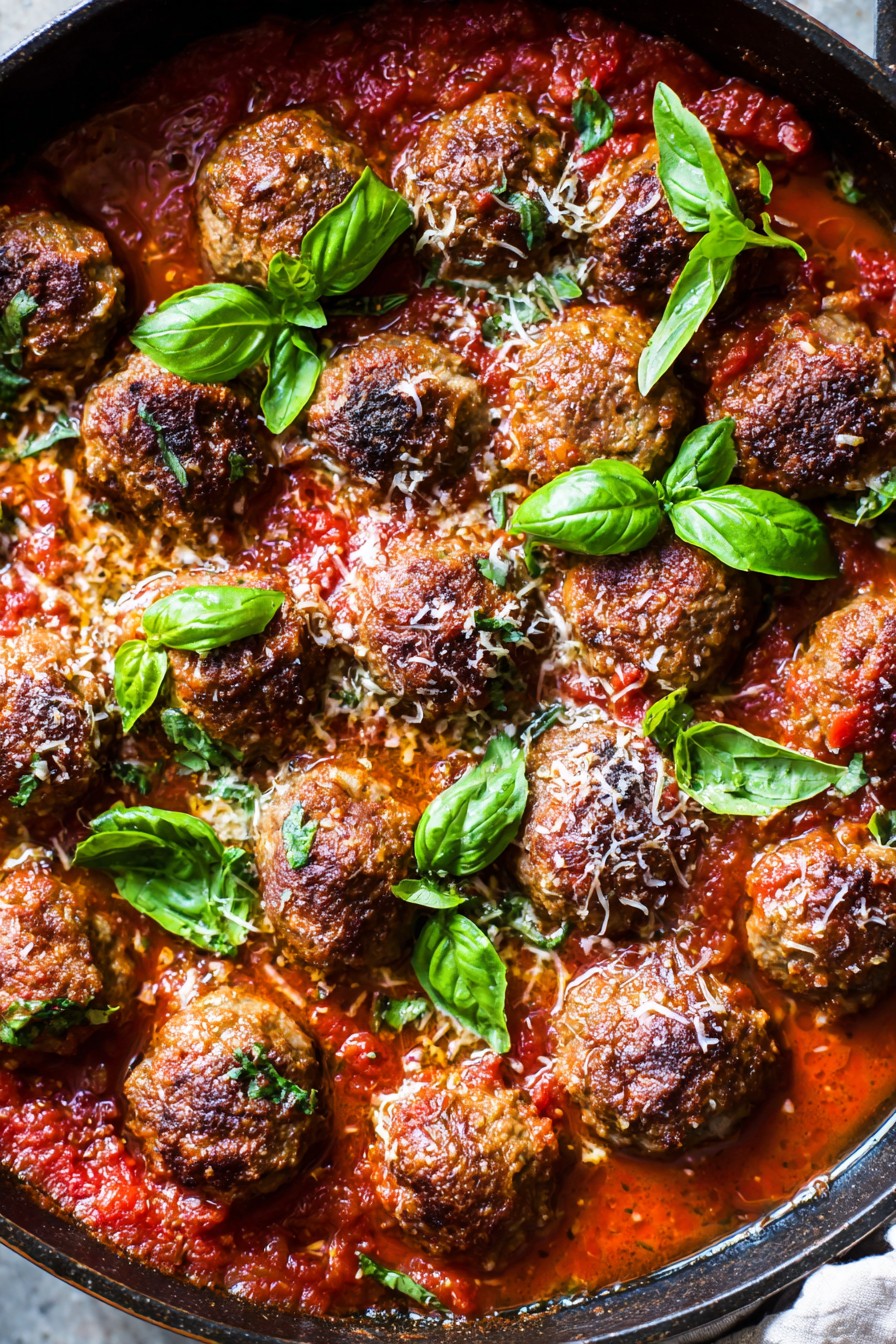
Prepare the Panade and Meat Mixture
Begin by creating the panade, which serves as the primary tenderizing agent for your meatballs. In your large mixing bowl, combine 1 cup of fresh breadcrumbs with 1/2 cup of whole milk, allowing the mixture to soak for approximately 5 minutes until the bread has fully absorbed the liquid and achieved a paste-like consistency. This hydration step is crucial—it prevents the meat proteins from tightening excessively during cooking, ensuring a tender final texture. While the panade rests, prepare your aromatics: finely dice 1 small yellow onion and mince 3 cloves of garlic, aiming for uniform pieces no larger than 1/8-inch to ensure even distribution. Add these to the bowl along with 1/2 cup of finely grated Parmesan cheese, 1/4 cup of chopped fresh parsley, 1 lightly beaten large egg, 1 teaspoon of kosher salt, 1/2 teaspoon of freshly ground black pepper, and 1/4 teaspoon of red pepper flakes. Gently incorporate 1 pound of ground beef and 1/2 pound of ground pork using a folding motion with your hands or a spatula, being careful not to overwork the mixture. Cover and refrigerate for 30 minutes to allow the flavors to meld and the mixture to firm slightly for easier handling.
Form and Sear the Meatballs
After the resting period, portion the meat mixture into approximately 40 uniform pieces, each weighing about 1/2 ounce. Using damp hands to prevent sticking, roll each portion into tight, smooth spheres measuring exactly 1 inch in diameter—this consistent size ensures even cooking throughout the batch. Arrange the formed meatballs on a parchment-lined baking sheet, maintaining at least 1/2 inch of space between them to prevent sticking. Heat 2 tablespoons of olive oil in your Dutch oven over medium-high heat until it shimmers and easily coats the bottom of the pot. Working in batches to avoid overcrowding, carefully place meatballs in the hot oil, searing for 2-3 minutes per side until they develop a deep golden-brown crust on at least two surfaces. Use tongs to gently turn the meatballs, being careful not to break their delicate structure. Transfer seared meatballs back to the baking sheet as they finish; they will not be fully cooked at this stage. This initial sear creates flavorful fond on the pot’s surface while establishing a protective crust that will help retain moisture during the simmering phase.
Develop the Tomato Sauce Base
Without cleaning the pot, reduce the heat to medium and add your finely diced onion to the remaining oil and rendered fat, sautéing for 4-5 minutes until translucent and just beginning to caramelize at the edges. Add the minced garlic and cook for an additional 60 seconds until fragrant but not browned, stirring constantly to prevent burning. Incorporate 2 tablespoons of tomato paste, cooking and stirring for 2 minutes until it darkens slightly and develops a richer, deeper aroma—this step, known as “blooming,” concentrates the tomato’s natural sugars and eliminates any raw flavor. Deglaze the pot with 1/4 cup of dry red wine, using a wooden spoon to scrape up all the browned fond from the bottom, and simmer until the wine has reduced by half, approximately 3-4 minutes. This deglazing process incorporates the complex flavors from the meatball sear directly into your sauce foundation.
Simmer and Finish the Sauce
Add 2 (28-ounce) cans of San Marzano tomatoes that you’ve crushed by hand, along with their juices, to the pot. The hand-crushing technique creates varied textures in your sauce, from smooth puree to small chunks, which provides more visual and textural interest than uniformly processed tomatoes. Stir in 1 teaspoon of dried oregano and 2 fresh basil sprigs, then bring the sauce to a gentle simmer over medium-low heat, maintaining small bubbles around the edges rather than a rolling boil. Season with additional salt and pepper to taste, remembering that the Parmesan in the meatballs will contribute saltiness as they cook. Allow the sauce to simmer uncovered for 15 minutes, stirring occasionally, to allow the flavors to meld and the sauce to reduce slightly, achieving a consistency that will coat the back of a spoon without being overly thick.
Complete Cooking and Final Adjustments
Gently return all seared meatballs to the simmering sauce, nestling them in a single layer as much as possible. Reduce the heat to low, cover the pot with the lid slightly ajar to allow some steam to escape, and simmer for 20-25 minutes. The meatballs are fully cooked when they reach an internal temperature of 165°F on an instant-read thermometer inserted into the center of several meatballs. During the final 5 minutes of cooking, taste the sauce and adjust seasoning if necessary—you may want to add a pinch of sugar if the tomatoes are particularly acidic, or a splash of pasta water if the sauce has thickened excessively. Remove the pot from heat and allow it to rest, covered, for 10 minutes before serving; this resting period allows the meatballs to reabsorb some moisture and the flavors to further harmonize.
Tips and Tricks
For exceptionally light meatballs, consider using a combination of ground meats with different fat contents—try 85% lean beef with pork shoulder for optimal flavor and texture balance. When forming meatballs, keep a small bowl of cold water nearby to periodically moisten your hands; this prevents sticking without adding excess flour or oil that could alter the crust formation. For deeper flavor development in your sauce, consider roasting whole San Marzano tomatoes with olive oil and garlic at 400°F for 25 minutes before crushing them—this caramelization adds subtle sweetness and complexity. If preparing ahead, meatballs can be formed and refrigerated on parchment-lined baking sheets for up to 24 hours before cooking, or fully cooked and frozen in sauce for up to 3 months. For a smoother sauce texture without using a blender, pass the cooked sauce through a food mill after removing the meatballs—this eliminates seeds and skins while maintaining a rustic consistency.
Recipe Variations
- Mediterranean Twist: Replace half the pork with ground lamb, add 2 teaspoons of ground cumin and 1 teaspoon of smoked paprika to the meat mixture, and finish the sauce with chopped mint and a squeeze of lemon juice.
- Spicy Arrabbiata Style: Increase red pepper flakes to 1 teaspoon, add 1 finely chopped jalapeño (seeds included) to the sauce base, and incorporate 1 tablespoon of Calabrian chili paste during the final 10 minutes of simmering.
- Creamy Swedish Adaptation: Omit tomato sauce entirely; after browning meatballs, create a roux with 3 tablespoons each of butter and flour, then whisk in 2 cups beef broth and 1 cup heavy cream, simmering until thickened before returning meatballs to the sauce.
- Vegetarian Alternative: Substitute meat with a mixture of 2 cups cooked lentils, 1 cup finely chopped mushrooms sautéed until dry, and 1 cup cooked quinoa; bind with 2 eggs and 1/2 cup breadcrumbs, then proceed with standard cooking method.
- Asian Fusion: Replace Italian herbs with 2 tablespoons grated ginger, 3 chopped scallions, and 1 tablespoon soy sauce in meat mixture; use a sauce of 2 cups chicken broth, 1/4 cup hoisin, and 2 tablespoons rice vinegar reduced by half before adding meatballs.
Frequently Asked Questions
Q: Can I use all beef instead of the beef-pork combination?
A: Absolutely, though the pork contributes both fat and subtle sweetness that enhances overall flavor. If using all beef, select 85% lean ground chuck for sufficient fat content, and consider adding 1 tablespoon of Worcestershire sauce to approximate the pork’s umami characteristics.
Q: Why do my meatballs sometimes fall apart during cooking?
A: Structural failure typically results from insufficient binding agents or overhandling. Ensure your egg is thoroughly incorporated, refrigerate the mixture before forming to firm the fat, and avoid compacting the meatballs too tightly—gentle pressure when rolling creates the ideal texture.
Q: Can I bake the meatballs instead of pan-searing?
A: Baking at 400°F for 15-20 minutes provides convenience but sacrifices flavor development from fond. For optimal results, sear first to create Maillard reaction flavors, then finish in the sauce; if baking exclusively, brush meatballs with oil and rotate halfway through cooking.
Q: How can I make this recipe gluten-free?
A: Replace breadcrumbs with 3/4 cup gluten-free panko or crushed gluten-free crackers, and ensure all other ingredients (including tomato paste and Parmesan) are certified gluten-free. The panade technique works equally well with gluten-free alternatives.
Q: What’s the best way to store and reheat leftovers?
A: Refrigerate in an airtight container for up to 4 days, or freeze for 3 months. Reheat gently in a covered saucepan over low heat with a splash of water or broth to prevent drying out; microwave reheating tends to toughen the meatballs.
Summary
This technique-driven approach transforms simple ingredients into exceptionally tender mini meatballs through precise panade preparation, controlled searing, and gentle simmering in a layered tomato sauce. The result showcases professional culinary principles in an accessible format that delivers consistent, restaurant-quality results in home kitchens.
Mini Meatballs in Tomato Sauce
6
servings45
minutes55
minutesIngredients
Instructions
- 1 Prepare panade by combining breadcrumbs and milk; let soak 5 minutes. Add onion, garlic, Parmesan, parsley, egg, salt, pepper, and red pepper flakes. Gently mix in ground meats. Refrigerate 30 minutes.
- 2 Form mixture into 1-inch meatballs (about 40 total). Heat oil in Dutch oven over medium-high. Sear meatballs in batches until browned on multiple sides, 2-3 minutes per side. Transfer to baking sheet.
- 3 In same pot, sauté remaining onion until translucent. Add garlic; cook 1 minute. Stir in tomato paste; cook 2 minutes. Deglaze with red wine, scraping up fond. Simmer until reduced by half.
- 4 Add crushed tomatoes, oregano, and basil. Season with salt and pepper. Simmer 15 minutes until slightly reduced.
- 5 Return meatballs to sauce. Simmer covered on low 20-25 minutes until meatballs reach 165°F internally. Rest 10 minutes before serving.