Zestful tropical flavors converge in this meticulously crafted pineapple coconut smoothie, transforming simple ingredients into a sophisticated beverage experience. Zeroing in on texture and balance, this recipe elevates the classic smoothie through precise technique and ingredient selection, delivering a velvety, restaurant-quality result that captures the essence of a sun-drenched island getaway.
Why This Recipe Works
- Frozen pineapple chunks create optimal viscosity without diluting flavor, as their crystalline structure breaks down into a creamy emulsion rather than a watery puree.
- Full-fat coconut milk provides essential lipids that bind with fruit fibers, preventing separation and creating a luxuriously smooth mouthfeel that low-fat alternatives cannot achieve.
- Strategic layering of ingredients in the blender vessel ensures even distribution of dense components, preventing motor strain and guaranteeing homogeneous blending from first pour to final sip.
- A touch of lime juice introduces necessary acidity that cuts through the richness of coconut, brightening the pineapple’s natural sweetness and creating dimensional flavor complexity.
Ingredients
- 3 cups frozen pineapple chunks (approximately 1.5 pounds), cut into 1-inch pieces
- 1 13.5-ounce can full-fat coconut milk, thoroughly shaken before measuring
- 1 cup unsweetened coconut water, chilled to 40°F
- 2 tablespoons pure maple syrup, grade A amber
- 1 tablespoon freshly squeezed lime juice, strained of pulp and seeds
- 1 teaspoon pure vanilla extract
- 1/4 teaspoon fine sea salt
- 1 cup ice cubes, made from filtered water
Equipment Needed
- High-speed blender (minimum 1000-watt motor)
- Digital kitchen scale
- Liquid measuring cups (1-cup and 2-cup capacities)
- Dry measuring cups
- Measuring spoons
- Fine-mesh strainer
- Citrus juicer or reamer
- Rubber spatula
- Tall serving glasses (16-ounce capacity)
Instructions
Step 1: Prepare and Measure Ingredients
Begin by verifying your frozen pineapple chunks are uniformly sized at approximately 1-inch pieces; larger chunks may strain your blender motor, while smaller pieces could over-process into a slushy consistency. Using a digital kitchen scale, measure exactly 3 cups (about 1.5 pounds) of frozen pineapple, ensuring you account for any ice crystals that may have formed during storage. Shake the can of full-fat coconut milk vigorously for 30 seconds to reincorporate any separated cream, then measure 1 13.5-ounce can’s worth into a liquid measuring cup. Chill your coconut water to precisely 40°F by placing it in the refrigerator for at least 2 hours or in an ice bath for 20 minutes—this temperature prevents premature melting of your frozen components during blending. Measure 2 tablespoons of grade A amber maple syrup, noting its viscosity should coat the back of a spoon without immediately dripping. Juice one medium lime through a fine-mesh strainer to yield approximately 1 tablespoon of clear liquid, discarding any pulp or seeds that could introduce bitterness. Pro Tip: For optimal texture, ensure all liquid ingredients are chilled to below 45°F before blending to maintain the structural integrity of your smoothie’s emulsion.
Step 2: Layer Ingredients in Blender Vessel
Strategic layering within the blender pitcher is crucial for achieving perfect emulsion without overtaxing your motor. Begin by pouring the chilled coconut water into the base of your blender vessel—this liquid foundation creates immediate lubrication for the blades. Next, add the freshly squeezed lime juice and pure vanilla extract directly onto the coconut water, allowing these flavor agents to disperse evenly throughout the liquid phase. Carefully pour in the shaken full-fat coconut milk, aiming for a steady stream that incorporates without splashing. Sprinkle the 1/4 teaspoon of fine sea salt evenly across the surface of the liquids; this minimal amount will enhance flavor perception without making the smoothie taste salty. Now add the 2 tablespoons of maple syrup, pouring it in a circular motion to distribute sweetness throughout the liquid base. Finally, place the 3 cups of measured frozen pineapple chunks on top of the liquid ingredients, creating a mound that will gradually descend into the blades as blending commences. Pro Tip: Never place frozen ingredients at the bottom of your blender, as this can cause blade jamming and uneven processing that results in chunks of unblended fruit.
Step 3: Execute Primary Blending Phase
Secure the blender lid firmly, ensuring the vent cap (if present) is properly seated to prevent pressure buildup. Begin blending on the lowest speed setting for exactly 15 seconds to initiate incorporation without creating excessive heat from friction. After this initial phase, increase speed to medium-high (approximately 70% of maximum power) and blend for 45 seconds, observing the vortex formation through the pitcher walls—a proper vortex should pull all ingredients downward toward the blades in a consistent spiral pattern. If ingredients appear to be climbing the walls instead of descending, pause blending and use a rubber spatula to carefully push material back toward the blades, taking care not to touch the blades themselves. Resume blending at high speed (90% of maximum) for 30 seconds, during which time the mixture should transform from a chunky slurry to a homogeneous, creamy liquid with no visible pineapple fragments. Pro Tip: Listen for a consistent, smooth motor sound; any grinding or stuttering indicates ingredients aren’t properly incorporated and requires immediate pausing to adjust contents.
Step 4: Incorporate Ice and Finalize Texture
After the primary blending phase, remove the vent cap from the lid (if your blender has one) and slowly add 1 cup of ice cubes through the opening while the blender continues running at medium speed. Add the ice cubes one at a time at 3-second intervals—this gradual incorporation prevents temperature shock that could cause the emulsion to break. Once all ice has been added, increase speed to maximum and blend for exactly 20 seconds, which should reduce the ice to microscopic crystals that provide body without detectable crunch. To test texture, stop the blender and dip a spoon into the mixture; it should coat the back of the spoon evenly without immediately sliding off, indicating proper viscosity. If the mixture appears too thick (coating the spoon without any movement), add additional chilled coconut water 1 tablespoon at a time, blending for 5 seconds after each addition until desired consistency is achieved. If too thin (immediately sliding off the spoon), add 2-3 additional ice cubes and blend for 10 seconds to incorporate.
Step 5: Serve Immediately with Proper Technique
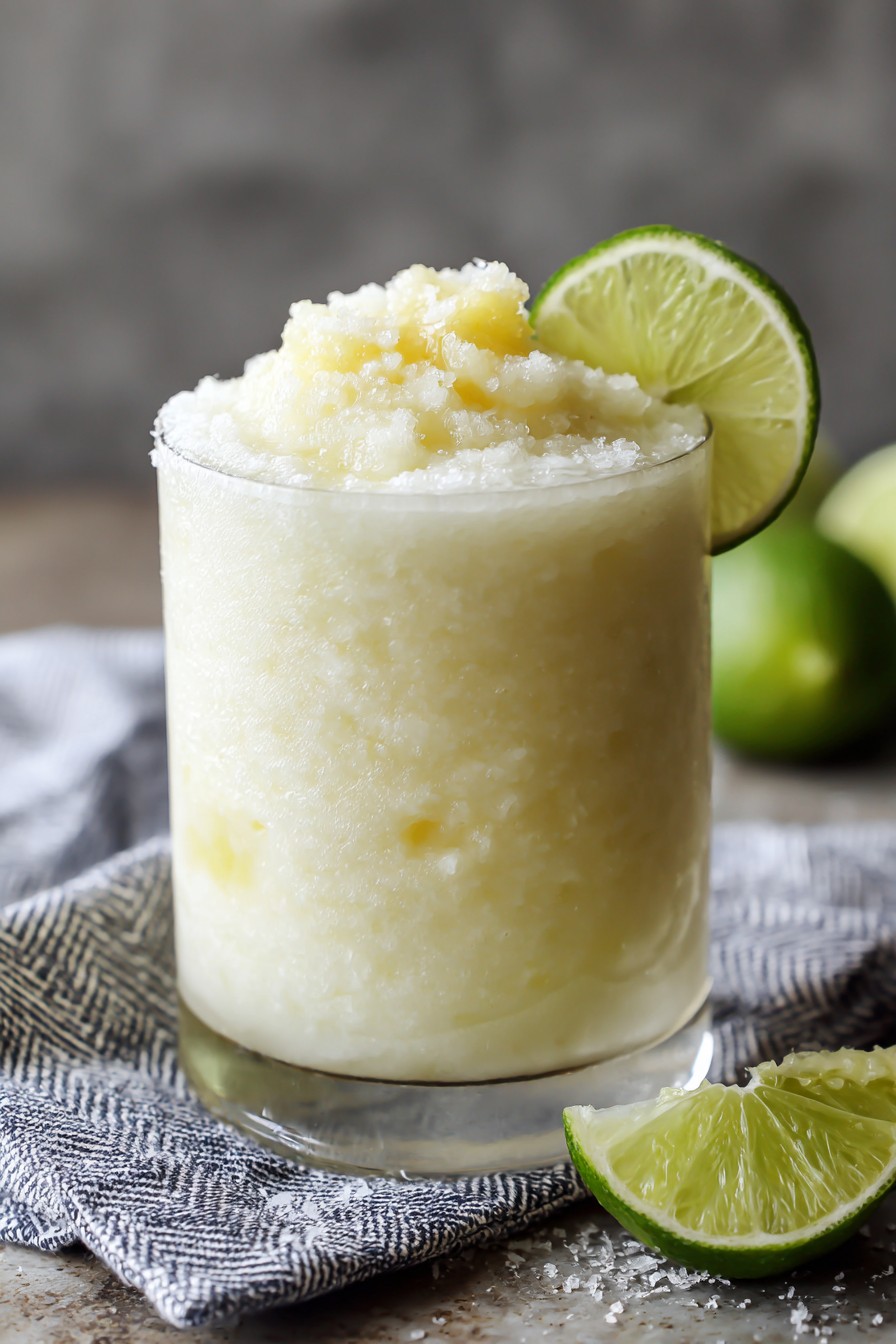
Once texture perfection is achieved, immediately pour the smoothie into chilled 16-ounce serving glasses, filling each to within 1/2 inch of the rim to prevent spillage while allowing visual appreciation of the creamy consistency. Use a rubber spatula to scrape every bit of mixture from the blender pitcher, as the final portions often contain the most thoroughly emulsified sections. Serve within 90 seconds of blending completion, as the emulsion will begin to separate after approximately 2 minutes at room temperature. For optimal drinking experience, provide wide-diameter straws that allow the full velvety texture to be appreciated without compromising the carefully achieved viscosity. Do not garnish with additional pineapple or coconut flakes, as these textural additions disrupt the seamless mouthfeel—instead, appreciate the visual appeal of the smoothie’s uniform pale yellow hue with tiny bubbles suspended throughout, evidence of proper aeration during blending.
Tips and Tricks
For professional-level results, consider these advanced techniques: First, toast unsweetened coconut flakes at 325°F for 5-7 minutes until golden brown, then grind them into a fine powder using a spice grinder; add 1 tablespoon of this coconut powder to the blender for intensified flavor without altering texture. Second, if using fresh pineapple instead of frozen, freeze the chunks on a parchment-lined baking sheet for exactly 4 hours before use—this creates the ideal crystalline structure for blending. Third, for a temperature-stable smoothie that maintains emulsion longer, chill your serving glasses in the freezer for 20 minutes before pouring. Fourth, consider clarifying your coconut water by straining it through a coffee filter—this removes particulates that can create slight graininess. Finally, if making multiple batches, clean your blender pitcher thoroughly between uses with hot water and a drop of dish soap, as any residual oils from the coconut milk can compromise the next batch’s emulsion stability.
Recipe Variations
- Tropical Green Boost: Replace 1 cup of frozen pineapple with 1 cup of frozen mango chunks and add 1 cup of packed baby spinach leaves during the initial blending phase. The spinach will completely incorporate without affecting flavor while adding phytonutrients and creating a vibrant green hue.
- Protein-Enhanced Version: Add 1 scoop (approximately 30g) of unflavored collagen peptides or vanilla protein powder during the liquid ingredient phase. Increase coconut water by 2 tablespoons to compensate for the powder’s thickening effect, and blend for an additional 10 seconds to ensure complete incorporation.
- Spiced Coconut Variation: Infuse the coconut milk with flavor by warming it gently with 1/4 teaspoon ground cardamom, 1/8 teaspoon ground ginger, and 1 cinnamon stick for 10 minutes over low heat. Strain through cheesecloth, chill completely, then use as directed in the main recipe.
- Creamsicle Interpretation: Replace 1 cup of frozen pineapple with frozen orange segments and add 1/2 teaspoon orange zest during blending. Reduce maple syrup to 1 tablespoon since oranges provide additional natural sweetness.
- Dairy-Free Piña Colada Style: Add 1 ounce of quality white rum after the primary blending phase and blend for just 5 seconds to incorporate without overheating the alcohol. Garnish with a pineapple wedge on the rim for presentation.
Frequently Asked Questions
Can I use canned pineapple instead of frozen?
While canned pineapple in juice (not syrup) can be substituted, you must drain it thoroughly and freeze the chunks for at least 6 hours before use. The freezing process is essential for creating proper texture—fresh or room temperature pineapple will yield a watery, separated smoothie regardless of blending technique. If using canned, reduce added sweetener by half since canned pineapple contains more natural sugars.
Why does my smoothie separate after sitting for a few minutes?
Separation typically indicates either insufficient blending time or incorrect ingredient temperature. Ensure you blend at high speed for the full recommended duration to create a stable emulsion, and verify all liquids are chilled below 45°F. The fat content in full-fat coconut milk should properly emulsify with the fruit fibers—if using light coconut milk, separation is inevitable due to lower lipid content.
Can I prepare this smoothie in advance?
For optimal texture and flavor, consume immediately after blending. If advance preparation is necessary, blend without ice, pour into an airtight container leaving 1/2 inch of headspace, and refrigerate for up to 4 hours. Add ice and re-blend for 15 seconds just before serving. Do not freeze prepared smoothies as thawing breaks the emulsion irreparably.
What if I don’t have a high-speed blender?
Standard blenders can achieve acceptable results with technique adjustments: Use partially thawed pineapple (15 minutes at room temperature), increase blending time by 50%, and pause every 30 seconds to stir contents with a rubber spatula. Texture will be slightly less smooth but still enjoyable. Never force a standard blender motor—if it struggles, your pineapple chunks are still too frozen.
Is the maple syrup necessary or can I use another sweetener?
Maple syrup provides specific viscosity and flavor notes that complement pineapple, but you may substitute with 1 1/2 tablespoons of honey or 2 tablespoons of agave nectar. Avoid granulated sugars as they won’t dissolve properly in the cold mixture. If using liquid stevia, begin with 10 drops and adjust to taste after blending.
Summary
This meticulously crafted pineapple coconut smoothie achieves tropical perfection through precise technique, ingredient selection, and attention to emulsion science. By following the detailed instructions, you’ll create a velvety, restaurant-quality beverage that balances bright pineapple acidity with rich coconut creaminess in every sip.
Pineapple Coconut Smoothie
2
servings10
minutesIngredients
Instructions
- 1 Prepare and measure all ingredients, ensuring frozen pineapple chunks are uniformly sized and all liquids are chilled below 45°F. Shake coconut milk can vigorously before measuring.
- 2 Layer ingredients in blender vessel: first add coconut water, lime juice, vanilla extract, then coconut milk. Sprinkle salt evenly, add maple syrup, then place frozen pineapple chunks on top.
- 3 Begin blending on lowest speed for 15 seconds, then increase to medium-high for 45 seconds. Increase to high speed for 30 seconds until mixture is homogeneous with no visible pineapple fragments.
- 4 With blender running at medium speed, slowly add ice cubes one at a time at 3-second intervals. Once all ice is added, blend at maximum speed for 20 seconds until ice is reduced to microscopic crystals.
- 5 Immediately pour into chilled 16-ounce glasses and serve within 90 seconds. Use a rubber spatula to scrape all mixture from blender pitcher. Provide wide-diameter straws for optimal drinking experience.