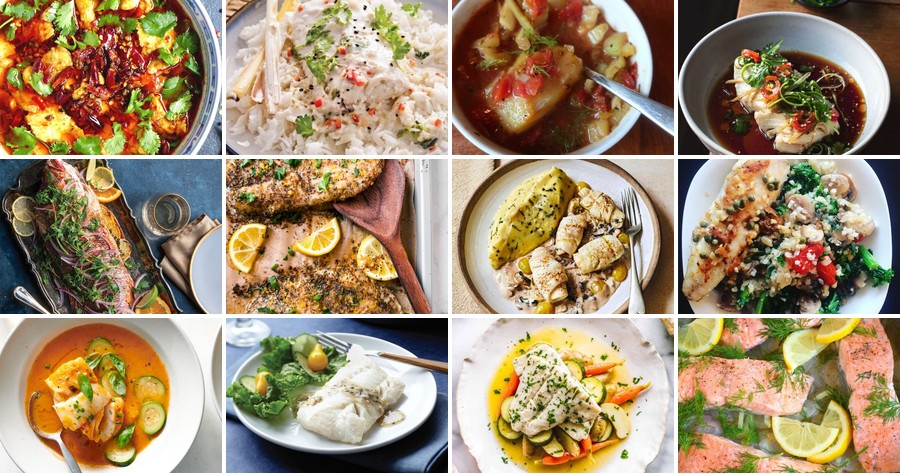
Tired of the same old dinner routine? Poached fish is your secret weapon for healthy, flavorful meals that come together in a flash. Whether you’re craving a light weeknight dinner or an impressive dish for guests, these recipes will transform simple fillets into something extraordinary. Let’s dive into 18 delicious ways to make poached fish the star of your table—your taste buds will thank you!
Classic Poached Salmon with Dill and Lemon
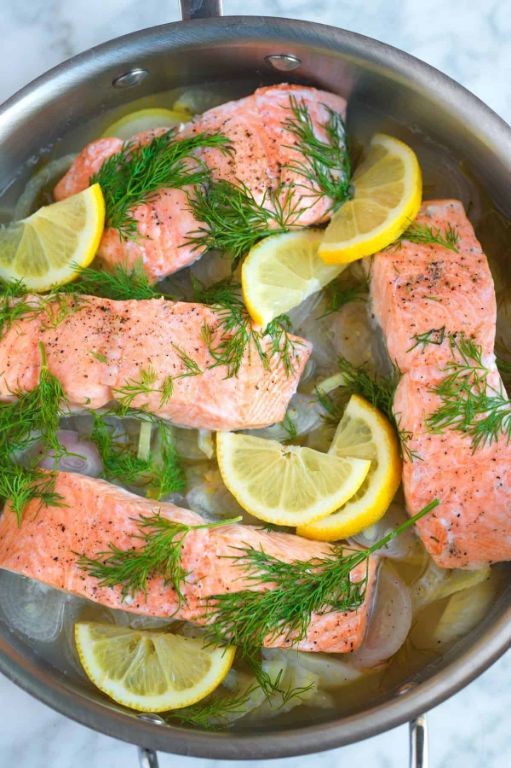
Venture into the world of elegant yet surprisingly simple cooking with this poached salmon—it’s the dish that makes you look like a gourmet chef without breaking a sweat (or your bank account). Perfect for a festive dinner or a fancy weeknight meal, it’s basically a spa treatment for fish, leaving it tender, flaky, and infused with bright, herby flavors. Trust me, once you try this method, you’ll be poaching everything in sight!
Serving: 4 | Pre Time: 10 minutes | Cooking Time: 15 minutes
Ingredients
– 4 salmon fillets (about 6 oz each, skin-on for extra flavor—I always grab wild-caught if available)
– 4 cups water (just plain tap water works, but filtered is my go-to for a cleaner taste)
– 1 lemon, sliced (go for a juicy one; I give it a gentle roll on the counter first to maximize juice)
– 1/4 cup fresh dill, chopped (don’t skimp—fresh is key here, dried just won’t cut it)
– 2 tbsp white wine vinegar (a splash adds a nice tang, and I keep a bottle handy for dressings too)
– 1 tsp salt (I prefer sea salt for a subtle mineral kick)
– 1/2 tsp black pepper (freshly ground if you can—it makes all the difference!)
Instructions
1. In a large skillet or wide pot, combine 4 cups water, 1 lemon (sliced), 1/4 cup fresh dill (chopped), 2 tbsp white wine vinegar, 1 tsp salt, and 1/2 tsp black pepper.
2. Bring the mixture to a gentle simmer over medium-high heat, which should take about 3–4 minutes—you’ll see small bubbles forming around the edges.
3. Tip: Don’t let it boil vigorously, as that can toughen the salmon; a low simmer is your best friend here.
4. Carefully place 4 salmon fillets (skin-side down if they have skin) into the simmering liquid, ensuring they’re fully submerged.
5. Reduce the heat to low and poach the salmon for 10–12 minutes, until the flesh turns opaque and flakes easily with a fork.
6. Tip: Check doneness by inserting a fork into the thickest part—if it separates cleanly, it’s ready; overcooking leads to dryness, so keep an eye on it!
7. Using a slotted spatula, gently lift the salmon fillets out of the liquid and transfer them to a serving plate.
8. Let the salmon rest for 2–3 minutes to allow the juices to redistribute—this step is crucial for maximum tenderness.
9. Tip: Reserve a bit of the poaching liquid to drizzle over the salmon for extra flavor, or reduce it down for a quick sauce.
10. Serve the salmon warm, garnished with additional fresh dill and lemon slices if desired.
Luxuriously tender and flaky, this poached salmon melts in your mouth with a subtle lemony zing and herbaceous dill notes. Pair it with a crisp salad or buttery roasted potatoes for a meal that feels indulgent yet light—or get creative by flaking it into tacos or atop a grain bowl for leftovers that won’t disappoint!
Asian-Style Poached Cod with Ginger and Soy
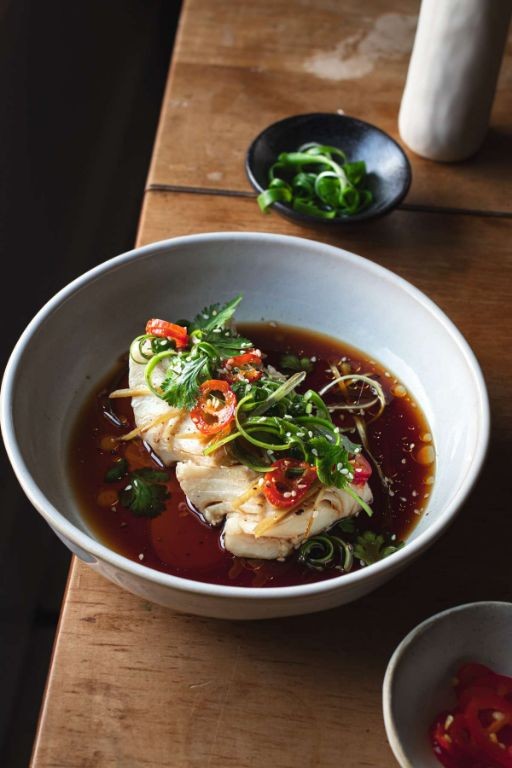
Virtually every time I’m craving something light yet bursting with flavor, this Asian-Style Poached Cod with Ginger and Soy swoops in to save the day—it’s like a cozy hug for your taste buds, minus the heavy food coma. Seriously, it’s so simple you’ll wonder why you ever ordered takeout.
Serving: 4 | Pre Time: 15 minutes | Cooking Time: 15 minutes
Ingredients
– 4 (6-ounce) cod fillets, skinless and patted dry (trust me, dry fish poaches way better)
– 4 cups low-sodium chicken broth, because regular broth can get too salty here
– 1/4 cup low-sodium soy sauce, my pantry MVP for that umami punch
– 2 tablespoons rice vinegar, for a bright, tangy kick
– 1 tablespoon honey, to balance everything out with a touch of sweetness
– 2-inch piece fresh ginger, peeled and thinly sliced (I always keep extra on hand—it’s a flavor powerhouse)
– 2 cloves garlic, minced (fresh is best, but I won’t judge if you use the jarred stuff in a pinch)
– 2 green onions, thinly sliced, for a fresh garnish at the end
– 1 tablespoon sesame oil, drizzled post-poaching for that nutty aroma
Instructions
1. In a large skillet or wide pot, combine the low-sodium chicken broth, low-sodium soy sauce, rice vinegar, honey, fresh ginger slices, and minced garlic.
2. Bring the mixture to a gentle simmer over medium-high heat, which should take about 3–4 minutes—you’ll see small bubbles forming around the edges.
3. Once simmering, carefully add the patted-dry cod fillets to the liquid in a single layer, ensuring they’re fully submerged.
4. Reduce the heat to low, cover the skillet, and let the cod poach for 8–10 minutes, or until the flesh flakes easily with a fork (tip: don’t boil it, or the fish will toughen up!).
5. While the cod poaches, thinly slice the green onions and set them aside for garnishing.
6. After poaching, use a slotted spoon to transfer the cod fillets to serving plates, discarding the ginger slices from the liquid.
7. Drizzle 1 tablespoon of sesame oil evenly over the cod fillets for a rich, toasty finish.
8. Sprinkle the sliced green onions on top as a fresh, colorful garnish.
The cod turns out incredibly tender and flaky, soaking up all that ginger-soy goodness without falling apart. Serve it over a bed of steamed jasmine rice to catch every last drop of the savory broth, or get fancy with some sautéed bok choy on the side—either way, it’s a weeknight winner that feels downright luxurious.
Mediterranean Poached Sea Bass with Tomatoes and Olives
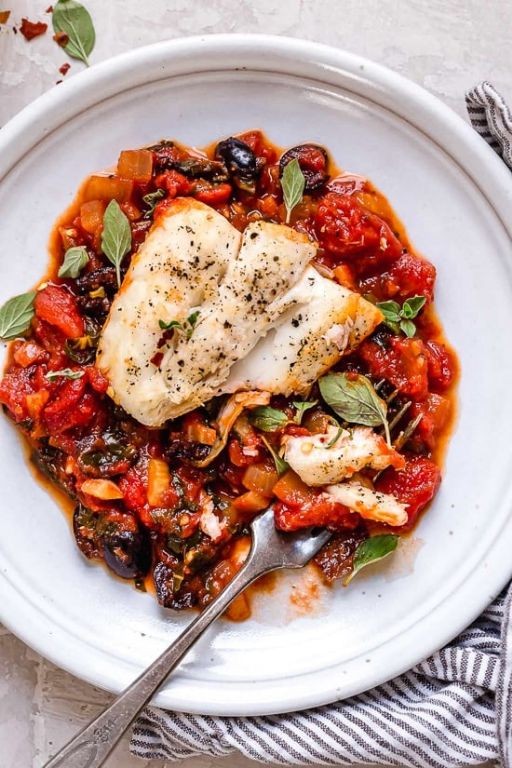
Aren’t we all secretly dreaming of a meal that feels like a Mediterranean vacation but doesn’t require a passport or a suitcase? This poached sea bass is exactly that—a one-pan wonder where juicy tomatoes and briny olives do all the heavy lifting, leaving you with a dish that’s as impressive as it is effortless. It’s the culinary equivalent of a relaxing beach day, minus the sand in your swimsuit.
Serving: 4 | Pre Time: 15 minutes | Cooking Time: 20 minutes
Ingredients
– 4 (6-ounce) sea bass fillets, skin-on for extra flavor and crispiness (trust me on this)
– 2 tablespoons extra virgin olive oil, my go-to for its fruity punch
– 1 medium yellow onion, thinly sliced—no one likes a chunky onion surprise here
– 3 cloves garlic, minced (fresh only, please; jarred garlic is a crime in my kitchen)
– 1 pint cherry tomatoes, halved—they burst into saucy perfection
– 1 cup Kalamata olives, pitted because no one wants to play hide-and-seek with pits
– 1 cup dry white wine, like Sauvignon Blanc (save a glass for the chef, obviously)
– 1 cup low-sodium chicken broth, for a savory base without the salt overload
– 1 teaspoon dried oregano, crushed between your fingers to wake up the flavor
– 1/2 teaspoon red pepper flakes, for a subtle kick that won’t start a fire
– 1/4 cup fresh parsley, chopped—it’s the green confetti this dish deserves
– Salt and black pepper, because seasoning is non-negotiable
Instructions
1. Pat the sea bass fillets completely dry with paper towels and season both sides generously with salt and black pepper.
2. Heat the extra virgin olive oil in a large, deep skillet over medium-high heat until it shimmers, about 2 minutes.
3. Add the sea bass fillets skin-side down and cook without moving for 4–5 minutes, until the skin is golden and crispy—this seals in moisture.
4. Carefully remove the fillets to a plate and set aside; they’ll finish cooking later, so don’t worry if they’re not fully done.
5. In the same skillet, add the thinly sliced onion and cook for 3–4 minutes, stirring occasionally, until softened and translucent.
6. Stir in the minced garlic and cook for 1 minute until fragrant, being careful not to let it burn—burnt garlic is bitter business.
7. Add the halved cherry tomatoes, Kalamata olives, dried oregano, and red pepper flakes, stirring to combine.
8. Pour in the dry white wine and let it simmer for 2 minutes to cook off the alcohol, scraping up any browned bits from the bottom of the skillet for extra flavor.
9. Add the low-sodium chicken broth and bring the mixture to a gentle simmer over medium heat.
10. Nestle the sea bass fillets back into the skillet, skin-side up, and spoon some of the tomato-olive mixture over the top.
11. Cover the skillet with a lid and reduce the heat to low; let it poach for 8–10 minutes, until the fish flakes easily with a fork and reaches an internal temperature of 145°F.
12. Sprinkle the chopped fresh parsley over the top just before serving.
Kiss goodbye to bland fish dinners! The sea bass emerges tender and flaky, soaking up the bright, tangy sauce from the burst tomatoes and salty olives. Serve it over a bed of couscous or with crusty bread to mop up every last drop—it’s a meal that’ll have you booking imaginary flights to the coast.
Herb-Infused Poached Halibut with White Wine
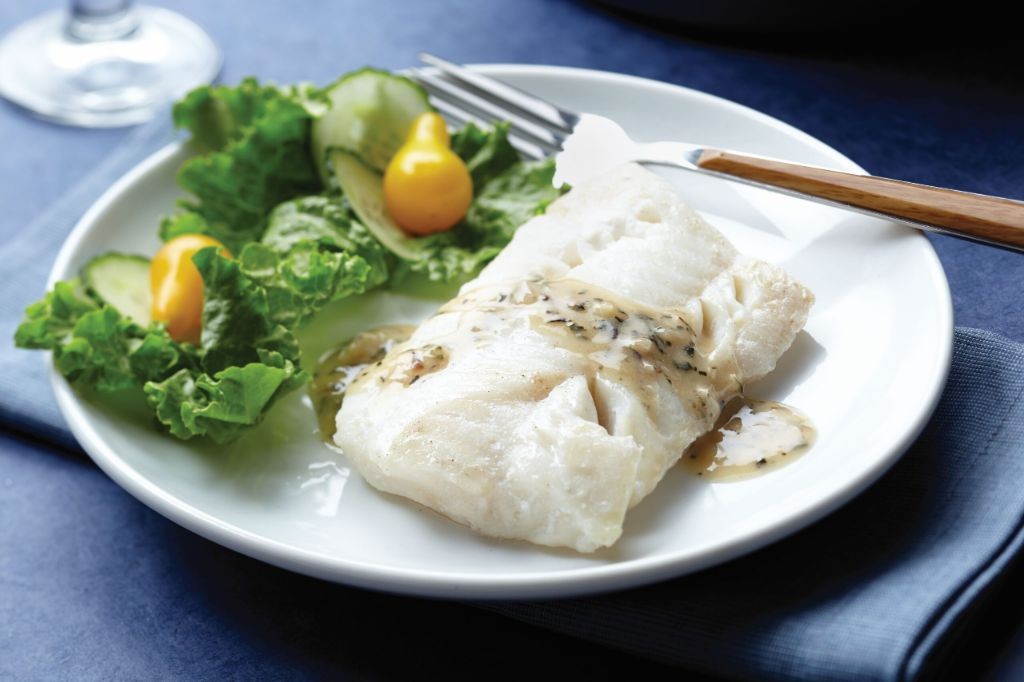
Now, let’s talk about a dish that’s as elegant as it is easy to pull off—perfect for when you want to impress without the stress. This herb-infused poached halibut with white wine is your ticket to a restaurant-worthy meal that’s surprisingly simple to master, and it’ll have everyone thinking you’ve got a secret chef up your sleeve.
Serving: 4 | Pre Time: 15 minutes | Cooking Time: 15 minutes
Ingredients
– 4 halibut fillets (about 6 oz each), patted dry—trust me, dry fish means better searing!
– 2 cups dry white wine (like Sauvignon Blanc, my go-to for its crispness)
– 1 cup water
– 1 lemon, thinly sliced (I always use organic for that zesty kick)
– 4 sprigs fresh thyme, plus extra for garnish if you’re feeling fancy
– 2 sprigs fresh rosemary, because why not add a woodsy aroma?
– 3 cloves garlic, smashed—this releases more flavor than mincing!
– 2 tbsp extra virgin olive oil (the good stuff makes all the difference)
– Salt and freshly ground black pepper, to taste (I’m generous with the pepper for a little kick)
Instructions
1. In a large skillet or wide pot, combine the white wine, water, lemon slices, thyme sprigs, rosemary sprigs, and smashed garlic cloves.
2. Bring the mixture to a gentle simmer over medium heat, which should take about 3-4 minutes—you’ll see small bubbles forming around the edges.
3. While the liquid heats, season both sides of the halibut fillets generously with salt and freshly ground black pepper.
4. Once simmering, carefully add the seasoned halibut fillets to the skillet in a single layer, ensuring they’re fully submerged in the liquid.
5. Reduce the heat to low to maintain a bare simmer—no boiling, or the fish will toughen up!
6. Cover the skillet with a lid and poach the halibut for 8-10 minutes, until the flesh is opaque and flakes easily with a fork.
7. Using a slotted spoon or spatula, gently transfer the poached halibut to a plate, being careful not to break the delicate fillets.
8. Discard the poaching liquid and aromatics, then wipe the skillet clean with a paper towel.
9. Heat the extra virgin olive oil in the same skillet over medium-high heat until it shimmers, about 1 minute.
10. Add the poached halibut fillets to the skillet and sear for 1-2 minutes per side, just until golden brown—this adds a lovely crispy texture.
11. Remove the halibut from the skillet and serve immediately, garnished with extra thyme sprigs if desired.
Here’s the magic: the halibut turns out incredibly tender and flaky, infused with the bright, herbal notes from the wine and aromatics. Serve it over a bed of creamy mashed potatoes or with a side of roasted asparagus for a meal that feels both light and luxurious, and watch as your guests swoon over every bite.
Coconut Milk Poached Mahi-Mahi with Lime
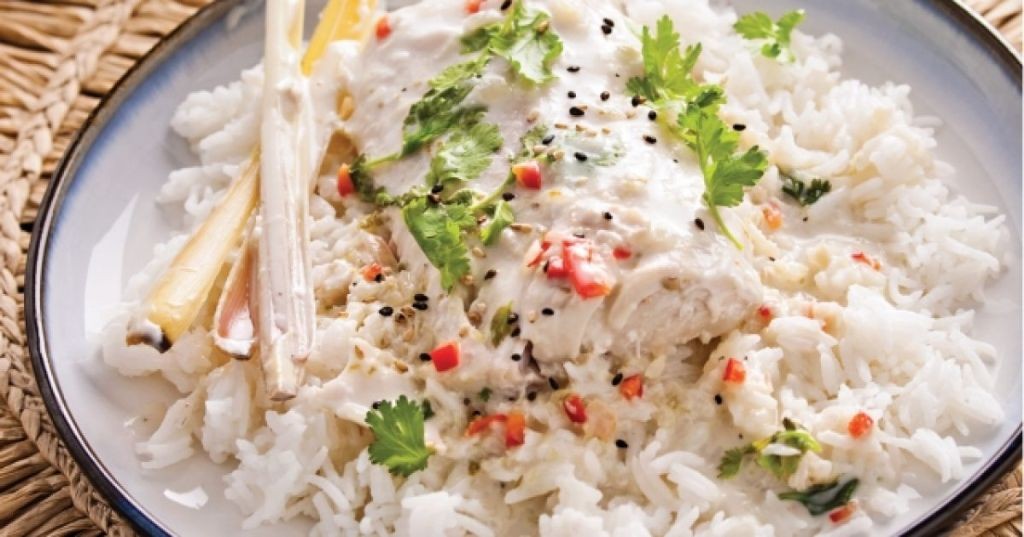
Oh, the holidays have you dreaming of tropical escapes? Let’s bring the beach to your kitchen with this ridiculously easy, flavor-packed mahi-mahi that poaches in a bath of creamy coconut milk and zesty lime. It’s the culinary equivalent of a vacation in a pan—no sunscreen required.
Serving: 4 | Pre Time: 15 minutes | Cooking Time: 15 minutes
Ingredients
– 4 (6-ounce) mahi-mahi fillets, patted dry (fresh is best, but thawed frozen works in a pinch)
– 1 (13.5-ounce) can full-fat coconut milk, shaken well (don’t skimp—the fat is flavor!)
– 2 limes (1 juiced, about 2 tbsp, and 1 sliced for garnish)
– 2 cloves garlic, minced (my go-to for instant aroma)
– 1 tbsp fresh ginger, grated (trust me, fresh beats powdered here)
– 1 tbsp coconut oil (for that extra tropical vibe)
– 1 tsp kosher salt (I prefer it for even seasoning)
– 1/2 tsp red pepper flakes (optional, for a subtle kick)
– Fresh cilantro, chopped, for garnish (a handful brightens everything up)
Instructions
1. In a large skillet over medium heat, melt 1 tbsp coconut oil until it shimmers, about 1 minute.
2. Add 2 cloves minced garlic and 1 tbsp grated ginger, sautéing for 30–45 seconds until fragrant—don’t let it brown!
3. Pour in 1 can coconut milk, 2 tbsp lime juice, 1 tsp kosher salt, and 1/2 tsp red pepper flakes, stirring to combine.
4. Bring the mixture to a gentle simmer over medium-low heat, letting it bubble lightly for 2–3 minutes to meld flavors.
5. Carefully place 4 mahi-mahi fillets into the skillet, ensuring they’re submerged in the liquid.
6. Cover the skillet and poach the fish for 8–10 minutes, or until the fillets are opaque and flake easily with a fork (check at 8 minutes to avoid overcooking).
7. Using a spatula, transfer the mahi-mahi to serving plates, spooning the coconut sauce generously over the top.
8. Garnish with lime slices and a sprinkle of fresh cilantro for a pop of color and freshness.
Delightfully tender and infused with citrusy-coconut goodness, this dish boasts a flaky texture that melts in your mouth. Serve it over jasmine rice to soak up every drop of that creamy sauce, or pair it with a crisp salad for a lighter meal—either way, it’s a weeknight winner that feels downright luxurious.
Spicy Poached Tilapia with Chili and Cilantro

Kick off your weeknight dinner with a dish that’s as lively as your favorite playlist—this Spicy Poached Tilapia with Chili and Cilantro is here to shake up your routine without shaking up your schedule. It’s the kind of meal that makes you feel like a kitchen wizard, even if you’re just waving a spatula around. Trust me, your taste buds will throw a party, and cleanup is a breeze, so you can get back to binge-watching that show you’re obsessed with.
Serving: 4 | Pre Time: 10 minutes | Cooking Time: 15 minutes
Ingredients
– 4 tilapia fillets (about 6 oz each, fresh or thawed—I grab them from the local market for that extra oomph)
– 4 cups water (tap is fine, but filtered gives it a cleaner base)
– 2 tbsp soy sauce (I swear by low-sodium to keep the salt in check)
– 1 tbsp rice vinegar (it adds a subtle tang that balances the heat)
– 2 fresh red chilies, thinly sliced (seeds in for a fiery kick, or out if you’re spice-shy)
– 1 bunch fresh cilantro, chopped (stems and all—they pack flavor, don’t toss ’em!)
– 1 lime, cut into wedges (for squeezing at the end—freshness is key)
– 1 tsp salt (I use kosher for even distribution)
Instructions
1. In a large skillet, combine 4 cups water, 2 tbsp soy sauce, 1 tbsp rice vinegar, and 1 tsp salt over medium-high heat—bring it to a gentle simmer, which should take about 3-4 minutes (tip: don’t let it boil hard, or the fish might toughen up).
2. Carefully add 4 tilapia fillets to the simmering liquid, ensuring they’re fully submerged—poach for 8-10 minutes until the flesh turns opaque and flakes easily with a fork (tip: check the thickest part to avoid undercooking).
3. While the fish cooks, thinly slice 2 fresh red chilies and chop 1 bunch fresh cilantro, including the stems for extra aroma.
4. Once the tilapia is done, use a slotted spoon to transfer the fillets to serving plates, discarding the poaching liquid (tip: save a spoonful to drizzle if you like it saucy, but I skip it for a lighter finish).
5. Top each fillet evenly with the sliced chilies and chopped cilantro, then serve immediately with lime wedges on the side for squeezing.
Heavenly tender and flaky, this tilapia melts in your mouth with a zesty chili punch that’s balanced by the fresh cilantro—it’s like a flavor fiesta without the cleanup hassle. Pair it with steamed rice to soak up any lingering juices, or go bold by stuffing it into tacos for a fun twist that’ll have everyone asking for seconds.
Poached Trout with Garlic and Butter Sauce
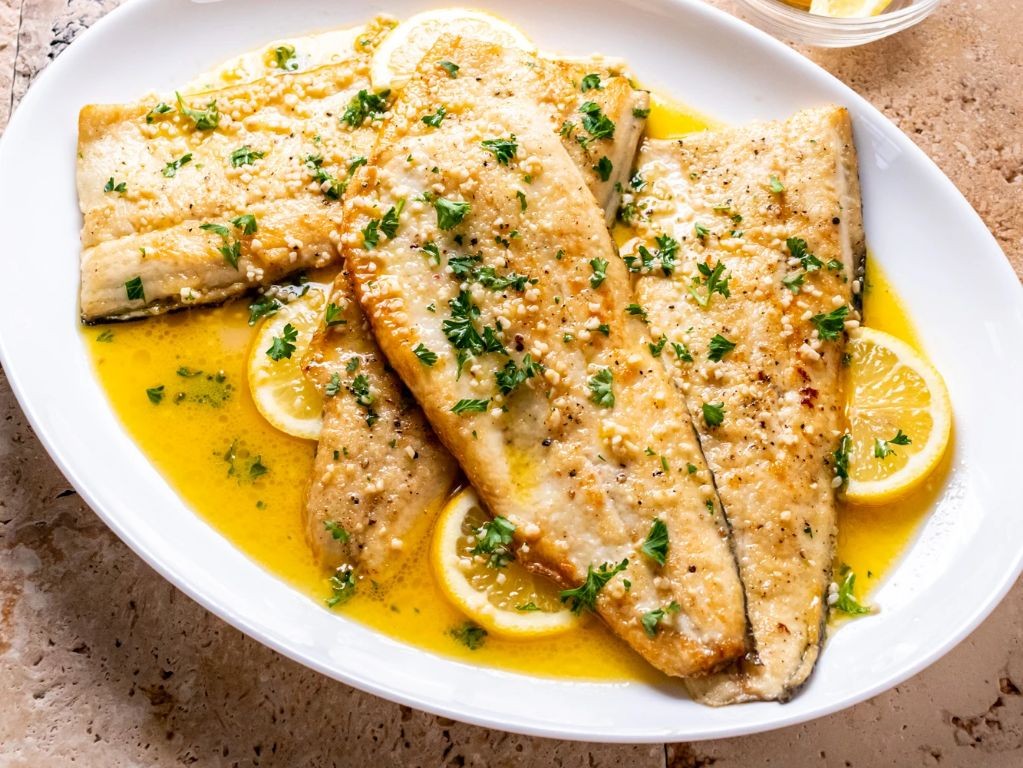
Mmm, let’s talk about a dish that’s so elegantly simple, you’ll wonder why you ever bothered with complicated fish recipes. This poached trout with garlic butter sauce is basically a spa day for your taste buds—gentle cooking meets luxurious flavor in a way that’ll make you feel like a culinary genius without the stress. It’s the perfect centerpiece for a special dinner or a fancy weeknight treat that says “I’ve got my life together” (even if you totally don’t).
Serving: 4 | Pre Time: 15 minutes | Cooking Time: 20 minutes
Ingredients
– 4 trout fillets (about 6 oz each, skin-on for extra flavor and easier handling—trust me on this)
– 4 cups water (just plain tap water works perfectly here)
– 1 lemon, thinly sliced (I always grab an extra for garnish because pretty food tastes better)
– 2 fresh thyme sprigs (dried works in a pinch, but fresh makes all the difference)
– 1 tsp salt (kosher salt is my go-to for even seasoning)
– ½ cup unsalted butter (salted butter works too, just adjust the salt later)
– 4 garlic cloves, minced (freshly minced, please—jarred garlic just doesn’t bring the same magic)
– 2 tbsp fresh parsley, chopped (flat-leaf parsley has more flavor, but curly works if that’s what you have)
– ¼ tsp black pepper (freshly ground if possible—it’s worth the extra twist)
Instructions
1. In a large skillet, combine 4 cups water, lemon slices, thyme sprigs, and 1 tsp salt, then bring to a gentle simmer over medium heat (you want tiny bubbles, not a rolling boil—this keeps the trout tender).
2. Carefully place 4 trout fillets skin-side down into the simmering liquid, ensuring they’re fully submerged, and poach for 8-10 minutes until the flesh turns opaque and flakes easily with a fork (tip: don’t overcrowd the pan; cook in batches if needed).
3. While the trout poaches, melt ½ cup butter in a small saucepan over low heat, then add 4 minced garlic cloves and cook for 2-3 minutes until fragrant but not browned (low heat is key here to avoid bitter garlic).
4. Stir 2 tbsp chopped parsley and ¼ tsp black pepper into the butter sauce, then remove from heat immediately to preserve the herbs’ bright flavor (tip: add a squeeze of lemon juice from the poaching liquid for extra zing).
5. Using a slotted spatula, transfer the poached trout fillets to serving plates, discarding the poaching liquid, lemon slices, and thyme sprigs.
6. Generously drizzle the warm garlic butter sauce over each trout fillet, coating them evenly (tip: save a little sauce for dipping—it’s that good).
Consider the delicate, flaky texture of the trout paired with that rich, garlicky butter sauce—it’s like a cozy blanket for your palate. Serve it over a bed of fluffy rice or with roasted asparagus to soak up every last drop, and watch it disappear faster than you can say “seconds, please!”
Citrus Poached Snapper with Orange and Thyme
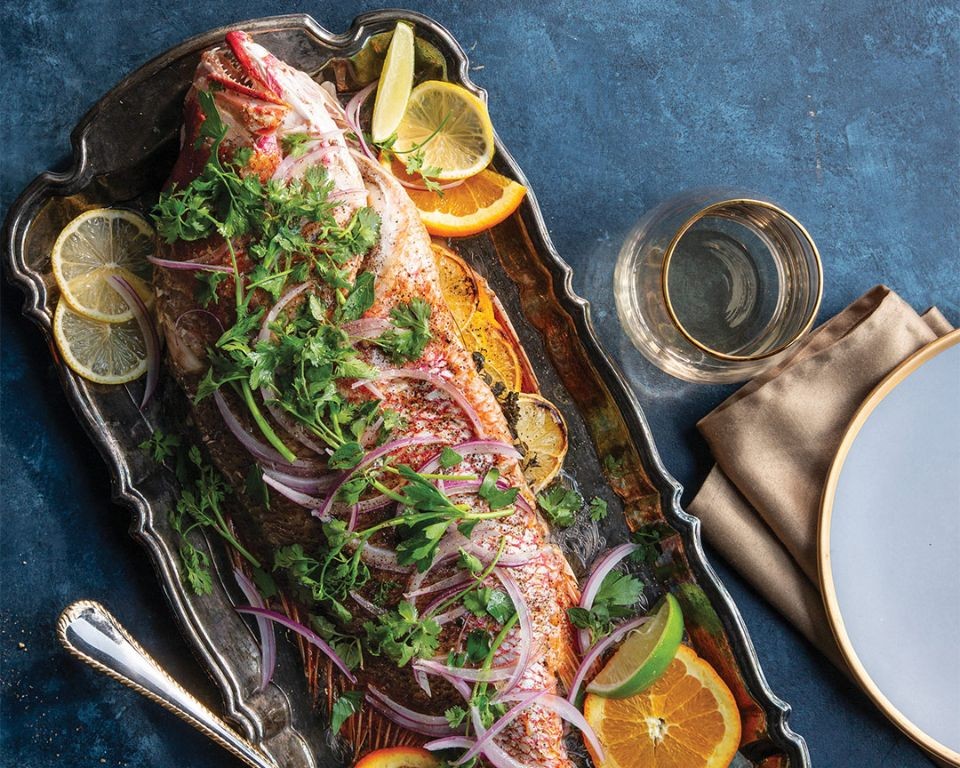
Oh, the holidays have us all running around like headless turkeys, but this snapper is here to save your sanity with its bright, zesty vibes. Picture this: tender, flaky fish swimming in a citrus bath so fragrant it’ll make your kitchen smell like a sunny orchard—no last-minute stress required, just pure delicious magic.
Serving: 4 | Pre Time: 15 minutes | Cooking Time: 20 minutes
Ingredients
– 4 snapper fillets (about 6 oz each, skin-on for extra flavor—trust me, it crisps up nicely)
– 2 cups fresh orange juice (I squeeze my own to avoid that processed tang, but store-bought works in a pinch)
– 1 cup dry white wine (a crisp Sauvignon Blanc is my go-to for balancing the citrus)
– 2 tbsp extra virgin olive oil (the good stuff makes all the difference here)
– 4 sprigs fresh thyme (dried just won’t cut it—pluck those leaves for maximum aroma)
– 1 orange, thinly sliced (for a pretty garnish and extra zing)
– Salt and freshly ground black pepper (I’m generous with the pepper to add a subtle kick)
Instructions
1. Pat the snapper fillets dry with paper towels—this helps them sear nicely without steaming.
2. Season both sides of the fillets generously with salt and pepper.
3. Heat the extra virgin olive oil in a large skillet over medium-high heat until it shimmers, about 2 minutes.
4. Place the snapper fillets skin-side down in the skillet and cook for 3–4 minutes until the skin is golden and crispy.
5. Flip the fillets carefully and cook for another 2 minutes on the other side, then transfer them to a plate.
6. In the same skillet, pour in the fresh orange juice and dry white wine, scraping up any browned bits with a wooden spoon for extra flavor.
7. Add the fresh thyme sprigs and orange slices, then bring the liquid to a gentle simmer over medium heat.
8. Return the snapper fillets to the skillet, skin-side up, and spoon the poaching liquid over them.
9. Cover the skillet and let it poach for 8–10 minutes, or until the fish flakes easily with a fork—don’t overcook, or it’ll turn rubbery!
10. Remove the skillet from heat and let it rest for 2 minutes before serving.
Craving something that feels fancy without the fuss? This dish delivers with its melt-in-your-mouth texture and a bright, herbaceous kick from the thyme. Serve it over a bed of fluffy couscous or with crusty bread to soak up every last drop of that citrusy sauce—it’s a showstopper that’ll have everyone asking for seconds!
Poached Cod in Saffron Broth with Fennel
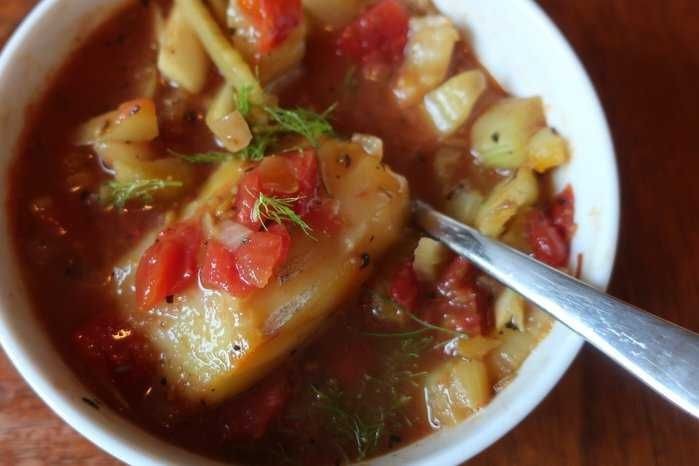
Yikes, is it just me or does cooking fish sometimes feel like defusing a bomb? Fear not—this poached cod in saffron broth with fennel is the gentle, foolproof antidote we all need. It’s basically a spa day for your taste buds, with flavors so bright and cozy, you’ll forget it’s actually healthy.
Serving: 4 | Pre Time: 15 minutes | Cooking Time: 25 minutes
Ingredients
– 4 (6-ounce) cod fillets, skinless—I always pat them dry with paper towels to avoid a soggy situation.
– 1 large fennel bulb, thinly sliced (save those fronds for garnish, they’re like nature’s confetti!).
– 4 cups low-sodium chicken broth, because homemade is great, but store-bought keeps it easy.
– 1/4 cup dry white wine, like a crisp Sauvignon Blanc—sip the rest while you cook, no judgment.
– 1/4 teaspoon saffron threads, the golden fairy dust that makes this dish sing.
– 2 tablespoons extra virgin olive oil, my go-to for that fruity kick.
– 1 small yellow onion, diced—I swear, a sharp knife here saves tears (and time).
– 3 cloves garlic, minced, because more garlic is always the answer.
– 1/2 teaspoon crushed red pepper flakes, for a subtle warmth that won’t scare off the kids.
– Salt and freshly ground black pepper, to season as you go—trust your instincts!
Instructions
1. Heat the extra virgin olive oil in a large Dutch oven or pot over medium heat until shimmering, about 2 minutes.
2. Add the diced yellow onion and sliced fennel bulb, cooking until softened and lightly golden, 5–7 minutes, stirring occasionally to prevent sticking.
3. Stir in the minced garlic and crushed red pepper flakes, cooking for 1 minute until fragrant—don’t let the garlic brown, or it’ll turn bitter.
4. Pour in the dry white wine, scraping up any browned bits from the bottom of the pot, and let it simmer until reduced by half, about 2 minutes.
5. Add the low-sodium chicken broth and saffron threads, bringing the mixture to a gentle boil over high heat.
6. Reduce the heat to low, cover the pot, and let the broth simmer for 10 minutes to infuse the flavors—this is where the magic happens, so be patient!
7. Season the pat-dry cod fillets generously with salt and freshly ground black pepper on both sides.
8. Gently place the cod fillets into the simmering broth, ensuring they’re submerged, and poach for 6–8 minutes until the fish flakes easily with a fork and reaches an internal temperature of 145°F.
9. Carefully remove the cod fillets with a slotted spoon and divide them among four shallow bowls.
10. Ladle the hot saffron broth with fennel and onions over the cod, garnishing with the reserved fennel fronds.
Zesty and silky, this dish delivers tender cod that melts in your mouth, swimming in a broth that’s both aromatic and subtly spicy. Serve it with crusty bread to soak up every last drop, or over a bed of couscous for a heartier meal—either way, it’s a showstopper that feels effortlessly elegant.
Poached Haddock with Leeks and Carrots
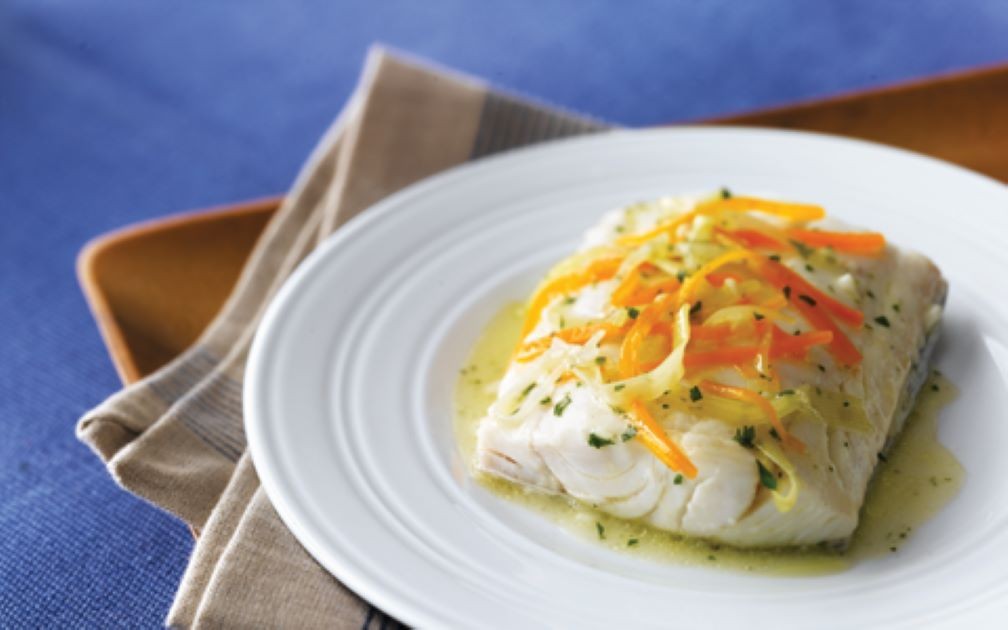
Sick of the same old fish routine? Let’s shake things up with a dish that’s as cozy as your favorite sweater but fancy enough to impress your in-laws—without the stress. This poached haddock with leeks and carrots is your ticket to a flavorful, fuss-free dinner that’ll have everyone asking for seconds.
Serving: 4 | Pre Time: 15 minutes | Cooking Time: 20 minutes
Ingredients
– 4 haddock fillets (about 6 oz each, skinless—trust me, it’s easier)
– 2 large leeks, white and light green parts only, sliced into half-moons (rinse well, those guys love to hide grit)
– 3 medium carrots, peeled and cut into thin coins (I like them uniform for even cooking)
– 4 cups low-sodium chicken broth (homemade if you’re fancy, boxed if you’re smart)
– 1 cup dry white wine (something you’d actually drink—sauvignon blanc works great)
– 2 tbsp unsalted butter (the real deal, not margarine, please)
– 2 tbsp extra virgin olive oil (my go-to for that fruity kick)
– 1 tsp kosher salt (plus more for seasoning)
– ½ tsp freshly ground black pepper (freshly ground makes all the difference)
– 2 sprigs fresh thyme (dried in a pinch, but fresh is worth it)
– 1 lemon, cut into wedges (for that zesty finish)
Instructions
1. In a large, deep skillet or Dutch oven, heat the extra virgin olive oil and 1 tbsp of unsalted butter over medium heat until the butter melts and foams slightly.
2. Add the sliced leeks and carrots to the skillet, seasoning with ½ tsp of kosher salt and ¼ tsp of black pepper. Sauté for 5–7 minutes, stirring occasionally, until the leeks are softened and the carrots start to brighten in color—don’t let them brown!
3. Pour in the low-sodium chicken broth and dry white wine, then add the fresh thyme sprigs. Bring the mixture to a gentle simmer over medium-high heat, which should take about 3–4 minutes.
4. Reduce the heat to low so the liquid is barely bubbling—a lazy simmer, not a rolling boil. Carefully place the haddock fillets into the skillet in a single layer, ensuring they’re submerged in the liquid.
5. Cover the skillet with a lid and poach the haddock for 8–10 minutes, or until the fillets are opaque and flake easily with a fork. Avoid overcooking; they’ll continue to cook slightly off the heat.
6. Using a slotted spoon or spatula, gently transfer the haddock fillets to serving plates, keeping them intact.
7. Increase the heat to medium-high and let the poaching liquid reduce by about half, which should take 5–7 minutes—you’ll see it thicken slightly.
8. Remove the skillet from the heat, discard the thyme sprigs, and swirl in the remaining 1 tbsp of unsalted butter until melted and glossy, seasoning with the remaining salt and pepper to finish the sauce.
9. Spoon the reduced sauce with leeks and carrots over the haddock fillets, and serve immediately with lemon wedges on the side for squeezing.
Now, for the grand finale: this dish boasts a melt-in-your-mouth texture from the gently poached haddock, balanced by the sweet crunch of carrots and mild oniony leeks. Nudge those flavors further by serving it over a bed of creamy mashed potatoes or with crusty bread to soak up every last drop of that buttery sauce—it’s a humble showstopper that’ll make weeknights feel special.
Poached Catfish in Tomato Basil Broth
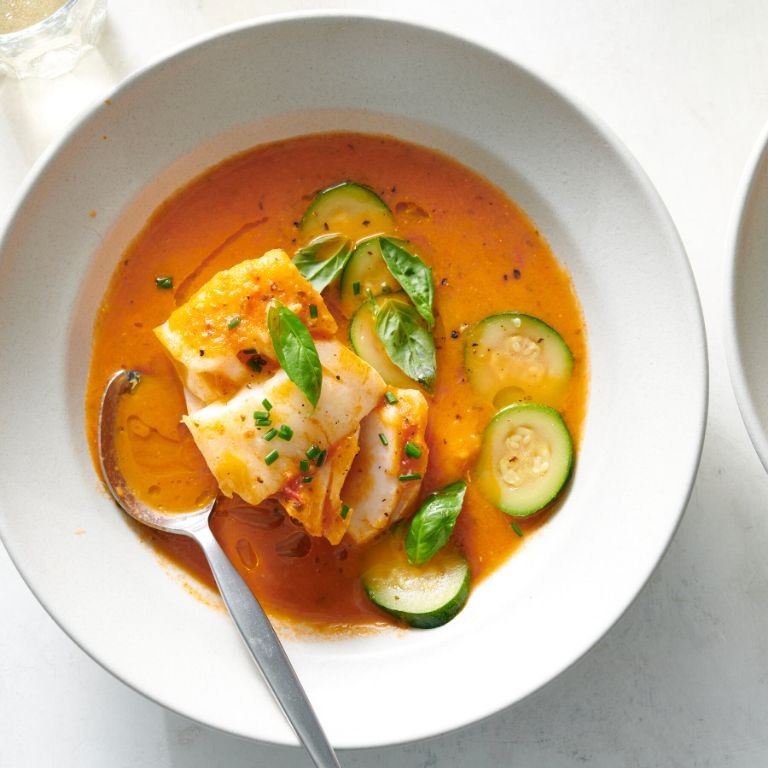
Tired of the same old fish recipes? This Poached Catfish in Tomato Basil Broth is here to rescue your dinner routine with a light, flavorful broth that’s basically a warm hug in a bowl—perfect for when you want something impressive but secretly easy. Think of it as a spa day for your catfish, where it gets to relax in a savory tomato bath instead of being fried into submission.
Serving: 4 | Pre Time: 15 minutes | Cooking Time: 20 minutes
Ingredients
– 4 catfish fillets (about 6 oz each, fresh or thawed—I always pat them dry to avoid a soggy mess)
– 2 tbsp extra virgin olive oil (my go-to for that fruity kick)
– 1 medium yellow onion, finely chopped (dice it small so it melts into the broth)
– 3 garlic cloves, minced (don’t skimp—this is the flavor backbone!)
– 1 can (28 oz) crushed tomatoes (I prefer the San Marzano kind for their sweet, low-acid vibe)
– 2 cups chicken broth (low-sodium lets you control the salt)
– 1/2 cup fresh basil leaves, chopped (tear them at the last minute to keep that bright green color)
– 1 tsp dried oregano (a pantry staple that adds earthy depth)
– Salt and black pepper (I start with 1/2 tsp salt and adjust later—no vague “to taste” here!)
Instructions
1. Heat the extra virgin olive oil in a large skillet over medium heat until it shimmers, about 2 minutes.
2. Add the finely chopped yellow onion and cook, stirring occasionally, until softened and translucent, 5–7 minutes—tip: don’t let it brown to keep the broth light.
3. Stir in the minced garlic and cook for 1 minute until fragrant, being careful not to burn it.
4. Pour in the crushed tomatoes and chicken broth, then add the dried oregano, 1/2 tsp salt, and 1/4 tsp black pepper.
5. Bring the mixture to a gentle simmer over medium-high heat, then reduce to low and let it bubble softly for 10 minutes to meld the flavors.
6. Gently place the catfish fillets into the broth in a single layer—tip: use a spatula to avoid splashing and ensure they’re fully submerged.
7. Cover the skillet and poach the catfish over low heat for 8–10 minutes, until the fillets are opaque and flake easily with a fork—check at 8 minutes to prevent overcooking.
8. Remove the skillet from heat and stir in the chopped fresh basil leaves, letting them wilt into the broth for 1 minute.
9. Taste the broth and adjust seasoning with more salt or pepper if needed, but go easy since the catfish absorbs flavor.
Elegantly ladle the broth and catfish into bowls, and get ready for a dish that’s tender and flaky with a broth that’s tangy from the tomatoes and herbaceous from the basil. Serve it over a bed of crusty bread to soak up every last drop, or pair it with a simple salad for a light yet satisfying meal that’ll have everyone asking for seconds.
Poached Monkfish with Shallots and White Wine
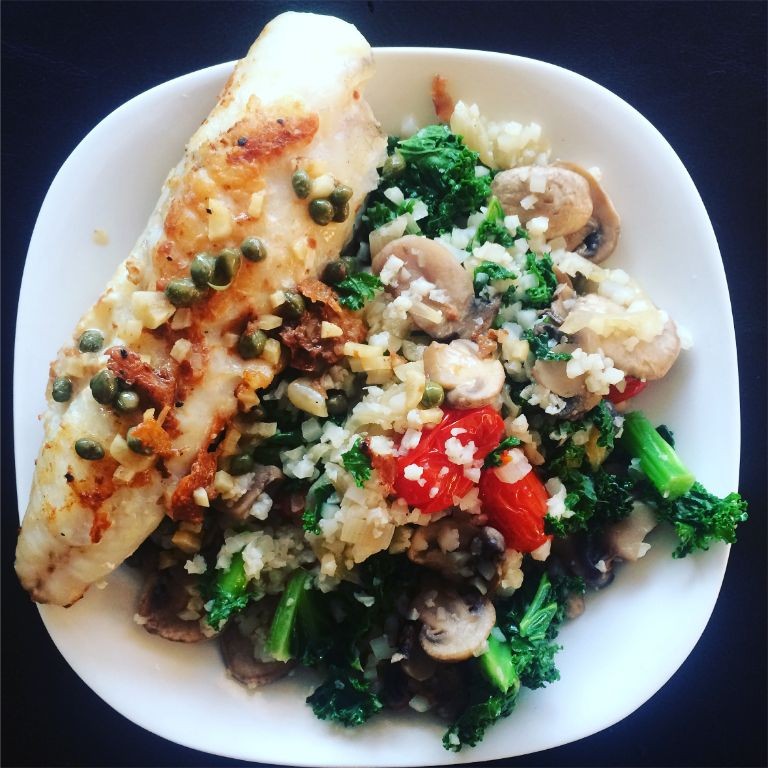
Well, well, well—look who decided to get fancy! Poached monkfish might sound like something you’d order at a white-tablecloth restaurant while nervously eyeing the prices, but trust me, this dish is secretly a weeknight hero in disguise. With a splash of white wine and a handful of shallots, you’re about to turn that firm, sweet fish into a showstopper that’ll have everyone thinking you hired a personal chef (your secret’s safe with me).
Serving: 4 | Pre Time: 15 minutes | Cooking Time: 25 minutes
Ingredients
– 1.5 lbs monkfish fillets, skin removed (I like to pat them dry with paper towels—less splatter, more sanity)
– 4 large shallots, thinly sliced (these little flavor bombs are non-negotiable)
– 1 cup dry white wine, like Sauvignon Blanc (save a sip for the chef, obviously)
– 2 cups low-sodium chicken broth (homemade if you’re fancy, boxed if you’re smart)
– 3 tbsp unsalted butter, cut into cubes (because everything’s better with butter)
– 2 tbsp extra virgin olive oil (my go-to for that fruity kick)
– 1 tsp kosher salt (don’t skimp—it’s your flavor friend)
– ½ tsp freshly ground black pepper (freshly ground makes all the difference, I swear)
– 2 tbsp fresh parsley, chopped (for a pop of green at the end)
Instructions
1. Heat the extra virgin olive oil in a large, deep skillet over medium heat until it shimmers, about 2 minutes.
2. Add the thinly sliced shallots and cook, stirring occasionally, until they’re soft and translucent, about 5 minutes—no browning allowed here!
3. Pour in the dry white wine and let it bubble away until reduced by half, roughly 3–4 minutes; this cooks off the alcohol and concentrates the flavor.
4. Stir in the low-sodium chicken broth and bring the mixture to a gentle simmer over medium-low heat.
5. Season the monkfish fillets evenly on all sides with the kosher salt and freshly ground black pepper.
6. Carefully place the seasoned monkfish fillets into the simmering liquid, ensuring they’re mostly submerged.
7. Cover the skillet and poach the fish at a bare simmer (just a few bubbles) until the flesh is opaque and flakes easily with a fork, about 10–12 minutes; tip: use a thermometer—it’s done at 145°F internally.
8. Using a slotted spoon, transfer the poached monkfish to a warm plate and tent loosely with foil to keep it cozy.
9. Increase the heat to medium-high and boil the poaching liquid until it reduces to about 1 cup, approximately 5–7 minutes.
10. Remove the skillet from the heat and whisk in the unsalted butter, one cube at a time, until the sauce is glossy and slightly thickened; tip: don’t rush this—adding butter off the heat prevents separation.
11. Stir in the chopped fresh parsley for a fresh, herby finish.
12. Spoon the buttery shallot sauce over the plated monkfish fillets. tip: For extra flair, serve it over creamy polenta or buttery mashed potatoes to soak up every last drop.
Elegantly tender and subtly sweet, the monkfish melts in your mouth while the white wine sauce adds a bright, tangy contrast that’s downright addictive. Try pairing it with a crisp green salad or crusty bread to mop up the sauce—leftovers? Ha, good luck with that!
Poached Flounder with Lemon and Caper Sauce
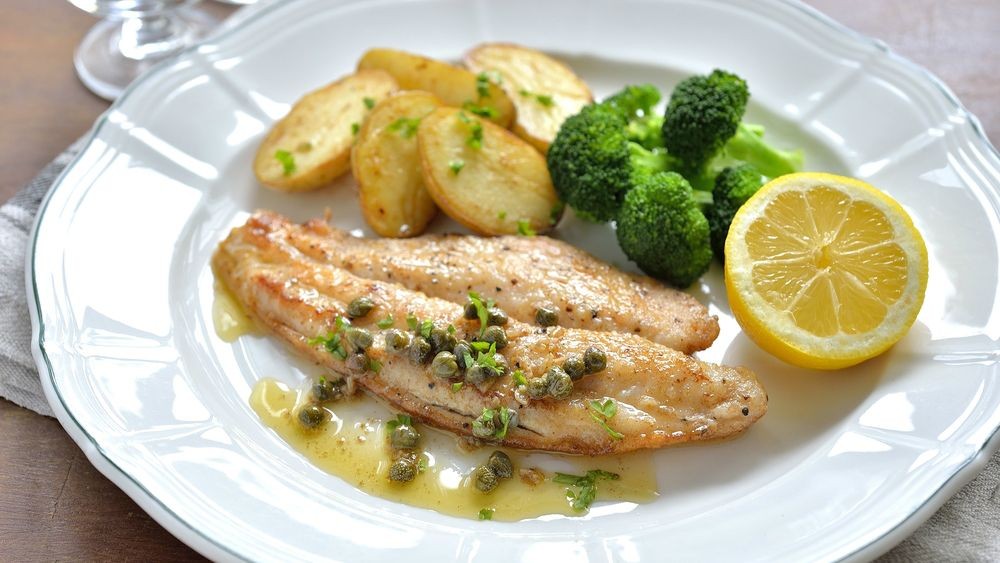
Gather ’round, seafood skeptics and flavor fanatics—this poached flounder is about to become your weeknight dinner MVP, proving that elegance doesn’t have to mean slaving over a hot stove for hours. With a zesty lemon-caper sauce that’s basically sunshine in a pan, you’ll wonder why you ever settled for boring baked fish. Trust me, your taste buds will throw a tiny party.
Serving: 4 | Pre Time: 10 minutes | Cooking Time: 15 minutes
Ingredients
– 4 flounder fillets (about 6 oz each, fresh or thawed—I always pat them dry to avoid a soggy situation)
– 2 tbsp extra virgin olive oil (my go-to for its fruity kick)
– 1 cup dry white wine (like Sauvignon Blanc—it adds brightness without overpowering)
– 1 cup low-sodium chicken broth (homemade or store-bought, just skip the salt bomb)
– 2 lemons (one juiced, about ¼ cup, and one thinly sliced for garnish—room temp lemons yield more juice)
– 2 tbsp capers, drained (these briny little gems are non-negotiable)
– 3 tbsp unsalted butter, cubed (cold butter makes the sauce silky)
– 2 tbsp fresh parsley, chopped (for a pop of color and freshness)
– Salt and black pepper (to season—I’m generous with the pepper)
Instructions
1. Pat the flounder fillets dry with paper towels and season both sides lightly with salt and pepper.
2. Heat the olive oil in a large skillet over medium heat until it shimmers, about 1 minute.
3. Add the flounder fillets to the skillet and cook for 2 minutes per side until lightly golden—don’t overcrowd the pan; work in batches if needed.
4. Remove the fillets to a plate and set aside.
5. Pour the white wine into the same skillet and simmer over medium-high heat for 3 minutes to reduce by half, scraping up any browned bits from the bottom.
6. Add the chicken broth and lemon juice, then bring to a gentle boil over medium heat.
7. Carefully return the flounder fillets to the skillet, spooning some liquid over them.
8. Cover the skillet and poach the fish over low heat for 5–7 minutes, until the fillets flake easily with a fork—check early to avoid overcooking.
9. Transfer the poached fillets to serving plates using a slotted spatula.
10. Increase the heat to medium and stir the capers into the skillet sauce, simmering for 1 minute.
11. Whisk in the cold butter, one cube at a time, until the sauce thickens slightly and becomes glossy, about 2 minutes.
12. Stir in the chopped parsley and immediately pour the sauce over the flounder.
13. Garnish with lemon slices from the remaining lemon.
Zesty and tender, this flounder melts in your mouth with a bright, tangy sauce that’s perfectly balanced by the briny capers. Serve it over a bed of fluffy quinoa or with crusty bread to soak up every last drop—leftovers (if any exist) make a killer fish taco filling the next day.
Poached Grouper with Herbs and Lemon Zest
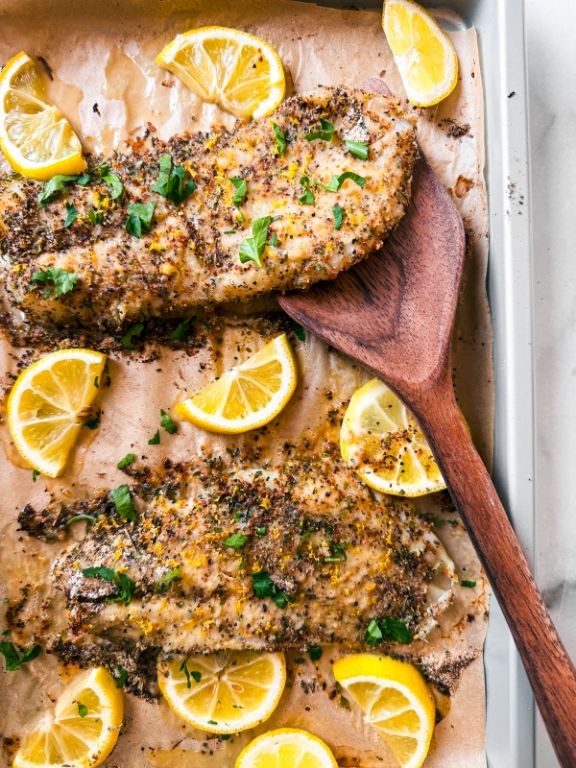
Miraculously, we’ve found a way to make fish taste like a fancy restaurant dish without the fuss—or the bill. This poached grouper is so tender and flavorful, you’ll swear you’ve got a secret chef hiding in your kitchen. It’s the perfect centerpiece for a dinner that says ‘I’m impressive’ without you having to break a sweat.
Serving: 4 | Pre Time: 15 minutes | Cooking Time: 15 minutes
Ingredients
– 4 (6-ounce) grouper fillets, skin-on for extra flavor (trust me, it crisps up nicely)
– 4 cups water, just enough to cover the fish in the pan
– 1 lemon, zested and juiced (save the zest for a bright finish)
– 2 tbsp extra virgin olive oil, my go-to for its fruity kick
– 2 tbsp unsalted butter, because everything’s better with butter
– 1/4 cup fresh parsley, chopped (I like it extra herby)
– 2 tbsp fresh dill, chopped (dill adds a lovely, light touch)
– 1 tsp salt, to season the poaching liquid perfectly
– 1/2 tsp black pepper, freshly ground for maximum punch
Instructions
1. In a large skillet, combine 4 cups water, 1 tsp salt, and 1/2 tsp black pepper, then bring to a gentle simmer over medium heat—you’ll see tiny bubbles forming, not a rolling boil.
2. Carefully place the 4 grouper fillets into the simmering water, skin-side down, ensuring they’re fully submerged.
3. Poach the fillets for 8-10 minutes, until they turn opaque and flake easily with a fork; tip: avoid overcooking by checking at 8 minutes.
4. While the fish poaches, heat 2 tbsp extra virgin olive oil and 2 tbsp unsalted butter in a separate pan over medium heat until the butter melts and foams slightly.
5. Remove the grouper from the poaching liquid using a slotted spoon and pat dry with paper towels to prevent splattering.
6. Add the poached grouper fillets to the pan with the oil and butter, cooking for 2-3 minutes per side until the skin is golden and crispy.
7. Sprinkle the juice of 1 lemon over the fish during the last minute of cooking to deglaze the pan and add tangy flavor.
8. Transfer the grouper to a serving platter and top with 1/4 cup chopped parsley, 2 tbsp chopped dill, and the reserved lemon zest.
9. Serve immediately while hot. Perfectly poached, this grouper boasts a melt-in-your-mouth texture with a crispy skin that’s pure joy. Pair it with a simple salad or roasted veggies for a meal that’s both elegant and effortless—your taste buds will thank you!
Poached Sole in Vermouth and Tarragon Broth
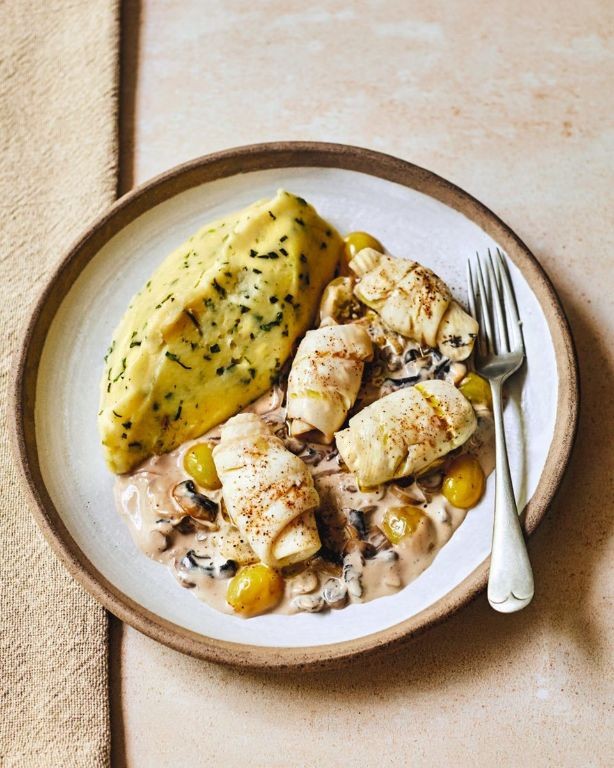
Venturing into a dish that feels fancy but is secretly a weeknight warrior? Let’s talk about poached sole in a vermouth and tarragon broth—it’s like a spa day for fish, where the broth does all the heavy lifting while you sip wine and pretend you’re a Michelin-starred chef. This light, aromatic meal comes together faster than you can say ‘bon appétit,’ making it perfect for impressing guests or just treating yourself without the fuss.
Serving: 4 | Pre Time: 10 minutes | Cooking Time: 15 minutes
Ingredients
– 4 sole fillets (about 6 oz each, fresh or thawed—I always pat them dry to avoid a soggy situation)
– 1 cup dry vermouth (go for a good-quality one; it’s the star here, not just cooking wine!)
– 2 cups low-sodium chicken broth (homemade if you have it, but store-bought works in a pinch)
– 1/4 cup heavy cream (full-fat for that luxurious silkiness)
– 2 tbsp unsalted butter (I prefer European-style for its richer flavor)
– 2 tbsp fresh tarragon, chopped (don’t skimp—dried just won’t give you that vibrant herby punch)
– 1 small shallot, finely minced (about 2 tbsp—it adds a subtle sweetness without overpowering)
– 2 cloves garlic, minced (because garlic makes everything better, right?)
– Salt and freshly ground black pepper (to season as you go, but I’ll be specific in the steps)
Instructions
1. In a large skillet over medium heat, melt the unsalted butter until it foams slightly, about 1 minute.
2. Add the minced shallot and garlic, cooking until softened and fragrant, 2–3 minutes—stir frequently to prevent burning.
3. Pour in the dry vermouth and let it simmer for 2 minutes to cook off the alcohol, reducing it by half.
4. Stir in the low-sodium chicken broth and bring to a gentle simmer over medium-low heat, about 3–4 minutes.
5. Season the sole fillets lightly with salt and pepper on both sides, then carefully place them into the simmering broth in a single layer.
6. Poach the fillets for 4–5 minutes, until they turn opaque and flake easily with a fork—avoid overcooking to keep them tender.
7. Using a slotted spoon, transfer the sole fillets to a warm plate and cover loosely with foil to keep warm.
8. Increase the heat to medium-high and let the broth reduce by about one-third, 3–4 minutes, until slightly thickened.
9. Whisk in the heavy cream and chopped fresh tarragon, cooking for 1 more minute until the broth is creamy and well combined.
10. Taste the broth and adjust seasoning with a pinch of salt if needed, then pour it over the sole fillets to serve.
Caress your taste buds with this dish—the sole is melt-in-your-mouth tender, swimming in a broth that’s herbaceous from the tarragon and subtly boozy from the vermouth. Serve it over a bed of buttery mashed potatoes or with crusty bread to soak up every last drop, and maybe light a candle to really sell the ‘fancy dinner’ vibe without the stress!
Poached Mackerel with Ginger and Scallions
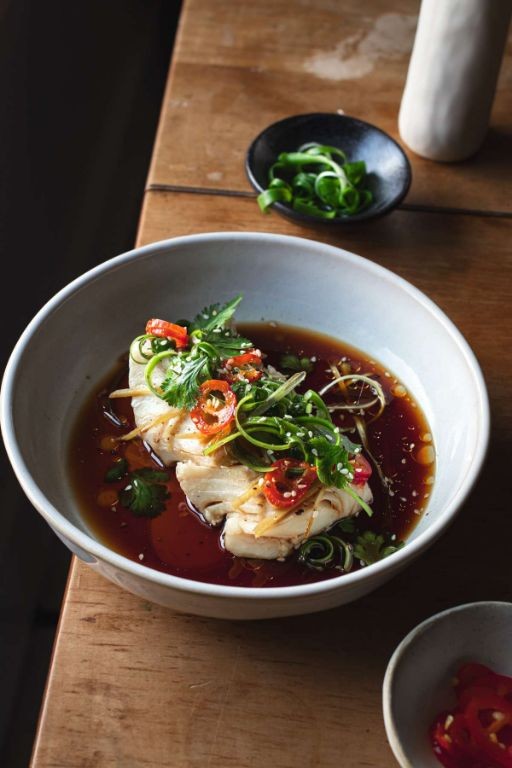
Ready to ditch the holiday stress and dive into something that won’t require a culinary PhD? This poached mackerel is your kitchen’s new best friend—a deceptively simple dish that delivers restaurant-worthy flavor with minimal fuss, perfect for when you need a break from all those festive cookies.
Serving: 4 | Pre Time: 15 minutes | Cooking Time: 20 minutes
Ingredients
– 4 fresh mackerel fillets (about 6 oz each), skin-on for that lovely texture—trust me, it makes a difference.
– 4 cups water (filtered if you’re fancy, tap works just fine too).
– 1 (3-inch) piece fresh ginger, thinly sliced (don’t skimp—this is the flavor hero).
– 6 scallions, white parts cut into 2-inch pieces, green parts thinly sliced for garnish (the green parts add a pop of color I adore).
– 3 tbsp soy sauce (I always use low-sodium to control the saltiness).
– 1 tbsp rice vinegar (a splash of acidity that brightens everything up).
– 1 tsp sesame oil (toasted is my go-to for that nutty aroma).
– 1/2 tsp sugar (just a pinch to balance the flavors—no one likes a one-note dish).
Instructions
1. In a large skillet or wide pot, combine 4 cups water, the sliced ginger, and the white parts of the scallions.
2. Bring the mixture to a gentle simmer over medium-high heat, which should take about 5 minutes—you’ll see small bubbles forming around the edges.
3. Carefully place the mackerel fillets skin-side up into the simmering liquid, ensuring they’re fully submerged.
4. Reduce the heat to low, cover the pot, and let the fish poach for 8-10 minutes, until the flesh turns opaque and flakes easily with a fork.
5. While the fish cooks, in a small bowl, whisk together 3 tbsp soy sauce, 1 tbsp rice vinegar, 1 tsp sesame oil, and 1/2 tsp sugar until the sugar dissolves.
6. Using a slotted spoon, gently transfer the poached mackerel fillets to a serving platter, discarding the ginger and scallion pieces from the poaching liquid.
7. Drizzle the soy sauce mixture evenly over the warm fish fillets.
8. Sprinkle the thinly sliced green parts of the scallions over the top as a fresh garnish.
Now, let’s talk about that first bite—the mackerel is so tender it practically melts, with the ginger and scallions adding a zesty kick that cuts through the richness. Serve it over a bed of steamed jasmine rice to soak up all those savory juices, or get creative and flake it into tacos for a fun twist. No matter how you dish it up, this recipe is a guaranteed crowd-pleaser that’ll have everyone asking for seconds.
Poached Barramundi with Coconut and Lemongrass
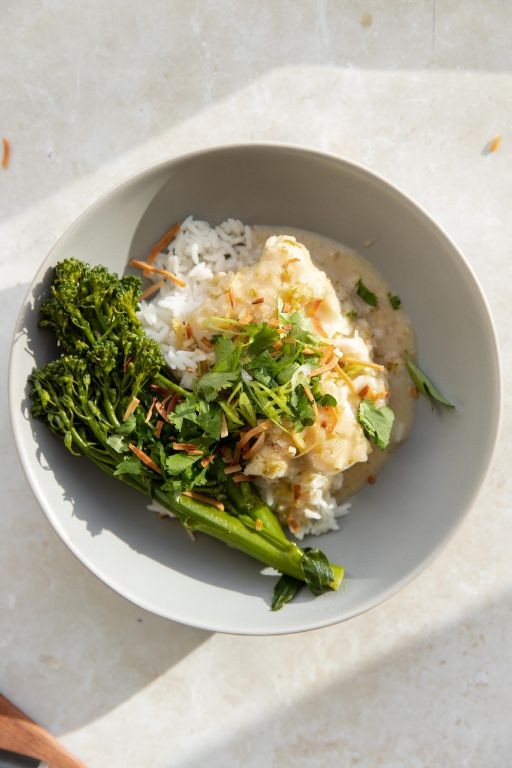
Hold onto your aprons, folks, because we’re about to turn a simple fish dinner into a tropical vacation on a plate. This Poached Barramundi with Coconut and Lemongrass is so fragrant and flavorful, it’ll make you forget you’re cooking and not lounging on a beach somewhere.
Serving: 4 | Pre Time: 15 minutes | Cooking Time: 15 minutes
Ingredients
– 4 (6-ounce) barramundi fillets, skin-on (trust me, the skin adds amazing texture)
– 1 (13.5-ounce) can full-fat coconut milk, shaken well—none of that light stuff, we want richness!
– 2 stalks fresh lemongrass, tough outer layers removed and bashed with the back of a knife (this releases those incredible citrusy oils)
– 1 tablespoon fresh ginger, grated (I keep a knob in the freezer for easy grating)
– 2 cloves garlic, minced (because everything’s better with garlic)
– 1 tablespoon fish sauce (the secret umami booster)
– 1 tablespoon lime juice, freshly squeezed (bottled just won’t cut it here)
– 1 teaspoon coconut oil, for sautéing (it adds a subtle tropical note)
– ¼ cup fresh cilantro, chopped, for garnish (a must for that fresh finish)
– Salt, to taste (I use flaky sea salt for a little crunch)
Instructions
1. In a large skillet or shallow pot, heat 1 teaspoon coconut oil over medium heat until shimmering, about 1 minute.
2. Add 2 cloves minced garlic and 1 tablespoon grated ginger, sautéing for 30 seconds until fragrant—don’t let it burn!
3. Pour in 1 can full-fat coconut milk, 2 bashed lemongrass stalks, 1 tablespoon fish sauce, and 1 tablespoon lime juice, stirring to combine.
4. Bring the mixture to a gentle simmer over medium-low heat, letting it bubble lightly for 3 minutes to infuse the flavors.
5. Carefully place 4 barramundi fillets skin-side up into the simmering liquid, ensuring they’re submerged about halfway.
6. Cover the skillet and poach the fish for 8–10 minutes, or until the flesh is opaque and flakes easily with a fork—check at 8 minutes to avoid overcooking.
7. Using a slotted spatula, transfer the poached barramundi to serving plates, discarding the lemongrass stalks.
8. Spoon the warm coconut broth over the fish, then garnish with ¼ cup chopped fresh cilantro and a pinch of salt.
What a showstopper! The barramundi turns out incredibly tender and moist, soaking up all that creamy, aromatic broth with hints of lemongrass and ginger. Serve it over steamed jasmine rice to soak up every last drop, or with a side of crunchy slaw for a textural contrast that’ll have everyone asking for seconds.
Poached Perch with Parsley and Garlic Butter
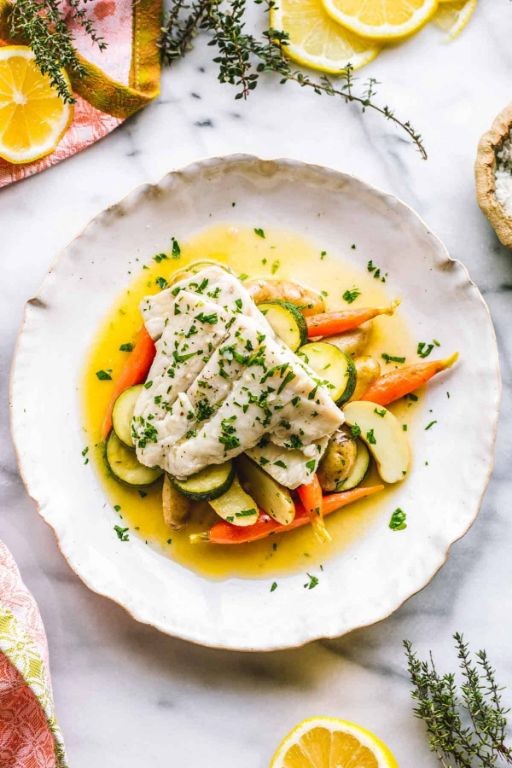
Yikes, have you ever stared at a fish fillet and thought, ‘You look delicious, but I don’t want to turn you into a dry, sad hockey puck’? Well, fret no more, because this poached perch is about to become your new best friend—it’s tender, flavorful, and basically foolproof. Let’s ditch the fish fear and get cooking!
Serving: 2 | Pre Time: 10 minutes | Cooking Time: 15 minutes
Ingredients
– 2 (6-oz) perch fillets, skin-on for extra flavor and to prevent curling (trust me on this)
– 4 cups water
– 1 lemon, thinly sliced (the zestier, the better!)
– 3 sprigs fresh parsley, plus 2 tbsp finely chopped for the butter
– 1 tsp whole black peppercorns
– 4 tbsp unsalted butter, softened to room temp so it whips up beautifully
– 2 cloves garlic, minced (fresh is non-negotiable for that punch)
– 1/2 tsp kosher salt
Instructions
1. In a large skillet, combine the 4 cups water, lemon slices, parsley sprigs, and 1 tsp black peppercorns. Bring to a gentle simmer over medium heat, which should take about 5 minutes—you’ll see tiny bubbles forming at the edges.
2. Carefully slide the 2 perch fillets into the simmering liquid, ensuring they’re fully submerged. Reduce heat to low to maintain a bare simmer (no rolling boils!).
3. Poach the fillets for 8-10 minutes, or until the flesh turns opaque and flakes easily with a fork. Tip: Use a slotted spoon to check one fillet to avoid overcooking.
4. While the fish poaches, make the garlic butter: In a small bowl, mash the 4 tbsp softened butter with the 2 minced garlic cloves, 2 tbsp chopped parsley, and 1/2 tsp kosher salt until well combined.
5. Using a slotted spoon, transfer the poached perch fillets to serving plates, discarding the poaching liquid and aromatics.
6. Immediately top each warm fillet with a generous dollop of the garlic butter, letting it melt into the fish. Tip: For extra flair, briefly broil the topped fish for 1-2 minutes until the butter is golden and bubbly.
7. Serve right away. Tip: Let the fish rest for a minute after plating to allow the butter to seep in for maximum juiciness.
So, what’s the verdict on this dish? The perch turns out incredibly moist and flaky, with the garlic butter adding a rich, aromatic punch that’s not overpowering. For a fun twist, try serving it over a bed of creamy polenta or with a side of roasted asparagus to soak up all that delicious butter sauce.
Summary
Ultimately, these 18 poached fish recipes prove that healthy dining can be incredibly delicious and easy. We hope you’re inspired to try a few in your own kitchen! Don’t forget to leave a comment telling us which recipe is your favorite and share this roundup on Pinterest to help other home cooks discover these tasty, wholesome meals.