Beyond a simple side dish, roasted asparagus represents a culinary exercise in precision, where high-heat application transforms fibrous stalks into tender, caramelized spears with concentrated flavor. This technique-driven approach elevates the humble vegetable, making it a versatile component for elegant plating or rustic family meals.
Why This Recipe Works
- High-temperature roasting (425°F) rapidly evaporates surface moisture, promoting caramelization while preserving interior texture.
- A preheated baking sheet ensures immediate searing upon contact, preventing steaming and yielding superior browning.
- Strategic oil application—coating spears thoroughly but not excessively—creates a conductive medium for even heat transfer.
- Finishing with flaky sea salt and citrus zest after roasting maintains their delicate textures and bright flavors.
- Proper asparagus selection (medium-thick spears) provides optimal structure for withstanding high heat without becoming mushy.
Ingredients
- 2 pounds fresh asparagus spears (medium thickness, about 1/2-inch diameter at base)
- 3 tablespoons extra-virgin olive oil
- 1 1/2 teaspoons kosher salt
- 1/2 teaspoon freshly ground black pepper
- 1 lemon (for 2 teaspoons finely grated zest and 1 tablespoon fresh juice)
- 1/4 cup finely grated Parmesan cheese (optional, for finishing)
- 1 tablespoon chopped fresh parsley leaves (for garnish)
- Flaky sea salt (such as Maldon, for finishing)
Equipment Needed
- Rimmed baking sheet (half-sheet pan, 18×13 inches)
- Parchment paper or silicone baking mat
- Chef’s knife and cutting board
- Vegetable peeler (optional, for thicker spears)
- Microplane or fine zester
- Citrus juicer
- Large mixing bowl
- Tongs or spatula for turning
- Instant-read thermometer (optional, for oven verification)
Instructions
Step 1: Prepare the Asparagus and Oven
Begin by positioning one oven rack in the center position and preheating your oven to 425°F—this specific temperature provides the ideal balance between rapid surface caramelization and controlled interior cooking. While the oven heats, prepare your asparagus: hold each spear at both ends and bend until it naturally snaps at the point where the tough woody base meets the tender stalk; discard the tough ends. For particularly thick spears (over 3/4-inch diameter), use a vegetable peeler to remove the outer fibrous layer from the lower third of each stalk, ensuring even cooking throughout. Rinse the trimmed spears under cold running water, then pat completely dry with kitchen towels or a salad spinner—any residual moisture will steam rather than roast the vegetables. Place a rimmed baking sheet in the oven during the final 10 minutes of preheating; this critical step ensures immediate searing upon contact. Pro Tip: Test your oven’s actual temperature with an instant-read thermometer placed on the rack, as many home ovens run 25-50°F cooler than their display indicates.
Step 2: Season and Oil the Spears
In a large mixing bowl, combine the thoroughly dried asparagus spears with 3 tablespoons of extra-virgin olive oil, using your hands to massage the oil onto every surface until each spear glistens uniformly. The oil should coat without pooling at the bottom of the bowl—adjust quantity if necessary based on asparagus size. Sprinkle 1 1/2 teaspoons of kosher salt and 1/2 teaspoon of freshly ground black pepper over the oiled spears, then toss again to distribute evenly. Kosher salt’s larger crystals dissolve gradually during roasting, seasoning from within rather than merely coating the surface. For enhanced flavor infusion, you may optionally add one minced garlic clove or 1 teaspoon of crushed red pepper flakes at this stage, though purists may prefer the clean asparagus flavor. Ensure the spears are arranged in a single layer in the bowl during seasoning to guarantee uniform coverage. Pro Tip: Use a bowl large enough to allow proper tossing without overcrowding, which ensures every spear receives equal oil and seasoning distribution.
Step 3: Arrange and Initial Roasting
Carefully remove the preheated baking sheet from the oven using oven mitts—the surface should register approximately 400°F when tested with an infrared thermometer. Immediately arrange the seasoned asparagus spears in a single layer with space between each spear, ensuring none are touching or overlapping; this air circulation is essential for proper evaporation and browning rather than steaming. Work quickly to maintain the pan’s heat, using tongs to position each spear perpendicular to the pan’s long edge for consistent exposure. Return the loaded baking sheet to the center rack and set a timer for 8 minutes—this initial high-heat exposure will begin the Maillard reaction, creating complex flavor compounds through protein-sugar interactions. During this phase, the asparagus will emit audible sizzling as surface moisture rapidly vaporizes; this sound should diminish slightly by the 6-minute mark as the exterior begins to dry and brown. Do not open the oven door during this critical initial roasting phase, as temperature fluctuations can compromise the searing process.
Step 4: Rotate and Continue Roasting
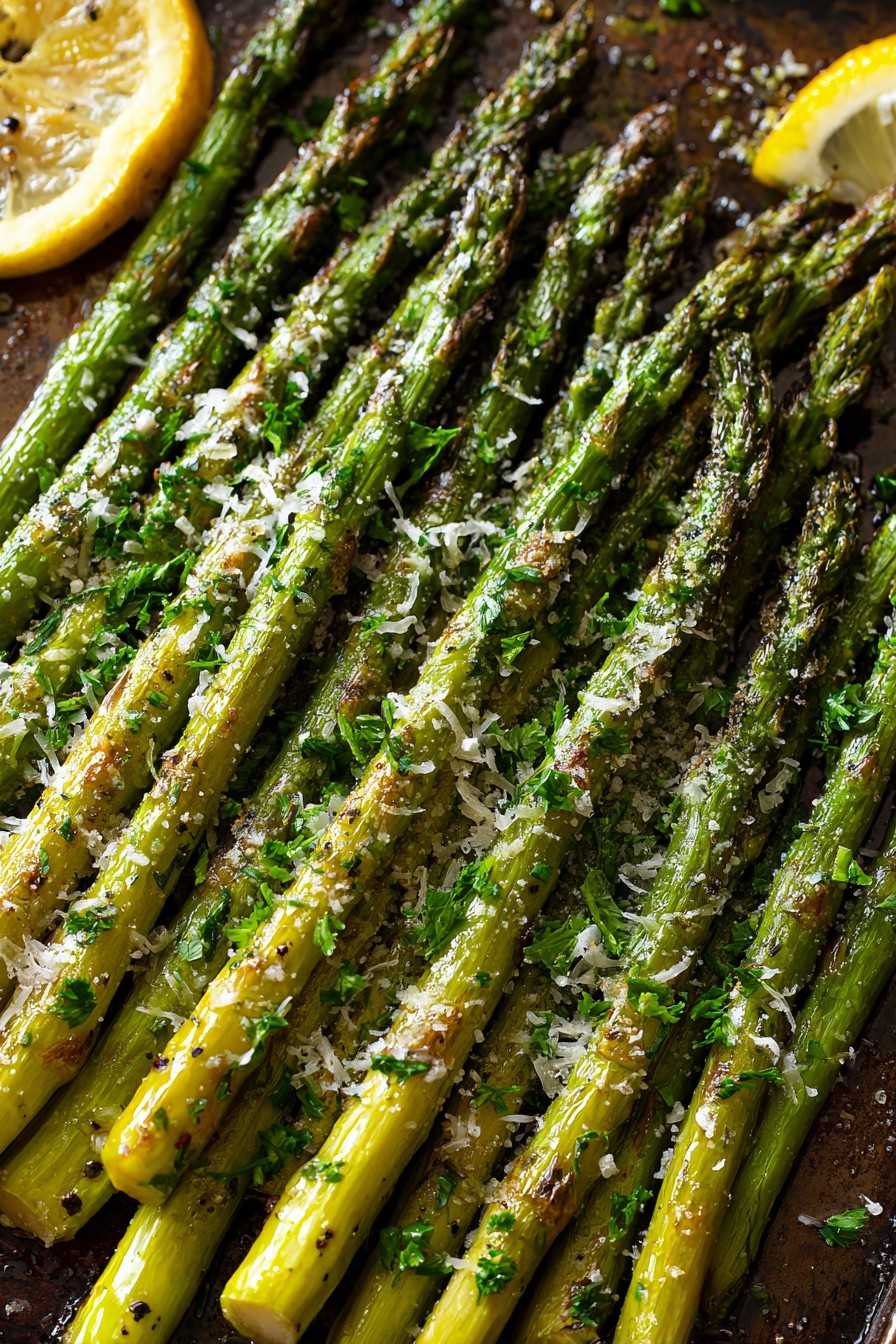
After 8 minutes, open the oven door and use tongs to carefully rotate each asparagus spear 180 degrees—this ensures even exposure to any hot spots in your oven and promotes uniform caramelization on all sides. Simultaneously, rotate the baking sheet front-to-back to account for potential temperature variations within your oven cavity. Continue roasting for an additional 6-8 minutes, monitoring closely during the final minutes. The asparagus is properly roasted when the spears are tender but still offer slight resistance when pierced with a paring knife at their thickest point, and the tips have developed crispy, frizzled edges while the stalks show deep golden-brown blistered spots covering approximately 40% of their surface area. Thinner spears may require only 12 total minutes, while thicker specimens might need up to 16 minutes—rely on visual and textural cues rather than strict timing. Pro Tip: For extra-crispy tips, position the baking sheet on the upper rack for the final 2-3 minutes of cooking, watching carefully to prevent burning.
Step 5: Finish and Plate
Immediately transfer the roasted asparagus to a serving platter using tongs or a spatula, arranging the spears with their tips aligned for elegant presentation. While still piping hot, zest one lemon directly over the spears using a Microplane, applying approximately 2 teaspoons of fine zest evenly across the surface. Follow with 1 tablespoon of freshly squeezed lemon juice, drizzling in a zigzag pattern to distribute acidity uniformly. If using Parmesan, sprinkle 1/4 cup of finely grated cheese over the warm spears—the residual heat will slightly melt the cheese without making it greasy. Finish with a light scattering of flaky sea salt (about 1/4 teaspoon) and 1 tablespoon of chopped fresh parsley. Serve immediately, as roasted asparagus begins to lose its crisp-tender texture within 10-15 minutes of removal from the oven. For optimal flavor development, allow the finished dish to rest for precisely 2 minutes before serving, enabling the lemon juice and salt to penetrate slightly while maintaining ideal texture.
Tips and Tricks
For professional-level results, consider these advanced techniques: First, blanch thicker asparagus spears (over 3/4-inch diameter) in heavily salted boiling water for 90 seconds before shocking in ice water, patting dry, then proceeding with the roasting recipe—this par-cooking method ensures perfectly tender interiors without overcooked exteriors. Second, create a compound oil by infusing olive oil with rosemary, thyme, or garlic for 24 hours before using it to coat the asparagus, adding nuanced herbal notes. Third, employ the “two-pan method” by roasting asparagus on separate baking sheets if preparing more than 2 pounds, ensuring proper air circulation and preventing steaming from overcrowding. Fourth, for extra-crispy results, toss the roasted asparagus with 1 tablespoon of panko breadcrumbs mixed with 1 teaspoon of olive oil during the final 3 minutes of cooking. Finally, if your oven has a convection setting, reduce the temperature to 400°F and check for doneness 2-3 minutes earlier, as the fan accelerates cooking and browning.
Recipe Variations
- Balsamic-Glazed: During the final 5 minutes of roasting, drizzle asparagus with 2 tablespoons of aged balsamic vinegar mixed with 1 teaspoon of honey. The vinegar will reduce and caramelize, creating a sweet-tart glaze.
- Prosciutto-Wrapped: Wrap bundles of 3-4 asparagus spears with thin slices of prosciutto before roasting. The pork fat renders during cooking, basting the vegetables while adding savory depth.
- Asian-Inspired: Substitute olive oil with toasted sesame oil, and after roasting, toss with 1 tablespoon of soy sauce, 1 teaspoon of grated ginger, and 1 teaspoon of sesame seeds.
- Mediterranean: After roasting, top with 1/4 cup crumbled feta cheese, 2 tablespoons chopped Kalamata olives, and 1 tablespoon chopped fresh oregano instead of parsley.
- Breadcrumb-Crusted: Toss oiled asparagus with 1/2 cup panko breadcrumbs mixed with 2 tablespoons grated Parmesan before roasting for an extra-crispy exterior.
Frequently Asked Questions
Q: Can I prepare roasted asparagus ahead of time for a dinner party?
A: While best served immediately, you can trim and dry asparagus up to 24 hours in advance, storing wrapped in damp paper towels in the refrigerator. Roast just before serving, as reheating causes texture degradation. For buffet service, hold at 150°F in a low oven for up to 30 minutes.
Q: How do I select the best asparagus at the market?
A: Choose spears with tightly closed, compact tips and smooth, vibrant green stalks. Avoid woody or wrinkled specimens. Uniform thickness ensures even cooking—if sizes vary significantly, separate into batches by thickness and adjust cooking times accordingly.
Q: Is it necessary to snap the tough ends off every spear?
A: Yes, this traditional method reliably removes the fibrous portion that remains unpalatable even after roasting. The spear naturally breaks where tenderness begins. For efficiency, align several spears and cut where the first naturally snaps.
Q: Can I roast frozen asparagus using this method?
A: Thaw completely and pat extremely dry, as frozen vegetables release more moisture. Increase initial roasting time by 3-4 minutes and expect slightly less caramelization due to cell structure changes during freezing.
Q: What main proteins pair best with roasted asparagus?
A: The vegetable’s bright acidity complements rich proteins like salmon, ribeye steak, or roasted chicken. For vegetarian pairings, serve alongside creamy polenta, risotto, or fried eggs for contrasting textures.
Summary
Mastering roasted asparagus requires precision in temperature control, proper seasoning technique, and attention to visual doneness cues. This chef-driven method transforms simple spears into a restaurant-quality dish through strategic high-heat application and thoughtful finishing touches.
Perfect Roasted Asparagus
4
servings10
minutes14
minutesIngredients
Instructions
- 1 Preheat oven to 425°F with a baking sheet inside during final 10 minutes of heating.
- 2 Snap tough ends from asparagus, rinse, and pat completely dry. For thick spears, peel lower third with vegetable peeler.
- 3 In large bowl, toss asparagus with olive oil, kosher salt, and pepper until evenly coated.
- 4 Arrange in single layer on preheated baking sheet. Roast 8 minutes, then rotate spears and pan. Roast additional 6-8 minutes until tender with browned spots.
- 5 Transfer to platter, immediately top with lemon zest, juice, Parmesan (if using), parsley, and flaky sea salt. Serve within 10 minutes.