On brisk evenings, few dishes satisfy like a deeply flavored, hearty stew that marries simplicity with sophisticated technique. Our spinach and white bean stew achieves this balance through careful layering of aromatics, proper bean preparation, and a slow simmer that coaxes out maximum flavor. Offering both robust texture and bright, vegetal notes, this recipe transforms humble ingredients into a comforting yet elegant centerpiece.
Why This Recipe Works
- Flavor Foundation: Sautéing pancetta first renders fat that becomes the aromatic base, while deglazing with white wine lifts fond for complex depth.
- Texture Management: Using canned cannellini beans ensures creamy consistency without overnight soaking, and adding spinach at the end preserves its vibrant color and delicate structure.
- Umami Amplification: A Parmesan rind simmered in the broth infuses savory, salty notes that permeate every component of the stew.
- Acid Balance: A final splash of lemon juice and zest cuts through the richness, brightening the overall flavor profile.
Ingredients
- 4 ounces pancetta, diced into ¼-inch cubes
- 2 tablespoons extra-virgin olive oil
- 1 large yellow onion, finely diced (about 2 cups)
- 3 medium carrots, peeled and cut into ½-inch rounds
- 3 celery stalks, cut into ½-inch pieces
- 4 garlic cloves, minced
- 1 teaspoon red pepper flakes
- ½ cup dry white wine (such as Sauvignon Blanc)
- 4 cups low-sodium vegetable broth
- 2 (15-ounce) cans cannellini beans, drained and rinsed
- 1 (2-inch) piece Parmesan rind
- 2 bay leaves
- 1 teaspoon dried thyme
- 10 ounces fresh spinach, stems removed
- Zest and juice of 1 lemon
- Kosher salt and freshly ground black pepper, to taste
- Freshly grated Parmesan cheese, for serving
- 2 tablespoons chopped fresh parsley, for garnish
Equipment Needed
- Large Dutch oven or heavy-bottomed pot (5-6 quart capacity)
- Wooden spoon or spatula
- Chef’s knife and cutting board
- Measuring cups and spoons
- Microplane or zester
- Citrus juicer
Instructions
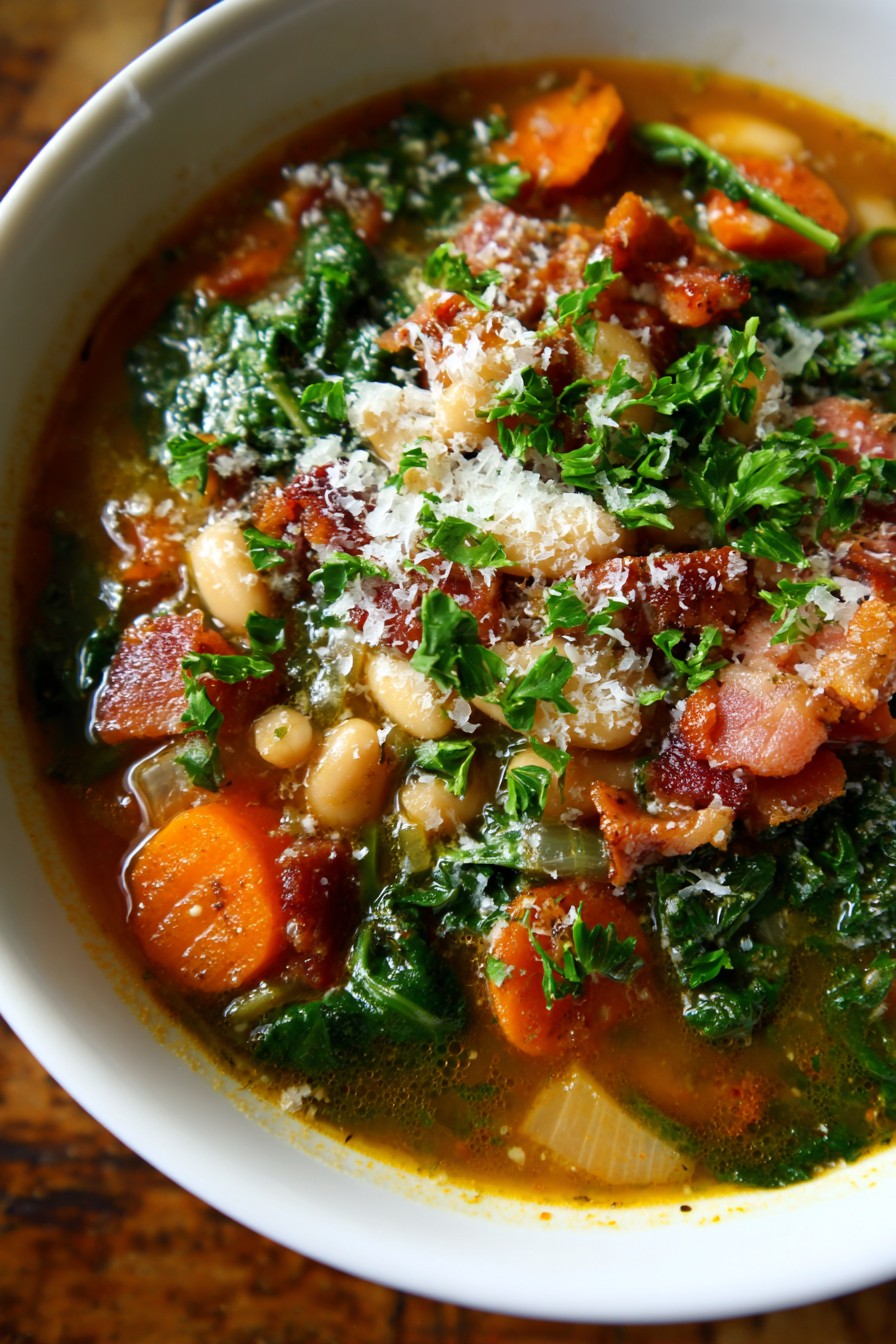
Step 1: Render the Pancetta and Build the Aromatic Base
Place your Dutch oven over medium-low heat and add the diced pancetta. Cook, stirring occasionally with a wooden spoon, for 8-10 minutes until the fat fully renders and the pieces turn golden brown and crisp. Using a slotted spoon, transfer the pancetta to a paper towel-lined plate, leaving the rendered fat in the pot. Increase the heat to medium and add the olive oil. Immediately add the diced onion, carrot rounds, and celery pieces. Season with a pinch of kosher salt to help draw out moisture. Sauté, stirring frequently, for 12-15 minutes until the vegetables soften and the onions become translucent with lightly browned edges. This slow cooking process, known as sweating, is crucial for developing a sweet, deep flavor foundation without burning the aromatics.
Step 2: Incorporate Garlic and Deglaze with Wine
Add the minced garlic and red pepper flakes to the softened vegetables. Cook for 60-90 seconds, stirring constantly, until the garlic becomes fragrant but before it takes on any color. Pour in the dry white wine, using the wooden spoon to scrape up any browned bits (fond) that have adhered to the bottom of the pot. Allow the wine to simmer vigorously for 3-4 minutes until reduced by about half and the raw alcohol smell has completely dissipated. This deglazing step is essential for incorporating the flavorful fond into the liquid base, adding a layer of acidity and complexity that will balance the stew’s richness.
Step 3: Simmer with Broth, Beans, and Aromatics
Pour in the vegetable broth, then add the drained and rinsed cannellini beans, Parmesan rind, bay leaves, and dried thyme. Bring the mixture to a gentle boil over medium-high heat, then immediately reduce the heat to low to maintain a bare simmer. Partially cover the pot with the lid slightly ajar. Simmer for 25-30 minutes, stirring occasionally, to allow the flavors to meld and the beans to become tender while absorbing the seasoned broth. The Parmesan rind will soften and slowly release its umami-rich essence into the stew. Tip: For a thicker consistency, use a potato masher to gently crush about one-quarter of the beans against the side of the pot during the final 10 minutes of simmering.
Step 4: Wilt the Spinach and Adjust Seasonings
Remove and discard the bay leaves and any remaining solid pieces of the Parmesan rind. Increase the heat to medium. Add the fresh spinach in two or three large handfuls, stirring after each addition to help it wilt into the hot liquid. This should take about 3-4 minutes total; the spinach will reduce dramatically in volume and turn a vibrant, deep green. Stir in the reserved crispy pancetta. Add the lemon zest and juice, then season the stew thoroughly with kosher salt and freshly ground black pepper. Taste and adjust, remembering that the Parmesan garnish will add saltiness. Tip: For the brightest flavor, add the lemon juice off the heat just before serving to preserve its volatile aromatic compounds.
Step 5: Final Presentation and Garnish
Ladle the hot stew into deep bowls. Finish each serving with a generous sprinkle of freshly grated Parmesan cheese and a scattering of chopped fresh parsley. Serve immediately while hot. The stew can rest off the heat for up to 10 minutes before serving without significant quality loss. For optimal texture, avoid reheating the spinach multiple times, as it will continue to cook and may become overly soft and lose its vibrant color. Tip: Drizzle each bowl with a thread of high-quality extra-virgin olive oil just before serving to add a final layer of fruity aroma and richness.
Tips and Tricks
For a vegetarian version, omit the pancetta and begin by sautéing the vegetables in 3 tablespoons of olive oil. Boost umami by adding 1 tablespoon of tomato paste with the garlic or a few dried porcini mushrooms soaked in warm broth. If using dried beans, soak 1 cup overnight, then simmer in fresh water until tender (about 1-1.5 hours) before adding to the stew. For a creamier texture without dairy, blend one can of beans with ½ cup of broth until smooth and stir it in during the final simmer. To make ahead, complete the stew through Step 3, then cool and refrigerate for up to 2 days; reheat gently and proceed with adding the spinach and finishing touches.
Recipe Variations
- Protein Additions: Incorporate 1 pound of browned Italian sausage (casings removed) or shredded rotisserie chicken added with the beans for a more substantial main course.
- Greens Swap: Substitute the spinach with an equal weight of chopped kale, Swiss chard, or escarole, adding them a few minutes earlier to ensure they become tender.
- Bean Alternatives: Use Great Northern beans or butter beans for a slightly different texture and flavor profile.
- Herb Infusion: Add a sprig of fresh rosemary with the thyme, or stir in 2 tablespoons of chopped fresh basil or oregano with the parsley at the end.
- Spice Route: For a smoky note, add 1 teaspoon of smoked paprika with the red pepper flakes, or include a pinch of saffron threads steeped in the wine before deglazing.
Frequently Asked Questions
Q: Can I make this stew in a slow cooker?
A: Yes. After sautéing the pancetta and vegetables on the stovetop (Steps 1 & 2), transfer everything to a slow cooker. Add the broth, beans, rind, and herbs. Cook on LOW for 6-7 hours or HIGH for 3-4 hours. Add the spinach and lemon in the last 30 minutes on HIGH.
Q: How should I store and reheat leftovers?
A: Cool completely and store in an airtight container in the refrigerator for up to 3 days. Reheat gently in a saucepan over medium-low heat, adding a splash of broth or water if it has thickened too much. Avoid microwaving for extended periods to prevent the spinach from becoming mushy.
Q: Is the Parmesan rind essential, and what can I use if I don’t have one?
A: The rind adds significant savory depth but is not strictly essential. If omitted, compensate by adding ¼ cup of grated Parmesan to the stew at the end and using a high-quality, flavorful broth. Save rinds in your freezer for future use.
Q: Can I use frozen spinach instead of fresh?
A: You can, but thaw and thoroughly squeeze out all excess liquid first to prevent watering down the stew. Use one 10-ounce package. Add it in Step 4; it will require less time to heat through.
Summary
This spinach white bean stew masterfully layers rendered pancetta fat, a sofrito of vegetables, white wine, and a Parmesan rind simmer to create a deeply flavorful, comforting dish. Finished with bright lemon and fresh spinach, it’s a technique-driven recipe yielding restaurant-quality results in a single pot.
Spinach White Bean Stew
6
servings20
minutes55
minutesIngredients
Instructions
- 1 Render Pancetta & Cook Vegetables: In a large Dutch oven over medium-low heat, cook pancetta for 8-10 min until crisp. Remove with a slotted spoon. Add oil to pot, increase heat to medium. Add onion, carrots, celery, and a pinch of salt. Sauté for 12-15 min until softened.
- 2 Add Garlic & Deglaze: Stir in garlic and red pepper flakes; cook 60-90 sec until fragrant. Pour in wine, scrape up fond, and simmer 3-4 min until reduced by half.
- 3 Simmer Stew: Add broth, beans, Parmesan rind, bay leaves, and thyme. Bring to a boil, then reduce to a low simmer. Partially cover and cook for 25-30 min, stirring occasionally.
- 4 Incorporate Spinach & Finish: Discard bay leaves and rind remnants. Increase heat to medium. Add spinach in batches, stirring until wilted (3-4 min). Stir in reserved pancetta, lemon zest, and juice. Season with salt and pepper.
- 5 Serve: Ladle into bowls. Garnish with grated Parmesan and parsley. Serve immediately.