Zigzagging from the rustic farmhouses of Eastern Europe to the aromatic kitchens of the Mediterranean, humble cabbage transforms into a soul-warming masterpiece through the art of slow stewing. This dish, a testament to culinary alchemy, turns a simple vegetable into a tender, flavor-infused centerpiece that has comforted generations across continents with its sweet, savory, and deeply satisfying profile.
Why This Recipe Works
- Layered Flavor Foundation: Sautéing aromatics like onion and garlic in butter and oil creates a rich, savory base that permeates every bite of cabbage.
- Perfect Texture Balance: The dual cooking method—initial sauté followed by covered stewing—ensures the cabbage softens completely while retaining a pleasant, melt-in-your-mouth tenderness without becoming mushy.
- Global Flavor Bridge: Incorporating apple cider vinegar and smoked paprika adds a subtle tang and smoky depth that echoes traditions from German sauerkraut to Hungarian főzelék, creating a universally appealing dish.
- Versatile Canvas: This basic stewed cabbage recipe serves as an ideal foundation for countless variations, easily adapting to incorporate proteins, different spices, or regional ingredients based on culinary inspiration.
Ingredients
- 1 large head green cabbage (about 2.5 pounds), cored and sliced into 1-inch strips
- 1 large yellow onion, thinly sliced
- 4 cloves garlic, minced
- 2 tablespoons unsalted butter
- 2 tablespoons olive oil
- 1 cup low-sodium chicken or vegetable broth
- 2 tablespoons apple cider vinegar
- 1 teaspoon smoked paprika
- 1 teaspoon caraway seeds (optional)
- 1 bay leaf
- 1 teaspoon kosher salt, plus more to taste
- ½ teaspoon freshly ground black pepper
- 2 tablespoons chopped fresh parsley for garnish
Equipment Needed
- Large Dutch oven or heavy-bottomed pot with lid
- Sharp chef’s knife
- Cutting board
- Wooden spoon or spatula
- Measuring cups and spoons
Instructions
Prepare Your Aromatic Foundation
Begin your culinary journey by placing your large Dutch oven over medium heat. Add two tablespoons of olive oil and two tablespoons of unsalted butter, allowing them to melt together into a golden pool that will carry flavors beautifully. Once the butter foam subsides—about 2 minutes—add your thinly sliced yellow onion. Cook these translucent ribbons, stirring occasionally with your wooden spoon, until they turn soft and take on a pale golden hue, which should take approximately 8-10 minutes. You’ll know they’re ready when they release a sweet, caramel-like fragrance that fills your kitchen. Now add your four minced garlic cloves, stirring constantly for just 60 seconds until fragrant but not browned—this brief cooking preserves garlic’s pungent character without bitterness. Tip: For deeper flavor, consider using a combination of butter for richness and olive oil for its higher smoke point and fruity notes.
Incorporate the Cabbage and Spices
Deglaze and Begin the Stewing Process
Once your cabbage has wilted and the spices are fragrant, it’s time to build your cooking liquid. Pour in two tablespoons of apple cider vinegar—this will deglaze the pot, lifting any flavorful browned bits from the bottom while adding a bright, tangy note that balances the cabbage’s sweetness. Immediately follow with one cup of low-sodium chicken or vegetable broth, which will provide both moisture and savory depth. Season the mixture with one teaspoon of kosher salt and half a teaspoon of freshly ground black pepper, stirring to distribute evenly. Bring the liquid to a gentle simmer, which should take about 3-4 minutes over medium heat. You’ll notice the broth bubbling gently around the edges of the pot, signaling it’s ready for the next phase. Tip: For vegetarian versions, use vegetable broth; for richer flavor, chicken broth works beautifully.
Slow Stew to Perfection
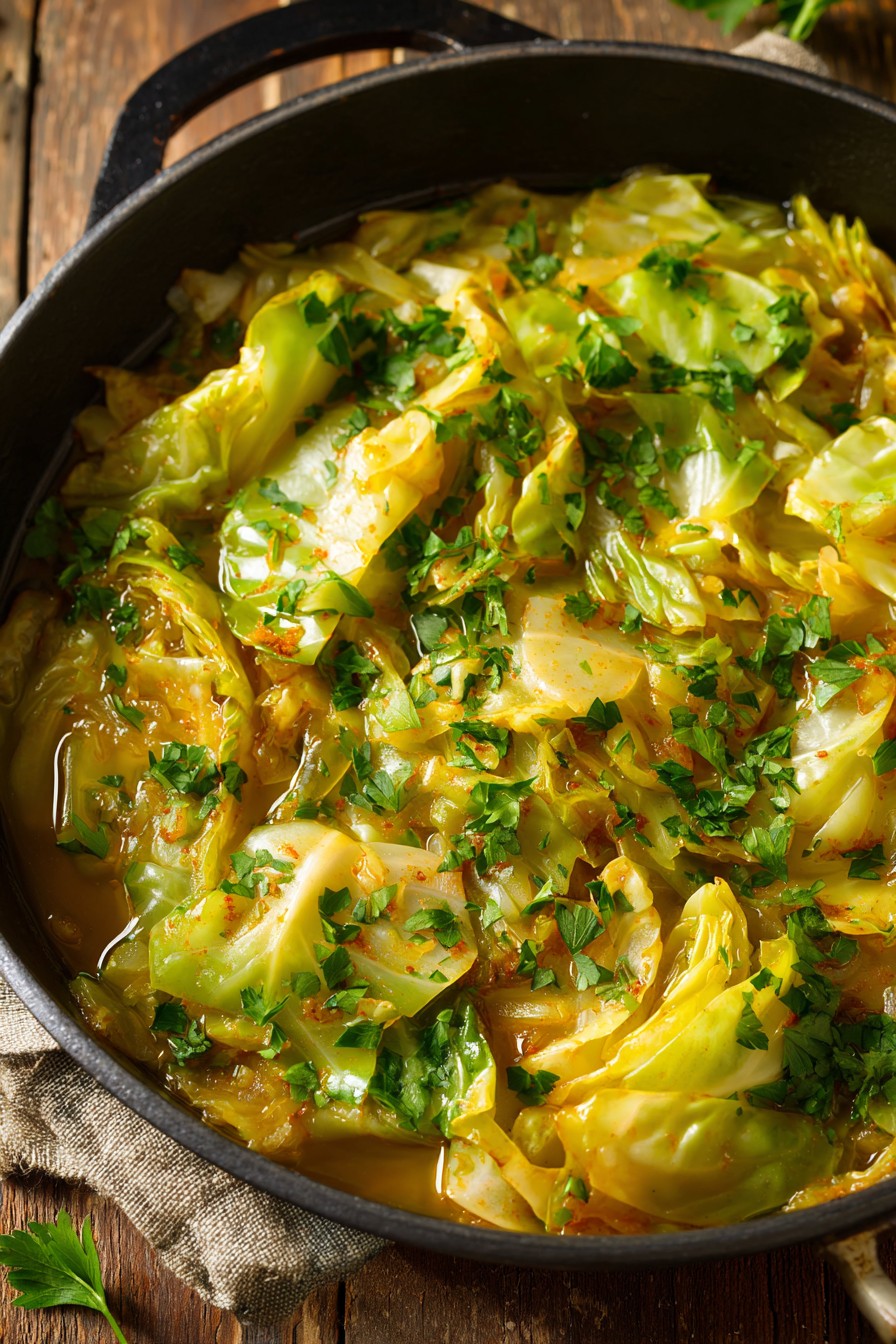
Reduce the heat to low and cover your Dutch oven with its lid. Allow the cabbage to stew gently for 45 to 55 minutes, maintaining a barely-there simmer where occasional bubbles break the surface. This slow, moist cooking method breaks down the cabbage’s cellular structure, transforming its texture from crisp to luxuriously tender while allowing it to fully absorb the seasoned broth. Resist the temptation to stir too frequently—every 15 minutes is sufficient—as this helps maintain even heat distribution without breaking down the cabbage excessively. After 45 minutes, check for doneness: the cabbage should be completely tender but still hold its strip-like shape, and most of the liquid should have reduced to a flavorful glaze coating each piece. Tip: If liquid remains excessive after 55 minutes, remove the lid and simmer uncovered for an additional 5-10 minutes to reduce.
Final Adjustments and Serving
Once your cabbage has reached perfect tenderness—yielding easily when pressed with the back of a spoon but not disintegrating—remove the pot from heat. Discard the bay leaf, which has now released its herbal essence into the dish. Taste and adjust seasoning with additional salt and pepper if needed, remembering that flavors concentrate as dishes cool slightly. Transfer the stewed cabbage to a serving dish and garnish generously with two tablespoons of freshly chopped parsley, whose bright green color and clean, grassy flavor provide a beautiful visual and taste contrast to the rich, caramelized cabbage. Serve immediately while warm, ideally alongside crusty bread to soak up any remaining flavorful juices.
Tips and Tricks
For exceptional results, consider these advanced techniques: First, select cabbage heads that feel heavy for their size with tightly packed, crisp leaves—these typically have better flavor and texture. When slicing, aim for uniform one-inch strips to ensure even cooking; irregular pieces may cook at different rates. If you prefer a sweeter profile, add one peeled and diced apple during the onion sauté phase, or incorporate a tablespoon of brown sugar with the broth. For umami depth, add a Parmesan rind to the stewing liquid—it will melt into the broth, adding savory complexity without overwhelming the cabbage. Storage is straightforward: cooled stewed cabbage keeps in an airtight container in the refrigerator for up to 5 days, and actually develops deeper flavor on day two. Reheat gently on the stovetop with a splash of broth or water to restore moisture. This dish also freezes beautifully for up to 3 months; thaw overnight in the refrigerator before reheating.
Recipe Variations
- Polish-Style Bigos Inspiration: Add 8 ounces of sliced kielbasa sausage when sautéing onions, plus 1 cup of sauerkraut (drained) and ½ cup of chopped prunes with the broth for a sweet-savory hunter’s stew variation.
- Mediterranean Twist: Incorporate 1 can (15 ounces) of drained chickpeas, 1 teaspoon of ground cumin, and a pinch of red pepper flakes with the spices; finish with lemon zest and chopped mint instead of parsley.
- Hearty Protein Addition: Brown 1 pound of ground pork or beef before the onions, then proceed with the recipe as written for a complete one-pot meal reminiscent of deconstructed cabbage rolls.
- Asian-Influenced Version: Substitute soy sauce for 1 tablespoon of the salt, add 1 tablespoon of grated ginger with the garlic, and use rice vinegar instead of apple cider vinegar; garnish with sesame seeds and sliced scallions.
- Creamy Northern European Style: After stewing, stir in ½ cup of heavy cream or crème fraîche and 2 tablespoons of whole-grain mustard; heat through gently without boiling for a luxurious, comforting finish.
Frequently Asked Questions
Q: Can I use red cabbage instead of green?
A: Absolutely! Red cabbage creates a stunning purple-hued dish with slightly earthier flavor. Note that it may require 5-10 minutes additional cooking time and will bleed color into the broth—this is normal and creates a beautiful presentation.
Q: How do I prevent the cabbage from becoming too watery?
A> Ensure your pot maintains a gentle, not rolling, simmer during stewing. If excess liquid remains after cooking, simply remove the lid and simmer uncovered for 5-10 minutes to reduce the broth to a glaze-like consistency.
Q: Is this dish freezer-friendly?
A> Yes, stewed cabbage freezes exceptionally well for up to 3 months. Cool completely, transfer to airtight containers or freezer bags, leaving ½-inch headspace for expansion. Thaw in the refrigerator overnight before reheating gently on the stovetop.
Q: What are the best side dishes to serve with stewed cabbage?
A> This versatile dish pairs beautifully with crusty bread, buttered egg noodles, mashed potatoes, or roasted meats like pork chops or sausages. For a lighter meal, serve alongside a simple green salad with vinaigrette.
Q: Can I make this recipe in a slow cooker?
A> Certainly! Sauté onions and garlic as directed, then transfer everything to a slow cooker. Cook on LOW for 6-8 hours or HIGH for 3-4 hours. The longer cooking yields exceptionally tender cabbage with deeper melded flavors.
Summary
This globally-inspired stewed cabbage transforms simple ingredients through slow cooking into a tender, flavor-packed dish that comforts like a culinary hug, offering endless variations from Polish bigos to Mediterranean chickpea additions.
Stewed Cabbage
6
servings15
minutes65
minutesIngredients
Instructions
- 1 In a large Dutch oven over medium heat, melt butter with olive oil. Add onion and cook 8-10 minutes until soft and golden. Add garlic and cook 1 minute until fragrant.
- 2 Add cabbage in batches, stirring to coat. Add smoked paprika, caraway seeds (if using), and bay leaf. Cook 5 minutes until cabbage wilts slightly.
- 3 Pour in apple cider vinegar to deglaze, then add broth, salt, and pepper. Bring to a simmer (3-4 minutes).
- 4 Reduce heat to low, cover, and stew 45-55 minutes until cabbage is tender and liquid is reduced, stirring every 15 minutes.
- 5 Remove from heat, discard bay leaf, adjust seasoning, and garnish with parsley before serving.