Tender, flaky salmon bathed in a glossy, savory-sweet teriyaki glaze transforms weeknight dinners into nourishing culinary experiences. This recipe balances robust umami flavors with the exceptional nutritional profile of wild-caught salmon, delivering a meal that satisfies both palate and wellness goals. Through careful ingredient selection and precise cooking techniques, we achieve restaurant-quality results in your own kitchen while maximizing health benefits.
Why This Recipe Works
- Wild-caught salmon provides superior omega-3 fatty acids compared to farmed varieties, supporting heart and brain health with every serving.
- Our homemade teriyaki glaze uses reduced-sodium soy sauce and pure maple syrup instead of refined sugars, creating balanced sweetness without blood sugar spikes.
- Baking at 400°F for precisely 12-15 minutes preserves the salmon’s moisture while developing a caramelized glaze that clings perfectly to each fillet.
- Fresh ginger and garlic in the marinade offer anti-inflammatory compounds that enhance both flavor and nutritional value.
- Toasted sesame seeds add crunch and additional healthy fats, elevating texture and nutrient density.
Ingredients
- 4 (6-ounce) wild-caught salmon fillets, skin-on or skinless based on preference
- 1/2 cup reduced-sodium soy sauce or tamari for gluten-free option
- 1/4 cup pure maple syrup (grade A or B)
- 2 tablespoons rice vinegar
- 1 tablespoon freshly grated ginger root
- 3 cloves garlic, minced
- 1 tablespoon sesame oil
- 1 tablespoon cornstarch dissolved in 2 tablespoons cold water
- 2 green onions, thinly sliced
- 1 tablespoon toasted sesame seeds
- Freshly ground black pepper to taste
Equipment Needed
- Medium saucepan
- Whisk
- Rimmed baking sheet
- Parchment paper or silicone baking mat
- Small bowl for cornstarch slurry
- Microplane or fine grater for ginger
- Instant-read thermometer
- Basting brush
Instructions
Prepare the Teriyaki Glaze Base
Begin by combining 1/2 cup reduced-sodium soy sauce, 1/4 cup pure maple syrup, 2 tablespoons rice vinegar, 1 tablespoon freshly grated ginger, and 3 minced garlic cloves in a medium saucepan. The reduced-sodium soy sauce provides the essential umami foundation while keeping sodium content manageable for heart-conscious diets. Pure maple syrup offers natural sweetness with trace minerals like manganese and zinc, unlike refined sugars that provide empty calories. Whisk these ingredients thoroughly over medium heat until the mixture reaches a gentle simmer, which typically takes 3-4 minutes. This initial heating helps meld the flavors while beginning the reduction process that will create the glaze’s signature thickness. As the mixture simmers, you’ll notice the sharpness of the raw garlic and ginger mellowing into the background, creating a more harmonious flavor profile. Tip: For maximum ginger flavor, grate it directly over the saucepan to capture every drop of ginger juice that contains potent anti-inflammatory compounds called gingerols.
Thicken the Glaze to Perfect Consistency
Prepare Salmon Fillets for Baking
Preheat your oven to 400°F and line a rimmed baking sheet with parchment paper or a silicone baking mat to prevent sticking and simplify cleanup. Pat 4 (6-ounce) wild-caught salmon fillets completely dry with paper towels, paying special attention to any moisture on the flesh side. This crucial step ensures proper browning and glaze adhesion, as excess moisture creates steam that prevents caramelization. If your fillets have skin, you may leave it on during cooking—the skin acts as a natural barrier that helps retain moisture and can be easily removed after baking if preferred. Arrange the salmon fillets evenly spaced on the prepared baking sheet, flesh side up, and season lightly with freshly ground black pepper. Avoid adding salt at this stage since the teriyaki glaze contains sufficient sodium from the soy sauce. Using a basting brush or spoon, apply a generous layer of the thickened teriyaki glaze to the top and sides of each fillet, reserving approximately 1/4 cup of glaze for finishing after baking. Tip: For optimal flavor penetration, use the back of a spoon to gently press the glaze into the salmon’s surface, creating better adhesion.
Bake to Perfect Doneness
Place the prepared salmon in the preheated 400°F oven on the middle rack. Bake for 12-15 minutes, depending on the thickness of your fillets. Thinner fillets (about 1 inch thick) will reach ideal doneness closer to 12 minutes, while thicker cuts (1.5 inches or more) may require the full 15 minutes. The salmon is perfectly cooked when it reaches an internal temperature of 125-130°F at its thickest point, measured with an instant-read thermometer inserted horizontally into the side of the fillet. At this temperature, the flesh will appear opaque and flake easily with a fork but remain exceptionally moist throughout. Visual cues include the glaze becoming slightly caramelized around the edges and the salmon’s surface developing a light golden hue. Avoid overcooking, as salmon continues to carryover cook for several minutes after removal from the oven. For those preferring their salmon more well-done, you may extend cooking time by 1-2 minutes, but note that temperatures above 140°F typically result in dry, chalky texture. Tip: Rotate the baking sheet halfway through cooking if your oven has hot spots to ensure even caramelization across all fillets.
Finish with Fresh Garnishes
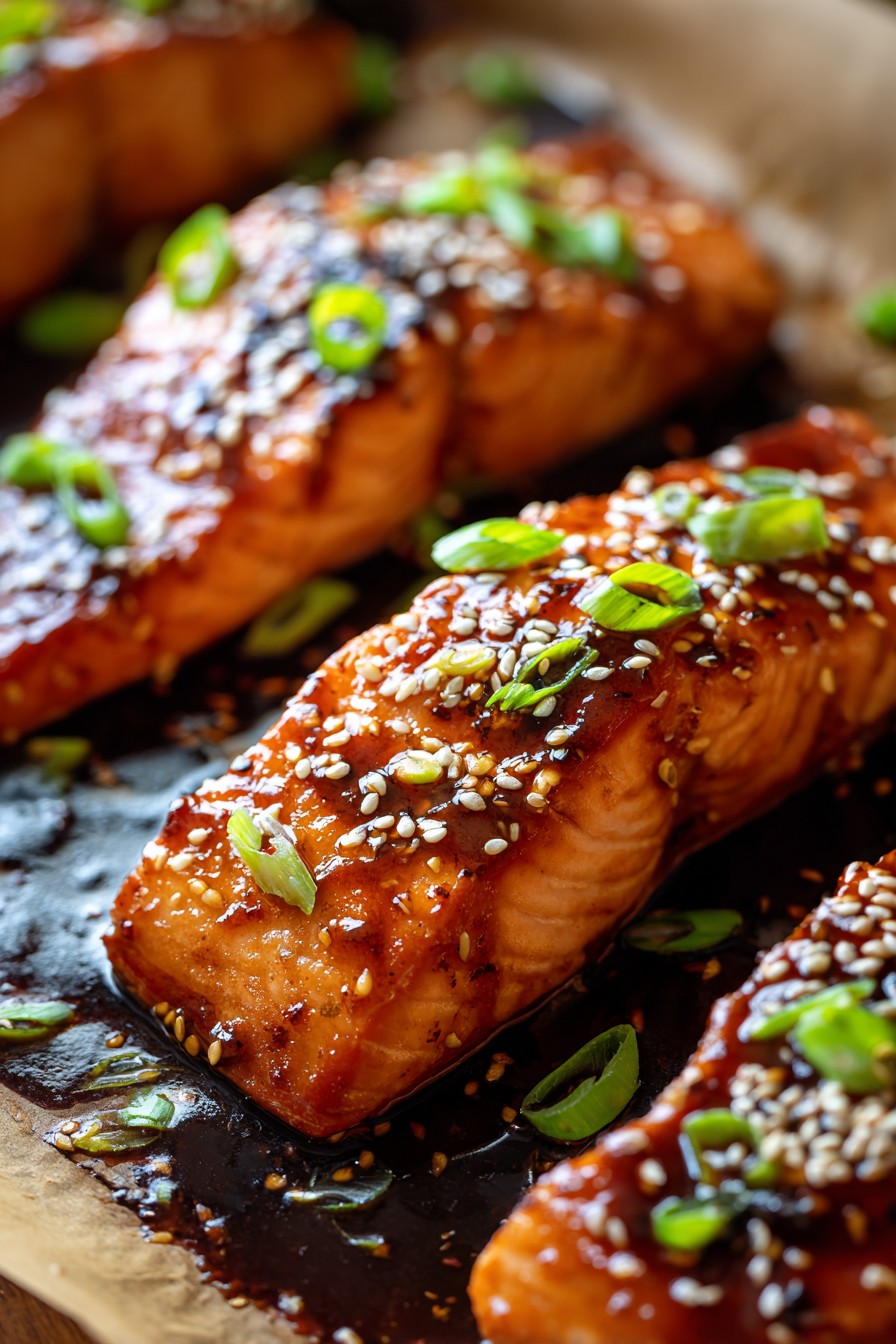
Once the salmon reaches your desired doneness, carefully remove the baking sheet from the oven using oven mitts. Immediately brush the reserved 1/4 cup of teriyaki glaze over the hot fillets—the residual heat will help this final layer set beautifully. Sprinkle each fillet generously with 1 tablespoon toasted sesame seeds and thinly sliced green onions from 2 stalks. The toasted sesame seeds add not only visual appeal and crunch but also provide additional healthy fats, fiber, and minerals like calcium and iron. The green onions contribute fresh, sharp notes that balance the rich sweetness of the glaze while offering antioxidants like quercetin. Allow the salmon to rest for 3-5 minutes before serving—this resting period allows the juices to redistribute throughout the flesh, ensuring each bite remains succulent. During this time, the glaze will continue to thicken slightly as it cools, creating the perfect clinging consistency. Serve immediately alongside your choice of steamed vegetables or whole grains for a complete, nutrient-dense meal that delivers approximately 35 grams of high-quality protein per serving.
Tips and Tricks
For optimal flavor development, consider marinating the salmon in half of the teriyaki glaze for 20-30 minutes before baking—this allows the umami compounds to penetrate deeper into the flesh. Always bring salmon to room temperature for 15 minutes before cooking to ensure even doneness from edge to center. If you prefer crispier edges, switch your oven to broil during the final 1-2 minutes of cooking, watching carefully to prevent burning. For meal prep efficiency, double the glaze recipe and store extra in an airtight container in the refrigerator for up to two weeks—it works beautifully on chicken, tofu, or vegetables. When selecting salmon, look for vibrant color and firm texture, avoiding any fillets with gaps between muscle fibers or strong fishy odor. For those monitoring sodium intake, substitute coconut aminos for soy sauce at a 1:1 ratio—this provides similar umami with approximately 60% less sodium. To achieve restaurant-style presentation, use tweezers to remove any remaining pin bones from the fillets before cooking, though most commercially prepared salmon comes pre-checked.
Recipe Variations
- Spicy Teriyaki Salmon: Add 1-2 teaspoons sriracha or 1/2 teaspoon crushed red pepper flakes to the glaze mixture. The capsaicin in chili peppers may boost metabolism while adding negligible calories.
- Citrus-Infused Version: Incorporate 2 tablespoons fresh orange juice and 1 teaspoon orange zest into the glaze, reducing maple syrup by 1 tablespoon. Citrus enhances iron absorption from the salmon.
- Miso-Enhanced Glaze: Whisk 1 tablespoon white miso paste into the simmering sauce. Miso provides probiotics and deeper umami while increasing protein content.
- Pineapple Teriyaki: Replace 2 tablespoons maple syrup with 1/4 cup crushed pineapple (juice included). Pineapple contains bromelain, an enzyme that may aid protein digestion.
- Herb-Crusted Option: Press 1/4 cup finely chopped fresh cilantro or parsley into the glaze before baking. Fresh herbs add antioxidants without significant calories.
Frequently Asked Questions
Q: Can I use frozen salmon for this recipe?
A: Absolutely—thaw frozen salmon completely in the refrigerator overnight, then pat thoroughly dry before proceeding. Frozen wild salmon often matches fresh in nutritional value since it’s typically flash-frozen immediately after catching, preserving omega-3 content.
Q: How can I make this recipe gluten-free?
A: Substitute tamari for soy sauce at a 1:1 ratio—tamari is traditionally brewed without wheat and provides similar umami depth. Also verify your rice vinegar is gluten-free, as some brands may include additives.
Q: What’s the best way to store leftovers?
A: Store cooled salmon in an airtight container in the refrigerator for up to 3 days. Reheat gently in a 300°F oven for 8-10 minutes to preserve texture, as microwaving can make the fish rubbery.
Q: Can I prepare the glaze ahead of time?
A: Yes—the teriyaki glaze can be made up to 5 days in advance and stored refrigerated. Reheat gently before using, adding a tablespoon of water if it thickens too much during storage.
Q: What sides pair well nutritionally with this salmon?
A: Steamed broccoli provides fiber and vitamin C, while quinoa offers complete plant-based protein. Roasted sweet potatoes add complex carbohydrates and beta-carotene for a balanced meal.
Summary
This teriyaki glazed salmon delivers restaurant-quality flavor with exceptional nutritional benefits. Through precise cooking techniques and thoughtfully selected ingredients, we achieve perfectly caramelized salmon rich in omega-3s, ready in under 30 minutes.
Teriyaki Glazed Salmon
4
servings10
minutes15
minutesIngredients
Instructions
- 1 Combine soy sauce, maple syrup, rice vinegar, ginger, and garlic in saucepan. Simmer 3-4 minutes.
- 2 Whisk cornstarch slurry into simmering sauce. Cook 2-3 minutes until thickened. Remove from heat and stir in sesame oil.
- 3 Preheat oven to 400°F. Pat salmon dry, place on parchment-lined baking sheet. Brush with glaze, reserving 1/4 cup.
- 4 Bake salmon 12-15 minutes until internal temperature reaches 125-130°F.
- 5 Brush with reserved glaze, sprinkle with sesame seeds and green onions. Rest 3-5 minutes before serving.