Oh, the humble tuna salad. Often relegated to sad desk lunches, it’s the culinary equivalent of beige wallpaper. But fear not, flavor-seekers! We’re about to give this pantry staple a glow-up so brilliant, it’ll make your taste buds do the cha-cha. This isn’t your mayo-soggy, celery-speckled childhood relic. This is a sophisticated, protein-packed, Mediterranean-inspired masterpiece that comes together faster than you can say “I’m hangry.”
Why This Recipe Works
- The Texture Tango: Creamy cannellini beans and flaky tuna create a satisfying, substantial base that won’t leave you reaching for a snack an hour later.
- Flavor Bomb Brigade: A zippy lemon-herb vinaigrette cuts through the richness, while briny capers and red onion add pops of excitement in every bite.
- Speed Demon Approved: Zero cooking required. It’s essentially a fancy, adult version of stirring stuff in a bowl. Your future self will thank your present self.
- Chameleon Cuisine: Eat it straight from the bowl, pile it on toast, stuff it in a tomato, or wrap it in lettuce. It’s the culinary equivalent of a versatile little black dress.
Ingredients
- 2 (5-ounce) cans solid white albacore tuna in water, drained well
- 1 (15.5-ounce) can cannellini beans, rinsed and drained
- 1/2 cup finely diced red onion
- 1/4 cup chopped fresh parsley
- 2 tablespoons capers, drained
- 1/3 cup extra-virgin olive oil
- 3 tablespoons fresh lemon juice (about 1 large lemon)
- 1 teaspoon Dijon mustard
- 1 small garlic clove, minced or pressed
- 1/2 teaspoon kosher salt, plus more to taste
- 1/4 teaspoon freshly cracked black pepper, plus more to taste
Equipment Needed
- Large mixing bowl
- Small bowl or jar for dressing
- Whisk or fork
- Can opener
- Colander
- Cutting board & sharp knife
- Measuring cups and spoons
Instructions
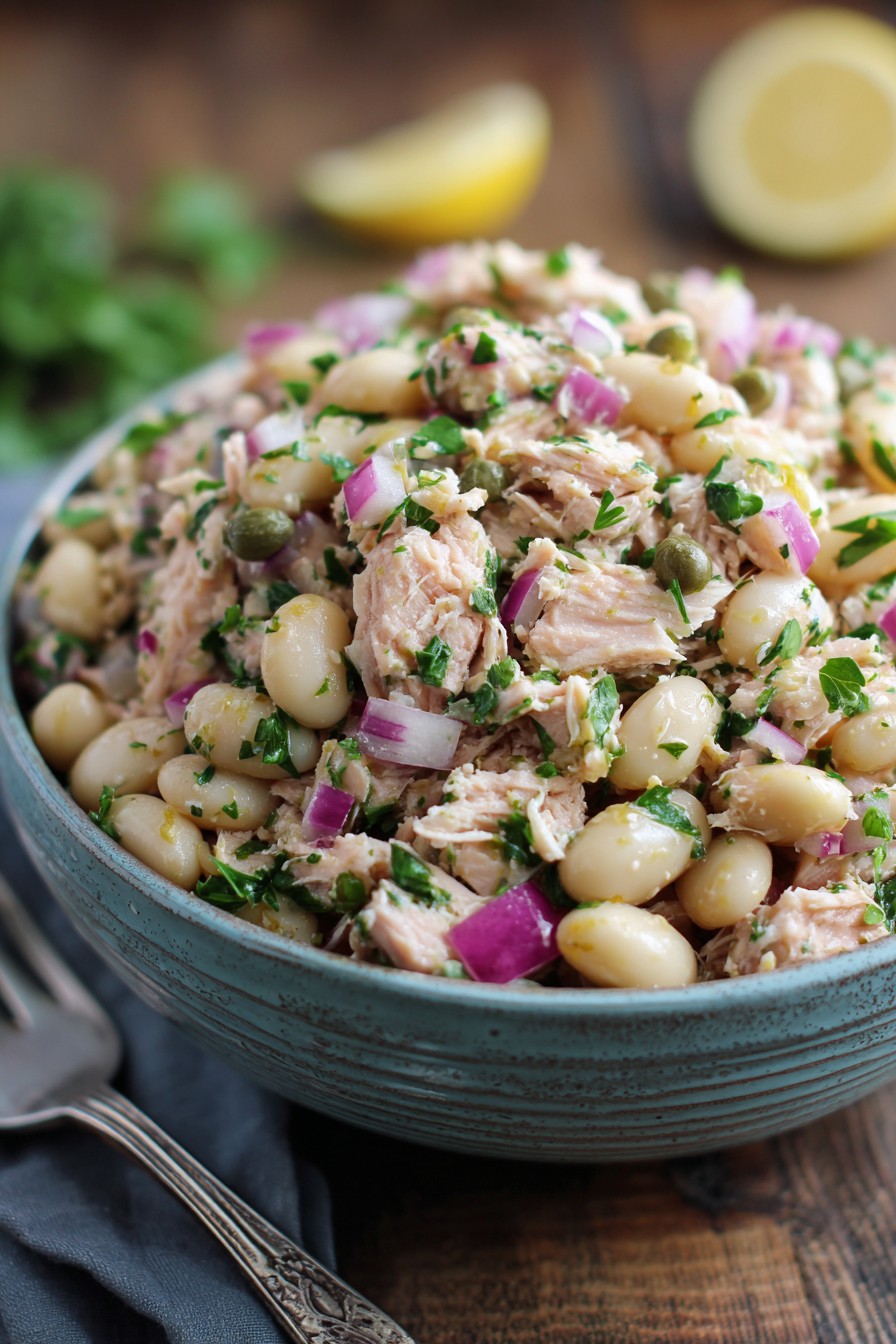
Step 1: Assemble Your Flavor Posse
First, let’s gather the troops. Grab your large mixing bowl—this is mission control. Open your two cans of solid white albacore tuna and drain them like you’re wringing out a tiny, fishy towel. Seriously, get all that water out, or you’ll end up with a sad, soupy situation. Flake the tuna into the bowl with a fork, creating lovely, irregular chunks. Next, attack that can of cannellini beans. Rinse them under cold water in a colander to wash away the starchy can liquid (this keeps your salad from being gloppy), then let them drain thoroughly before adding them to the tuna. Now, take your half cup of finely diced red onion. If raw onion tends to stage a hostile takeover of your palate, give the dice a quick 5-minute soak in ice water, then pat dry. This tames the bite while keeping the crunch. Toss the onion in with the tuna and beans.
Step 2: Craft the Zesty Elixir (a.k.a. The Dressing)
This is where the magic happens, folks. In your small bowl or jar, combine one-third cup of extra-virgin olive oil, three tablespoons of fresh lemon juice (please, for the love of flavor, use a real lemon—bottled juice is its sad, distant cousin), and one teaspoon of Dijon mustard. The mustard isn’t here to be spicy; it’s an emulsifier, a tiny peacekeeper that convinces the oil and lemon juice to play nice together. Add one small, finely minced or pressed garlic clove—this is flavor armor. Season with a half teaspoon of kosher salt and a quarter teaspoon of freshly cracked black pepper. Now, whisk or shake that jar like you’re trying to win a maraca competition. You’re looking for a slightly thickened, unified, pale yellow mixture. Tip: Taste your dressing on a leaf of parsley or a bean. It should be bright and punchy, as it will mellow once mixed with the other ingredients. Adjust salt, pepper, or lemon as needed.
Step 3: The Grand Mixing Ceremony
Pour about three-quarters of your glorious dressing over the tuna, bean, and onion mixture. Grab a large spoon or spatula and gently fold everything together. We’re aiming for cohesion, not annihilation—you want to keep some texture and not turn the tuna into mush. Once the base is lightly coated, add your quarter cup of chopped fresh parsley and two tablespoons of drained capers. The parsley brings a grassy freshness, and the capers are like tiny flavor fireworks of briny saltiness. Fold these in gently. Now, assess the situation. Does it look sufficiently dressed and glossy? If it seems a bit dry, add the remaining dressing. Remember, the beans will continue to soak up the dressing as it sits, so erring on the side of slightly more is better than a dry salad.
Step 4: The Patience-Developing Rest
I know, I know. You want to eat it NOW. But trust the process, grasshopper. Cover the bowl with plastic wrap or a lid and let it chill in the refrigerator for at least 30 minutes. This is non-negotiable flavor development time. The chill allows the ingredients to get to know each other intimately. The sharp edges of the onion and garlic mellow, the flavors from the dressing permeate every nook and cranny of the tuna and beans, and everything comes together in harmonious unity. Think of it as a brief, refreshing spa day for your salad. Tip: If you can manage it, an hour is even better. This rest period is the secret weapon that transforms a simple mix into a complex, cohesive dish.
Step 5: The Final Flourish & Serve
After its beauty rest, take the salad out of the fridge. Give it one final, gentle stir. This is your moment to perform a quality control taste test. Does it need another pinch of salt? A crack of pepper? Maybe a tiny extra squeeze of lemon for brightness? Adjust to your personal palate’s delight. Now, decide how you want to serve your masterpiece. Spoon it generously into a bowl for a simple, satisfying meal. Pile it high on thick slices of toasted rustic bread for an open-faced sandwich that’ll make you feel fancy. Hollow out a beefsteak tomato or a bell pepper and stuff it for a low-carb vessel. Or, use crisp romaine or butter lettuce leaves as edible cups. Tip: For presentation, a final light drizzle of olive oil and a sprinkle of extra parsley or capers on top makes it look restaurant-worthy.
Tips and Tricks
For the absolute best tuna, seek out jarred tuna packed in olive oil. Drain off most of the oil (you can use a bit in the dressing!)—it’s often more flavorful and tender than water-packed. If using dried beans, cook 3/4 cup dried cannellini beans according to package directions until tender; this yields about 1.5 cups cooked. To make this ahead, mix everything except the parsley and capers; add those just before serving to keep them bright and crisp. If you’re not a fan of raw garlic’s punch, try rubbing the cut side of a halved garlic clove around the inside of your mixing bowl instead of mincing it into the dressing—you’ll get a subtle, aromatic hint without the bite. For a creamier texture, mash about a quarter of the beans with a fork before mixing.
Recipe Variations
- The Greek Getaway: Swap parsley for dill, add chopped Kalamata olives and diced cucumber, and use oregano in the dressing. Crumble some feta cheese on top for the full Aegean experience.
- Spicy Kick: Add a finely chopped jalapeño (seeds removed for less heat) to the mix. Stir a teaspoon of harissa paste or a pinch of red pepper flakes into the dressing for a warm, smoky heat.
- Herb Garden Explosion: Use a mix of soft herbs like basil, mint, chives, and tarragon along with or instead of parsley. Each forkful becomes a fragrant surprise.
- Avocado Add-In: For extra creaminess and healthy fats, dice a ripe avocado and gently fold it in right before serving. The cool, buttery texture is a dream.
- Pantry Raid: Add a handful of toasted pine nuts or walnuts for crunch, or throw in some sun-dried tomatoes or roasted red peppers for a sweet, tangy twist.
Frequently Asked Questions
Q: Can I use a different type of bean?
A: Absolutely! Cannellini are my favorite for their creamy texture, but great northern beans, chickpeas (garbanzo beans), or even butter beans would work beautifully. Just make sure they’re rinsed and drained well to avoid excess moisture.
Q: How long does this salad keep in the fridge?
A: Stored in an airtight container, it will be at its best for 2-3 days. The flavors actually improve on day two! The beans may continue to absorb dressing, so you might want to give it a stir and perhaps a tiny drizzle of fresh olive oil before serving leftovers.
Q: Is this recipe gluten-free and dairy-free?
A: Yes, as written, this recipe is naturally both gluten-free and dairy-free. It’s a fantastic option for various dietary needs. Just double-check your Dijon mustard label if you’re strictly gluten-free, as some brands may contain trace amounts.
Q: Can I make this with fresh tuna?
A: You sure can! For a splurge, grill or pan-sear a 10-ounce tuna steak until medium-rare, let it cool, then flake it. It’s a luxurious upgrade, though the canned version is delicious, convenient, and budget-friendly.
Q: My salad seems dry after chilling. What happened?
A> The beans are thirsty little legumes! They continue to soak up the dressing. Next time, be a bit more generous with the dressing initially, or reserve a tablespoon or two to add just before serving. You can also revive it with a fresh squeeze of lemon and a drizzle of oil.
Summary
This tuna white bean salad is a fast, flavorful, and flexible lunch hero. With its perfect balance of creamy, briny, and zesty elements, it proves simple ingredients can create something spectacular with zero cooking required.
Tuna White Bean Salad
4
servings15
minutesIngredients
Instructions
- 1 In a large bowl, combine the drained, flaked tuna, rinsed and drained beans, and diced red onion.
- 2 In a small bowl or jar, whisk together the olive oil, lemon juice, Dijon mustard, minced garlic, salt, and pepper until emulsified.
- 3 Pour about 3/4 of the dressing over the tuna mixture and gently fold to combine. Add the parsley and capers and fold gently. Add remaining dressing if needed.
- 4 Cover and refrigerate for at least 30 minutes (up to 1 hour is ideal) to allow flavors to meld.
- 5 Before serving, taste and adjust seasoning with more salt, pepper, or lemon juice as desired. Serve in bowls, on toast, in lettuce cups, or stuffed in tomatoes.