Perfectly balancing indulgence with mindful ingredients, this vanilla custard tart reimagines a classic dessert for the health-conscious home baker. Prepared with a wholesome almond-oat crust and a protein-rich custard sweetened naturally, it delivers creamy satisfaction without the typical sugar crash. This recipe proves that thoughtful substitutions can elevate both flavor and nutritional value, making it a dessert you can feel good about serving.
Why This Recipe Works
- An almond-oat crust provides heart-healthy fats and fiber, avoiding refined flours.
- Egg-based custard uses whole eggs for protein and richness, with a touch of maple syrup for natural sweetness.
- Full-fat coconut milk adds creaminess and beneficial medium-chain triglycerides (MCTs).
- Vanilla bean paste offers intense flavor without artificial additives.
- Chilling sets the custard perfectly, creating a smooth, sliceable texture.
Ingredients
- For the crust: 1 cup almond flour, 1/2 cup rolled oats, 1/4 cup melted coconut oil, 2 tablespoons maple syrup, 1/4 teaspoon sea salt
- For the custard filling: 4 large eggs, 1 (13.5-ounce) can full-fat coconut milk, 1/3 cup maple syrup, 1 tablespoon vanilla bean paste, 1/4 teaspoon ground nutmeg
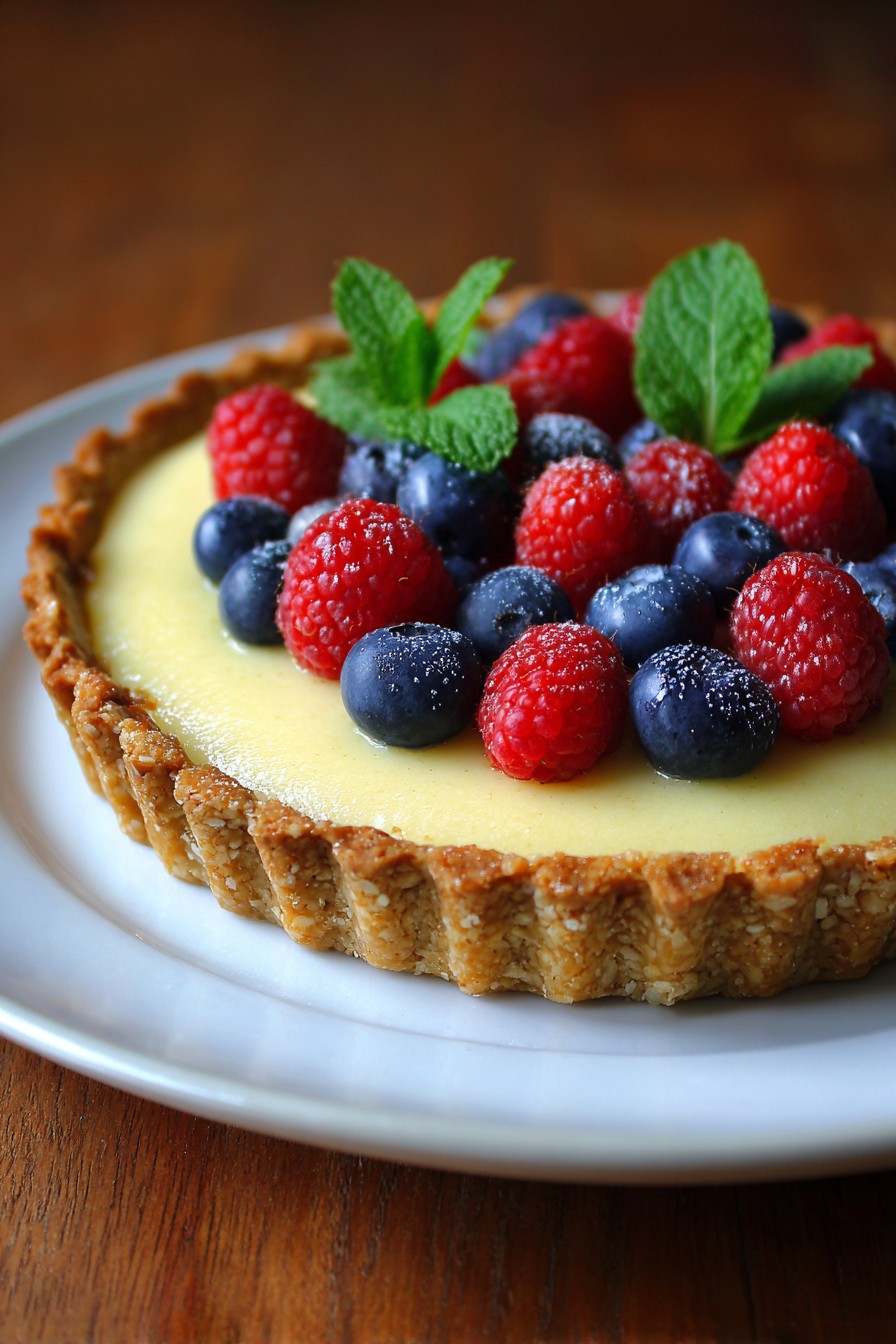
- For garnish: Fresh berries (such as raspberries or blueberries) and mint leaves
Equipment Needed
- 9-inch tart pan with removable bottom
- Medium mixing bowl
- Whisk
- Measuring cups and spoons
- Saucepan
- Fine-mesh sieve
- Oven
Instructions
Step 1: Prepare the Almond-Oat Crust
Begin by preheating your oven to 350°F (175°C). In a medium mixing bowl, combine 1 cup of almond flour, 1/2 cup of rolled oats, and 1/4 teaspoon of sea salt, stirring until evenly mixed. Almond flour is rich in vitamin E and healthy fats, while oats add soluble fiber for digestive health. Add 1/4 cup of melted coconut oil and 2 tablespoons of maple syrup to the dry ingredients. Coconut oil provides medium-chain triglycerides that may support metabolism, and maple syrup offers antioxidants like manganese. Mix thoroughly until the mixture resembles wet sand and holds together when pressed. Press this mixture firmly and evenly into the bottom and up the sides of a 9-inch tart pan with a removable bottom, using the back of a spoon to smooth it. Tip: For a crispier crust, pre-bake it for 10 minutes at 350°F before adding the filling, but this recipe works well without pre-baking for a softer texture. Place the crust in the refrigerator to set while you prepare the custard, about 10 minutes.
Step 2: Whisk the Custard Base
In a clean medium mixing bowl, crack 4 large eggs and whisk them vigorously until smooth and slightly frothy, about 1-2 minutes. Eggs are a complete protein source, providing all essential amino acids and nutrients like choline for brain health. Gradually pour in 1/3 cup of maple syrup while continuing to whisk, ensuring it’s fully incorporated to avoid graininess. Add 1 tablespoon of vanilla bean paste, which contains real vanilla seeds for a more intense flavor and fewer additives than extract, and 1/4 teaspoon of ground nutmeg for a warm, aromatic note. Slowly whisk in 1 (13.5-ounce) can of full-fat coconut milk until the mixture is homogenous and creamy. Coconut milk adds healthy fats and a dairy-free creaminess, making this recipe suitable for lactose-intolerant diets. Tip: For a smoother custard, strain the mixture through a fine-mesh sieve into another bowl to remove any egg bits or lumps, though this step is optional if you whisk thoroughly.
Step 3: Assemble and Bake the Tart
Remove the chilled crust from the refrigerator and place it on a baking sheet for stability. Carefully pour the custard mixture into the crust, filling it almost to the top but leaving a small margin to prevent overflow during baking. Gently tap the pan on the counter a few times to release any air bubbles, which helps achieve a smoother surface. Place the tart in the preheated oven at 350°F (175°C) and bake for 30-35 minutes. The custard is done when the edges are set and the center jiggles slightly when shaken, similar to a firm gelatin. Avoid overbaking, as this can cause curdling or a rubbery texture. Tip: To ensure even baking, rotate the tart pan halfway through the cooking time, especially if your oven has hot spots. The custard will continue to set as it cools, so don’t worry if it seems soft initially.
Step 4: Cool and Chill to Set
Once baked, remove the tart from the oven and let it cool completely at room temperature on a wire rack for about 1 hour. This gradual cooling prevents cracking and allows the custard to firm up properly. After cooling, transfer the tart to the refrigerator and chill for at least 4 hours, or ideally overnight, to fully set. Chilling enhances the flavors and ensures a clean slice when serving. The custard will become firm and sliceable, with a creamy texture that holds its shape. During this time, the ingredients meld together, with the vanilla and nutmeg notes deepening for a more complex taste. Refrigeration also makes this dessert a great make-ahead option for gatherings, as it can be prepared up to two days in advance.
Step 5: Garnish and Serve
Before serving, carefully remove the tart from the pan by pressing up the removable bottom and sliding it onto a serving plate. Garnish with fresh berries, such as raspberries or blueberries, which add a burst of antioxidants and vitamin C, and a few mint leaves for a refreshing touch. Slice using a sharp knife dipped in hot water and wiped dry between cuts for clean edges. Serve chilled, and store any leftovers covered in the refrigerator for up to 3 days. This tart pairs beautifully with a cup of herbal tea or as a light dessert after a meal, offering a satisfying sweetness without excessive sugar. The combination of protein from eggs and healthy fats from almond flour and coconut milk provides sustained energy, making it a smarter choice for dessert lovers.
Tips and Tricks
For a nut-free crust, substitute almond flour with sunflower seed flour or use gluten-free oat flour alone. If coconut milk isn’t available, cashew cream or full-fat dairy milk can work, but adjust sweetness as needed. To enhance vanilla flavor, scrape seeds from a real vanilla bean into the custard. For a crispier crust, pre-bake at 350°F for 10 minutes before adding filling. Use a kitchen scale for precise measurements, especially with almond flour, to avoid a crumbly crust. If the custard cracks, it’s often due to overbaking; next time, reduce oven time by 5 minutes. For a smoother finish, blend the custard mixture in a blender before baking to ensure no lumps.
Recipe Variations
- Chocolate Swirl: Add 2 tablespoons of cocoa powder to half the custard mixture and swirl it in before baking for a marbled effect.
- Citrus Zest: Incorporate 1 tablespoon of lemon or orange zest into the custard for a bright, vitamin C-rich twist.
- Spiced Version: Mix in 1/2 teaspoon of cinnamon or cardamom with the nutmeg for added warmth and anti-inflammatory benefits.
- Berry Layer: Spread a thin layer of sugar-free berry jam on the crust before adding custard for extra fruit flavor and antioxidants.
- Protein Boost: Stir 1 scoop of vanilla protein powder into the custard for an extra 20 grams of protein, ideal for post-workout treats.
Frequently Asked Questions
Can I make this tart dairy-free and gluten-free?
Yes, this recipe is naturally dairy-free using coconut milk and gluten-free with almond flour and oats. Ensure oats are certified gluten-free if needed, as cross-contamination can occur during processing.
How do I prevent the custard from curdling during baking?
Avoid overbaking by checking at 30 minutes; the center should jiggly slightly. Use an oven thermometer to ensure accurate temperature, as high heat can cause curdling.
Can I use a different sweetener instead of maple syrup?
Yes, honey or date syrup work well in equal amounts, offering similar natural sweetness. For a sugar-free option, use monk fruit sweetener, but adjust to taste as it’s sweeter.
Is this tart suitable for a low-carb diet?
Moderately; almond flour and coconut milk are low-carb, but maple syrup adds carbs. For stricter diets, reduce syrup or use a keto-friendly sweetener like erythritol.
How long does it keep in the refrigerator?
Store covered for up to 3 days. The crust may soften slightly over time, but the custard remains creamy. For best texture, consume within 2 days.
Summary
This health-conscious vanilla custard tart combines an almond-oat crust with a protein-rich custard for a delicious, nutrient-dense dessert. With natural sweeteners and dairy-free options, it’s a versatile treat perfect for mindful indulgence.
Vanilla Custard Tart
8
servings20
minutes35
minutesIngredients
Instructions
- 1 Preheat oven to 350°F. Mix almond flour, oats, and salt. Add coconut oil and maple syrup, press into a 9-inch tart pan, and chill.
- 2 Whisk eggs, then add maple syrup, vanilla bean paste, nutmeg, and coconut milk until smooth.
- 3 Pour custard into crust and bake at 350°F for 30-35 minutes until set at edges and jiggly in center.
- 4 Cool at room temperature for 1 hour, then chill in refrigerator for at least 4 hours.
- 5 Garnish with berries and mint, slice, and serve chilled.